Money can change without most people noticing. A new payment method appears, businesses begin adopting it, and eventually a financial arrangement that once seemed unfamiliar becomes part of ordinary life. The public may notice the convenience long before it understands the institutions and incentives behind it.
The United States is preparing for another such change. The GENIUS Act, enacted in July 2025, established a federal framework for payment stablecoins: digital tokens designed to maintain a stable value relative to a currency such as the U.S. dollar. The Office of the Comptroller of the Currency’s implementing rule, finalized in October 2026 and scheduled to take effect January 18, 2027, sets requirements for issuers and activities under its jurisdiction.¹
The framework does more than establish rules for a new financial product. It defines how payment stablecoins must be backed, distinguishes them from insured bank deposits, and restricts how issuers may reward people for holding them. It also raises a less obvious possibility: if stablecoins become more widely used, the securities held to back them could increase demand for short-term U.S. Treasury debt. The OCC explicitly considers this potential effect in its final rule.¹
The scale of this transition remains uncertain. So do its consequences for government borrowing costs, financial institutions, and consumers. But the rules are being established now, before the eventual shape of adoption is clear.
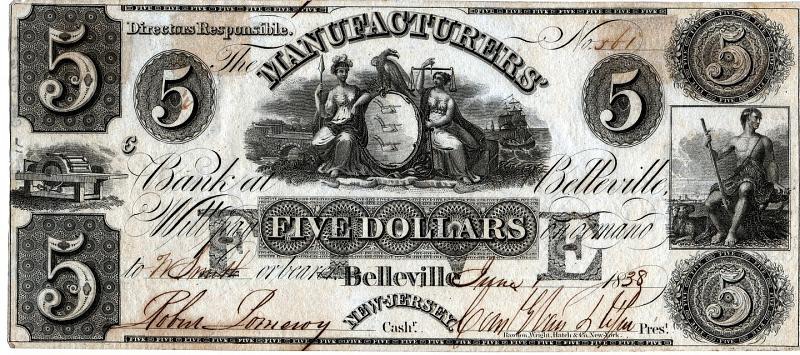
The history of American money offers a useful perspective. From privately issued banknotes to the national banking system that emerged during the Civil War, the relationship between money, private institutions, and public authority has repeatedly changed. Today’s digital payment instruments are not simply a repeat of that history, but they raise a familiar question: who stands behind the money we use, and what wider system does it support?
Understanding the framework is therefore about more than understanding stablecoins. Money is one of the principal means by which people turn their labor into the conditions of a life, so the institutions, incentives, and protections surrounding it matter even when the underlying technology changes quietly. The question is whether greater efficiency helps people exercise more control over their lives or leaves them more dependent on systems they cannot easily understand, influence, or leave.
A DOLLAR WITHOUT DEPOSIT INSURANCE
The GENIUS Act states that payment stablecoins are not backed by the full faith and credit of the United States, are not guaranteed by the federal government, and are not covered by federal deposit insurance or credit-union share insurance.² A stablecoin may be designed to maintain a one-dollar value, but that does not make it equivalent to an insured bank deposit.
The law also makes it unlawful to represent that payment stablecoins have any of those protections, and treats such a misrepresentation as a violation of existing federal law (12 U.S.C. § 1828(a)(4) or 18 U.S.C. § 709, as applicable).² Claims suggesting that a stablecoin is government-insured or guaranteed are therefore not merely imprecise marketing; they may be unlawful. That does not mean every misleading claim will be caught immediately, but it gives consumers a concrete standard against which to judge what they are being told.
The absence of insurance does not mean the absence of protection. The Act requires issuers to hold reserves of at least one dollar for every outstanding stablecoin, limited to a defined set of assets. It requires them to publish their reserve composition monthly, with that information examined each month by a registered public accounting firm, and to maintain a public redemption policy. In an issuer’s insolvency, stablecoin holders receive priority over other claimants with respect to the required reserves.³ The Act also preserves federal consumer financial law remedies and largely leaves state consumer protection laws in place.⁴
These are meaningful safeguards. But they rest on the quality of the reserves, the issuer’s compliance, and the vigor of supervisors. Deposit insurance is a government backstop. A familiar dollar sign can make two different arrangements appear interchangeable, and the difference may be easy to overlook during an ordinary purchase and much more consequential when redemption problems or issuer distress arise.
As the framework takes effect in January 2027, consumers should pay attention to how stablecoins are described in advertisements, exchange listings, promotional material, and statements by influencers. Faster payments, innovation, and convenience are the natural selling points. The legal distinction between a stablecoin and an insured deposit deserves to sit beside them.
THE CURRENCY OFFICE, DIGITIZED
The OCC was established in 1863, when Abraham Lincoln signed the National Currency Act into law. The United States was fighting the Civil War and needed to finance its military effort while addressing a fragmented banking system in which banknotes issued by individual banks varied in reliability and acceptance.
The National Banking Acts created a system of federally chartered banks that could issue notes backed by U.S. Treasury securities. In 1865, Congress imposed a ten-percent tax on state-bank notes, effectively driving them out of circulation. These reforms helped establish a more uniform national currency while creating demand for federal debt.⁵
More than 160 years later, the OCC is regulating another form of privately issued payment instrument. Stablecoins are not simply modern national banknotes, and the economic circumstances are different. Yet the institutional parallel is striking: in both cases, federal rules governing private money intersect with the market for government securities.
The OCC’s final rule makes that connection explicit. Under the GENIUS Act, permitted payment stablecoin issuers must maintain reserves at least equal to their outstanding stablecoins. Eligible reserves include cash, certain deposits, short-term Treasury securities, qualifying repurchase agreements, and government money market funds. Treasury securities with maturities of 93 days or less are among the permitted assets.³
The rule’s economic analysis, in a section titled “Effect on Cost of Short-Term Treasury Debt Financing,” states that the OCC “anticipates that the final rule will benefit the US government and taxpayers by increasing the demand for short-term Treasury debt securities.” It reasons that because short-term Treasuries have no close substitutes, added demand would be expected to lower their yields. It cites outside research estimating effects from about two basis points for a few billion dollars of stablecoin inflows to as much as 40 basis points of downward pressure on interest rates under widespread use. It also cautions that the effect could be offset if the Treasury issues more short-term debt, if the Federal Reserve sells bills, or if stablecoin reserve purchases merely displace other buyers.⁶
This is a benefit identified by the regulator itself, not merely an outside interpretation. But a regulator’s cost-benefit analysis is not evidence of motive, and it does not establish how large the effect will be. Nor is lower short-term borrowing cost a pure gain for everyone: the same downward pressure could also lower the yields available to investors holding short-term Treasury bills, including savers whose money market funds own them.
Still, the relationship is there: private digital payments may generate demand for public debt.
The two eras emerged under different circumstances and should not be treated as equivalent, but both show why changes in monetary infrastructure deserve scrutiny beyond their technical objectives. Who gains new opportunities? Who bears the costs? And does the resulting system expand ordinary people’s economic agency, or primarily improve the efficiency of the institutions through which they must operate?
A PAYMENT SHIFT LARGELY OUT OF SIGHT
Deloitte’s May 2026 analysis, How Stablecoins Could Power the Next Era of Retail Payments, predicts that stablecoin-enabled U.S. retail purchases could exceed $200 billion annually by 2030. It also estimates that stablecoins could support approximately 2.5 percent of U.S. noncash transactions by that year through backend settlement, processing, or funding.⁷ These are predictions, not established outcomes, and even on Deloitte’s numbers stablecoins would remain a small share of U.S. payment activity.
The distinction between direct and indirect use matters. A consumer may never own a stablecoin or open a cryptocurrency wallet. They might pay with a familiar card or application while stablecoins operate behind the scenes, helping settle transactions between financial institutions.
This is how infrastructure changes without necessarily changing people’s vocabulary. The consumer sees a checkout screen; the merchant sees a completed payment. The system underneath them may be different.
There are legitimate benefits. Faster settlement and lower transaction costs could help businesses, while digital transfers may make international commerce easier. But convenience has always been a powerful commercial incentive, and payment systems influence the conditions under which people spend.
Credit cards, online banking, automatic subscriptions, and one-click purchasing have progressively reduced the effort required to buy things. Stablecoins do not create consumerism, but they may become another component of an economy increasingly organized around frictionless transactions.
WHO EARNS FROM DIGITAL MONEY?
The GENIUS Act prohibits payment stablecoin issuers from paying holders interest or yield solely in connection with holding, using, or retaining their stablecoins.⁸ Issuers may earn income on permitted reserve assets, but they cannot simply pass that income to holders on the prohibited basis.
This creates a distinction between the institution maintaining the reserves and the consumer using the payment instrument. The issuer may earn income from eligible assets; the holder receives a means of payment, not necessarily a return on the balance.
The prohibition does not mean every stablecoin-related reward is illegal. The OCC distinguishes prohibited interest or yield from payments for bona fide services and other arrangements that may be permissible depending on the facts. The final rule declined to adopt a proposed presumption that certain affiliate or third-party arrangements would violate the prohibition, but the OCC retained its authority to address arrangements that violate or evade the law. It also declined to presume existing rewards programs comply. As the OCC has emphasized, “interest does not stop being interest merely because it is given a different name.”⁹ The ban does not apply to bank deposits, including tokenized deposits, which remain governed by separate banking rules.⁹
The distinction will matter as companies compete for users. If issuers cannot attract customers through certain forms of yield, they may compete through convenience, loyalty programs, services, or other incentives. Whether any given arrangement is lawful will turn on its economic substance, not its label, and regulators have signaled they will look closely.
The broader commercial pattern is familiar. Loyalty programs monetize repeat purchases. Subscriptions monetize continued access. Digital platforms monetize attention and behavior. Payment systems can become more than a means of transferring money; they can become part of the relationship through which companies retain customers and encourage transactions.
WHEN CONVENIENCE BECOMES CULTURE
None of this establishes that physical cash is about to disappear.
But the long-term decline in the frequency of cash payments is clear.
Consumers made an average of 14 cash payments per month in 2016, and six in 2025, even though cash remained legal tender and most consumers (76 percent) still carried some.¹⁰ No formal prohibition is required for habits to change. Merchants, platforms, and service providers may favor electronic transactions, and consumers may grow accustomed to systems that depend on accounts, devices, networks, and intermediaries.
That trend predates stablecoins, and nothing yet shows that stablecoins will accelerate it. But it illustrates how financial infrastructure becomes cultural infrastructure.
Money is not merely a number used to purchase goods. It shapes how people understand ownership, security, privacy, and consumption. Cash makes a transaction tangible; a digital balance makes it abstract. When a purchase requires only a tap, the transaction itself can become less noticeable.
A transaction can become faster without a household becoming more secure. A payment can become cheaper without a worker gaining more control over their time.
Money is not an end in itself. For most people, its value lies in what it makes possible: food, shelter, education, time with family, freedom from immediate financial distress, and the opportunity to pursue a life of their choosing. The ability to convert labor into these things is a form of practical agency. It determines not only what people can buy, but what they can refuse, what risks they can withstand, and how much of their time they can claim. A change in monetary infrastructure does not automatically diminish that agency, and it may expand access and lower costs. But technical progress should not be mistaken for social progress without asking who benefits. If a new system makes transactions more efficient while leaving people less able to understand their options, protect their resources, or move to alternatives, its efficiency may coexist with a loss of meaningful control.
That concern grows when financial and technological literacy are unevenly distributed. People with the time and resources to compare products and absorb mistakes are better positioned to adapt; those constrained by low incomes, limited time, or unfamiliarity with digital services may have fewer chances to evaluate their choices. The starting point is not uniform: the FDIC’s 2023 survey estimated that 4.2 percent of U.S. households, about 5.6 million, had no bank or credit union account.¹¹ For households at the edge of the insured banking system, products that resemble bank accounts but lack deposit insurance may carry particular stakes.
Stablecoins may remain a specialized tool used primarily by businesses and financial institutions, or they may become embedded in familiar payment systems, largely invisible to the people using them. The scale of that adoption remains uncertain. What is already clear is that the framework connects private payment instruments to public financing, distinguishes stablecoins from insured deposits while providing certain protections, and restricts how issuers can reward holders. What remains to be seen is how widely stablecoins will be used, how large the Treasury-demand effect will prove, and who will capture the savings from cheaper or faster payments.
The OCC’s history offers a fitting place to begin watching. The institution established during Lincoln’s effort to reorganize American currency is now helping regulate a new form of private digital money whose growth may support demand for federal debt. Three things deserve particular attention: how stablecoins are marketed relative to the insured-deposit distinction, how regulators treat reward programs, and whether lower payment costs reach consumers. These are practical questions, but they point toward a larger measure of the transition: whether the system’s efficiencies become improvements in people’s lives, rather than merely improvements in the machinery through which their money moves.
A society can become more efficient at moving value without becoming more effective at helping people turn their labor into security, independence, and time to live. Whether this transition produces that outcome is not yet settled, but it is worth asking before the infrastructure becomes so familiar that its underlying choices disappear from view.
NOTES AND SOURCES
- Office of the Comptroller of the Currency, “Implementing the Guiding and Establishing National Innovation for U.S. Stablecoins Act for the Issuance of Stablecoins by Entities Subject to the Jurisdiction of the Office of the Comptroller of the Currency,” final rule, Docket ID OCC-2025-0372, October 2026. The rule takes effect January 18, 2027.
- GENIUS Act, § 4(e), “Misrepresentation of Insured Status.” Statutory text.
- GENIUS Act, §§ 4(a)(1), 4(a)(3), and 11 (reserves, monthly disclosure and examination, redemption policy, and insolvency priority).
- GENIUS Act, §§ 6(c) and 7(f)(4) (preservation of federal consumer financial law and state consumer protection laws).
- Federal Reserve History, “National Banking Acts of 1863 and 1864.” Historical overview.
- OCC final rule (October 2026), section “Effect on Cost of Short-Term Treasury Debt Financing,” including the outside research it cites.
- Deloitte Center for Financial Services, “How Stablecoins Could Power the Next Era of Retail Payments,” May 2026. Figures cited are predictions for 2030, not observed outcomes.
- GENIUS Act, § 4(a)(11), prohibition on issuer payment of interest or yield solely in connection with holding, using, or retaining payment stablecoins.
- OCC final rule (October 2026), discussion of the yield prohibition, including its treatment of deposits, rewards, agents, and bona fide services; GENIUS Act, § 2(22)(B)(ii) (deposits excluded from the definition of payment stablecoin).
- Federal Reserve Financial Services, “2026 Diary of Consumer Payment Choice: Cash Remains Essential for U.S. Consumers,” August 2026 (underlying report released May 2026). The figures describe U.S. consumer payment behavior in 2025.
- Federal Deposit Insurance Corporation, 2023 FDIC National Survey of Unbanked and Underbanked Households, November 2024.
Featured image: Manufacturers’ Bank of Belleville five-dollar note, 1838. Smithsonian National Museum of American History.
Leave a Reply