Civic Ineptitude: Signals in a Nation of Noise

Some time ago, I wrote a song with a lyric I find myself repeating more often to coworkers, and even in online conversations:

“Pay attention to what you pay attention.”

It’s the simplest way I’ve found to gesture toward the problem of the signal-to-noise ratio and how its manipulation breeds civic ineptitude.

Most of what we take in, whether from commerce or politics, isn’t meant to sharpen judgment. It’s engineered to trap us inside a single topic, to overload the civic ear. Not to expand participation, but to shrink it under the weight of constant input. Inputs irrelevant to both daily life and future prospects.

Democracy likes to sell the story that people can separate signal from static, that citizens have reviewed all sides of a problem and reached true understanding. The reality rarely matches the pitch.

Defining Civic Ineptitude

Civic ineptitude is a manufactured incapacity, not an accidental occurrence. It’s not that people are unwilling to participate, it’s that they are overloaded with inputs designed to trap attention in outrage and trivia. Citizens debate endlessly but rarely govern themselves or the institutions meant to be by the people, for the people. They are trained to consume noise to the point they delegate their sovereignty to an outside source, until they no longer truly think for themselves.

Commerce & Politics: The Social Noise Complex

Politics delivers daily scandal, a viral hearing, or a televised confrontation in all caps. These moments are designed to impress upon viewers the breaking news matters more than they could ever know. They digress from legislative maneuvers that might actually impact daily life and repress the viewer’s ability to think independently.

The churn promises significance but rarely explains consequences without exaggeration. Slow, structural signals (like infrastructure, demographics, environmental planning, national debt) fade into silence because they don’t trend. Because the ones in charge don’t need your input anymore, just your compliance.

Commerce is louder still. Advertising and financial media bombard us with promises of autonomy through consumption. New gadgets, lifestyle upgrades, and speculative bets are sold as independence. But the true signal, legitimate questions of sovereignty, labor, and national debt, goes unheard. Instead, the illusion of participation is kept alive by trading apps, side hustles, and brand loyalty. It looks like engagement but it’s only noise. Sometimes they’re blatant about it: “escape from real life, escape the burden of civic duty.”

While headlines focus on tech scandals, trillion-dollar corporate buybacks reshape ownership of the entire economy. Credit, conspicuous consumption and engineered complacency drive the system.

Historical Shifts that Made It So

This condition has roots. The 24/7 news cycle rewarded outrage over substance. The modernization of the Smith–Mundt Act blurred propaganda into domestic media. The dollar’s divorce from gold made inflation and debt permanent features, not temporary policies.

Citizens are still taught to treat dollars as solid. In reality, the currency became an abstraction, an IOU backed only by government promise. A system that once had a natural limit (gold convertibility) turned into one that could expand infinitely. The public was never educated on what that shift meant, because understanding it would expose the truth: debt is not a temporary emergency but the backbone of fiscal policy. The so-called debt ceiling is theater, not restraint.

When the money supply lost its anchor, spending lost its discipline. Citizens could still count dollars in their wallet, but they could no longer count on those dollars to mean the same thing tomorrow. The disconnect between appearance and reality became the foundation of modern civic ineptitude.

Even right now, the news is trying to convince every citizen the reason other governments and foreign banks are dumping U.S. Treasury Bonds is because of tariffs. They can’t let you doubt the longevity of the dollar too, you know?

Present-Day Illustration

The imbalance is obvious: the public spends weeks locked onto scandals, while consequential legislation moves quietly in the background. The pattern is clear:

  • 2008 financial collapse: While the public debated Wall Street outrage, Congress passed the $700 billion TARP bailout with little scrutiny.
  • Post-9/11: Fear of terrorism overshadowed the Patriot Act, quietly expanding surveillance.
  • Pandemic: Debate over masks and mandates eclipsed multi-trillion-dollar stimulus packages, shaping long-term debt obligations.

Here’s the next one: In about two weeks (from the time I published this) CISA, the Cybersecurity Information Sharing Act of 2015, will be hitting the 10 year expiration date and needs to be re-enacted/rewritten.

Why? Because in 2018, Congress created CISA, the Cybersecurity Infrastructure Security Agency, an agency with almost unrestricted authority over citizen communications, a component of the Department of Homeland Security. (Notice the acronyms are identical, blurring law and agency. Hardly an accident.)

Since the Agency’s creation, Congressional Oversight Committees have run multiple investigations that uncovered the Agency is apparently more concerned with what you and I say online, rather than cyber attack threats. Working in tandem with social media platforms, CISA has censored comments and posts, employed “narrative intervention” tactics, and surveilled US citizens unconstitutionally with the Mis-, Dis, and Malinformation (MDM) team.

CISA was disbanded in 2022, but government power rarely disappears, it reincarnates. When the new CISA passes (and it will) the agency will return, maybe under a new acronym, but with the same powers reborn.

I fully expect the law to be revived with further additions that exacerbate this issue of government weaponization upon the citizenry of the United States. I also fully expect only a sliver of the populace to even know it happened.

Why? The spectacle is always designed to be louder than the substance. Outrage consumes the civic ear while policy slips by unnoticed, and the government is always watching, waiting for us to be distracted or disinterested in what they’re doing this week.

The Democratic Mirage

Democracy promises citizens can separate signal from static. In reality, engagement is mediated by distraction. Civic aptitude is nearly nonexistent.

Candidates are products of party machinery, donor networks, and lobbying groups. Not public deliberation. Most voters respond to slogans, sound bites, and marketing repetition. The candidate becomes a brand, politics becomes advertising.

Appointments reveal where real power sits and why the candidate was dangled before us. Positions of influence often benefit industry, private networks, and political machines—not citizens. Just look at the last 25 years of questionable appointments:

George W. Bush

  • John Bolton – U.S. Ambassador to the UN (2005)
    Bolton was openly hostile to the UN and multilateral diplomacy, which made his appointment look like sabotage by placement. Bush didn’t even wait for Congress to vote on the appointment, he just signed off on it while Congress was in recess. 
  • Also appointed over 700 judges in the wake of 9/11, judges who provided no opposition to warrantless surveillance requests from the then-created Department of Homeland Security. 

Barack Obama

  • Mark A. Patterson – Chief of Staff to the Treasury Secretary (2009)
    Patterson was a former Goldman Sachs lobbyist, put into a senior Treasury role just after Goldman benefited from TARP bailout policies. 
  • Gary Gensler – Chairman of the Commodity Futures Trading Commission (2009)
    Former Goldman Sachs partner, placed in charge of regulating derivatives, the very instruments central to the 2008 crisis. 
  • Jack Lew – Director of the Office of Management and Budget (2010) then Treasury Secretary (2013)
    Former Citigroup Chief Operating Officer, another bank complicit in the 2008 derivatives scandal. 

Donald Trump (First Administration)

  • William Perry Pendley – Acting Director, Bureau of Land Management (2019–2021)
    Pendley had spent much of his career arguing for selling off federal lands, yet was appointed to oversee them.

Joe Biden

  • Gary Gensler – SEC Chairman (2021)
    Another Great Financial Crisis banker appointed by Obama, later reappointed under Biden to lead the SEC.

Donald Trump (Second Administration)

  • Ed Martin – U.S. Attorney for D.C. (2025)
    Martin had no prior experience as a federal prosecutor or judge, but was appointed to one of the most powerful legal posts in the country.

This is the democratic mirage: the appearance of choice, the ritual of participation, the illusion of sovereignty. All sustained by noise. The decisions made behind closed doors have had lasting impacts on these last 25 years, and more than likely, will for the next 25.

Returning to Attention

Civic ineptitude is not stupidity; it’s engineered overload. The signals of governance, sovereignty, and responsibility are still there, but faint, competing against an industrial volume of noise.

The question isn’t whether people can still hear them. The question is whether anyone remembers how to listen.

Pay attention to what you pay attention.


If this piece resonated, you may also find these worth your attention:

Market Forces: Foreign Factors & Domestic Actors

Precision Consumer 2030: Wellness as a Window Into You

© 2025 Zakariyas James. First shared here at theruminationcompilation.wordpress.com.

H5N1: When the Wild Whispers Across Continents

From the wetlands of Asia to the frozen coasts of Antarctica, from the farms of Europe to the forests of North America, H5N1 is moving quietly yet relentlessly. Once called “bird flu,” this virus has slipped through the cracks of public attention, expanding its reach across species and continents. It is no longer just a disease of birds: it is a cross-species contagion, touching goats, pigs, seals, sea lions, cats, cows and numerous other wild mammals.


Yet despite this, media coverage is fragmented and human awareness is uneven. H5N1 is everywhere, but our gaze often stops at borders, political lines, or convenient news cycles. The virus does not respect such boundaries. Its spread is a mirror to our selective attention.

A Global Cast of Hosts

Consider the reach of this virus. Across the globe, new species are being documented with infection and the list is become extensive to say the least (FAO, 2025). In Europe, swans, wild geese, poultry and even foxes and martens have been infected (ECDC, 2025). North America has seen seals, sea lions, wild birds, domestic cats, cows, raccoons and skunks (USDA, 2025). South America reports penguins, sea lions, gulls and other marine mammals. Swine are the historical step before human transmission but because of the amount of mammalian hosts thus far, it could be anything from cattle to sea lions that lead to a mutation that’ll cause the jump (Nature, 2025).


From Antarctic penguins to goats in Asia, from big cats in American sanctuaries to backyard poultry across the globe, the virus leaps in ways that are both biological and symbolic. It reminds us that human, animal and environmental health are never separate; they are threads in a single, tangled web.

The Global Eye: How States Track (or don’t track) Bird Flu

Even as H5N1 spreads across species and continents, the ways in which governments observe it diverge sharply. Some countries maintain strict, systematic surveillance; others glance occasionally; some have turned away entirely.


United States: Federal oversight has receded. The Centers for Disease Control and Prevention treats H5N1 updates as a subset of routine influenza data (CDC, 2025). Voluntary testing programs in dairy herds draw participation from just a tiny fraction of farms. The state’s gaze has shifted elsewhere, leaving large gaps in knowledge.


China: Poultry markets and farms are disinfected daily, weekly, and monthly in a meticulously enforced rhythm (ScienceDirect, 2025). Every bird cough, every unusual death is a signal in a network designed to catch the virus before it leaps.


Europe: Coordinated regionally, member states report any case within 24 hours. A sick bird in Spain triggers alerts across the continent (ECDC, 2025).


India: Reactive measures, like the temporary closure of the National Zoological Park in Delhi after two painted storks died, illustrate intervention that follows tragedy rather than anticipation (Times of India, 2025).


Across the globe, this spectrum of vigilance (from obsessive monitoring to passive observation to deliberate neglect) illustrates the human choices behind surveillance. The virus moves indiscriminately, but our attention is selective. And selective attention, in a pandemic of interspecies proportion, is a choice with consequences.

The most recent iteration of government action related to H5N1 is quite literally a polar opposite of the U.S. approach: The Korea Center for Disease Control and Prevention conducts a national diagnostic test practice mock training for animal influenza human infection (KCDCP, 2025).

A Reflection on Our Relationship with the Wild

H5N1’s march across species and continents forces a question: how do we relate to the wild when it can suddenly turn contagious? When a virus moves from birds to goats to marine mammals, when pets and livestock are implicated, the boundary between nature and human society blurs.


As with other technologies or threats, the unintended consequences unfold over time. The virus is impartial; we are not. Our awareness is shaped by policy, economics and media attention. What we choose to track, or not track, determines not just who gets sick, but who notices, who acts and who survives.
And so the question lingers: if a virus can hop continents and species, why do our eyes remain shut? When does selective monitoring become neglect, when does the world’s quiet whisper demand that we finally listen?

Closing Reflection

H5N1 is not just a threat to poultry or wildlife; it is a mirror of our attention, our governance, our relationship to the planet. The wild was once where humans went to disappear; now it is a place where contagion can travel undetected, where the boundaries between species and borders blur.


We can ignore it, as some states do. We can track obsessively, as others do. But no matter where the virus moves, it challenges every human assumption about control, safety, and care. And perhaps the greatest question is not whether we can stop it, but whether we are paying attention in time.


For further reading on how lobby groups are influencing the U.S. decision to ignore H5N1, see Bird Flu & The Great Disappearing Act.


References / Further Reading

Photo credit: NIAID

© 2025 Zakariyas James. First shared here at theruminationcompilation.wordpress.com.
Basel III and the Return of Gold: A Comparative History

When the Bank for International Settlements finalized Basel III in 2019, it didn’t make headlines. But in elevating physical gold bullion to a Tier 1 asset (and relegating paper contracts and futures to near-irrelevance), the rules of global finance shifted as profoundly as they did in 1933, 1944, or 1971.

To understand the magnitude of this change, it helps to compare it with the last century’s monetary resets.

1933 — U.S. Gold Confiscation & Revaluation
• What changed: Franklin Roosevelt suspended the domestic gold standard, forcing Americans to hand in their gold at $20.67/oz. Months later, the government revalued gold to $35/oz.
• Effect: Citizens lost bullion, the state gained reserves, and the U.S. Treasury booked an overnight windfall that supported Depression-era finance.
• Parallel to today: A rule change, not a war, restructured wealth by reclassifying gold’s role. Value didn’t vanish—it was reassigned.

1944 — Bretton Woods & Dollar Hegemony
• What changed: Allied powers agreed to anchor global currencies to the U.S. dollar, itself pegged to gold at $35/oz.
• Effect: Nations no longer settled accounts in gold directly; they settled in dollars. The U.S. consolidated financial supremacy by holding the world’s largest bullion hoard.
• Parallel to today: Liquidity was centralized under one system. The illusion of stability masked a transfer of gold’s role into state-backed paper claims.

1971 — Nixon Closes the Gold Window
• What changed: President Nixon suspended the dollar’s convertibility into gold. The Bretton Woods system collapsed, leaving a purely fiat world.
• Effect: Currencies floated, debt exploded, and dollar dominance survived only because oil and global trade continued to be priced in dollars.
• Parallel to today: A pivot disguised as necessity. Rules were rewritten mid-game to preserve credit expansion, even as trust in the old system eroded.

2019 — Basel III Redefines Gold’s Value
• What changed: Physical gold was upgraded to Tier 1, recognized at full value on bank balance sheets. Paper gold contracts and futures were risk-weighted down to ~10%.
• Effect: Sovereigns and central banks suddenly had incentive to accumulate bullion, not paper promises. The East has led record purchases, while Western markets cling to futures.
• Parallel to history: Like 1933, 1944, and 1971, the change was regulatory and quiet—but it redefined gold’s place in the system. Instead of removing gold, Basel III restores it to the balance sheet.

The Throughline

Across each reset, the same pattern emerges:

• Gold is never eliminated. It is reclassified, revalued, or hidden behind paper substitutes.

• Fiat credit is preserved. Whether by confiscation, substitution, suspension, or regulation, the system shifts rules to extend its lifespan.

• The burden of adaptation is global. Citizens in 1933, allied nations in 1944, world markets in 1971—all had no choice but to adjust. Basel III sets up the East as the next adjustment point.

As analyst Lena Petrova notes, “We are being told a story of multipolarity, but what we’re really seeing is continuity. The structure doesn’t vanish—it relocates.” The “relocation” now is not merely geographic (West to East) but material: away from paper contracts toward bullion. The BIS and World Bank aren’t losing control; they are orchestrating the transfer. To preserve fiat credit, bubbles must migrate, and liquidity must sink somewhere new.

If the 20th century required world wars to enforce its financial resets, the 21st may achieve the same outcome more subtly but no less disruptively. Basel III is the quiet hinge-point: a reminder that while money changes form, its gravity keeps circling back to the same metal.

What Comes Next, A New 1971 Moment?

If 1933 was confiscation, 1944 was consolidation, and 1971 was suspension, then Basel III may be the preparation stage for a fourth great reset. The difference this time is that it is not centered in Washington, London, or Paris, but in Beijing, Moscow, and the capitals of the Global South.


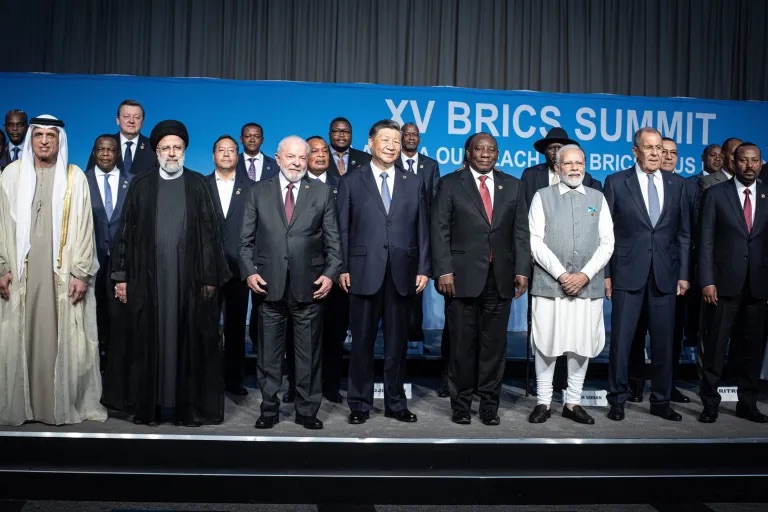
The BRICS bloc has already signaled its intent. Its member nations—Brazil, Russia, India, China, South Africa, and now a widening circle of others—are exploring settlement systems that bypass the U.S. dollar. Without a peg, such systems risk fragmentation. The glue, as history shows, is gold.

• Eastern central banks are buying record tonnage of bullion, not futures contracts.

• Western banks remain tethered to paper claims, increasingly downgraded by Basel III rules.

• Liquidity migration is not a conspiracy but a pattern: when one region’s fiat exhausts credibility, another inherits the burden and backstopped by gold.

As Petrova observes, “This is not about destroying the dollar—it is about keeping fiat alive by shifting its weight onto new pillars.” Those pillars may look multipolar, but their load-bearing material is the same as it has always been.

The Shape of the Next Reset

If history holds, the shift will not be announced openly. It will arrive by necessity disguised as inevitability:

• A commodity crisis forcing nations to accept settlement in a BRICS-linked system.

• A financial shock exposing the fragility of Western futures markets.

• A global liquidity squeeze that can only be relieved by bullion-backed credit.

The pivot could take many forms: gold-linked settlement units, hybrid currency baskets, or digital instruments backed by physical reserves. But the essence will echo 1971: a silent rewriting of the rules, enforced globally, with citizens and smaller nations adjusting afterward.

Closing Reflection

The world has seen this cycle before. Gold is confiscated, concealed, dismissed, and restored again under new terms. Each reset claims permanence, but each is temporary scaffolding for the next.

The question is not whether BRICS will displace the dollar, but whether fiat itself can endure without a metallic skeleton. If the 20th century taught us that wars were the price of financial rearrangement, the 21st may show whether quiet regulation and rebalancing can achieve the same outcome or whether conflict remains the final enforcer of monetary truth.

Photo credit: PER-ANDERS PETTERSSON/GETTY IMAGES

© 2025 Zakariyas James. First shared here at theruminationcompilation.wordpress.com.
America’s Warpath Towards Corporate Control

Do you feel it shifting yet?
It is subtle, but unmistakable. The United States is stepping beyond ordinary economic support, slipping into direct ownership of private enterprise. Owning ten percent of Intel is not a bailout, it’s a strategic maneuver.
The Intel chip foundry, powering every drone, missile system, satellite and cyber-defense operation is now partially tethered to Washington. This is the war economy coming alive again.
Let us walk this through.
(Cue the Battle Hymn of the Republic)

Intel as the New Arsenal

On August 22, 2025, the administration converted federal CHIPS Act grants into a ten-percent equity stake in Intel. The stake carries no voting rights, yet it signals Intel’s further integration into the national defense apparatus; chips are now synonymous with weapons.
While the government claims this move will not interfere with day-to-day operations, history shows that ownership (even without governance) aligns strategic interests with influence.
Consider SkyWater Technology, a U.S.-based semiconductor foundry specializing in radiation-hardened chips for high-altitude craft and satellites. With deep collaborations with the Defense Advanced Research Projects Agency, it stands as the only American-owned pure-play foundry of its kind, making it a likely candidate for future government equity. If Intel is the visible fortress of U.S. semiconductor capacity, SkyWater may be the shadow arsenal woven into defense.
This is not mere industrial policy, it is war economy logistics; the state is embedding itself into the supply chains critical for military readiness.

A Repeating Playbook

In both World Wars, the U.S. government nationalized railroads, seized control of the telephone system and created the Defense Plant Corporation to build and lease munitions factories. These assets were returned or privatized in peacetime and the pattern has been repeated: wartime central planning, privatization in peace. Today, semiconductors are the new artillery; Intel’s stake could be the new assembly line.
Likewise, the Department of Defense’s $400 million investment in MP Materials, the only significant rare-earth mining company in the U.S., mimics wartime strategy: securing magnet supply chains for guidance systems, drones and missiles.

What Industries Are Next?

Semiconductors were just the opening salvo. The war economy model is poised to extend into:
• Rare-earth elements and strategic metals: MP Materials already shows the model.
• Battery minerals such as lithium, graphite, and cobalt: critical for advanced munitions and energy systems.
• Oil and natural gas infrastructure: needed to sustain fleets, aircraft, and command centers.
• Advanced manufacturing for aerospace, hypersonics, and AI systems.

Silver’s Role in Military Tech and Munitions

Silver is indispensable in modern warfare for its superior conductivity and reliability. It features prominently in military electronics from radar and guidance systems to circuit boards.
• Conservative estimates put cruise missiles silver usage at about 15 per missile.
• Defense contractors manufacture silver-zinc batteries for missile families such as Patriot, Tomahawk, Hellfire, THAAD, and JDAM to power guidance, telemetry and control systems.
This demand makes silver a strategic resource and yet supply remains volatile. It is likely to become a target for government safeguarding or supply-chain oversight. If not from a military perspective, the government may involve themselves in the industry solely to manipulate cost of acquiring the metal for all industrial use.

U.S.–Ukraine Minerals Partnership

On April 30, 2025, the United States and Ukraine signed a landmark minerals agreement establishing a United States–Ukraine Reconstruction Investment Fund, equally managed by both governments. Ukraine retains ownership of its subsoil and resources, while 50 percent of new project revenues (across rare earths, lithium, titanium, uranium, graphite, oil, and gas) will flow into the fund. U.S. military aid counts as contributions and there are no debt provisions on past aid.
Ukraine’s parliament has since ratified the deal, envisioned as both a reconstruction and strategic investment vehicle. However, actual economic benefits are projected to take a decade or more due to damaged infrastructure, outdated geological data, and active conflict zones as many resource-rich areas remain under Russian control.

Strategic State War Economics

This is not European-style dirigiste planning in peacetime, it is America preparing its economy for conflict. From railroads and refineries to rare-earth mines, semiconductor fabs, critical minerals and silver-dependent munitions. The pattern is clear: when the United States identifies a threat, it turns not merely to regulation or subsidies but to ownership and control.

Ownership as Armament

America is once again rewiring capitalism for conflict. The Intel stake may feel disconcerting because it is not a standard industrial policy, it is war economy policy.
Will this be temporary, like past wartime interventions, or permanent like the Tennessee Valley Authority? That is the question.

In some respects, these recent developments from our government resembles a form of economic warfare conducted in the open but rarely acknowledged as such. The factories, the mineral rights, the intellectual property, they have all become fields of contest rather than fields of commerce. A document that circulated decades ago, Silent Weapons for Quiet Wars, framed the notion that a population could be subdued not by force of arms but by systems of policy, scarcity and control. Ignoring whether it should be viewed as allegory or leaked strategy, the thesis lingers: today’s corporate stakeholdings and mineral seizures may not be silent weapons in the literal sense but they echo the idea that war has shifted into quieter, more pervasive forms. If the weapon is silent and the war is quiet, how would we recognize we are even at war at all?


For more insight as to how likely it is the U.S. is prepping for a major conflict, see Critical Minerals: The Silent Tell of a War Economy.

© 2025 Zakariyas James. First shared here at theruminationcompilation.wordpress.com.