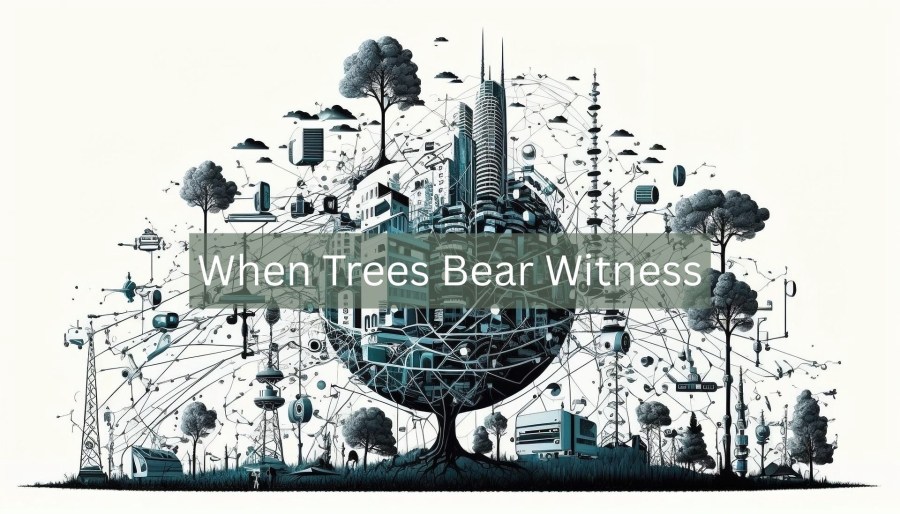
Give it some time, the trees will start listening to you. A device once used only to track growth rates is now the seed of something else, a quiet grafting of the forest into the cloud.
Dendrometers (used to measure the growth of trees and other plants by monitoring changes in diameter) have gotten a recent boost in applicability for more than just forest management teams. Thus far, they’ve allowed forest managers to cut down site visits needed to gather data on tree growth and carbon capture rates, but because of a recent innovation, much more is possible and I want to paint a picture for you.
As per usual, what begins as a gesture to efficiency, a nod to preservation, may warp into something far more insidious.
The company Treemetrics, working alongside the European Space Agency, created sensors that link through wide-area networks and satellites, feeding streams of data into a platform called Forest HQ. If your tree is growing, Forest HQ knows. The forest becomes an extension of the cloud, feeding numbers related to diameter growth, height, location—change of all sorts. So, the forest is no longer a place. It is a feed. The company calls this project the Internet of Trees.
The logic is seductive: better measurement equals better care. Carbon accounting strengthens climate response. Carbon credits for the cap-and-trade markets gain more authenticity. But inside that necessity lies a governance architecture: every tree, instrumented; every growth curve, visible; every beat of the forest, rearranged as data. A swarm of data waiting to be further monetized or weaponized—unfortunately, humans do one or the other. Often both.
I know what I will soon describe may seem altogether far fetched, but it does not take much imagination to see the scope widen in the way I expect given the right amount of time.
The slope is not hard to imagine. Already, forests are wired with listening devices meant to detect chainsaws, trucks and any other prohibited criteria. Artificial intelligence runs on-site, flagging the sounds of illegal logging before they reach the cloud. It is admittedly clever, even noble. But anything involving criminalization soon collapses into categories: nuance is stripped, anomalies are flagged, people are reduced to signals.
We’ve seen this arc before. The Global Positioning System was once sold as a gift for navigation: finding your way home, never getting lost. Now it’s the backbone of precision strikes and geofencing. Closed-circuit television cameras were rolled out for “public safety.” Now they’re stitched together in networks that can track a face across an entire city and can even recognize your gait amongst a crowd. Social media began as a way to connect with friends and now it’s a sprawling apparatus of profiling, targeted persuasion and behavioral nudging.
Each began as benevolent. Each hardened into control.
For a good number of technologies, the arc of applicability tends to bend toward something darker. Monetized until meaningless or weaponized against anyone not in control of the weapon.
What begins as protection of ecology can just as easily become the monitoring of people. A hiker’s footsteps, a group of protestor’s chants; any human activity can be parsed as anomaly, pinged to headquarters. With the right contracts, the forest becomes surveillance infrastructure, camouflaged in green.
What if Forest HQ evolves from tracking growth to performing guard duty? What if the forest ceases to be wild and becomes a grid, mapping bodies as much as making bark?
Conveniently, this year a viral post showcased a new service from XFinity that uses WiFi signals to detect motion in your home, “without relying on sensors or cameras.” The technology has existed for years, but only now is it being pitched as household convenience. Tracking once reserved for homes and offices will soon extend to the wilderness.
You can opt into this service, which routers and WiFi connected objects around you don’t give the option to opt out?
This shift matters not only technologically but culturally. What happens when forests are no longer trusted as wild refuges, but feared as watchtowers? What happens to the human imagination when trees are not symbols of mystery or sanctuary, but extensions of a monitoring state? Jokes about birds not being real will lose their humor. Children will hesitate or outright refuse to climb a tree.
Surveillance always arrives dressed as care. It comes with drones, dashboards and dragnet data streams in the name of stewardship and security. But benevolence, left unexamined, can harden into coercion. The trees will stop watching silently; they start reflecting, transmitting, bearing witness.
And so the question lingers: at what point does monitoring, however noble its pitch, become policing?
Throughout our history, the wild was once where we went to disappear. Now it has the potential to be where we are found most easily.
For more reading on how technological advancement affects our interaction with nature and cultivated products, see The Products of a New Environment.
Are you certain that you’ll reap what you’ve sown?
For the moment, I seek to address those in the southwestern portion of the United States of America & ask those reading from elsewhere to keep an open mind & an open eye. We’re just about halfway into our summer season but we’re nowhere near close to beginning the actual battles that’ll come in respect to water rights & land rights for those in the southwest & eventually the entire nation.
Though one could dive deeper into the legal acumen involving water use, I will not be doing that here. I am admittedly more concerned with the present nature of genetic ownership in regards to gardening & farming – I find the issue to be a bit more murky than Leak Mead is at the moment & I believe predetermined agreements between corporations & legislative bodies will exacerbate any water issue regardless of civilian conservation efforts going forward.
Are you certain the things you’ve grown are things you own?
To illustrate the point of a future scuffle regarding “right to grow”, one must only look to existing laws that provide precedent for such an incident.
“Nonetheless, with the data that can readily be gleaned publicly, our analysis of mapped and referenced patent sequences across the three crop genomes revealed DuPont and its affiliates as the holder of the largest collection of gene patents. It holds more gene patents than Monsanto or the rest of the US industry—including small and medium biotech companies and governmental research institutes and universities—put together (Fig. 1).
Uniquely in the United States, plants and their products can be protected by patents and by other IP mechanisms at the same time. Plant varieties can be protected by a specific plant patent under the Plant Patent Act of 1930 for asexually reproducible plants; by a plant variety protection (PVP) certificate under the Plant Variety Protection Act of 1970 for sexually reproducible plants or tuber-propagated plant varieties; or, since 1985, by utility patents.
Because several types of protection can be granted at the same time—for example, either a plant patent or a PVP certificate with a utility patent—and exclusive rights extend for 20 years, any IP right holder on any of the crops can in principle benefit not only by enforcing their IP rights but also by holding off competition in the market and potentially delaying innovation on certain technologies, especially when the granted rights are under utility patents. Utility patents have a broader scope, including protection on the plant itself, its diverse uses, its progenies and the method used to produce it, and they have an impact on follow-on innovations.”
The commercial aspect of gardening, rife with rebranding & business-to-business marketing schemes like any other discernible industry has notably unique moments wherein legislation concerning biological conservation can be tweaked or outright ignored.
While most Californians by now are aware of the issue of the moderately invasive nature of the Eucalyptus globulus (Tasmanian Blue Gum) & the impact it has on soil erosion & fueling fires, certain corporations that operate in the southwest are tactically circumnavigating subnational & national legislation meant to curb the sale of invasive species & they’re becoming increasingly bold in their endeavors.
In all honesty, I work for a large nursery that supplies plants to a number of states & I thoroughly enjoy my job so I won’t be disclosing business practices I can directly speak to that correlate here. Sorry Too Short, this is the one time I don’t want to blow the whistle. That said, I will do my best to display the matter as a basic schematic so as to allow application to any business that potentially falls under the model to be properly scrutinized in a like manner.
Linked here are the 6 agencies overseeing the invasive species list; if you live in California, look at one of the lists the next time you go shopping at a store that has a garden center. For the past year & change that I’ve worked in the industry, a number of the listed plants have been available for purchase & the number of invasive species being sold on the market is growing.
Through genetically manipulating invasive species, commercial growers are able to market the plants as “new varieties” or “regional friendly” – no determinations, to my knowledge, are required by legislation to assess the nature of hybridized or genetically modified plant varieties in regards to local impact on the environments where these lab-produced plants are introduced & established. As the Non-GMO group put it in their blog post, “nothing in nature exists in a vacuum, and it is unnatural to assume that it would.” So it could be said that these lab-produced edible & non-edible plants on the market are potentially as detrimental as the organisms they are based on, unfortunately only time & focused attention will tell.
At the present time, companies like SDG&E are facilitating programs wherein “qualifying SDG&E customers can receive a $35 rebate for planting or potting a 1- or 5-gallon tree/plant species.”
Specifically, under the “native trees” category, the Black Willow is native to the East Coast of the US, not the Southwest; furthermore, the other two Willow species listed are more commonly found in wetlands as their root systems take so much water that is advised not to plant them near septic tanks or drainage fields. Intriguing choices to say the absolute least, though when you look to the “regionally-friendly” trees & see the number of invasive species, it doesn’t seem to matter much anymore. Either SDG&E is misinformed or they’re willing to let the public stay misinformed about the future cost of those $35 since it’s all for “local biodiversity, improving air quality, and sequestering carbon.”
That “sequestering carbon” bit is how a lot of these GMO trees are being pushed on the market & into the ground lately & why the Lorax is one of my favorite films of all time.
Artificial Trees & Grasslands Please
Mass sapling-planting campaigns are nothing new; most of anyone who could read this is probably aware of at least 1-3 moments wherein a company or country just threw a bunch of saplings in the ground. My mothers homeland just went crazy with the idea last year & planted 350 million of them.
Without a doubt, the only certainty at all, is that the most interesting & equally terrifying campaigns are the ones that involve the interplay between genetically modified trees & the cap-and-trade carbon-credit scheme.
MasterCard, a proponent of the cap-and-trade scheme, has a credit card called Aspiration: Zero Carbon Footprint where they “plant a tree every time you make a purchase—and let you round up to plant one too. Using this card just once a day can plant enough trees that, once grown, will counteract your daily negative carbon footprint (unless you’re a real gas-guzzler). Spend daily with Zero to neutralize your footprint and earn up to 1% cash back. Use your rewards to plant more trees or receive a statement credit.”
Call me crazy whatever way suits you, merely afford me a bit more of your time if you’ve yet to read Part 3 of “The Volumes on Vitality” specifically the section on utility tokens.
The “statement credit” Zero Card is vaguely proposing in lieu of planting more trees is rather reminiscent of the utility token FreeWater quickly mentioned on their own site & digital advertisements, along with carbon credits as a whole. Aspirations’ “join us in our mission to plant 125 Million trees by 2030” remark on their website, coupled with the self-implementation of a carbon-credit schematic makes it clear they are probably aware of one of the contracts I mentioned in the blog post that precedes this one. Good old “market forces”!
Another company, Living Carbon, genetically modifies trees in a way that causes “modified poplar trees [to] store up to 53% more carbon than control trees.” In the interview for the article, the CEO Maddie Hall said, “if we were to double the acreage that we have today up until 2030, we would be able to actually plant enough trees to remove 1.66% of global emissions in 2021.” I can’t wait to see how many companies try to buy these GMO trees, then reason to the government & relevant regulating bodies that the trees in question warrant greater carbon capture credit values than purchases of regular trees.
It’s odd though – there is a respectable amount of science regarding carbon capture practices that point out that grass is more of a reliable carbon sink than trees for two reasons: grass grows faster & grass stores the carbon in the soil unlike trees that store carbon in their wood above soil. The carbon above the soil line is pure fuel in the event of a forest fire & hardly the safer choice considering a sizable portion of the US is in a drought & is expected to remain so for the foreseeable future. All this considered, we have a stark prevalence of tree planting campaigns across the globe & across the market & water restrictions across the Southwest that directly impact civilian grass lawn upkeep. It seems as though not all things are considered equally, I should say.
Due in large part to the unequal use of water from the Colorado River Basin, one can see exactly what it looks like when water is continuously taken from one environment & used/left in another. The canopy alongside the canal that exists now is a testament to what Lake Mead will look like(check out 12:16-17:08) in due time, should the water levels continue to recede at the rate they have as shown in the beginning of the video.
But as a whole, what will our collective future be like in regards to water rights & land rights? I often wonder, did the people who wrote the film adaptation of the Lorax just get oddly lucky in retrospect or were they prematurely portraying a theoretical situation where GMO trees modified to capture increased levels of carbon replace natural trees in a system where carbon credits & debits become commonplace across the globe?
Will we prevail through this unifying struggle or will we communally fail, leaving behind only remnants of our attempts to simply survive, much like the Hohokam people who long ago built the canals that the city of Phoenix, Arizona finds inspiration from today?
I don’t imagine these compounding issues can be swept under the rug – we’re talking about the earth itself, where can we sweep it? There needs to be better application of the best practices available to every region afflicted with constrained access to the basics of life, greater attention paid to the outcome of our efforts & actual transparency between civilian, regulator & market. The cool thing is, the civilian is the foundation of the coupled latter & Dr. Seuss said it well enough, “Unless someone like you cares a whole awful lot, nothing is going to get better. It’s not.”
This is not to say we all need to memorize the list of invasive species & self-impose restrictions; on the contrary, in a world where the morality of consumption is debated & designed by market forces & legislation that can oftentimes be overreaching (hello & goodbye 18th amendment) we, the consumer, must become pickier & demand more of the persons seeking to make off with our hard earned money. We must work to see our own requirements met, soon, before there comes a time, for some maybe August 15th, when the only requirements met are those set outside of our control.
Jefferson, O., Köllhofer, D., Ehrich, T. et al. The ownership question of plant gene and genome intellectual properties. Nat Biotechnol 33, 1138–1143 (2015). https://doi.org/10.1038/nbt.3393
Millison, Andrew. “The Canal That Accidentally Grew a Forest in the Arizona Desert.” Andrew Millison, YouTube, 29 Nov. 2021, https://m.youtube.com/watch?v=jf8usAesJvo.
I was on a walk recently & I began to think of awareness & the lack thereof in the form of a tree.
In my mind, the phrase, “the root of the problem”, poetically asserts that the true issue of any problem is often obscured by internal & external awareness & negligence. To get to the truth of a matter, using this backdrop of forestry, one must dig deep & rummage through sediments & sentiments that lead to the true obstacles – the “root” of our problems.
Yet, are we safe in assuming that we begin our journeys of knowledge near the earth itself-grounded & steadfast in determination to see the truth? Or are we somewhere near the apex of the tree – branched & segmented away from truths that are upholding our existence regardless of our acknowledgement?
Accounting for malicious mechanisms that attempt to distract & dilute truths like paywalls & measured misinformation, can one be certain that they know anything for certain? That they know the root of a thing? Where it came from? Where it leads to?
In this world of marketed extravagance & flashing lights, our conspicuous consumption requires a certain willingness to be blinded by our innate need for immediate gratification & easy answers. To be blinded by the choice between digging deeper or accepting what is on the surface or simply presented as the truth.
This blinding existence, as bright as the sun at times, expresses the duality of the state of truth when imagined as being a part of a tree: the subterranean critters, the excavators of the “roots” of an issue are hardly exposed to the jarring lights of fanaticism & idolatry & would not be naturally sustained in the light of these external truths; contrarily, the branches, the leaves, the fleeting sky dwellers that perch there are accustomed to the enticing quality of the presented half-truths & the lights that shine upon them.
In the simplest of ways, the tree is the living example of the lie. Above the soil, we find the trunk, the beginning of the path towards the truth. Upon the first large branch closest to the ground, protruding smaller branches are the first lie & the multitude of smaller branches & leaves, along with all the fauna thereafter are the individuals that find sustenance from a half-truth or blatant lie.
The second large branch just a bit higher along the trunk is the second lie, the second layer of malicious marketing for good measure. The branches & leaves from this section, in my mind, are the individuals that will inevitably find sustenance in the lower branch but they aren’t all that concerned with finding the truth anyways, they’d rather bask in the blinding lights like the apex of the tree many branches further up, almost unaware of the existence the lower branches have as they are sustained by completely different truths.
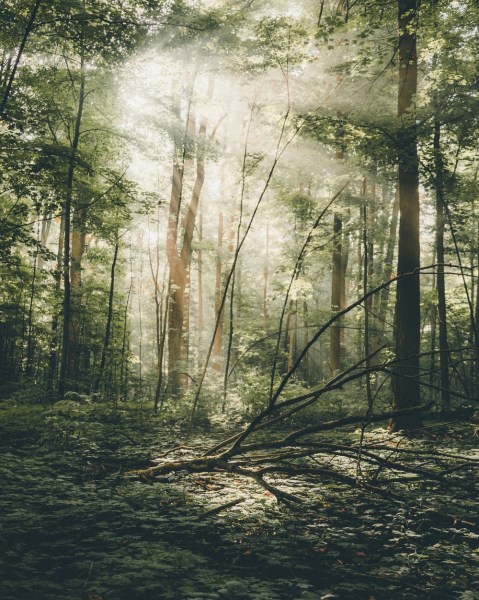
The further down the tree, closer to the trunk, closer to the truth, is the darkest part of the tree, excluding the root system; much like in our collective pursuit for the truth, we encounter periods of depression, sadness, hopelessness & all the various feelings of darkness while those sustained by a falsehood live in a state of blissful, blinding ignorance. The dance & the space between this dark & light is another way of perceiving komorebi (pronounced koh-mo-reh-bi, click for the definition).
What are the root of our problems? What things are distracting us from realizing the truths? Is there an optimal space to inhabit along the tree or is it all more or less the same if one is sustained where they are at?
I think the quote, “The tree of liberty must be refreshed from time to time with the blood of patriots and tyrants” by Thomas Jefferson imparts new understanding from this perspective; some want to hear nothing but the truth, some are in no way concerned with the truth & there’s always someone who’s trying to hide the truth. Nothing is more liberating than the truth & those who fight to obscure truths do not wish you or I to be free, whether it be through mental slavery or physical.
Find your truths, hold onto them & assess from where they came. Dig deeper & get to the root of the problem the next time a salesman, a politician or some regular passerby says that you need what they’re offering; do you really need what they’re selling? Do you think there’s anything they’re not telling you?
Get to the bottom of it before all the trees are gone & all truth is gone or only accessible post-purchase.
For the past year & change, I’ve been attempting to develop multiple Scot Pine saplings for various bonsai projects as a hobby.
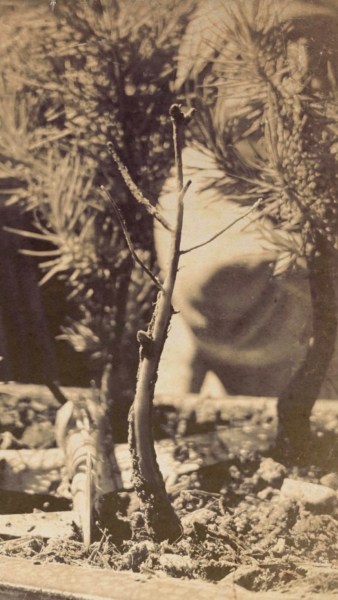
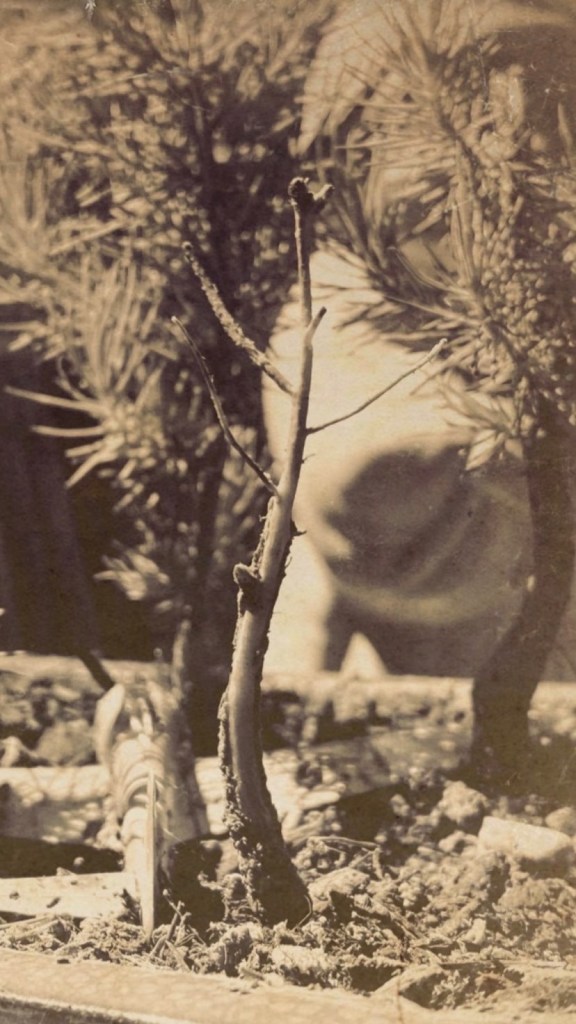
Recently, one of my Scot Pine saplings in a group planting I put together passed away. Rather than remove the lasting image of the error on my part, I’ve opted to remove the bark down to the cambium & appreciate the final step all living things happen upon: death.
Dealing with death is an exhausting matter; cerebral & poetic, discussions of death deal in recollections of past events & postulations of what could’ve been, often intangible.
Maybe it’s a childlike hope that reflecting on a perished pine will help me appreciate the things around me that are still alive & worth caring for. Maybe it’s the appropriate thing to do.
Either way, I’ll leave this somber Scot pine settled in the soil to see a sign of what used to be & what will come to be.

 The Rumination Compilation