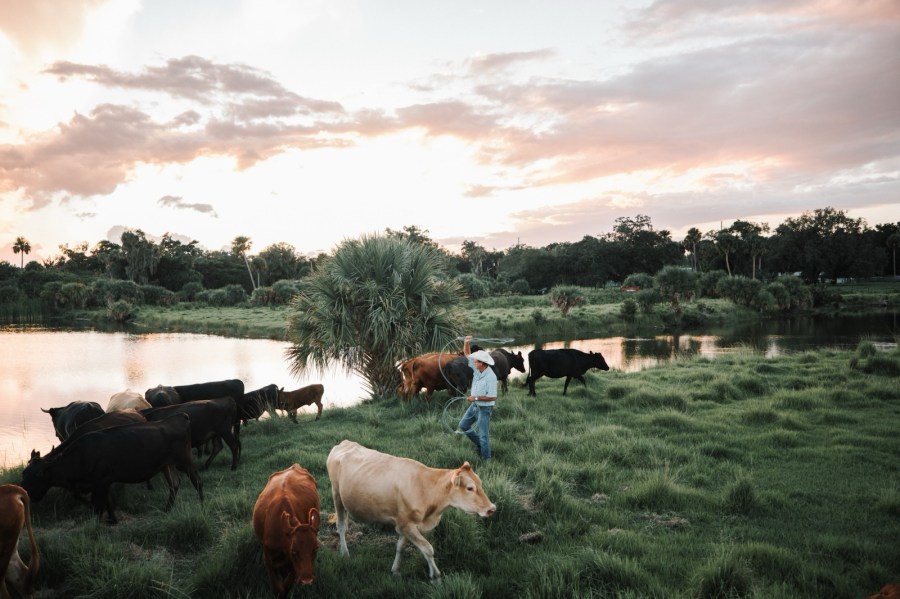
Painted Quarters Cattle Company: Where Soil and Sound Money Meet

I first heard of Painted Quarters Cattle Company through word of mouth. After reviewing their methods, I concluded they produced some of the best beef available. For me, the decision was personal: I wanted my 8-month-old son to eat the best food possible during these critical developmental months. That pursuit brought me to their stand at the Hobe Sound Farmers Market.

I had a rough idea of what cuts I wanted and an even clearer idea of what it would cost after visiting Painted Quarters’ website. I paid for two ½-pound brisket patties with a Utah 1 Goldback and a Florida 1 Goldback. When I mentioned my intention to use Goldbacks, Greg Flewelling, who hadn’t been assisting at the counter, came over with a smile, genuinely pleased to see them in action. 

Our conversation quickly turned to economics: the failing fiat dollar, gold and silver as stores of value, and how Goldbacks create steady transactions on both sides of the counter. Greg mentioned that he travels the world teaching other farms how to implement regenerative practices. In that brief exchange, the scope of Painted Quarters became clear to me: this is more than a cattle company. It’s a model where ecological stewardship and financial resilience intersect; an example of how farming might endure in a future defined by economic and ecological challenges.
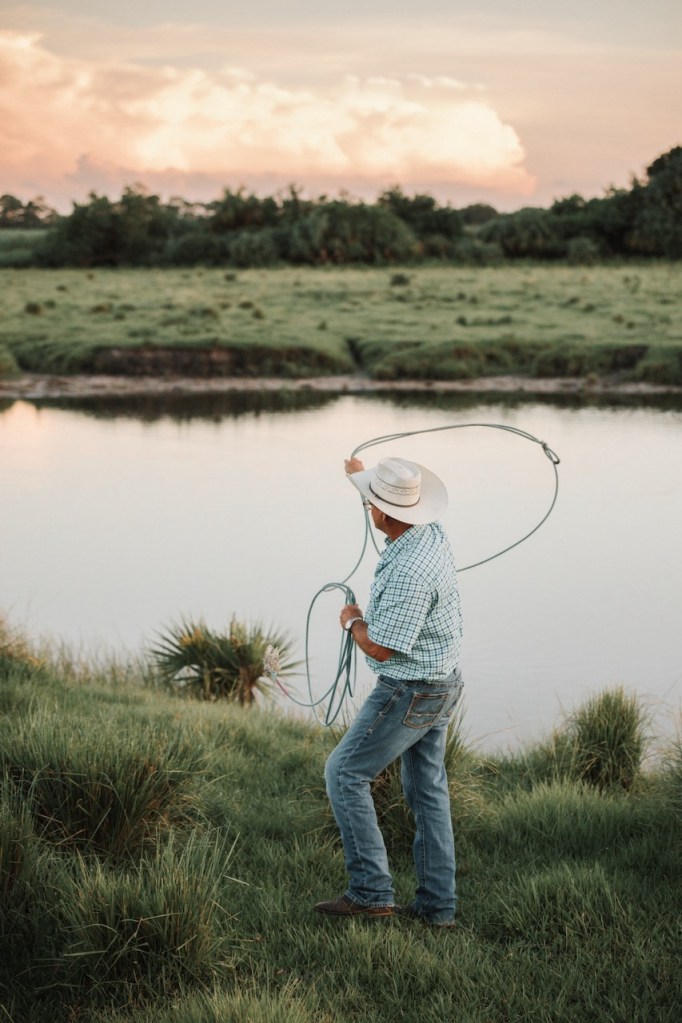
Greg Flewelling, founder of Painted Quarters, takes a hands-on approach to cattle and land management.

Greg’s story begins long before Painted Quarters. Food was always his family’s work; his father and relatives were butchers. As a boy, he spent summers on his uncle’s dairy farm in Canada, situated in a Mennonite community, though his family did not practice the faith themselves. The exposure there shaped his early perspective on resilience, self-sufficiency, and where he first absorbed the rhythms of food production and community. As an adult, he showed horses competitively, even ran a rodeo while raising cattle of his own.
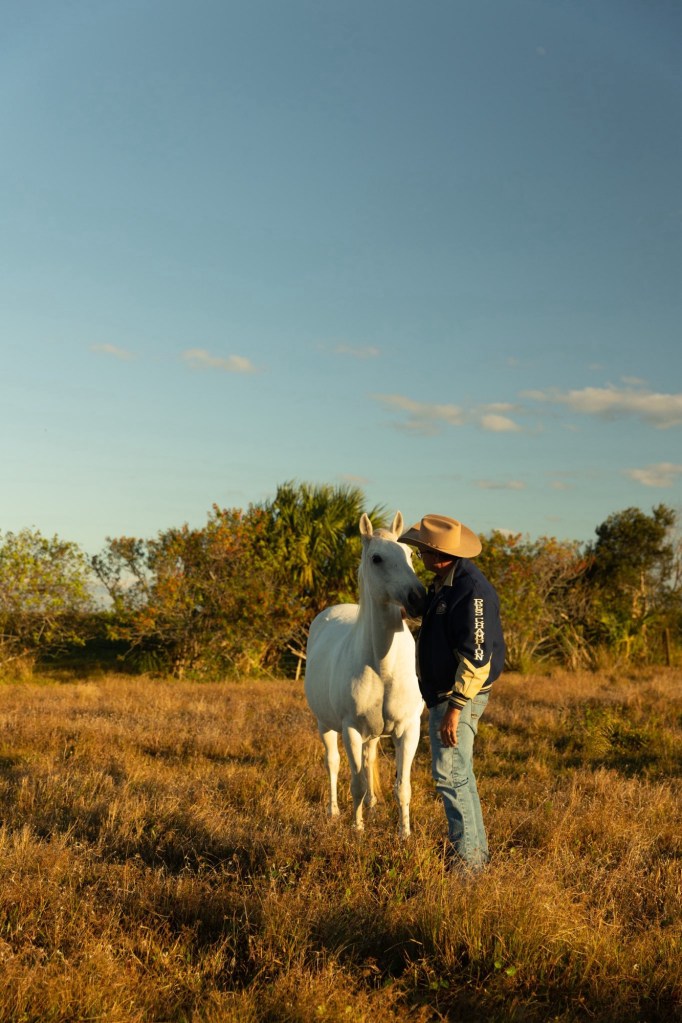
Before Painted Quarters, Flewelling ran a rodeo and showed horses competitively, a foundation for the discipline he later brought to cattle.

The crash of 2008 became his pivot point; amidst a downturn in demand for horses, he sold his rodeo and shifted his focus back to vegetables and cattle. Greg began traveling abroad to teach regenerative methods, which he’s done in six countries so far. Back home, he took every chance to tour American feedlots. Those two tracks, mentoring and researching, eventually converged into a single realization: the food system in America was structured for profit, not health, and its effects were showing up in children.

Today, Painted Quarters operates on principles that take longer but restore balance and trust. It can take him five to six years to raise an animal, compared with the 18 to 24 months common in industrial agriculture. That difference exists because Greg refuses the shortcuts: steroid shots, antibiotics on arrival, and feed laced with more of the same, the commercial production standard. Unlike large-scale operations where cattle stand shoulder to shoulder on concrete, fed for maximum weight while machines scrape away their daily excrement, Greg ensures his animals touch grass and walk on natural earth. He respects each animal, herding them thoughtfully and letting them move freely. That philosophy also informs how he approaches the economics of farming. The pricing of farm goods is another reason commercial operations prioritize weight over quality: futures contracts and derivative mechanisms allow industry and organizations to skew the system. The market pays for heavier cattle, not healthier ones. Greg, however, can sell his cattle slightly above these futures prices at live auctions because the value is tangible. Real animals, raised well. Not just numbers on a contract. That tangibility is also why he favors Goldbacks over fiat, currency that carries real, discernible worth, not faith. For him, being a farmer is not about the straw hat stereotype but about proving there’s another way to do the work while remaining profitable. He mentors young farmers, emphasizing that agriculture doesn’t need to serve corporate profit alone but can be reoriented toward community profit.
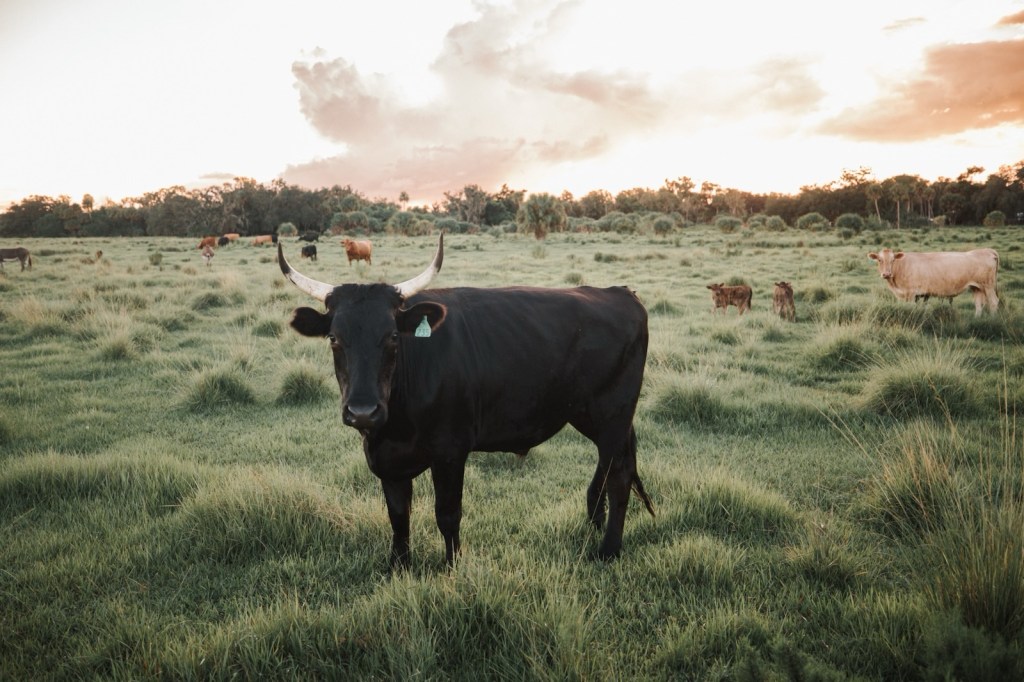

One of Painted Quarters’ bulls grazing on Florida grassland, raised without shortcuts.

The fight hasn’t been easy. When hurricanes wiped out his greenhouses, Greg received no help from the USDA, while corporations like Del Monte were bailed out, all because of red tape that always seems to favor the big guys. He has seen firsthand how agricultural policy serves consolidation, not small independence. “Get big or go broke,” as farmers say, and inheritance taxes make sure family land doesn’t last beyond a few generations. Greg told me a family farm these days is lucky to survive past 3 generations. 

Along the way, sound money became more than an experiment for Greg; it became a necessity. “I have no confidence in fiat,” he told me, noting that the dollar has already lost 11 percent of its value this year. For him, Goldbacks and constitutional silver represent not just alternative currency but survival tools. Gold is already priced out of reach for most, leaving silver and fractional notes like Goldbacks as practical options. “They control the population by controlling the food, they control the food by controlling the money,” he said. He appreciates that Florida has legalized gold and silver transactions, but he also knows people need to relearn the art of barter. We shared anecdotes about the first time we held silver and gold coinage, agreeing it’s easier to hand over paper currency than hand over an ounce of real value. The phrase “weighing your options” has a deeper meaning when you feel the weight of a Troy ounce and remember the work it took to earn it. 

For Greg, financial resilience and ecological resilience are inseparable. “Hand in hand,” he told me. A farmer who learns to cut out the middlemen, go vertical, and keep that wealth within the community is as regenerative as soil that retains its fertility. Both systems—soil and currency—are depleted by extraction and strengthened by care. 
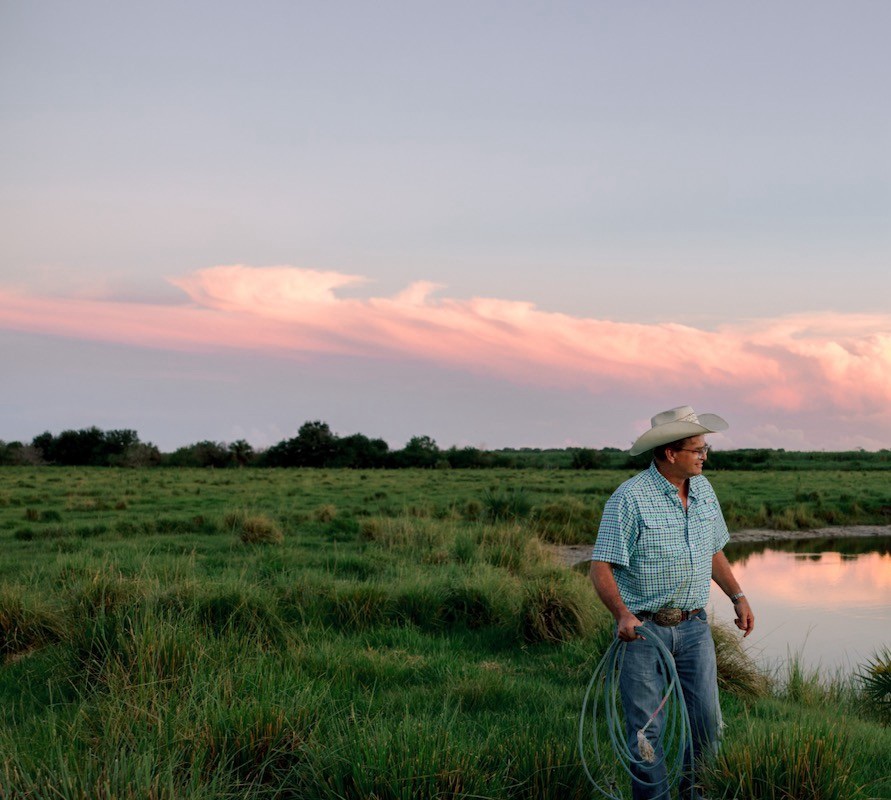
Flewelling sees resilience in both soil and currency, an outlook shaped by decades of farming.

Looking forward, his outlook is both sobering and hopeful. He sees large corn farms already collapsing, with massive auctions happening. He recounted the news about Walmart and Sam’s Club expanding further into cattle production, swallowing even more of the market that could have gone to independents. Regulations will continue to strangle small operators while leaving corporate giants untouched. At the same time, he is encouraged by young farmers willing to adapt and build resilience. He mentors two a year, and says, “if I can make 20 copies of myself, I’ll consider all my work worth it.” To farmers at large, his advice is simple: form groups, co-ops, and online networks to create a stronger voice, one resilient against government efforts that hinder choice and freedom. Spend physical money amongst yourselves and your wealth will never end up in the accounts of corporations you inevitably compete with. He sees urban farming rising in the next five to ten years, while food from corporate channels becomes increasingly artificial, “food out of tubes” as he put it.

Painted Quarters is not just Greg’s business. It’s his counter-argument to the way food and money have been handled for decades. It is proof that agriculture can serve people and land together, without cutting corners or bowing to corporate dictates. If agriculture is to survive the twin crises of ecological degradation and economic instability, it won’t be through business-as-usual models propped up by fragile fiat systems. Painted Quarters Cattle Company shows us what a different path can look like: regeneration of the land paired with the resilience of sound money. Supporting farms like this, and building parallel economies of barter, silver, and Goldbacks, isn’t just preference, it’s preservation. It may well be the foundation of food security and sovereignty in the decades ahead. 

© 2025 Zakariyas James. First shared here at theruminationcompilation.wordpress.com.
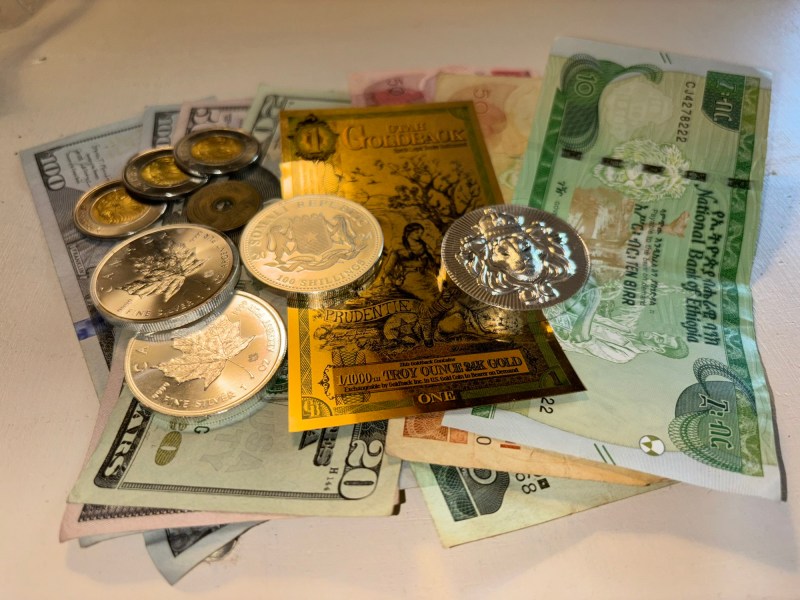
When Ledgers Rewrite Culture: The Social Side of Sound Money

The technocrats will eventually tell you Basel III was a technical fix. The pundits will call BRICS a geopolitical contest. Both are true in their limited ways but us real people do not live inside policy memos or summit communiqués and will have our own perspective. We live in the real world of habit, rituals and desire. As the scaffolding of global finance is quietly remodeled (physical bullion regaining status and liquidity rerouting to the Global South) the most consequential shifts will be cultural, not merely fiscal.

This is the story no headline quite tells: how an accounting reclassification becomes a tiered, shared experience.

The West: From Immaterial Credit to Material Anxiety

In economies that grew comfortable with digital balances and endless credit aka “easy money”, the cultural shift will feel different, it will be slower and then sudden. Crack-up boom. Daily life is calibrated to cheap, frictionless money: mortgages, subscription living, bulk pricing. When policy nudges value back toward the tangible, the result will be a new kind of cognitive dissonance.

Expect changes in language first, personally, interpersonally and then communally/politically. Conversations will shift from “How much can I borrow?” to “What is real?”

Nostalgia will warp itself into politics. Calls for protectionism, reclaiming physical assets, other varying populist sentiments will resonate with people who discover a mismatch between their actual costs and their imagined abundance.

Mutual Aid and Parallel Economies: Gardens and Barter

When trust in fiat frays, communities adapt. We’ve seen it in Argentina, Zimbabwe and during wartime rationing but the west will have variation:

• Community gardens reappear as survival infrastructure, where calories mean more than currency. As fiat fails, big chain grocer prices will madden the masses and local growers will become pseudo-heroes.

• Barter centers allow exchange without the reach of taxation or failing banks. I expect this to be a mainstay of the West post-wealth transfer as citizens will lose respect and trust in the institutions they blindly followed. “Why give them taxes when they got us into this mess?”

• Local scrip or informal IOUs return as a temporary patch for frayed systems. This is already happening in terms of the Goldback movement in 7 states of the U.S., with two more announced but not yet active at the time of writing. In the U.K., the Bristol Pound (backed by sterling) is the closest example as it is a functioning local currency but lacks association to precious metals.

What begins as improvisation can calcify into an alternative, parallel economy. Trust, not credit, becomes the currency. Skills, not stocks, will pay the dividends. Trickle-down economics will be exemplified by the kind ones in the community, not the corporations.

Rituals, Class and the Story of Ownership

Ownership is never neutral: it’s class-status and identity. The form of possession matters as much as the fact of it.

In BRICS-aligned nations, gold is held whole. A coin is a coin, a bar is a bar. Jewelry is worn not just for ornament but for sovereignty. Wholeness is permanence: the signal that your wealth cannot be deleted by a keystroke or dissolved in a bankruptcy court.

In the West, scarcity will force a different adaptation: tokenization. Instead of outright ownership, assets will be broken into fractions and sold back as digital claims. Families will cling to ledger entries representing “one-tenth of a coin” or “a fraction of a house.” Cities and corporations will tokenize infrastructure just to stay liquid, slicing the material world into abstract coupons.

This isn’t innovation though, it’s desperation disguised as fintech. Tokenization is a coping mechanism for a civilization that can no longer afford wholeness, that can’t afford endless growth. It lets people pretend to own what they cannot hold.

The divide will cut deeper than economics. To the bullion-rich nations, the West will look like addicts trading scraps of paper to simulate the real thing. To Western citizens, the sight of others wearing or storing full reserves will feel like betrayal: their leaders sold them futures, while others secured permanence.

The new class line will be brutal and obvious: whole vs. fractioned, real vs. synthetic, permanent vs. provisional. One side will pass their wealth on intact. The other will spend their lives juggling slices.

This approach isn’t unique to the U.S. though; across the West, similar experiments have emerged. In 2018, the U.K.’s Royal Mint launched a gold-backed cryptocurrency: The Blockchain-based coin, called Royal Mint Gold (RMG), is a digital representation of gold stored in The Royal Mint vault. One RMG coin may be equal to one gram of gold but in a world of hard assets, I’m not sure how attractive this digital placeholder will be over the real deal. But you know, this might be the best the West might have to offer.

Theology, Disillusionment and the Question of Faith

Religion bends around money’s shape. In the West, Christian sermons may reach for familiar motifs: Judas’s thirty pieces of silver, the dangers of idolatry, the fleeting nature of wealth. But overuse risks cliché and invites criticism of hypocrisy. Different branches of Christianity may fracture in their responses:

Catholicism could lean into what’s lasting ie liturgy and sacrament as the “true store of value” against a collapsing fiat world. Evangelical Protestantism may frame gold resurgence as a divine order reasserting itself: God’s money returning into life after man’s failed experiment with paper. Prosperity gospel will struggle the most, almost collapsing entirely, as its glitzy promises seem outlandish in a world where even the faithful cannot finance new SUVs on credit.

The collapse of fiat’s aura may also push in two opposite directions across the board:

• Renewed Faith: A turn back toward God, with bullion framed as a sign of “end-times upon us”. The sentiment might find greater hold in non-denominational settings, though I imagine it’ll be common to the point of standardization.

• Rising Atheism: A wave of disillusionment, rejecting not only money but the institutions and faiths that blessed the old order and inevitably request tithes in the form of precious metals.

Theology will not be a bystander; it will be a contested arena for interpreting what gold’s return “means.” I fully expect the sermons post-wealth transfer to be extremely centered around Proverbs 3:13-14, along with stern reminders that the coveting of money is the root of all evil.

Secrecy Replaces Display: the Death of Flex Culture

Today’s culture of flaunting lifestyles, enabled by credit, will become dangerous in a metals-driven economy. Buy now, pay later schemes have almost entirely ensnared millennials and Gen-Z. But in a metals-driven economy, this visibility becomes dangerous.

• Those who stacked metals early will avoid attention, adopting aloofness and secrecy. This is already a norm, as it is for the general prepper, though the lengths these people will take to ensure privacy and security will impress just about anyone.

• Those who struggle amidst the post-wealth transfer will conceal their “bad luck” by retreating from the shame of scarcity both online and in real life.

• The algorithmic culture of flaunt-and-scroll will erode, replaced by discretion and silence.

Social media will have its reckoning in the post-wealth transfer world. Without a doubt, the failure of fiat will dismantle decades of “flexing” and the result will be admittedly cathartic for those who used to subscribe to content creators of all sorts, as the seemingly synchronized decline in quality of leisure is observed, the subscribers will realize it’s not just them, it’s just normal.

Everyday Behavior: Thrifting , Working and Timing

Culture is habit, and habits follow incentives. As money rewires, so too does the cadence of daily life.

• Work: jobs built on speculation, abstract consulting and branding will thin out. The booming will be in agriculture, repair trades, personal security, medical basics and food logistics. The gig worker who once delivered takeout may now be fixing farm equipment. The “creative consultant” and “affiliate marketer” will look more like a hustler without a market.

• Consumption: novelty becomes a liability. The fast-fashion buyer becomes the thrift-shop regular. The broken appliance gets repaired, not replaced. Mending, patching and improvising will become core skills, especially among the young who never learned them.

• Time Horizons: in unstable regions, people will hesitate to sign a 12-month lease or take out student loans for degrees tied to paper economies. Short-term survival dominates. But where gold and silver are treated as security, the opposite emerges: multi-decade infrastructure projects, new family compounds, community institutions.

The cultural split will be sharp. In one town, neighbors trade tools, seeds, weekend labor. In another, boarded-up shops and “for sale” signs multiply. The wealth transfer will redraw which places feel livable, which don’t and it’ll happen far faster than governments can manage.

Media, Narrative, and the New Moral Economies

How people interpret this shift will depend on who controls the story.

• State media in bullion-rich nations will frame accumulation as sovereignty and “what we deserve”. Depending on the nation, newscasters may invariably parrot state-sponsored rhetoric related to the “defeat of the West” and support re-election for many leaders within the Global South.

• Western outlets may cast it as loss, betrayal and “temporary”. On the other hand, I imagine investigative journalism may rise as the citizens of the West hunger for truth, valuable information and explanations of how the shift happened when decades went by of leaders and institutions saying it wouldn’t.

• Social platforms will fracture the narrative into memes; without a doubt humor will veer further into dark comedy, especially as the humor of Gen-Z prevails online as they are the growing bulk of the most active user base. Humor heals to a degree and humor will find a way to soften the financial blow.

Stories will shape behavior and politics, not spreadsheets and quarterly updates. The way media summarizes the drop in sales, the rise in unemployment, how things are the “new normal” will be at odds with how the common people view things.

Migration, Mobility and the Geography of Belief

Money moves people as much as goods. As liquidity tilts eastward, migration will not only follow jobs but a deeper quest for security.

For Western immigrants who left the Global South, the arc may reverse. A banker’s son who once left Lagos for London may find himself heading back. Skills, connections, and a sense of Western fragility will travel with him. A daughter who studied in Boston may bring her expertise home. Accreditation knowledge leaves one region and finds roots in another.

Western nations losing both talent and capital gained through immigration may find themselves hollowed out. Skilled professionals will no longer see New York or Paris as the obvious endgame. Families will weigh where their real, tangible savings feel safest.

Diasporas will change their tunes and ties. They won’t just wire money home; they will re-anchor their futures there. This will be a cultural migration as much as a physical one. My own mother, like millions of others, came here to the U.S. on the promise of stability, safety, and opportunity. In a post-wealth transfer world, that promise may not hold. The dream of “making it in the West” could erode, replaced by a dream of returning to one’s motherland or fatherland and not as escape, but as reclamation.

Closing Reflection

The mechanics of money are written in ledgers; the consequences are written in kitchens, altars and the streets. Basel III’s technical recalibration and BRICS’ geopolitical choreography are the inorganic architecture. The organic architecture will be cultural: how we talk about value, how we teach children to save, whom we trust which rituals we carry forward, how we consume, how we view leisure.

If you want to understand the future, don’t look at trading floors, prospectus statements or anything of the sort. Listen to the markets filled with people like you and people nothing like you: what songs are being sung at weddings, what words children learn about wealth, how neighbors share food in hard seasons, how people talk about their government. Those small things are the real indicators of where an economy has landed in the human heart and how people conceptualize worth.

When ledgers rewrite culture, ‘sound money’ becomes less about accounting conventions and more about the sounds in the marketplace, the voices in prayer halls, the silence at the dinner table.


This write-up is a cultural assessment of the banking changes coming into play that I’ve outlined in Basel III and the Return of Gold: A Comparative History.

© 2025 Zakariyas James. First shared here at theruminationcompilation.wordpress.com.