Analyzing the City of San Diego Climate Action Plan

A friend of mine sent me a DM over the weekend, an Instagram post about bikes.
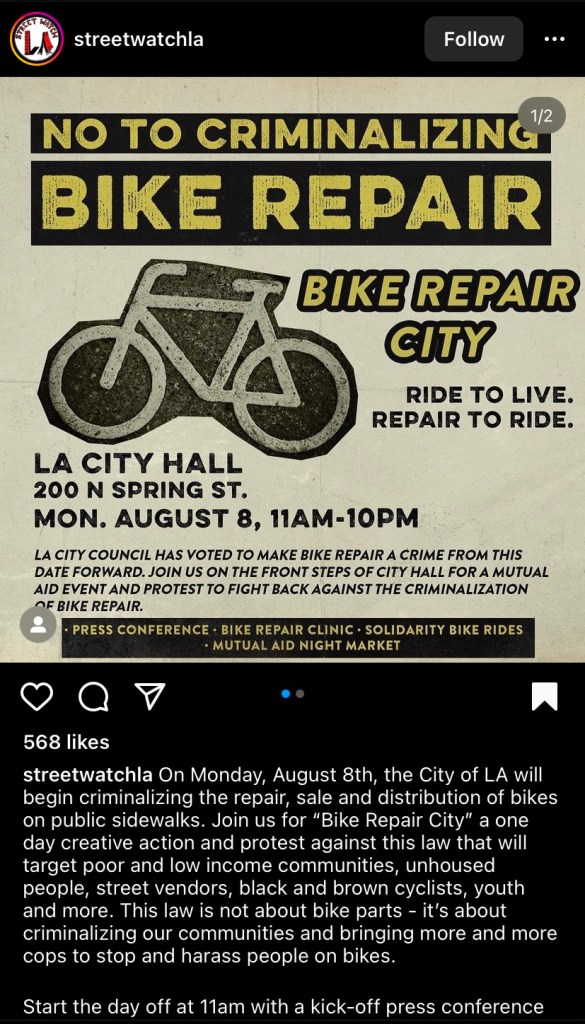
The City of Los Angeles on August 8th will regard the public repair, sale & distribution of bicycles as “chop shops”, legally defined as: three or more bicycles;— a bicycle frame with the gear cables or brake cables cut;— two or more bicycles with missing parts;— five or more bicycle parts.

On the surface & even from a distance this new ordinance seems fickle, overreaching, unnecessary or long overdue – the opinions vary as greatly as the personalities & cultures of California itself.

Unbeknownst to most, this new ordinance is a sign of the times to come. An indication of the veracity with which the governing bodies & authorities are willing to display in their endeavor to see predetermined plans finally implemented across the populous.

Just this past week, the neighboring City of San Diego enacted their own legislative frameworks regarding bikes too! Mayor Todd Gloria, members of SANDAG & affiliated organizations presented the 2022 edition of the Climate Action Plan, even though only weeks prior, what was reported to be over 4,000 citizens expressed discontent & preferences requesting the withdrawal of the plan altogether.

Without a doubt, a majority of the citizenry’s dissatisfaction with the proposed Climate Action Plan stems from public awareness of the plan’s origins itself; the goals of conscious stewardship & leveraging local abilities are not foreign to the citizenry of San Diego but the citizenry do not wish to yield agency & authority to international conglomerates & contractual agreements they are hardly party to. For clarification, as stated on pages 32 & 33 of the updated 2022 draft, “[t]he ICLEI Community-wide Protocol methodology was utilized for determining the City’s science-based fair share CAP goal for this program which is described in more detail in Appendix C.”

For those that have already read my post, “Environments & Requirements”, you may skip this video from a 2009 city council meeting in San Carlos, CA showing council members ignoring the words of the citizenry & implementing an ICLEI-derived plan. For those now coming across this site, I’d recommend watching & comparing the disregard of the San Carlos council members to the disregard of our politicians today as far climate legislation is concerned.

The folks seen in 2009 & the folks seen last week are of like mind: they simply wish to oversee their lands themselves; they uniformly wish to see the lands & its resources benefit the locals to the greatest degree. The politicians seen in 2009 & today are the same: they wish to see their plans fulfilled, no matter the cost as increased taxes will foot the bill.

Proposed taxes & suggested economic frameworks of San Diego’s 2022 version of CAP range from gallon per capita water limits, an increase in funding for tree rebate programs I covered a bit in “The Products of a New Environment” & transportation ordinances that all relate to a 2050 plan the City of San Diego has been pushing since at least 2010 involving…you guessed it: bikes. If you look to page 56 of the 2022 CAP, under Strategy 3: Mobility and Land Use, you see the City’s obsession with bikes & disdain for internal combustion engine vehicles at once:

“Shifting away from a car-centric transportation system starts with a loading priority for our roadways, prioritizing and protecting the most vulnerable modes such as walking and biking, and enhancing public transit for improved efficiency and performance. The loading priority concludes with shared, commercial, and personal electric vehicles, underscoring a commitment to the full transition of all vehicles from combustion engines and fossil fuels. The City will reduce vehicle miles traveled (VMT) for trips through transportation infrastructure and technology improvements, transportation demand management (TDM) programs, and land use changes.”

It should be noted that this 2022 plan is simply a foundation for the 2050 plan titled “Riding to 2050: The San Diego Regional Bicycle Plan” but there are a number of proposed actions relating to Greenhouse Gas (GHG) emissions & other climate issues that will be enacted along the way as 2035 is a mid-point target year from now to 2050. Among the myriad of proposals to curb GHG emissions, one of marked interest is found in the 2022 edition of the CAP on page 69:

1) Reduce GHG emissions and water use of total beef, pork, chicken, turkey and dairy purchases by 20%.
2) Increase local, healthy, and sustainable foods to 20% of total food purchases prioritizing locally sourced, valued workforce and animal welfare.

Interestingly enough, in the entire CAP document, only one page is devoted to “Measure 5.3: Local Water Supply” & simply discusses the aforementioned gallon per capita limit; in one week the Federal government is going to impose water restrictions on 40 million people due to the state of the Colorado River basin, yet the City of San Diego has apparently nothing to say on the matter.

At the moment, the City of San Diego is primarily focused on regulator technology & economic frameworks that will advance the 2050 plan. In all fairness, San Diego has been this way since it entertained ICLEI & other entities; in the 2010 version of “Riding to 2050: The San Diego Regional Bicycle Plan”, published while Jerry Sanders was Mayor, on page 49, “encouragement programs” are proposed as an economic method of enticing, to some perspectives coercing, citizens & businesses into participating in these programs where ride-sharing & biking are the preferred forms of transportation.

An excerpt on these programs:

Encouragement programs are generally characterized by their focus on encouraging people to bicycle more frequently, particularly for transportation. Encouragement programs increase the propensity for bicycle trips by providing incentives, recognition, or services that make bicycling a more convenient transportation mode. The following encouragement programs are recommended for implementation in the region and described in more detail in the remainder of the section:
⁃ Bike Sharing Program
⁃ Pilot Smart Trips Program
⁃ Employer Incentive Programs
⁃ Bicycle Friendly Community Designation
⁃ San Diego Region Bike Map
⁃ Identification and Way-finding Signage
⁃ University-base Bike Orientation

In the version published in 2011, the concept of ride-share programs is expanded & marginally defined a bite more with examples like the Guaranteed Ride Home Program (which I had no clue existed until today) & iCommute, a vanpool program with a subsidy of $400 per month per vanpool. By 2015, under the direction of then Mayor Kevin L. Faulconer, the ride-share programs expanded into a contract with DecoBike but ended in 2019 after the City of San Diego claimed a breach of contract occurred on the companies end – though this is disputed by DecoBike.

In terms of high occupancy transportation, all versions of the climate plans advocate for electric vehicle fleets; the most common form is tied to K-12 & collegiate school bus programs. This past July, a San Diego based company, Nuvve Holding Corp., announced a joint venture with San Diego Gas & Electric where eight electric school buses in the Cajon Valley Union School District will connect to the grid & serve as a pilot program for the next five years, not only for state-wide school transportation use but also for the federal Build Back Better plan as Nuvve Holding Corp. announced a Memorandum of Understanding with the US Department of Energy some time ago regarding V2G & V2X technology.

An often overlooked aspect of the V2X technology that appeals to governing bodies is the “connected vehicle” nexus & data mining capabilities thereof. In these evolving iterations of climate plans related to the years 2025, 2030 & 2050, digital details are a prerequisite of all vehicles that will be on the road for a consortium of reasons that summarily present as regulatory technology. In early plans, connected vehicles simply refers to vehicles capable of emitting wireless data vehicle-to-vehicle & vehicle-to-infrastructure so as to aid in the flow of traffic; as we’ve seen with newer plans & in European counterparts, intelligent speed limits, excessive tracking & the aforementioned prioritization of biking civilians are the culmination of these mandated advances in vehicle technology.

I have yet to address the cost of all these mandated applications of higher-end vehicle-to-everything technologies; I’ve considered making a whole post on the expected costs incurred for civilians in the wake of these subnational & national mandates stemming from international contractual agreements but I’ll simply point out that the average all-electric bus costs $400,000 & in the Inflation Reduction Act of 2022, eligible “clean” vans, SUVs & pickup trucks qualify for a rebate of $80,000 upon purchase & other vehicles for $55,000. I really can’t imagine how much these all vehicles will cost in total but if the rebates are already close to some people’s yearly income, I can imagine most will not be buying these vehicles, unless on an already strained credit line.

So, I guess we’ll all bike to work, right?

But what if your bike breaks down & you live in a city like Los Angeles where you can’t rely on your local handy-folk to lend a helping hand anymore because of a city ordinance? Guess you’ll pull out your card anyways & pay for a ride on an EV bus, rent a ride-share bike or pay for a ride on the rail transit system.

From what I can gather, the Guaranteed Ride Home Program only covers three rides per year; seems like baseball, three strikes & we’re left outside.

Amazingly, the word “homeless” shows up only one time in the entire 2022 San Diego Climate Action Plan, whereas the word “bike” shows up 49 times. I wonder, if one is left outside, what is the plan, what are the options & allowances afforded by a City that can’t even type the word “homeless” more than once in a 238 page document?

Thanks for reading.


San Diego’s approach can be better understood in the context of global economic pressures outlined in Market Forces: Foreign Factors and Domestic Actors.


Works Cited:

Photo by Susanne Jutzeler, suju-foto from Pexels

Chou, E., 2022. Los Angeles City Council votes to ban bike repair entrepreneurs on public sidewalks – Daily News. [online] Dailynews.com. Available at: <https://www.dailynews.com/2022/06/21/los-angeles-city-council-votes-to-ban-bike-repair-entrepreneurs-on-public-sidewalks/&gt; [Accessed 7 August 2022].

Sandiego.gov. 2022. City of San Diego Climate Action Plan. [online] Available at: <https://www.sandiego.gov/sites/default/files/san_diegos_2022_climate_action_plan_0.pdf&gt; [Accessed 8 August 2022].

Sandag.org. 2010. Riding to 2050: The San Diego Regional Bicycle Plan. [online] Available at: <https://www.sandag.org/uploads/publicationid/publicationid_1674_14591.pdf&gt; [Accessed 8 August 2022].

(In case that link doesn’t work, try: https://www.sandiego.gov/sites/default/files/san_diegos_2022_climate_action_plan_0.pdf )

Sandag.org. 2011. 2050 Regional Transportation Plan. [online] Available at: <https://www.sandag.org/uploads/2050RTP/F2050rtp_all.pdf&gt; [Accessed 8 August 2022].

(In case that link doesn’t work, try: https://www.sdforward.com/pdfs/Final_PDFs/AppendixU16.pdf )

Sdgenews.com. 2022. SDG&E and Cajon Valley Union School District Flip the Switch on Region’s First Vehicle-to-Grid Project Featuring Local Electric School Buses Capable of Sending Power to the Grid | SDGE | San Diego Gas & Electric – News Center. [online] Available at: <https://www.sdgenews.com/article/sdge-and-cajon-valley-union-school-district-flip-switch-regions-first-vehicle-grid-project&gt; [Accessed 8 August 2022].

Documentcloud.org. 2022. Inflation Reduction Act of 2022. [online] Available at: <https://www.documentcloud.org/documents/22122281-inflation_reduction_act_of_2022&gt; [Accessed 8 August 2022].

© 2022 Zakariyas James. First shared here at theruminationcompilation.wordpress.com.

The Products of a New Environment

Are you certain that you’ll reap what you’ve sown?

For the moment, I seek to address those in the southwestern portion of the United States of America & ask those reading from elsewhere to keep an open mind & an open eye. We’re just about halfway into our summer season but we’re nowhere near close to beginning the actual battles that’ll come in respect to water rights & land rights for those in the southwest & eventually the entire nation.

As most are aware, more than a few bodies of water & rivers they connect to are depleting at exigent rates like Lake Powell, Lake Mead & the Colorado River Basin. To note, the “U.S. Bureau of Reclamation officials gave all seven states until August 15 to create a plan to save between 2 million and 4 million acre-feet of water. If they fail, the federal government will take control and impose its own cuts as water use exceeds supply and an ongoing megadrought continues to sap water from the Colorado River.” To clarify, the seven states in question are Arizona, California, Colorado, Nevada, New Mexico, Utah & Wyoming – by August 15th, nearly 40 million people will be subject to regulations & contractual agreements they’ll probably be hearing about for the first time.

Though one could dive deeper into the legal acumen involving water use, I will not be doing that here. I am admittedly more concerned with the present nature of genetic ownership in regards to gardening & farming – I find the issue to be a bit more murky than Leak Mead is at the moment & I believe predetermined agreements between corporations & legislative bodies will exacerbate any water issue regardless of civilian conservation efforts going forward.

Are you certain the things you’ve grown are things you own?

To illustrate the point of a future scuffle regarding “right to grow”, one must only look to existing laws that provide precedent for such an incident.

In a Nature Biotechnology paper from 2015, four authors found that,

“Nonetheless, with the data that can readily be gleaned publicly, our analysis of mapped and referenced patent sequences across the three crop genomes revealed DuPont and its affiliates as the holder of the largest collection of gene patents. It holds more gene patents than Monsanto or the rest of the US industry—including small and medium biotech companies and governmental research institutes and universities—put together (Fig. 1).
Uniquely in the United States, plants and their products can be protected by patents and by other IP mechanisms at the same time. Plant varieties can be protected by a specific plant patent under the Plant Patent Act of 1930 for asexually reproducible plants; by a plant variety protection (PVP) certificate under the Plant Variety Protection Act of 1970 for sexually reproducible plants or tuber-propagated plant varieties; or, since 1985, by utility patents.
Because several types of protection can be granted at the same time—for example, either a plant patent or a PVP certificate with a utility patent—and exclusive rights extend for 20 years, any IP right holder on any of the crops can in principle benefit not only by enforcing their IP rights but also by holding off competition in the market and potentially delaying innovation on certain technologies, especially when the granted rights are under utility patents. Utility patents have a broader scope, including protection on the plant itself, its diverse uses, its progenies and the method used to produce it, and they have an impact on follow-on innovations.”

In summation, bioengineered materials are property, in some way, of corporations that produced them. This fact itself is what lies at the core of most debates around commercial agriculture practices & genetically modified organism (GMOs) as “the biotech industry argues that genetic engineering can be used to create “nature-identical,” non-GMO products. This false claim supports the development of new GMOs in the food supply while side-stepping the current definition of bioengineering and avoiding BE disclosure. Without transparent and reliable GMO labeling, Americans are kept in the dark about what goes into their food” & who really owns it.

The Invasion of the Garden Snatchers

The commercial aspect of gardening, rife with rebranding & business-to-business marketing schemes like any other discernible industry has notably unique moments wherein legislation concerning biological conservation can be tweaked or outright ignored.

While most Californians by now are aware of the issue of the moderately invasive nature of the Eucalyptus globulus (Tasmanian Blue Gum) & the impact it has on soil erosion & fueling fires, certain corporations that operate in the southwest are tactically circumnavigating subnational & national legislation meant to curb the sale of invasive species & they’re becoming increasingly bold in their endeavors.

In all honesty, I work for a large nursery that supplies plants to a number of states & I thoroughly enjoy my job so I won’t be disclosing business practices I can directly speak to that correlate here. Sorry Too Short, this is the one time I don’t want to blow the whistle. That said, I will do my best to display the matter as a basic schematic so as to allow application to any business that potentially falls under the model to be properly scrutinized in a like manner.

Linked here are the 6 agencies overseeing the invasive species list; if you live in California, look at one of the lists the next time you go shopping at a store that has a garden center. For the past year & change that I’ve worked in the industry, a number of the listed plants have been available for purchase & the number of invasive species being sold on the market is growing.

Through genetically manipulating invasive species, commercial growers are able to market the plants as “new varieties” or “regional friendly” – no determinations, to my knowledge, are required by legislation to assess the nature of hybridized or genetically modified plant varieties in regards to local impact on the environments where these lab-produced plants are introduced & established. As the Non-GMO group put it in their blog post, “nothing in nature exists in a vacuum, and it is unnatural to assume that it would.” So it could be said that these lab-produced edible & non-edible plants on the market are potentially as detrimental as the organisms they are based on, unfortunately only time & focused attention will tell.

At the present time, companies like SDG&E are facilitating programs wherein “qualifying SDG&E customers can receive a $35 rebate for planting or potting a 1- or 5-gallon tree/plant species.”

Specifically, under the “native trees” category, the Black Willow is native to the East Coast of the US, not the Southwest; furthermore, the other two Willow species listed are more commonly found in wetlands as their root systems take so much water that is advised not to plant them near septic tanks or drainage fields. Intriguing choices to say the absolute least, though when you look to the “regionally-friendly” trees & see the number of invasive species, it doesn’t seem to matter much anymore. Either SDG&E is misinformed or they’re willing to let the public stay misinformed about the future cost of those $35 since it’s all for “local biodiversity, improving air quality, and sequestering carbon.”

That “sequestering carbon” bit is how a lot of these GMO trees are being pushed on the market & into the ground lately & why the Lorax is one of my favorite films of all time.

Artificial Trees & Grasslands Please

Mass sapling-planting campaigns are nothing new; most of anyone who could read this is probably aware of at least 1-3 moments wherein a company or country just threw a bunch of saplings in the ground. My mothers homeland just went crazy with the idea last year & planted 350 million of them.

Without a doubt, the only certainty at all, is that the most interesting & equally terrifying campaigns are the ones that involve the interplay between genetically modified trees & the cap-and-trade carbon-credit scheme.

MasterCard, a proponent of the cap-and-trade scheme, has a credit card called Aspiration: Zero Carbon Footprint where they “plant a tree every time you make a purchase—and let you round up to plant one too. Using this card just once a day can plant enough trees that, once grown, will counteract your daily negative carbon footprint (unless you’re a real gas-guzzler). Spend daily with Zero to neutralize your footprint and earn up to 1% cash back. Use your rewards to plant more trees or receive a statement credit.”

Call me crazy whatever way suits you, merely afford me a bit more of your time if you’ve yet to read Part 3 of “The Volumes on Vitality” specifically the section on utility tokens.

The “statement credit” Zero Card is vaguely proposing in lieu of planting more trees is rather reminiscent of the utility token FreeWater quickly mentioned on their own site & digital advertisements, along with carbon credits as a whole. Aspirations’ “join us in our mission to plant 125 Million trees by 2030” remark on their website, coupled with the self-implementation of a carbon-credit schematic makes it clear they are probably aware of one of the contracts I mentioned in the blog post that precedes this one. Good old “market forces”!

Another company, Living Carbon, genetically modifies trees in a way that causes “modified poplar trees [to] store up to 53% more carbon than control trees.” In the interview for the article, the CEO Maddie Hall said, “if we were to double the acreage that we have today up until 2030, we would be able to actually plant enough trees to remove 1.66% of global emissions in 2021.” I can’t wait to see how many companies try to buy these GMO trees, then reason to the government & relevant regulating bodies that the trees in question warrant greater carbon capture credit values than purchases of regular trees.

It’s odd though – there is a respectable amount of science regarding carbon capture practices that point out that grass is more of a reliable carbon sink than trees for two reasons: grass grows faster & grass stores the carbon in the soil unlike trees that store carbon in their wood above soil. The carbon above the soil line is pure fuel in the event of a forest fire & hardly the safer choice considering a sizable portion of the US is in a drought & is expected to remain so for the foreseeable future. All this considered, we have a stark prevalence of tree planting campaigns across the globe & across the market & water restrictions across the Southwest that directly impact civilian grass lawn upkeep. It seems as though not all things are considered equally, I should say.

Due in large part to the unequal use of water from the Colorado River Basin, one can see exactly what it looks like when water is continuously taken from one environment & used/left in another. The canopy alongside the canal that exists now is a testament to what Lake Mead will look like (check out 12:16-17:08) in due time, should the water levels continue to recede at the rate they have as shown in the beginning of the video.

But as a whole, what will our collective future be like in regards to water rights & land rights? I often wonder, did the people who wrote the film adaptation of the Lorax just get oddly lucky in retrospect or were they prematurely portraying a theoretical situation where GMO trees modified to capture increased levels of carbon replace natural trees in a system where carbon credits & debits become commonplace across the globe?

Will we prevail through this unifying struggle or will we communally fail, leaving behind only remnants of our attempts to simply survive, much like the Hohokam people who long ago built the canals that the city of Phoenix, Arizona finds inspiration from today?

I don’t imagine these compounding issues can be swept under the rug – we’re talking about the earth itself, where can we sweep it? There needs to be better application of the best practices available to every region afflicted with constrained access to the basics of life, greater attention paid to the outcome of our efforts & actual transparency between civilian, regulator & market. The cool thing is, the civilian is the foundation of the coupled latter & Dr. Seuss said it well enough, “Unless someone like you cares a whole awful lot, nothing is going to get better. It’s not.”

This is not to say we all need to memorize the list of invasive species & self-impose restrictions; on the contrary, in a world where the morality of consumption is debated & designed by market forces & legislation that can oftentimes be overreaching (hello & goodbye 18th amendment) we, the consumer, must become pickier & demand more of the persons seeking to make off with our hard earned money. We must work to see our own requirements met, soon, before there comes a time, for some maybe August 15th, when the only requirements met are those set outside of our control.

Thanks for reading.


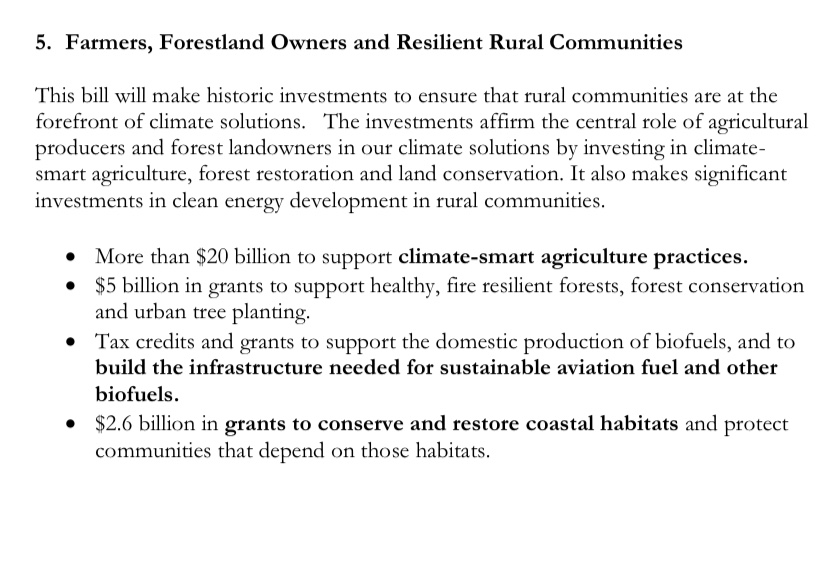
P.S. look at Point 5 of the Summary of the Energy Security and Climate Change Investments in the Inflation Reduction Act of 2022:

SDG&E is salivating I bet

And when you find another 20 minutes of your time affordable to this post, watch this video on the pipeline being built for carbon capture:


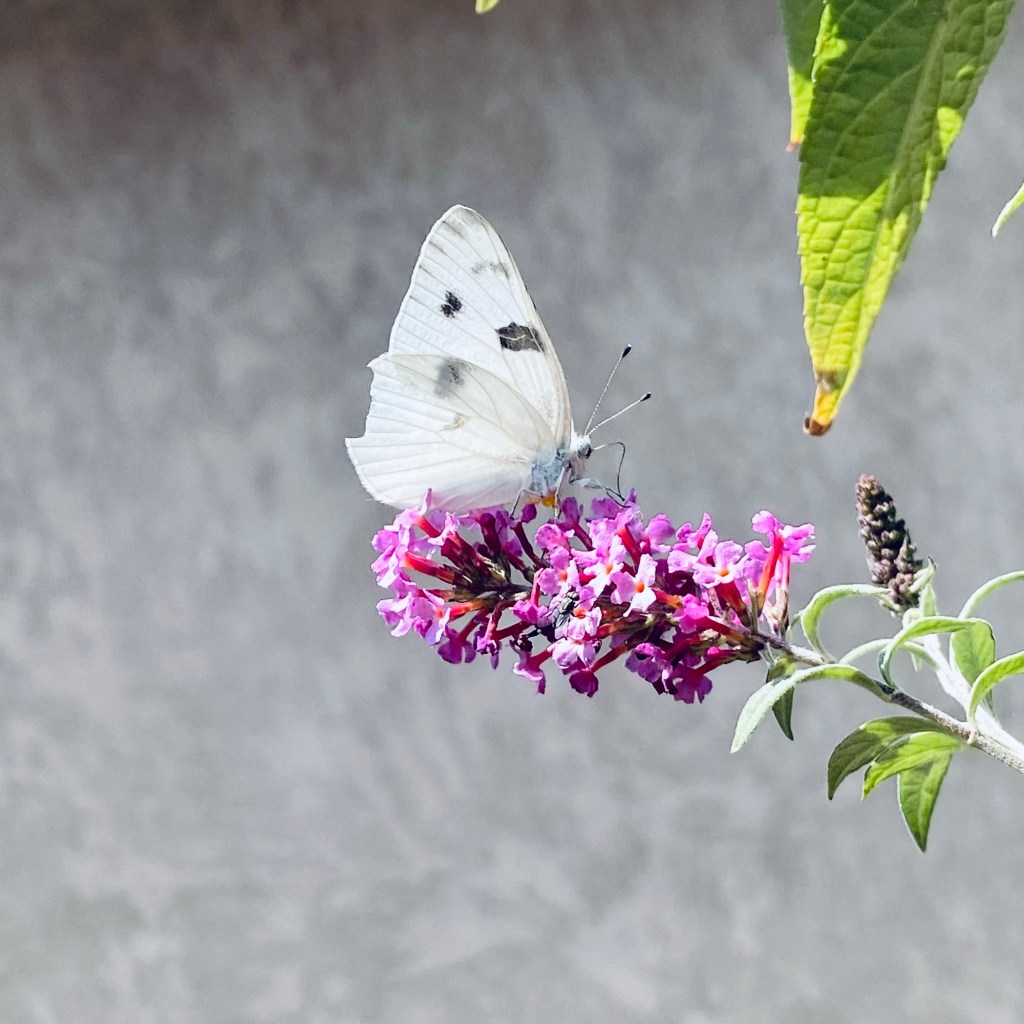
And to cap it all off, a nice photo I snapped of a moth on my balcony enjoying the pollen of a buddleja davidii.


Works Cited:

Swanson, Conrad. “As Critical Deadline Nears, Only Half of a Plan to Save Colorado River Water Has Been Proposed.” The Denver Post, The Denver Post, 22 July 2022, https://www.denverpost.com/2022/07/22/colorado-river-drought-plan-water-arizona-california/.

Jefferson, O., Köllhofer, D., Ehrich, T. et al. The ownership question of plant gene and genome intellectual properties. Nat Biotechnol 33, 1138–1143 (2015). https://doi.org/10.1038/nbt.3393

Non-Gmo Project. “What Is Bioengineered Food? .” The Non-GMO Project – Everyone Deserves an Informed Choice, 8 Sept. 2021, https://www.nongmoproject.org/blog/what-is-bioengineered-food/.

“National Invasive Species Resource Center.” Resource Search | National Invasive Species Information Center, https://www.invasivespeciesinfo.gov/resources/search?f%5B0%5D=location%3A90&amp;f%5B1%5D=subject%3A268.

“Community Tree Rebate Program – SDGE.” SDG&amp;E Community Tree Rebate Program for Residential Customers, SDG&amp;E, https://www.sdge.com/sites/default/files/15897_sdge_treerebate_fs.04.pdf.

“Ethiopia Plants More than 350 Million Trees in 12 Hours.” AFR100, https://afr100.org/content/ethiopia-plants-more-350-million-trees-12-hours.

“Green Credit Card: Carbon-Neutral &amp; Eco-Friendly.” Aspiration, Aspiration Partners, Inc., https://www.aspiration.com/credit.

Kerlin, Katherine E. “Grasslands More Reliable Carbon Sink than Trees.” UC Davis, 25 Oct. 2021, https://climatechange.ucdavis.edu/climate/news/grasslands-more-reliable-carbon-sink-than-trees.

Millison, Andrew. “The Canal That Accidentally Grew a Forest in the Arizona Desert.” Andrew Millison, YouTube, 29 Nov. 2021, https://m.youtube.com/watch?v=jf8usAesJvo.

“Lake Mead Drought Update!!! Lowest It’s Ever Been!!!” SinCity Outdoors, YouTube, 20 July 2022, https://m.youtube.com/watch?v=3Azy88IiVqU.

© 2022 Zakariyas James. First shared here at theruminationcompilation.wordpress.com.
The New Three R’s:

Rates, Restrictions & Representation

I’m a product of the mid-90’s; a measured concept of early education at that time was “reading, writing & arithmetic”. Admittedly, I’m a novice writer, an impatient reader that skims more than I should & mathematics are a language I don’t understand all too often-calculators are translators in my eyes.

But I think there are new ideological frameworks available as rubrics from here on out.

Economically, on, June 13th, 2022, “The S&P 500 slumped nearly 4%, entering a bear market territory, meaning the broad benchmark index has now dropped more than 20% from its most recent high. The S&P 500 had briefly entered a bear market last month but was able to pull back, a feat it was unable to accomplish this time around.”

Obviously, it is now more than safe to say “rates” will be on many minds as life with a dollar that doesn’t stretch like it used to starts to feel like the body not stretching the same it way did last year either, just sad all around.

Socially, we’re at a point now where the social credit system is more than simply a TV trope or a concept far away in “the East”; within the last year or so, I’ve watched, with others, the slow refinement of how consumers can interact with creators on various platforms.

From removing the option to like/dislike content, to flooding spaces with bots that can mimic a genuine account & up/downvote content enmasse (at the least) & outright removing creators from platforms or removing consumers from platforms, our ability to have meaningful interaction unencumbered with rules outside of the framework of the language itself will dissipate faster than the pennies pinched & dollars stretched.

On another hand busy trying to make ends meet since the last recession, both economically & socially, the concept of rate of infection is now at the forefront of policymakers, market makers & the commonwealth’s mind, no matter how much we try to focus on any other issue, pertinent or not. Like many others, I have built an irregular habit of staying up-to-date on various diseases of elevated concern as determined by the World Health Organization. How long will I & others find themselves looking at case rates & articles upon articles of issues close in proximity & far outside our scope of contact?

Lately, I’ve been restricting myself in ways more than likely concerning or amusing for an outsider looking in; from being painfully mindful of spending habits while looking at the impulse aisle goodies to skipping certain sources of protein in lieu of elevated zoonotic disease spreading across the continental U.S.

Self-imposed restrictions are always subject to scrutiny by the masses; how often do we find content online or in mainstream media demeaning or berating individuals for fasting, abstaining from sex, going gluten free, etc. even the abstinent voter is still in 2022 admonished at a rate greater than the corporations who time & time again find themselves indisposed indefinitely during tax season. Sure, we as the commonwealth griped a bit here & there to no avail but I dare you to buy a “I didn’t vote” sticker this weekend & see how that goes.

State-imposed restrictions are another matter.

To date, a number of governing bodies are exercising emergency powers either challenged as excessive by way of unlimited scope of control through ambiguous language or excessive due to social determinations that the powers are no longer needed. The average Joe can complain about the ruling Joe’s orders all day & night but there is no true amount of scrutiny involved in this process, as we have seen thus far considering emergency powers from 2001 still abide.

In a world of staggering uncertainty, I question how well you & I are represented & considered in the determinations & processes that spur on action. Very often, regardless of external circumstances, I question how well I represent myself given the fact that I learn more about my goals, dreams, fears, desires as I age or they simply shift with experience & preference.

Will we be better represented in this coming world or will we find our representation by authoritative & legislative bodies simply shift with experience & preference?

P.S. leave a comment! Tell me of your goals, expectations, concerns for 2022; I hope to create an area where it can all be hashed out.

Links to ponder that’ve come out since posting this:

https://www.cnbc.com/2022/06/24/roe-v-wade-overturned-by-supreme-court-ending-federal-abortion-rights.html

https://www.dw.com/en/water-scarcity-eu-countries-forced-to-restrict-drinking-water-access/a-62363819

https://www.england.nhs.uk/london/2022/08/25/routine-hiv-testing-rolls-out-to-all-emergency-departments-in-london/

© 2022 Zakariyas James. First shared here at theruminationcompilation.wordpress.com.