Basel III and the Return of Gold: A Comparative History

When the Bank for International Settlements finalized Basel III in 2019, it didn’t make headlines. But in elevating physical gold bullion to a Tier 1 asset (and relegating paper contracts and futures to near-irrelevance), the rules of global finance shifted as profoundly as they did in 1933, 1944, or 1971.

To understand the magnitude of this change, it helps to compare it with the last century’s monetary resets.

1933 — U.S. Gold Confiscation & Revaluation
• What changed: Franklin Roosevelt suspended the domestic gold standard, forcing Americans to hand in their gold at $20.67/oz. Months later, the government revalued gold to $35/oz.
• Effect: Citizens lost bullion, the state gained reserves, and the U.S. Treasury booked an overnight windfall that supported Depression-era finance.
• Parallel to today: A rule change, not a war, restructured wealth by reclassifying gold’s role. Value didn’t vanish—it was reassigned.

1944 — Bretton Woods & Dollar Hegemony
• What changed: Allied powers agreed to anchor global currencies to the U.S. dollar, itself pegged to gold at $35/oz.
• Effect: Nations no longer settled accounts in gold directly; they settled in dollars. The U.S. consolidated financial supremacy by holding the world’s largest bullion hoard.
• Parallel to today: Liquidity was centralized under one system. The illusion of stability masked a transfer of gold’s role into state-backed paper claims.

1971 — Nixon Closes the Gold Window
• What changed: President Nixon suspended the dollar’s convertibility into gold. The Bretton Woods system collapsed, leaving a purely fiat world.
• Effect: Currencies floated, debt exploded, and dollar dominance survived only because oil and global trade continued to be priced in dollars.
• Parallel to today: A pivot disguised as necessity. Rules were rewritten mid-game to preserve credit expansion, even as trust in the old system eroded.

2019 — Basel III Redefines Gold’s Value
• What changed: Physical gold was upgraded to Tier 1, recognized at full value on bank balance sheets. Paper gold contracts and futures were risk-weighted down to ~10%.
• Effect: Sovereigns and central banks suddenly had incentive to accumulate bullion, not paper promises. The East has led record purchases, while Western markets cling to futures.
• Parallel to history: Like 1933, 1944, and 1971, the change was regulatory and quiet—but it redefined gold’s place in the system. Instead of removing gold, Basel III restores it to the balance sheet.

The Throughline

Across each reset, the same pattern emerges:

• Gold is never eliminated. It is reclassified, revalued, or hidden behind paper substitutes.

• Fiat credit is preserved. Whether by confiscation, substitution, suspension, or regulation, the system shifts rules to extend its lifespan.

• The burden of adaptation is global. Citizens in 1933, allied nations in 1944, world markets in 1971—all had no choice but to adjust. Basel III sets up the East as the next adjustment point.

As analyst Lena Petrova notes, “We are being told a story of multipolarity, but what we’re really seeing is continuity. The structure doesn’t vanish—it relocates.” The “relocation” now is not merely geographic (West to East) but material: away from paper contracts toward bullion. The BIS and World Bank aren’t losing control; they are orchestrating the transfer. To preserve fiat credit, bubbles must migrate, and liquidity must sink somewhere new.

If the 20th century required world wars to enforce its financial resets, the 21st may achieve the same outcome more subtly but no less disruptively. Basel III is the quiet hinge-point: a reminder that while money changes form, its gravity keeps circling back to the same metal.

What Comes Next, A New 1971 Moment?

If 1933 was confiscation, 1944 was consolidation, and 1971 was suspension, then Basel III may be the preparation stage for a fourth great reset. The difference this time is that it is not centered in Washington, London, or Paris, but in Beijing, Moscow, and the capitals of the Global South.


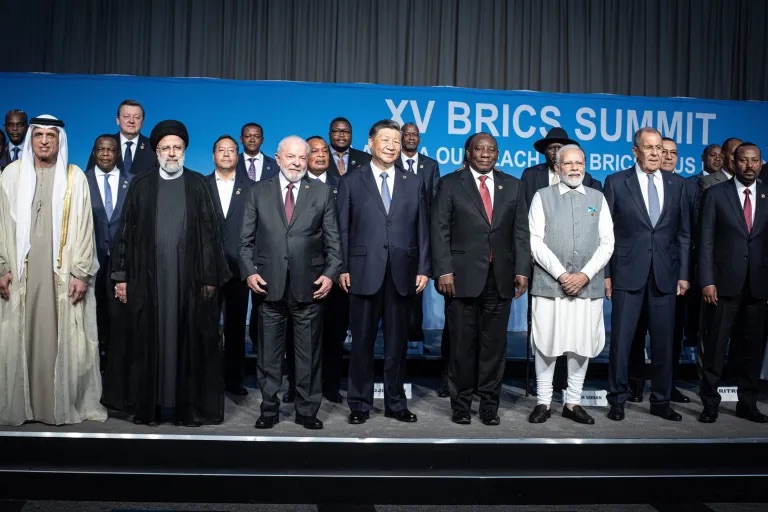
The BRICS bloc has already signaled its intent. Its member nations—Brazil, Russia, India, China, South Africa, and now a widening circle of others—are exploring settlement systems that bypass the U.S. dollar. Without a peg, such systems risk fragmentation. The glue, as history shows, is gold.

• Eastern central banks are buying record tonnage of bullion, not futures contracts.

• Western banks remain tethered to paper claims, increasingly downgraded by Basel III rules.

• Liquidity migration is not a conspiracy but a pattern: when one region’s fiat exhausts credibility, another inherits the burden and backstopped by gold.

As Petrova observes, “This is not about destroying the dollar—it is about keeping fiat alive by shifting its weight onto new pillars.” Those pillars may look multipolar, but their load-bearing material is the same as it has always been.

The Shape of the Next Reset

If history holds, the shift will not be announced openly. It will arrive by necessity disguised as inevitability:

• A commodity crisis forcing nations to accept settlement in a BRICS-linked system.

• A financial shock exposing the fragility of Western futures markets.

• A global liquidity squeeze that can only be relieved by bullion-backed credit.

The pivot could take many forms: gold-linked settlement units, hybrid currency baskets, or digital instruments backed by physical reserves. But the essence will echo 1971: a silent rewriting of the rules, enforced globally, with citizens and smaller nations adjusting afterward.

Closing Reflection

The world has seen this cycle before. Gold is confiscated, concealed, dismissed, and restored again under new terms. Each reset claims permanence, but each is temporary scaffolding for the next.

The question is not whether BRICS will displace the dollar, but whether fiat itself can endure without a metallic skeleton. If the 20th century taught us that wars were the price of financial rearrangement, the 21st may show whether quiet regulation and rebalancing can achieve the same outcome or whether conflict remains the final enforcer of monetary truth.

Photo credit: PER-ANDERS PETTERSSON/GETTY IMAGES

© 2025 Zakariyas James. First shared here at theruminationcompilation.wordpress.com.
The Human Appetite for Metals and the Cost Incurred

Metals are more than just commodities, they exist as the scaffolding of corporate and societal appetite itself. Central banks hoard gold, nations fight over lithium and entire industries rise or fall depending on nickel supply chains. Upon their discovery and recognition as more than something in the earth, they had been survival tools, currencies, monuments, weapons, talismans et cetera; now they have become “green” lifelines. To follow metals through history is to trace how human desire, how our appetites, change shape but never lessen in weight and how we’ve entwined ourselves with them eternally.

The Hunger that Shapes Worlds

From the first hammered copper tool to the record bulk purchases of gold by central banks these last two years, human history has been driven by a desire involving metal.
While the metals we’ve wrought don’t hold intrinsic power, they ultimately reflect what societies hunger for: security, wealth, prestige, immortality. Each era and advancement of our metal use fulfilled this multifaceted appetite in a new way, yet each fulfillment left depletion, waste or disillusionment in its wake. While we improved our craftsmanship, mining and smelting, our satiation of the appetites didn’t improve, only the appetite itself. This pattern repeats across millennia with limited deviation: desire drives extraction from the earth, extraction feeds consumption and all that’s left is something that might shine for a while; altogether, only certainly can we say a hole in the ground is what remains. Trace this thread and you trace humanity itself: the mines we’ve riddled the earth with are the greatest testament to our appetite for more.

“Wealth consists not in having great possessions, but in having few wants.” — Epictetus

Copper, Bronze and the Weight of Survival

Copper and bronze emerged from necessity: sharper tools, stronger weapons, more productive farms, each proper meals to satiate the hunger our ancestors had for change and growth. Iron scaled our early appetite of secured growth, making war easier to wage and ultimately creating the first empires that stretched across continents. Empires rose on metal ripped from the very grounds they claimed; the lands our ancestors desired enough to kill for were in like kind stripped of resources as quickly as they were gazed upon. This hunger for dominance and security demanded such action and accompanied an unfounded belief that the two metals guaranteed the fulfillment of these desires as they unlocked new weapons and tools of agriculture.
Thus was the advent of a simple truth: the more we consume to secure ourselves, the faster the world erodes around us. From Bronze Age city-states to Roman legions, metals carried both civilization and destruction, a paradox that echoes in every era of human ambition.

“If you would conquer the world, first conquer yourself.” — Seneca

Coins and the Illusion of Security

When appetite shifted from survival to wealth, metals became symbols, not tools. Gold and silver promised stability, denoted status, solidified lines between beggar and chooser and consolidated power. Primarily power, that for the first time, that could be exerted without force yet had the capacity to create force by way of financing military might.
But power built on trust must always outrun the hunger it feeds, otherwise the hunger leads to cannibalism. Coins became less about the weight of their metal and more about the faith they carried. Once rulers discovered that stamped images and state decree could anchor belief as firmly as silver itself, debasement was inevitable. Rome did not hollow its coins and diminish the purity of them because it lacked imagination, but because its appetite for expansion exceeded its mines and temporarily staved off their people from eating the nation from the inside. Soldiers had to be paid, wars had to be financed and marble cities had to rise, so silver content shrank as promises swelled. Swelled until the money men figured out the greatest trick of all time, printing paper called money. Fiat currency was less of an invention than it was a confession: the earth could no longer yield enough metal to sustain the ambitions placed upon it. By detaching paper from gold and silver, states learned to mint appetite itself. Debt became the hidden ore of civilization, mined not from the ground but from tomorrow’s labor. Fractional reserve banking enshrined the process, multiplying desire by lending what did not yet exist.
Modern economies are thus propped up on this cycle: appetite creating credit, credit enabling appetite, each pretending to be backed by something more tangible than belief. Each coin, each bill, each ledger entry is a mirror of our urge to claim security and our long winded attempt at quantifying the appetite that drives it all. Metals, once tangible bastions of strength, became metaphors for ambition. Even in the process of detaching mass finance from metals, states opted to use nickel, which resembles silver to the untrained eye, instead of silver in monetary supply to convince the masses the metals were still around, that their appetite for more would still be met.
Rome’s problem was never the weight of its silver, but the weight of its hunger. The more it acquired, the more it needed; the more it consumed, the less it could restrain itself. Coins lost their substance because restraint lost its place; this Roman problem still exists and we inherited it.

“The things we love tell us what we are.” — Thomas Aquinas

Monuments of Desire and Ambition

Identity and legacy find their most visible expression in monuments, statues and icons. Gold leaf in Notre-Dame, copper on the Statue of Liberty, the iron of the Eiffel Tower: these are metals forged not to plow fields or mint coins, not for security or domination. Our use of metal had already addressed these things to a sufficient degree and the appetite we share shifted again: awe, impress and endure. The innumerable golden crosses, icons, and talismans scattered across the globe likewise functioned as declarations: this land is consecrated, this people belong to this god, this ruler has favor beyond the mortal, this symbol is synonymous with truth. Monuments are depictions of our craving to be remembered, to assert permanence in a world that refuses to grant it.
Yet permanence is the grandest illusion. Cathedrals burn, towers rust, statues are toppled and smelted into new emblems of power and declaration. The appetite then is less about survival or wealth than it is the craving for recognition, identity and symbolic immortality. We spend metal as though it could buy eternity and ignore the debt it exacts from the earth and ourselves, for the unrestrained appetite is truly a debt cycle in essence, potentially the worst there is. That our appetite allows us to stomach the price for any level of satiation, great or small, reveals its magnitude more than any monument ever could. Nothing can compare.

“All the works of mortals are destined to perish; only desire itself is endless.” — Seneca

Steel, Aluminum and the Facade of Progress

Industrialization morphed the appetite endurance and inspiration into speed, mass production and convenience. Steel carved railroads and skyscrapers; aluminum and nickel flowed into aircraft, appliances and war machines. Metals no longer just secured empires, they manufactured an entirely new pace of life. Admittedly, the first time we as a species realized copper and bronze availed sedentary societies and seasonal repetition, this was too the case but the comparison is pale and dismisses the state of leisure. Convenience became its own form of conquest, and with it, our appetite found a new dimension: the craving for effortlessness and essentially endless rest.
The machines we built did not merely serve us; they reshaped us. Factories and assembly lines gave rise to gadgets that promised ease but also ensnared attention. The circuits of modernity (televisions, smartphones, computers) are only the latest refinements of the same metallic hunger. Appetite, once satisfied by empire or monument, now found sustenance in the pocket and the screen. Even to the point of mental impact, the hunger for expedited content, contentment and contact has become so pervasive it is nearing levels of cannibalism at it obviously eats away at society in many ways today.
So, the gleam of progress is still two-sided as an ancient coin. On the obverse, we depict advancement, connectedness unparalleled and growth. On the reverse, beneath the polished facades lay pollution, gutted mines, battlefields littered with steel and aluminum and economies mortgaged and over-leveraged to feed the machinery our appetites demand. Thus, the hunger persists.

“Men have become the tools of their tools.” — Henry David Thoreau

Lithium Dreams and the Morality of Metals

The modern appetite, having already tasted of security, self-expression, leisure and longevity, now drapes itself in morality. Lithium, cobalt and silver (among other metals) are cast as instruments of redemption, promising a “green” future both for ourselves and for the planet. For the first time in history, our appetite presents itself not as selfish consumption but as virtuous stewardship. Yet what does stewardship mean when it is measured in gigafactories, strip mines and subsidies? What does it mean when mass adoptions of green tech demands mining at levels exceeding the norm?
Beneath this moral cloak lies the familiar cycle, only more globalized and more disguised. Child labor in cobalt mines, rivers poisoned in lithium basins, profits absorbed by the very manufacturers and kickback-enriched policymakers who prescribe these “solutions” are the overlooked and ignored foundation of our new ethics. We consume now not only for comfort or survival but for the absolution of guilt. The battery, the solar panel, the wind turbine all carry a subtext: I am not to blame.
But appetite, even moralized, does not change its nature. The so-called green revolution risks repeating history at high speed with a twist: appetite creating carbon credits to excuse pollution, carbon credits enabling appetite, over and over. So still, the hunger intensifies. Stewardship itself becomes a performance, one whose costs are obscured by urgency, by moral pressure and by our own willingness to believe that appetite can finally be reconciled with virtue and carbon credit scores. That the appetite won’t eventually envelop the planets and stars we’ve looked to throughout the ages. But it will. There’s only so much metal on this earth and only so many lands to rip apart.

“Man is not worried by real problems so much as by his imagined anxieties about real problems.” — Epictetus

The Tarnish of Tomorrow

Metals endure. They rust, they corrode, they are melted down and reshaped, but they do not vanish. So too with our appetite. Truly, are you full? Copper, bronze, silver, steel, lithium—each metal has been refashioned by successive generations and each time it has carried the same urge: to secure, to impress, to progress. This appetite has never rested; it has only found new vessels, new tastes, new forms of fulfillment.
Tomorrow, our mining may stretch beyond the Earth itself. Whether it be asteroids, moons, or distant planets, our appetite will follow the ore, carrying the same patterns we have engraved into metal for millennia: desire fueling extraction, extraction sustaining consumption, the consequences deferred or displaced. The residues of our ambition (scrap, debt, pollution, human toil and environmental destruction) will travel with us, folded into the architecture of other worlds.
If we cannot imagine restraint now, the cycle will repeat, not just on Earth but wherever we take our hunger. Metals will endure. Appetite will endure. Surely, the record of our desires, written in ore and dust alike, will be the first legacy we leave among the stars.

“It is not the man who has too little, but the man who craves more, that is poor.” — Seneca

Understanding the human appetite for metals echoes the points in An Ounce of Silver and More than an Ounce of Delusion

© 2025 Zakariyas James. First shared here at theruminationcompilation.wordpress.com.