As of late, the discussions of fertility rates, bodily autonomy/agency & general adolescent care increasingly center around philosophical assertions as to the pertinence of proposed legislation or outright purely economic statements pointing to losses & gains.
On June 17th, 2022, the World Economic Forum stated, “[f]or the last 70 years, fertility rates have decreased worldwide, with a total 50% decline.” This was only a few months after Elon Musk tweeted (in May of this year) a WSJ article about US birth rates declining; since then, as though everyone’s been putting their minds (and other things) to it, a flurry of seemingly reactionary events have taken place. On June 18th the CDC approved COVID-19 vaccination for children who are at least 6 months old, legislative action took place in the form of the Roe v Wade overturn scenario on June 24th & only a handful of days prior to writing this, scientists in Israel announced a breakthrough in medical research & experimentation: the “synthetic embryo” which “bypassed the need for sperm, eggs and fertilisation”. Even at the Oregon Health & Science University, artifical eggs devoid of genetic material are being manipulated:
"If successful, they plan to then fertilize those eggs with sperm and grow the resulting embryos in the lab for five or six days to see if they develop normally." If the technique proves to be safe, the creation of artificial human eggs could one day be used to treat infertility and even enable same-sex couples to have genetically related children.”
I won’t even get into the chimeric sperm part of that article – it makes me think of “The Island of Dr. Moreau” a bit more than I’d like to, even if it is a great film.
Further along the list of issues I don’t like to mentally tackle are those where I’d be expected to correctly ascertain “what it is to be human” or what sort of legislation a nation would need in place when technologies like the aforementioned are on the cusp of large-scale/common application.
Wesley J. Smith said in his article:
“If the “entity” — let’s call it — develops like a natural embryo and has nearly identical genetic properties, why would it be considered something other than bona fide human life? After all, a cloned human embryo doesn’t involve the use of sperm but is as fully human as its counterpart that comes into being through fertilization. Just because sperm and egg are not involved would not necessarily make the resulting entity less human. What should matter is the nature of the thing itself, however brought into existence. Just calling something “synthetic” doesn’t make it so. And the burden of proof in this regard should fall on the scientists to demonstrate that the process would not create an organism before they are given carte blanche.”
It eloquently encapsulates the gravity of the situation; hopefully, it also explains why, in this paper, I will not claim to know where to begin in these matters of adjudicating the rights & rewards of another entity.
What I’d rather do is discuss our technological dependence since the advent of agriculture & surmise as to what lengths we could go in this digital world to achieve the goals of procreation, stewardship & social longevity.
Back then…
It is no mystery to those fortunate in their education that agriculture was the first technological advancement of our species. While the use of tools is considered a benchmark of evolution, it was the shift from meek hunter-gatherers (kept in check with the games of chance & fate, always on the hunt with their breakable tools) to stewards of the earth (with a voracious appetite but a tolerance for sitting around) that set us on a path towards further discovery & social evolutions.
Chief amongst the agricultural innovations in 7000 BC was alcohol; everlasting in it’s application to societal affairs, micro & macro, alcohol is a testament to the human predisposition to be technologically dependent. This is not to say every human dead & alive has imbibed, nor contrarily, that there’s no such thing as an alcoholic since we’re fated to be dependent on this ancient technological advancement; this is to point to the fact that the discovery of fermentation has been utilized in our times of joy, reception of sacrament & stifling of sorrows. Most, if not, all of the emotions that humans have developed, deepened & attempted to describe to each other has involved alcohol in some way as we’ve been further socialized with one another.
After certain technologies, like fermentation & animal husbandry, become familiarized & fully integrated into the social fabrics we’ve knit over the millennia, it is near impossible to regulate or outright restrict their applications. Historically speaking, the US government’s 19th amendment is a perfect place in “recent” history to point to for an example of a glaring dependence on a technology familiarized & fully integrated into social order. After 13 years of prohibiting the production & consumption of alcohol during a Protestant movement in the 1920’s, the American people said “I need a drink.” Comparatively, in Islam, alcohol is scripturally prohibited but even though there’s around 50 majority-Muslim countries, only 14 enforce this rule in a theocratic manner.
Certain technological advancements have become so integrated that it seems they’ll be here to stay.

Today…
Juvenile in the scope of all advancements made thus far, social media platforms are becoming the next dependency. Sure, one could lackadaisically point to the temper tantrum a child throws in response to an authority figure taking away a tablet & call that the sign of dependence but that more closely resembles anger attributed to loss of control. Up to a certain age, a child is simply viewing the tech as a toy & something interesting – half of the kids playing around on mom’s & dad’s phone have hardly any idea what they’re doing or what they’re seeing, they’re just having fun. It isn’t until one is around the teen years that the dependency begins to develop.
Teenagers & adults are better points to assess the progressive dependence on technology that sustains social networking; in the former, there are entire campaigns focused on bringing attention to the addictive nature of social media in a developing mind, studies on the correlation between social media use & teen suicide rates & lately there are proposals by governments to ban teen access to certain apps & limit most that fall under the label of “social media”. In the latter, social media is where most adults find their news, where most of the political rhetoric is being created & utilized & where an increasing number of adults are producing income or at least attempting to.
At this point, the activity on social media reminds me of various games like “The Sims”, numerous “Sid Meier’s Civilization” titles, BitLife & others in the sense that social media has become a false reality wherein the user attempts to affect other entities in a digital plane. Role playing games where one is able to customize their avatar to a high degree also come to mind whenever the idea of “curating” a profile & it’s content comes up in discussion; MMORPGs are comparable to social media in so many ways honestly but the concept of expressing the self in a digital fashion is the primary focus.
Tomorrow…
Social media, across the board, allows anything from anonymity to almost completely unfettered self-expression; some users create entire personas that solely exist online & a relatively fresh example is that of “Lil Miquela” – an avatar created by L.A. based company Brud. Lil Miquela has a few songs on Spotify, 3 million ardent fans & followers on Instagram & has spurred on a slow race between other companies to make their own versions of these advanced avatars.
Some want to create avatars of brand-new, never-before-seen “people”. Some want to create more advanced avatars of ourselves, much like the bitmoji stuff I find a bit creepy. I personally can’t wait to see the creation of the first “digital dependent”.
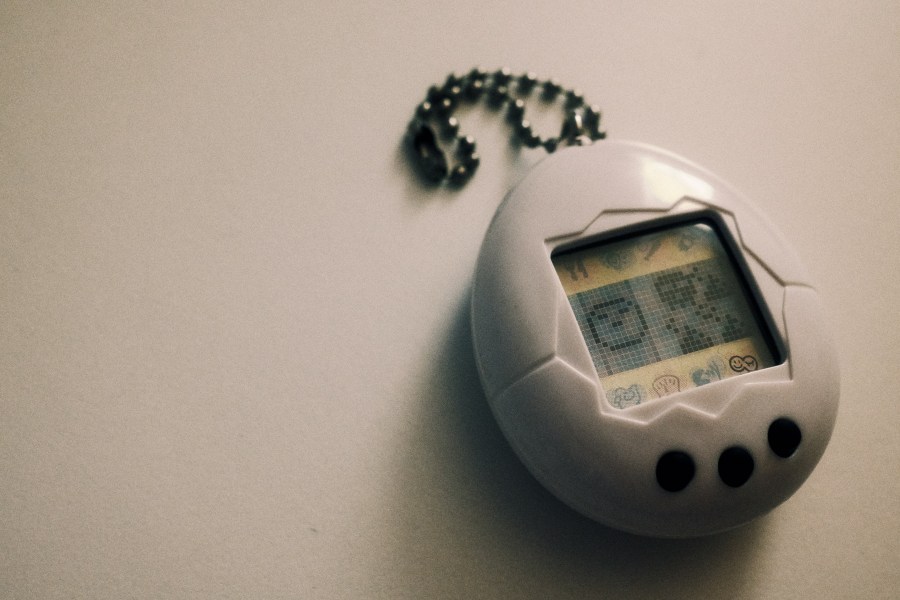
As a kid, one of my favorite shows was called “Digimon: Digital Monsters”; there’s a slew of games based on the series but the prevailing theme is that, there exists, in a digital world accessible by our modern day devices, digital monsters we can befriend, battle with & help evolve as we nurture it like a pet. Released right after the original Tamagatchi’s, Digimon simply took the “digital egg” concept a bit further which led to Pokémon introducing their own egg-aspect to the games & anime just a year later.
In most of these iterations, the player would simply walk with the egg or provide it care in some form. In Pokémon Go, the mobile app, players still do this walking but it is now tracked with GPS & motion sensors in our mobile devices. The same devices responsible for the rapid onset of targeted advertisement, rampant mass surveillance & public documentation of conspicuous consumption, aka flexing on social media.
In due time, thanks to the rampant & often unchecked state of data collection we exist in, the companies working on those digital avatars will proposition the people:
Provide us your consumer data & your health data & we’ll create an online representation of what your child would look & act like! For a yearly subscription, we’ll use our AI to evolve the level of interaction & appearance that mirrors actual human cognitive development. Available to couples, individuals, corporations & communities our digital denizens will be an extension of you!
Already so absorbed with cultivating & curating our own profiles, I can see a future wherein companies appeal to our nature to nurture & desire to create by offering to “assist us” in creating “offspring with an off-switch” & it going over extremely well. The idea of “digital resurrection”, holographic models of dead individuals, has already been introduced to the public through events like the Tupac hologram from 2012, Robert Kardashian “showing up” at Kim’s birthday party in 2020 & now Amazon’s working on it’s Alexa technology to “let people turn their dead loved ones’ voices into digital assistants”.
There’s plenty of apps where you & another person can upload photos of yourselves & see an AI generated example of what your offspring would look like; there’s fertility clinics that offer couples the ability to predetermine the eye color of their coming child; in due time, companies will exist that provide all this & more, for the right price, of course.
Though what is the price for even further mixing the digital plane & the physical? For attempting to curate a persona in a space of manufactured members of society?
Remember that line Wesley wrote?
“Just because sperm and egg are not involved would not necessarily make the resulting entity less human. What should matter is the nature of the thing itself, however brought into existence. Just calling something “synthetic” doesn’t make it so.”
I believe we’re on the cusp of having to deal with these issues, whether we want to or not. The level of dependence on technology thus far has not peaked or begun to plateau & accordingly we must expect progressive integration of human activities involving creation, description & everything in between on the digital plane. We’re not going to be able to ban social media & the technologies of mass communication much like we weren’t able to ban the manufacture of alcohol, so will we see something play out that feels almost surreal as watching an obviously fake avatar take selfies in an obviously real place? Or will we simply accept the advanced integration of the human experience in the digital plane until that’s all there is?
Thanks for reading.
P.S. the digital dependents are already on the way:

Works Cited
Alvarez, P., 2022. What does the global decline of the fertility rate look like?. [online] World Economic Forum. Available at: <https://www.weforum.org/agenda/2022/06/global-decline-of-fertility-rates-visualised/> [Accessed 9 August 2022].
Sample, I., 2022. Scientists create world’s first ‘synthetic embryos’. [online] The Guardian. Available at: <https://www.theguardian.com/science/2022/aug/03/scientists-create-worlds-first-synthetic-embryos> [Accessed 9 August 2022].
Bailey, R., 2022. Researchers create artificial eggs, chimeric sperm and synthetic embryos. [online] Reason.com. Available at: <https://reason.com/2022/08/05/researchers-create-artificial-eggs-chimeric-sperm-and-synthetic-embryos/> [Accessed 9 August 2022].
Smith, W., 2022. About Those ‘Synthetic Embryos’ | National Review. [online] National Review. Available at: <https://www.nationalreview.com/corner/about-those-synthetic-embryos/> [Accessed 9 August 2022].
Hern, A., 2022. Amazon’s Alexa could turn dead loved ones’ voices into digital assistant. [online] The Guardian. Available at: <https://www.theguardian.com/technology/2022/jun/23/amazon-alexa-could-turn-dead-loved-ones-digital-assistant> [Accessed 18 August 2022].
Photo credit:
Homage, 2022. [image] Available at: <https://www.homage.com/blogs/news/28550593-we-want-beer-the-parade-to-end-prohibition> [Accessed 18 August 2022].
© 2022 Zakariyas James. First shared here at theruminationcompilation.wordpress.com.
 The Rumination Compilation