Basel III and the Return of Gold: A Comparative History

When the Bank for International Settlements finalized Basel III in 2019, it didn’t make headlines. But in elevating physical gold bullion to a Tier 1 asset (and relegating paper contracts and futures to near-irrelevance), the rules of global finance shifted as profoundly as they did in 1933, 1944, or 1971.

To understand the magnitude of this change, it helps to compare it with the last century’s monetary resets.

1933 — U.S. Gold Confiscation & Revaluation
• What changed: Franklin Roosevelt suspended the domestic gold standard, forcing Americans to hand in their gold at $20.67/oz. Months later, the government revalued gold to $35/oz.
• Effect: Citizens lost bullion, the state gained reserves, and the U.S. Treasury booked an overnight windfall that supported Depression-era finance.
• Parallel to today: A rule change, not a war, restructured wealth by reclassifying gold’s role. Value didn’t vanish—it was reassigned.

1944 — Bretton Woods & Dollar Hegemony
• What changed: Allied powers agreed to anchor global currencies to the U.S. dollar, itself pegged to gold at $35/oz.
• Effect: Nations no longer settled accounts in gold directly; they settled in dollars. The U.S. consolidated financial supremacy by holding the world’s largest bullion hoard.
• Parallel to today: Liquidity was centralized under one system. The illusion of stability masked a transfer of gold’s role into state-backed paper claims.

1971 — Nixon Closes the Gold Window
• What changed: President Nixon suspended the dollar’s convertibility into gold. The Bretton Woods system collapsed, leaving a purely fiat world.
• Effect: Currencies floated, debt exploded, and dollar dominance survived only because oil and global trade continued to be priced in dollars.
• Parallel to today: A pivot disguised as necessity. Rules were rewritten mid-game to preserve credit expansion, even as trust in the old system eroded.

2019 — Basel III Redefines Gold’s Value
• What changed: Physical gold was upgraded to Tier 1, recognized at full value on bank balance sheets. Paper gold contracts and futures were risk-weighted down to ~10%.
• Effect: Sovereigns and central banks suddenly had incentive to accumulate bullion, not paper promises. The East has led record purchases, while Western markets cling to futures.
• Parallel to history: Like 1933, 1944, and 1971, the change was regulatory and quiet—but it redefined gold’s place in the system. Instead of removing gold, Basel III restores it to the balance sheet.

The Throughline

Across each reset, the same pattern emerges:

• Gold is never eliminated. It is reclassified, revalued, or hidden behind paper substitutes.

• Fiat credit is preserved. Whether by confiscation, substitution, suspension, or regulation, the system shifts rules to extend its lifespan.

• The burden of adaptation is global. Citizens in 1933, allied nations in 1944, world markets in 1971—all had no choice but to adjust. Basel III sets up the East as the next adjustment point.

As analyst Lena Petrova notes, “We are being told a story of multipolarity, but what we’re really seeing is continuity. The structure doesn’t vanish—it relocates.” The “relocation” now is not merely geographic (West to East) but material: away from paper contracts toward bullion. The BIS and World Bank aren’t losing control; they are orchestrating the transfer. To preserve fiat credit, bubbles must migrate, and liquidity must sink somewhere new.

If the 20th century required world wars to enforce its financial resets, the 21st may achieve the same outcome more subtly but no less disruptively. Basel III is the quiet hinge-point: a reminder that while money changes form, its gravity keeps circling back to the same metal.

What Comes Next, A New 1971 Moment?

If 1933 was confiscation, 1944 was consolidation, and 1971 was suspension, then Basel III may be the preparation stage for a fourth great reset. The difference this time is that it is not centered in Washington, London, or Paris, but in Beijing, Moscow, and the capitals of the Global South.


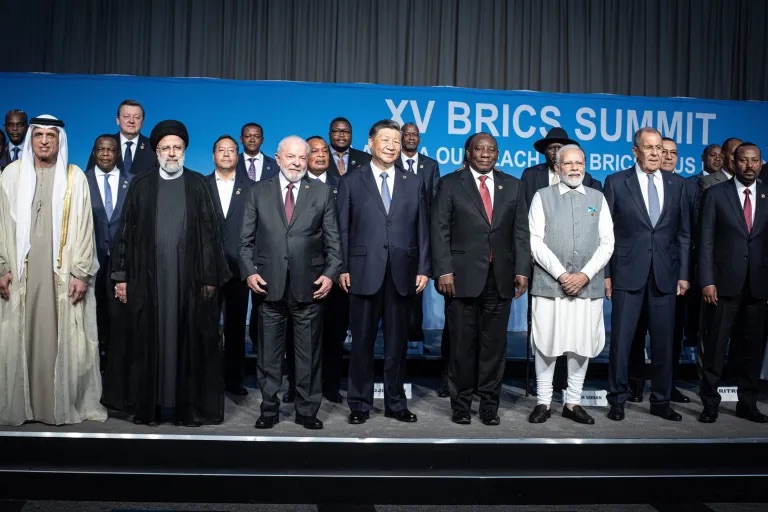
The BRICS bloc has already signaled its intent. Its member nations—Brazil, Russia, India, China, South Africa, and now a widening circle of others—are exploring settlement systems that bypass the U.S. dollar. Without a peg, such systems risk fragmentation. The glue, as history shows, is gold.

• Eastern central banks are buying record tonnage of bullion, not futures contracts.

• Western banks remain tethered to paper claims, increasingly downgraded by Basel III rules.

• Liquidity migration is not a conspiracy but a pattern: when one region’s fiat exhausts credibility, another inherits the burden and backstopped by gold.

As Petrova observes, “This is not about destroying the dollar—it is about keeping fiat alive by shifting its weight onto new pillars.” Those pillars may look multipolar, but their load-bearing material is the same as it has always been.

The Shape of the Next Reset

If history holds, the shift will not be announced openly. It will arrive by necessity disguised as inevitability:

• A commodity crisis forcing nations to accept settlement in a BRICS-linked system.

• A financial shock exposing the fragility of Western futures markets.

• A global liquidity squeeze that can only be relieved by bullion-backed credit.

The pivot could take many forms: gold-linked settlement units, hybrid currency baskets, or digital instruments backed by physical reserves. But the essence will echo 1971: a silent rewriting of the rules, enforced globally, with citizens and smaller nations adjusting afterward.

Closing Reflection

The world has seen this cycle before. Gold is confiscated, concealed, dismissed, and restored again under new terms. Each reset claims permanence, but each is temporary scaffolding for the next.

The question is not whether BRICS will displace the dollar, but whether fiat itself can endure without a metallic skeleton. If the 20th century taught us that wars were the price of financial rearrangement, the 21st may show whether quiet regulation and rebalancing can achieve the same outcome or whether conflict remains the final enforcer of monetary truth.

Photo credit: PER-ANDERS PETTERSSON/GETTY IMAGES

© 2025 Zakariyas James. First shared here at theruminationcompilation.wordpress.com.
Bird Flu & The Great Disappearing Act


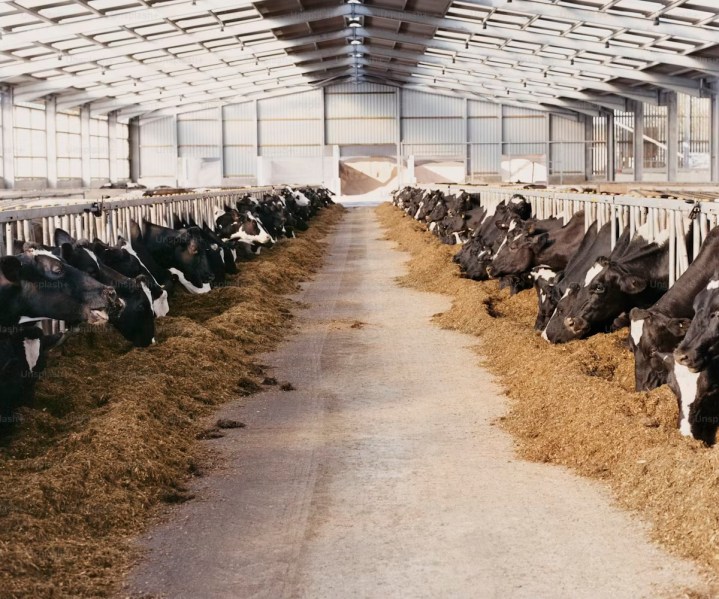
In early 2024, cows started testing positive for a virus we’ve long associated with birds H5N1, also known as Highly Pathogenic Avian Influenza (HPAI). The phrase bird flu in cattle started showing up in news alerts and government bulletins, albeit intermittently. But now, hundreds of infected dairy herds later, the illness is being given a new name.

Not by virologists. Not by the CDC.
By a trade group.

The American Association of Bovine Practitioners (AABP) declared it will no longer refer to the virus in cattle as HPAI. From here on out, they’re calling it Bovine Influenza A Virus (BIAV) and they’re urging federal agencies, diagnostic labs and state health officials to follow suit.

The reason?
To help the public “better understand” the difference between bird flu in birds and the milder form now spreading through cows.

They also say the change will “help maintain confidence in the safety and accessibility of dairy and beef products.”

Which might be the most honest sentence in the entire press release.


In 2024, the U.S. exported nearly 2.8 billion pounds of beef, generating over $10 billion in international sales.
China, a cornerstone of those exports, is now largely off the table. American beef faces a 32% tariff there, alongside widespread delistings of U.S. facilities.

With the Trump administration’s tariffs raising tensions across North America, maintaining consumer trust (both domestic and foreign) has never been more financially urgent for the beef lobby.
You don’t move that kind of product if people start panicking about biosecurity, let alone the potential for animal-to-human spillover.


At least 17 states have now reported H5N1 infections in dairy cattle.
Human cases have already occurred. Wastewater and milk sampling show signs of persistent viral shedding.

But the renaming of the virus comes at a time when the federal government is reportedly scaling back H5N1 surveillance efforts. Staff reductions, limited testing and quiet policy shifts are leaving fewer eyes on a virus that’s crossing species lines with alarming ease.

There’s a strange convenience in the timing.

A virus known for devastating poultry industries is now embedded in America’s dairy system. And just as public concern might begin to swell, a new label appears.

Not one rooted in viral evolution or scientific consensus but in consumer confidence.

The virus didn’t disappear.
Just the name.


Meanwhile, American consumers are seeing beef prices climb steadily, often far faster than official inflation numbers suggest.

Major media outlets and government agencies largely frame these increases as a natural outcome of supply and demand or temporary inflationary pressures. But the reality is more complex.

For a deeper look at how inflation numbers get manipulated and what that means for prices like beef, see: Shadow Inflation & the Price of Freedom


Tariffs imposed by the current administration on beef imports from key trading partners like Canada and Mexico (sometimes as high as 25%) have disrupted supply chains and added costs that producers pass down the line.

Meanwhile, retaliatory tariffs from export markets such as China have shrunk overseas demand, squeezing domestic producers from both ends.

Add to that rising feed, fuel, and labor expenses and the fallout from widespread H5N1 infections in dairy herds (costs they simply can’t eat) it’s clear that American beef is caught in a pressure cooker.


Consumers are left to wonder:

  • How much of the rising beef price is due to trade policy?
  • How much stems from inflation?
  • And how much reflects an industry quietly trying to manage the optics of a virus now entrenched in the very livestock they rely on?

The American Association of Bovine Practitioners and the current administration say people won’t get sick from bird flu in cows unless, of course, they drink the milk raw.

But if the virus isn’t a threat, why does every regulatory body recommend only pasteurized milk?


The answers are complicated.
But what is certain is this:

The story told about beef, bird flu, and prices is being carefully served to us on a dirty platter.

© 2025 Zakariyas James. First shared here at theruminationcompilation.wordpress.com.
Shadow Inflation & the Price of Freedom

You’re not losing your mind, you’re losing your purchasing power.

Everything from groceries to rent to basic utilities has crept into unaffordable territory, but somehow the government insists inflation is around 3.3%. To most of us, that number feels like a punchline with no setup.

ShadowStats, which calculates inflation using methods from before the 1980s CPI revisions, suggests it’s actually over 9%. That sounds far more in line with what you feel in your bones and your wallet, doesn’t it?

The difference isn’t just mathematical, it’s philosophical. It determines whether you believe our society is slowly progressing or quietly deteriorating.

And at the center of that delusion sits the green tech movement: an ideal pushed by agreements between supranational organizations and state governments, built on commodities like silver, which ironically is one of the few tangible lifeboats left in an era of untethered money, misrepresented data, and unsustainable goals.


CPI: The Numbers Game That Makes Poverty Look Like Progress

In the early 1980s, the U.S. government began quietly redefining inflation. It didn’t look good on paper to say retirees needed 10% annual increases in Social Security checks. It looked even worse for Treasury bondholders expecting “real” returns.

So instead of wrestling inflation down, policymakers redefined how it was measured.

They introduced terms like:

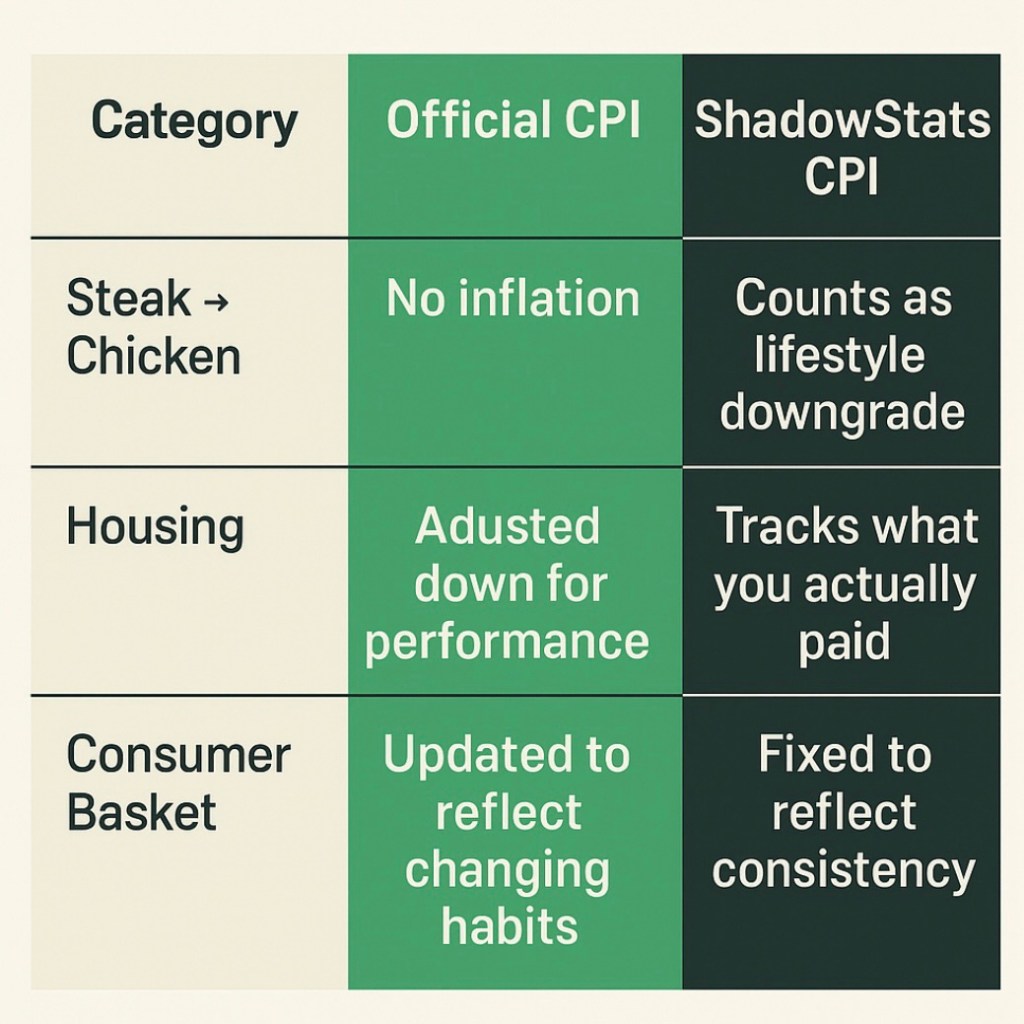
  • Substitution: If steak gets too expensive, CPI assumes you switch to chicken. Inflation problem solved.
  • Hedonic adjustment: If your laptop is twice as fast, they say you’re paying less for it—even if it cost you more dollars (source, second bullet point).
  • Owner’s Equivalent Rent (OER): Instead of tracking what you pay in housing, they estimate what your home might rent for, based on surveys. (Crazy isn’t it?)

These methods were sold as ways to make CPI “more accurate,” but what they really did was make inflation more palatable to policymakers and debt managers. They also did it to make sure you and I kept racking up debt and consuming more each quarter.

Official inflation numbers rely on mechanisms that hide the erosion of lifestyle:

These adjustments treat your survival adaptations like buying cheaper food, delaying car repairs, moving back in with family, etc as market choices rather than signs of stress.

You’re not living worse, they say you’re just living differently.

Here’s what the former Fed Chairman Alan Greenspan said in 1995:

“If you are measuring the cost of living, you must measure the cost of maintaining a constant standard of living. If you substitute chicken for beef, you are not maintaining the same standard.”(https://www.nytimes.com/1995/12/04/us/inflation-gauge-may-be-too-high-experts-say.html)

The BLS has been doing the opposite for decades.


Green Tech: The Utopian Offramp Built on Industrial Scarcity

Enter the Sustainable Development Goals and the “just transition” to a greener future. Electric vehicles. Wind turbines. Solar panels. Battery storage. Carbon offsets. All tied to the years 2030 and 2050 as I’ve outlined in more than a few posts on this blog.

The problem? Every one of these systems relies heavily on silver, a finite, mined metal with growing industrial scarcity. According to the Silver Institute, solar panel production alone is expected to account for over 25% of annual silver demand by the end of this decade.

The price of silver has risen 43% year-to-date as of July 2025. Gold is up roughly 22%. Compare that to:

2025 YTD Return

NASDAQ +15%

S&P 500 +10%

DJIA +5.5%

So let’s check the math. If inflation is only 3.3% (official CPI), then those stock market gains look decent. But if ShadowStats is right, and inflation is closer to 9%, then:

  • The Dow Jones is posting a negative real return.
  • The S&P 500 is barely breaking even.
  • Even the NASDAQ, with its AI hype and tech surge, is only modestly positive in real terms.
  • Only silver and gold are delivering substantial real returns after adjusting for actual inflation.

This is the moment where you realize: only one entity will be paying for the widespread retrofitting and implementation of all this green tech that needs silver and it’s you. Either through willing compliance or taxation by the government so they can buy it with your wages and make you use it.


Hedonics, Hopium, and the Silver Choke Point

The CPI tells you that your phone is getting cheaper, even if you spent more on it, because it has better specs (source, first bullet point).

The ESG movement tells you your energy is getting cleaner, even if your utility bills are rising, because it’s coming from renewables.

But here’s what they don’t tell you:

  • Silver is irreplaceable in high-efficiency solar, circuit boards, EV contacts, and grid storage.
  • No large-scale replacement exists.
  • We are burning through reserves faster than we are discovering new viable deposits.

That means the very commodity needed to “fix” the future is becoming more expensive, even in inflation-adjusted terms. And that creates a dilemma no policy paper can solve.


Silver: The Honest Asset in a Dishonest System

In a world where official CPI is engineered to deflate your sense of decline, silver doesn’t lie.

  • It doesn’t get adjusted for quality.
  • It doesn’t get substituted.
  • It doesn’t get hedonicized.

It just reflects what a scarce, in-demand physical asset actually costs in a world of paper promises and underpriced labor.

And unlike fiat currencies or ESG credits, silver is outside the system. That’s why central banks don’t talk about it, and why retail investors who understand its utility in both monetary protection and energy transition are quietly accumulating at Costco before getting a hot dog and soda.


The Fatal Irony of Sustainable Progress

We are trying to build a green future using a grey metal whose supply cannot scale with our policy ambition. The Sustainable Development Goals require a miracle of material availability that simply doesn’t exist.

If silver prices are outpacing even ShadowStats’ inflation, then the affordability of the clean tech utopia vanishes on arrival. And if real inflation is devouring your market returns, then the dream of using “compound growth” to escape stagnation is mathematically dead.


Compliance or Sovereignty: There Is No Third Option

If you’re not holding assets that outpace real inflation (like silver or gold or the next randomly pumping stock) then you’re not preserving wealth. You’re slowly converting it into obedience.

Because what happens when your savings can’t keep up?

  • You’ll be offered government rebates for heat pumps.
  • Carbon credits for commuting less.
  • EV mandates.
  • Sustainability scorecards tied to your bank account (like that Aspire card I mentioned a few posts ago).
  • Access granted in exchange for compliance.

If you can’t buy your way out of the system, you’ll be forced to conform to it.

Green tech won’t be a lifestyle choice. It will be a behavioral requirement coded into policy, enforced by banks, and justified by a CPI that says “everything’s fine.”


Final Thought: Scarcity Isn’t the Problem—It’s the Lie

ShadowStats reveals how far we’ve drifted from price reality. Silver shows how tangible scarcity still has economic weight, how truth leaks out where it can’t be hedged.

And if you’re still counting on index funds and CPI-adjusted retirement accounts to protect you, ask yourself:

What happens when the growth you’re chasing is just inflation in disguise?

Silver isn’t just a hedge. It’s a mirror. And the reflection it shows is too uncomfortable for mainstream narratives to tolerate.

© 2025 Zakariyas James. First shared here at theruminationcompilation.wordpress.com.