H5N1: When the Wild Whispers Across Continents

From the wetlands of Asia to the frozen coasts of Antarctica, from the farms of Europe to the forests of North America, H5N1 is moving quietly yet relentlessly. Once called “bird flu,” this virus has slipped through the cracks of public attention, expanding its reach across species and continents. It is no longer just a disease of birds: it is a cross-species contagion, touching goats, pigs, seals, sea lions, cats, cows and numerous other wild mammals.


Yet despite this, media coverage is fragmented and human awareness is uneven. H5N1 is everywhere, but our gaze often stops at borders, political lines, or convenient news cycles. The virus does not respect such boundaries. Its spread is a mirror to our selective attention.

A Global Cast of Hosts

Consider the reach of this virus. Across the globe, new species are being documented with infection and the list is become extensive to say the least (FAO, 2025). In Europe, swans, wild geese, poultry and even foxes and martens have been infected (ECDC, 2025). North America has seen seals, sea lions, wild birds, domestic cats, cows, raccoons and skunks (USDA, 2025). South America reports penguins, sea lions, gulls and other marine mammals. Swine are the historical step before human transmission but because of the amount of mammalian hosts thus far, it could be anything from cattle to sea lions that lead to a mutation that’ll cause the jump (Nature, 2025).


From Antarctic penguins to goats in Asia, from big cats in American sanctuaries to backyard poultry across the globe, the virus leaps in ways that are both biological and symbolic. It reminds us that human, animal and environmental health are never separate; they are threads in a single, tangled web.

The Global Eye: How States Track (or don’t track) Bird Flu

Even as H5N1 spreads across species and continents, the ways in which governments observe it diverge sharply. Some countries maintain strict, systematic surveillance; others glance occasionally; some have turned away entirely.


United States: Federal oversight has receded. The Centers for Disease Control and Prevention treats H5N1 updates as a subset of routine influenza data (CDC, 2025). Voluntary testing programs in dairy herds draw participation from just a tiny fraction of farms. The state’s gaze has shifted elsewhere, leaving large gaps in knowledge.


China: Poultry markets and farms are disinfected daily, weekly, and monthly in a meticulously enforced rhythm (ScienceDirect, 2025). Every bird cough, every unusual death is a signal in a network designed to catch the virus before it leaps.


Europe: Coordinated regionally, member states report any case within 24 hours. A sick bird in Spain triggers alerts across the continent (ECDC, 2025).


India: Reactive measures, like the temporary closure of the National Zoological Park in Delhi after two painted storks died, illustrate intervention that follows tragedy rather than anticipation (Times of India, 2025).


Across the globe, this spectrum of vigilance (from obsessive monitoring to passive observation to deliberate neglect) illustrates the human choices behind surveillance. The virus moves indiscriminately, but our attention is selective. And selective attention, in a pandemic of interspecies proportion, is a choice with consequences.

The most recent iteration of government action related to H5N1 is quite literally a polar opposite of the U.S. approach: The Korea Center for Disease Control and Prevention conducts a national diagnostic test practice mock training for animal influenza human infection (KCDCP, 2025).

A Reflection on Our Relationship with the Wild

H5N1’s march across species and continents forces a question: how do we relate to the wild when it can suddenly turn contagious? When a virus moves from birds to goats to marine mammals, when pets and livestock are implicated, the boundary between nature and human society blurs.


As with other technologies or threats, the unintended consequences unfold over time. The virus is impartial; we are not. Our awareness is shaped by policy, economics and media attention. What we choose to track, or not track, determines not just who gets sick, but who notices, who acts and who survives.
And so the question lingers: if a virus can hop continents and species, why do our eyes remain shut? When does selective monitoring become neglect, when does the world’s quiet whisper demand that we finally listen?

Closing Reflection

H5N1 is not just a threat to poultry or wildlife; it is a mirror of our attention, our governance, our relationship to the planet. The wild was once where humans went to disappear; now it is a place where contagion can travel undetected, where the boundaries between species and borders blur.


We can ignore it, as some states do. We can track obsessively, as others do. But no matter where the virus moves, it challenges every human assumption about control, safety, and care. And perhaps the greatest question is not whether we can stop it, but whether we are paying attention in time.


For further reading on how lobby groups are influencing the U.S. decision to ignore H5N1, see Bird Flu & The Great Disappearing Act.


References / Further Reading

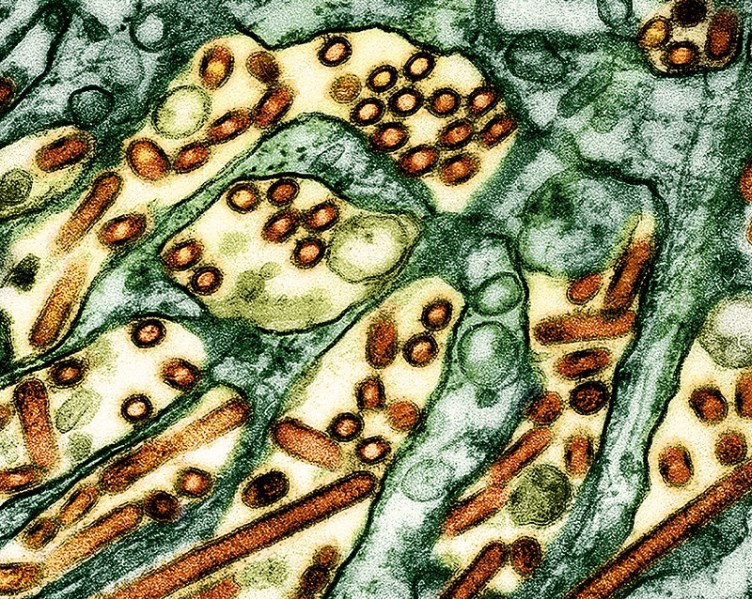
Photo credit: NIAID

© 2025 Zakariyas James. First shared here at theruminationcompilation.wordpress.com.
The Volumes on Vitality: Part Four

Even though the farmer is the man, the farmer has a few friends to thank. The crops and various yields we concern ourselves with, or at least the ones we place the highest value on, severely depend on interactions with other creatures that we tend to overlook or altogether neglect.

As of late, the neglect is reaching a potential maximum that may herald in a world in which some recipes seem too costly or altogether impossible to alter for sake of substitution. Bats, bees and other pollinators are invaluable aids to humanity, yet they’re slowly and quietly going into the long night…moreso than the TV screens care to tell you.

Going Batty

Bats (those cool, nocturnal insectivores) are being wiped out across 40 states by Pseudogymnoascus destructans (white-nose syndrome), a fungus that shatters their hibernation, fat reserves and wings. The result: millions dead, entire colonies erased.
Their absence carries a price tag. Bats provide $3.7 to $53 billion in pest control services each year by eating the insects that would otherwise chew through corn, cotton, rice and other staples. In field studies, excluding bats from cornfields meant 60% more pests and 50% more crop damage in just two nights (Kunz et al, 2011).
Counties hit by the fungus see $2.84 per acre rental declines, idle farmland, a 31% jump in pesticide use and a 7.9% rise in infant mortality which ends up costing society $39 billion. Still today, the fungus spreads. Tangentially, they’re also the largest pollinator group of agave, the basis of tequila; so maybe enjoy it while you got it?

Now the bees…

Between mid-2024 and early 2025, U.S. beekeepers lost 62% of their colonies, totaling over 1.1 million hives gone. These pollinators add $34 billion annually to U.S. agriculture; almonds alone require 1.4 million hives each spring, with hundreds of millions of dollars at stake in pollination contracts.
The causes are hardly mysterious: Varroa mites, viruses, pesticide exposure, habitat loss, and extreme weather (Goulson et al., 2015). In Texas, heat and drought drove a 66% colony collapse; a staggering loss far beyond the norm.
Globally, inadequate pollination already reduces fruit, vegetable and nut production by 3–5%, contributing to hundreds of thousands of premature deaths each year from diet-related disease. Fewer pollinators mean smaller harvests, higher prices and a poorer diet for millions.

Cattle Craze

In early 2024, H5N1 appeared in U.S. dairy herds. A trade group quickly pushed to rename it Bovine Influenza A Virus (BIAV), softening the optics even as infections spread to 17 states and hundreds of herds. Viral shedding was found in milk and wastewater, human cases were recorded, and federal surveillance quietly receded.
The direct food-safety risk is managed through pasteurization, but the economic risk comes from reduced production, herd health declines, and tighter export margins in an already tariff-heavy trade environment (USDA ERS, 2024).

Poultry Problems

The same virus has hit poultry far harder. Since 2022, over 166 million birds have been culled nationwide, across all 50 states and Puerto Rico—marking the largest, longest avian influenza outbreak in U.S. history.
The fallout has been rough, to say the least. Wholesale egg prices more than doubled in early 2025, retail prices hit $5–$9 per dozen and store shelves in some areas went bare between shipments. In February 2025, the USDA launched a $1 billion response plan, including $500 million in biosecurity upgrades, $400 million in farmer relief and $100 million for vaccine research. Wholesale egg prices later fell 64%, retail by 27% and still the USDA forecasts a 41% increase in egg prices for 2025 overall.
Meat production also tightened as infected flocks were destroyed, pushing poultry prices upward and reshuffling supply chains.

None of this even covers the detriment to pest management we owe to millions of other birds we’ve lost to H5N1 recently; they may be bird species we don’t ingest but their contributions to food production shouldn’t be dismissed.

The Hidden Truth Beneath Rising Prices
• Bats gone = higher pest pressure, greater crop losses.
• Bees gone = pollination deficits, reduced yields, higher produce prices.
• Cattle infected = production hits, export challenges.
• Poultry culled = eggs and meat scarce, prices surge.
We call it inflation, trade friction, “market shifts,” but the ledger is ecological and measured in wings lost, colonies collapsed and flocks erased.
These losses don’t happen in a vacuum. They’re amplified by poor government stewardship: from underfunded wildlife agencies to reactive rather than preventative biosecurity. Corporate malpractice often doubles the damage, whether through chemical overuse, disease mismanagement, or lobbying for optics over truth (Food Tank, 2024). Climate disruption compounds every weakness, making winters too warm for pest cycles to break, summers too hot for bees to forage and droughts too long for forage crops to survive (IPCC, 2019). And all of this is made more volatile by consumer demands for cheap, abundant, uniform products causes pressure for producers to cut corners in ways that weaken ecological resilience further.
The true cost of our food is not just in the grocery bill. It’s in degraded ecosystems, distorted market signals, and an agriculture system that burns through its biological capital faster than it can be replenished.

The runaway printing of fiat isn’t helping either but ultimately, the more we ignore the interlocking causes, the more expensive eating will become. Whether it’s denoted in dollars, observed in personal health or in the declining stability of the systems that feed us, we’ll see the cost sooner rather than later and it won’t be easy to stomach.

Sources

• Boyles, J.G., Cryan, P.M., McCracken, G.F., & Kunz, T.H. (2011). Economic Importance of Bats in Agriculture. Science, 332(6025), 41–42.https://science.sciencemag.org/content/332/6025/41


• Kunz, T.H. et al. (2011). Ecosystem Services Provided by Bats. US Forest Service Report. https://www.landcan.org/pdfs/wns%20kunz%20april%205%20%202011.pdf


• Environmental Health Journal (2020). Economic and Health Impacts of Bat Declines. https://www.science.org/doi/10.1126/science.adg0344

• Survey Reveals Over 1.1 Million Honey Bee Colonies Lost, Raising Alarm for Pollination and Agriculture https://honeybeehealthcoalition.org/survey-reveals-over-1-1-million-honey-bee-colonies-lost-raising-alarm-for-pollination-and-agriculture/


• Bee Informed Partnership, 2025 National Honey Bee Loss Survey Results. http://web.archive.org/web/20231218173803/https://beeinformed.org/citizen-science/loss-and-management-survey/


• Calderone, N.W. (2012). Insect Pollinated Crops and US Agriculture. PLoS ONE, 7(5): e37235.
https://journals.plos.org/plosone/article?id=10.1371/journal.pone.0037235


• Almond Board of California, 2024 Annual Report. Annual Publications | Almond Almanac | Growing Good


• Goulson, D. et al. (2015). Bee Declines Driven by Combined Stressors. Science, 347(6229).
https://science.sciencemag.org/content/347/6229/1255957


• Pollination loss removes healthy foods from global diets, increases chronic diseases causing excess deaths. https://hsph.harvard.edu/news/pollination-loss-removes-healthy-foods-from-global-diets-increases-chronic-diseases-causing-excess-deaths/


• USDA Economic Research Service (2024). Cattle and Beef Market Reports.
https://www.ers.usda.gov/topics/animal-products/cattle-beef/


• USDA APHIS (2022–2025). Avian Influenza Outbreak Reports.
https://www.aphis.usda.gov/aphis/ourfocus/animalhealth/animal-disease-information/avian/avian-influenza


• USDA Press Release (Feb 2025). $1 Billion Avian Influenza Response Plan.
https://www.usda.gov/media/press-releases/2025/02/15/usda-announces-1-billion-avian-influenza-response


• USDA Economic Research Service (2025). Poultry and Egg Price Outlook.
https://www.ers.usda.gov/topics/animal-products/poultry-eggs/


• Examining Corporate Influence Over Food and Farm Bill – Food Tank https://foodtank.com/news/2024/07/examining-corporate-influence-over-food-and-farm-bill/


• Intergovernmental Panel on Climate Change (2019). Climate Change and Land.
https://www.ipcc.ch/srccl/

© 2025 Zakariyas James. First shared here at theruminationcompilation.wordpress.com.
Bird Flu & The Great Disappearing Act


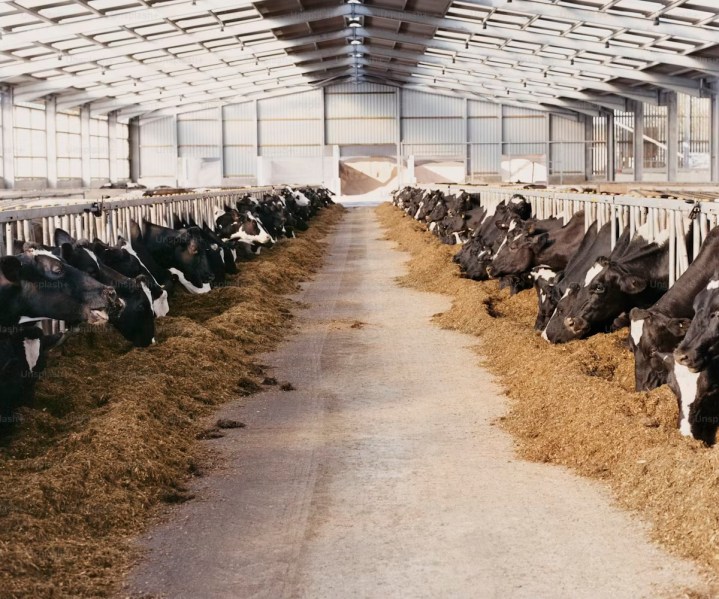
In early 2024, cows started testing positive for a virus we’ve long associated with birds H5N1, also known as Highly Pathogenic Avian Influenza (HPAI). The phrase bird flu in cattle started showing up in news alerts and government bulletins, albeit intermittently. But now, hundreds of infected dairy herds later, the illness is being given a new name.

Not by virologists. Not by the CDC.
By a trade group.

The American Association of Bovine Practitioners (AABP) declared it will no longer refer to the virus in cattle as HPAI. From here on out, they’re calling it Bovine Influenza A Virus (BIAV) and they’re urging federal agencies, diagnostic labs and state health officials to follow suit.

The reason?
To help the public “better understand” the difference between bird flu in birds and the milder form now spreading through cows.

They also say the change will “help maintain confidence in the safety and accessibility of dairy and beef products.”

Which might be the most honest sentence in the entire press release.


In 2024, the U.S. exported nearly 2.8 billion pounds of beef, generating over $10 billion in international sales.
China, a cornerstone of those exports, is now largely off the table. American beef faces a 32% tariff there, alongside widespread delistings of U.S. facilities.

With the Trump administration’s tariffs raising tensions across North America, maintaining consumer trust (both domestic and foreign) has never been more financially urgent for the beef lobby.
You don’t move that kind of product if people start panicking about biosecurity, let alone the potential for animal-to-human spillover.


At least 17 states have now reported H5N1 infections in dairy cattle.
Human cases have already occurred. Wastewater and milk sampling show signs of persistent viral shedding.

But the renaming of the virus comes at a time when the federal government is reportedly scaling back H5N1 surveillance efforts. Staff reductions, limited testing and quiet policy shifts are leaving fewer eyes on a virus that’s crossing species lines with alarming ease.

There’s a strange convenience in the timing.

A virus known for devastating poultry industries is now embedded in America’s dairy system. And just as public concern might begin to swell, a new label appears.

Not one rooted in viral evolution or scientific consensus but in consumer confidence.

The virus didn’t disappear.
Just the name.


Meanwhile, American consumers are seeing beef prices climb steadily, often far faster than official inflation numbers suggest.

Major media outlets and government agencies largely frame these increases as a natural outcome of supply and demand or temporary inflationary pressures. But the reality is more complex.

For a deeper look at how inflation numbers get manipulated and what that means for prices like beef, see: Shadow Inflation & the Price of Freedom


Tariffs imposed by the current administration on beef imports from key trading partners like Canada and Mexico (sometimes as high as 25%) have disrupted supply chains and added costs that producers pass down the line.

Meanwhile, retaliatory tariffs from export markets such as China have shrunk overseas demand, squeezing domestic producers from both ends.

Add to that rising feed, fuel, and labor expenses and the fallout from widespread H5N1 infections in dairy herds (costs they simply can’t eat) it’s clear that American beef is caught in a pressure cooker.


Consumers are left to wonder:

  • How much of the rising beef price is due to trade policy?
  • How much stems from inflation?
  • And how much reflects an industry quietly trying to manage the optics of a virus now entrenched in the very livestock they rely on?

The American Association of Bovine Practitioners and the current administration say people won’t get sick from bird flu in cows unless, of course, they drink the milk raw.

But if the virus isn’t a threat, why does every regulatory body recommend only pasteurized milk?


The answers are complicated.
But what is certain is this:

The story told about beef, bird flu, and prices is being carefully served to us on a dirty platter.

© 2025 Zakariyas James. First shared here at theruminationcompilation.wordpress.com.
Precision Consumer 2030

Wellness as a Window into You

You are being watched.
Not just by a camera or a satellite or a data broker.

But by your smart mirror.
Your fitness ring.
Your gut biome dashboard.
Your digital assistant that noticed you’ve been coughing more lately.

This isn’t surveillance in the dystopian, authoritarian sense. It’s subtler than that. It’s called “precision wellness”. By 2030, so they say especially if certain think tanks have their way, it’ll be normalized. Incrementally, then all at once. After that, it’ll more than likely be dystopian but let’s take a step back. 

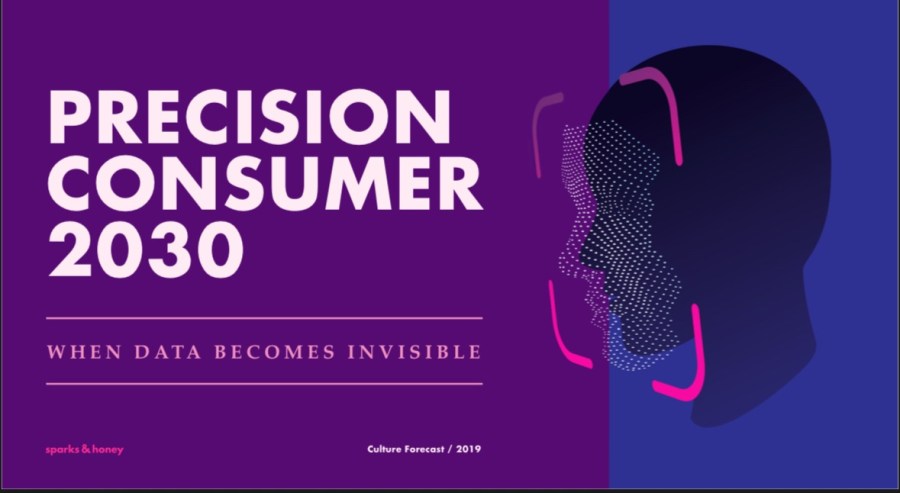
In 2019, a cultural intelligence consultancy called Sparks & Honey released a document titled Precision Consumer 2030—a 125-page playbook detailing the transformation of personal health into a hyper-individualized, AI-optimized ecosystem of apps, trackers, scores, and predictive services. At first glance, it reads like a wellness brochure from the future: designer synbiotics, mood-responsive interiors, “smart” toilets that analyze your waste. But with discerning eyes, what emerges is not just summaries of consumer trends but actually a governance architecture.

That’s because Sparks & Honey isn’t just some boutique agency running ideation workshops for sleepy CPG brands. It is a strategic foresight division of Omnicom Precision Marketing Group, a branch of the $17B Omnicom advertising conglomerate. They deploy an AI platform called Q™, which digests thousands of cultural signals to guide institutional decision-making. And their most prominent collaborator on Precision Consumer 2030 was the World Economic Forum (WEF).

The WEF Connection

Sparks & Honey didn’t just work adjacent to the World Economic Forum. They co-developed and presented the Precision Consumer 2030 initiative at Davos in 2020 alongside corporate partners like IBM, 23andMe, Mount Sinai, and PepsiCo, to name a very short few. Robb Henzi, their SVP of Strategy, also served on the WEF’s Global Future Council on Agile Governance, where he contributed to WEF white papers on regulatory technology (RegTech) and behaviorally responsive governance frameworks. 

So when you read Precision Consumer 2030, you’re not just browsing a guess at what’s coming. You’re reading an institutionally aligned proposal, actively disseminated to the very companies, cities, and policymakers tasking themselves with building the future.

This is not fiction. This is how it comes to be. 

Your Body, Their API

In the Precision 2030 model:

  • Consumers will soon manage a “bio-cloud”—a constantly updating digital twin of their physiology.
  • Workplaces will match employees to tasks using biometric stress data.
  • Retail will shift from demographic targeting to individual mood-based personalization.
  • Health insurance could fluctuate based on real-time metabolic behavior.

This isn’t a question of “if” or “when.” The infrastructure is already here. What Precision Consumer 2030 shows us is the desired end-state of that infrastructure. A system where privacy, bodily autonomy, and informed consent are functionally obsolete.

And nowhere in the document is data security meaningfully addressed. There is no mechanism proposed to protect against biometric theft, psychological profiling, or genetic discrimination. Why would there be? That’s not the concern of predictive market designers. Their job is to make behavior legible, profitable, and manageable. 

Wellness as Performance, Surveillance as Care

In this model, health becomes aesthetic; another layer of conspicuous consumption. You don’t just track your well-being; you display it. Your biometric score becomes your new credit score. Your gut biome becomes part of your brand. Your wearable tells others whether you’re exhausted, inflamed, focused, or fertile. It tells others that your affluence is secure enough to secure you another healthy day. 

This is the new luxury: the appearance of control over your own biology, delivered through interfaces owned and operated by someone else.

The Sparks & Honey advisory board itself reveals how broad this reach is:

1. Judy Samuelson

Affiliation: Executive Director, Aspen Institute Business and Society Program
Known For:

  • Leading voice in rethinking the role of corporations in society.
  • Spearheaded the Aspen Principles, which influenced long-term corporate value metrics and social responsibility standards.
  • Frequently writes and speaks on stakeholder capitalism and the limits of Milton Friedman’s shareholder-first model.
  • Author of The Six New Rules of Business.

Relevance: Brings policy influence and corporate ethics framing to Sparks & Honey’s predictions; grounding their trend work in emerging governance and business ideology.

2. Kahlil Greene

Known As: The “Gen-Z Historian”
Background:

  • Former Yale Student Body President, became widely recognized on TikTok and Instagram for distilling American history and social issues for younger audiences.
  • Topics often include race, systemic inequality, and generational perspective shifts.
  • Strong social media presence with partnerships in youth education, brand consulting, and activism.

Relevance: Represents the youth culture pulse, with the ability to translate institutional messaging into digestible narratives for digital-native generations.

3. Dr. Brian Pierce

Background: Former Director of the Information Innovation Office (I2O) at DARPA (Defense Advanced Research Projects Agency)
Known For:

  • Oversaw cutting-edge military research related to artificial intelligence, neuroscience, and human-machine symbiosis.
  • Helped lead DARPA’s efforts into predictive intelligence and autonomous systems.

Relevance: Adds high-level expertise in defense-grade AI, surveillance tech, and human-data integration, which reinforces Sparks & Honey’s credibility in biometric and predictive modeling domains.

4. Lynn Greene

Background: Former President of Estée Lauder’s Global Brands
Known For:

  • Oversaw Estée Lauder, Clinique, and Origins globally.
  • Noted for modernizing brand strategy and integrating emerging beauty tech and AI-driven personalization.
  • Played a key role in shifting beauty toward data-informed consumer experiences.

Relevance: Ties Sparks & Honey’s foresight work to consumer behavior, biometric branding, and commercial personalization strategies.

5. Maarten Leyts

Background: Youth culture expert; CEO of Trendwolves (a Belgium-based trend forecasting firm focused on millennials and Gen Z)
Known For:

  • Specializes in cross-generational insight, emerging behaviors, and cultural forecasting across Europe.
  • Has advised on education, youth employment, and tech adoption trends.
  • Published widely on the socio-psychological patterns of Gen Z and post-pandemic youth culture.

Relevance: Adds granular insight into how generational shifts impact consumer behavior, governance models, and cultural adoption of bio-integrated tech.

These aren’t marketers. These are architects of consensus, shaping how commerce, identity, and even biology are interpreted across institutions, over years of focused influence. 

The Real Takeaway: This Is the Blueprint

Precision Consumer 2030 is not simply forecasting where health culture might go. It is manufacturing the desirability of its inevitability, corporations on board are working at this very moment to convince you or your younger peers this is sexy, smart and socially significant. Through collaborations with the WEF and a multitude of Fortune 500 partners, Sparks & Honey’s influence isn’t theoretical it’s operational.

As a result, this document (light on footnotes but heavy on framing) should be read the way a legal analyst reads a contract. Or the way a surveyor reads a map of land that isn’t theirs yet.

Because this is a roadmap for cultural submission, where each biometric check-in is repackaged as empowerment. Where every app that helps you sleep better might also be reshaping your insurance score, your employability, and your self-worth. It may even flag you for limited travel and limited consumption of goods and services; it will know more about you than you do and make decisions based of information you wouldn’t even know how to read or process.

But that’s no excuse to say you didn’t see it coming.


They published it.

They presented it.

(Then they scrubbed the paper from their website.)


Now they and a bunch of companies you probably give your money to or might even work for are building the infrastructure to make sure you can’t opt out.

Below, you will find a download of Precision Consumer 2030. Read it over and start to look at what’s on the shelves and on the way with this paper in mind.

Update: and just like that, President Trump has a very relevant idea that sounds like just another step in Precision Consumer 2030.

Trump Administration Is Launching a New Private Health Tracking System With Big Tech’s Help

President Donald Trump is expected to deliver remarks on the initiative Wednesday afternoon in the East Room. The event is expected to involve leaders from more than 60 companies, including major tech companies such as Google and Amazon, as well as prominent hospital systems like the Cleveland Clinic.

© 2025 Zakariyas James. First shared here at theruminationcompilation.wordpress.com.