Give it some time, the trees will start listening to you. A device once used only to track growth rates is now the seed of something else, a quiet grafting of the forest into the cloud.
Dendrometers (used to measure the growth of trees and other plants by monitoring changes in diameter) have gotten a recent boost in applicability for more than just forest management teams. Thus far, they’ve allowed forest managers to cut down site visits needed to gather data on tree growth and carbon capture rates, but because of a recent innovation, much more is possible and I want to paint a picture for you.
As per usual, what begins as a gesture to efficiency, a nod to preservation, may warp into something far more insidious.
The company Treemetrics, working alongside the European Space Agency, created sensors that link through wide-area networks and satellites, feeding streams of data into a platform called Forest HQ. If your tree is growing, Forest HQ knows. The forest becomes an extension of the cloud, feeding numbers related to diameter growth, height, location—change of all sorts. So, the forest is no longer a place. It is a feed. The company calls this project the Internet of Trees.
The logic is seductive: better measurement equals better care. Carbon accounting strengthens climate response. Carbon credits for the cap-and-trade markets gain more authenticity. But inside that necessity lies a governance architecture: every tree, instrumented; every growth curve, visible; every beat of the forest, rearranged as data. A swarm of data waiting to be further monetized or weaponized—unfortunately, humans do one or the other. Often both.
I know what I will soon describe may seem altogether far fetched, but it does not take much imagination to see the scope widen in the way I expect given the right amount of time.
The slope is not hard to imagine. Already, forests are wired with listening devices meant to detect chainsaws, trucks and any other prohibited criteria. Artificial intelligence runs on-site, flagging the sounds of illegal logging before they reach the cloud. It is admittedly clever, even noble. But anything involving criminalization soon collapses into categories: nuance is stripped, anomalies are flagged, people are reduced to signals.
We’ve seen this arc before. The Global Positioning System was once sold as a gift for navigation: finding your way home, never getting lost. Now it’s the backbone of precision strikes and geofencing. Closed-circuit television cameras were rolled out for “public safety.” Now they’re stitched together in networks that can track a face across an entire city and can even recognize your gait amongst a crowd. Social media began as a way to connect with friends and now it’s a sprawling apparatus of profiling, targeted persuasion and behavioral nudging.
Each began as benevolent. Each hardened into control.
For a good number of technologies, the arc of applicability tends to bend toward something darker. Monetized until meaningless or weaponized against anyone not in control of the weapon.
What begins as protection of ecology can just as easily become the monitoring of people. A hiker’s footsteps, a group of protestor’s chants; any human activity can be parsed as anomaly, pinged to headquarters. With the right contracts, the forest becomes surveillance infrastructure, camouflaged in green.
What if Forest HQ evolves from tracking growth to performing guard duty? What if the forest ceases to be wild and becomes a grid, mapping bodies as much as making bark?
Conveniently, this year a viral post showcased a new service from XFinity that uses WiFi signals to detect motion in your home, “without relying on sensors or cameras.” The technology has existed for years, but only now is it being pitched as household convenience. Tracking once reserved for homes and offices will soon extend to the wilderness.
You can opt into this service, which routers and WiFi connected objects around you don’t give the option to opt out?
This shift matters not only technologically but culturally. What happens when forests are no longer trusted as wild refuges, but feared as watchtowers? What happens to the human imagination when trees are not symbols of mystery or sanctuary, but extensions of a monitoring state? Jokes about birds not being real will lose their humor. Children will hesitate or outright refuse to climb a tree.
Surveillance always arrives dressed as care. It comes with drones, dashboards and dragnet data streams in the name of stewardship and security. But benevolence, left unexamined, can harden into coercion. The trees will stop watching silently; they start reflecting, transmitting, bearing witness.
And so the question lingers: at what point does monitoring, however noble its pitch, become policing?
Throughout our history, the wild was once where we went to disappear. Now it has the potential to be where we are found most easily.
For more reading on how technological advancement affects our interaction with nature and cultivated products, see The Products of a New Environment.
You’re not losing your mind, you’re losing your purchasing power.
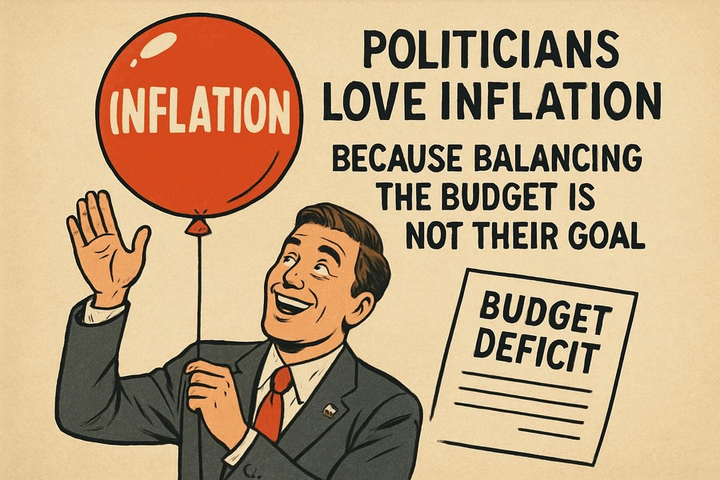
Everything from groceries to rent to basic utilities has crept into unaffordable territory, but somehow the government insists inflation is around 3.3%. To most of us, that number feels like a punchline with no setup.
ShadowStats, which calculates inflation using methods from before the 1980s CPI revisions, suggests it’s actually over 9%. That sounds far more in line with what you feel in your bones and your wallet, doesn’t it?
The difference isn’t just mathematical, it’s philosophical. It determines whether you believe our society is slowly progressing or quietly deteriorating.
And at the center of that delusion sits the green tech movement: an ideal pushed by agreements between supranational organizations and state governments, built on commodities like silver, which ironically is one of the few tangible lifeboats left in an era of untethered money, misrepresented data, and unsustainable goals.
CPI: The Numbers Game That Makes Poverty Look Like Progress
In the early 1980s, the U.S. government began quietly redefining inflation. It didn’t look good on paper to say retirees needed 10% annual increases in Social Security checks. It looked even worse for Treasury bondholders expecting “real” returns.
So instead of wrestling inflation down, policymakers redefined how it was measured.
They introduced terms like:
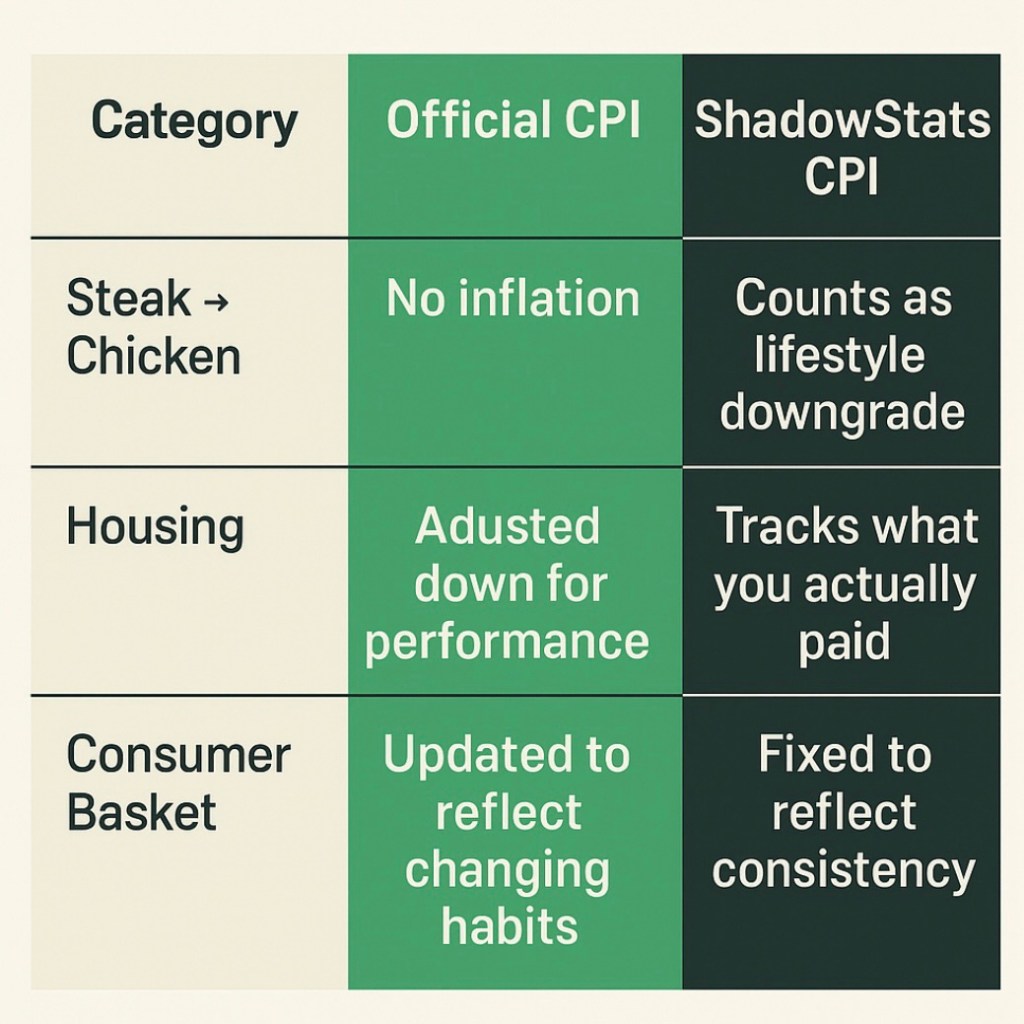
Substitution: If steak gets too expensive, CPI assumes you switch to chicken. Inflation problem solved.
Hedonic adjustment: If your laptop is twice as fast, they say you’re paying less for it—even if it cost you more dollars (source, second bullet point).
Owner’s Equivalent Rent (OER): Instead of tracking what you pay in housing, they estimate what your home might rent for, based on surveys. (Crazy isn’t it?)
These methods were sold as ways to make CPI “more accurate,” but what they really did was make inflation more palatable to policymakers and debt managers. They also did it to make sure you and I kept racking up debt and consuming more each quarter.
Official inflation numbers rely on mechanisms that hide the erosion of lifestyle:
These adjustments treat your survival adaptations like buying cheaper food, delaying car repairs, moving back in with family, etc as market choices rather than signs of stress.
You’re not living worse, they say you’re just living differently.
Here’s what the former Fed Chairman Alan Greenspan said in 1995:
Green Tech: The Utopian Offramp Built on Industrial Scarcity
Enter the Sustainable Development Goals and the “just transition” to a greener future. Electric vehicles. Wind turbines. Solar panels. Battery storage. Carbon offsets. All tied to the years 2030 and 2050 as I’ve outlined in more than a few posts on this blog.
The problem? Every one of these systems relies heavily on silver, a finite, mined metal with growing industrial scarcity. According to the Silver Institute, solar panel production alone is expected to account for over 25% of annual silver demand by the end of this decade.
The price of silver has risen 43% year-to-date as of July 2025. Gold is up roughly 22%. Compare that to:
2025 YTD Return
NASDAQ +15%
S&P 500 +10%
DJIA +5.5%
So let’s check the math. If inflation is only 3.3% (official CPI), then those stock market gains look decent. But if ShadowStats is right, and inflation is closer to 9%, then:
The Dow Jones is posting a negative real return.
The S&P 500 is barely breaking even.
Even the NASDAQ, with its AI hype and tech surge, is only modestly positive in real terms.
Only silver and gold are delivering substantial real returns after adjusting for actual inflation.
This is the moment where you realize: only one entity will be paying for the widespread retrofitting and implementation of all this green tech that needs silver and it’s you. Either through willing compliance or taxation by the government so they can buy it with your wages and make you use it.
Hedonics, Hopium, and the Silver Choke Point
The CPI tells you that your phone is getting cheaper, even if you spent more on it, because it has better specs (source, first bullet point).
The ESG movement tells you your energy is getting cleaner, even if your utility bills are rising, because it’s coming from renewables.
But here’s what they don’t tell you:
Silver is irreplaceable in high-efficiency solar, circuit boards, EV contacts, and grid storage.
No large-scale replacement exists.
We are burning through reserves faster than we are discovering new viable deposits.
That means the very commodity needed to “fix” the future is becoming more expensive, even in inflation-adjusted terms. And that creates a dilemma no policy paper can solve.
Silver: The Honest Asset in a Dishonest System
In a world where official CPI is engineered to deflate your sense of decline, silver doesn’t lie.
It doesn’t get adjusted for quality.
It doesn’t get substituted.
It doesn’t get hedonicized.
It just reflects what a scarce, in-demand physical asset actually costs in a world of paper promises and underpriced labor.
And unlike fiat currencies or ESG credits, silver is outside the system. That’s why central banks don’t talk about it, and why retail investors who understand its utility in both monetary protection and energy transition are quietly accumulating at Costco before getting a hot dog and soda.
The Fatal Irony of Sustainable Progress
We are trying to build a green future using a grey metal whose supply cannot scale with our policy ambition. The Sustainable Development Goals require a miracle of material availability that simply doesn’t exist.
If silver prices are outpacing even ShadowStats’ inflation, then the affordability of the clean tech utopia vanishes on arrival. And if real inflation is devouring your market returns, then the dream of using “compound growth” to escape stagnation is mathematically dead.
Compliance or Sovereignty: There Is No Third Option
If you’re not holding assets that outpace real inflation (like silver or gold or the next randomly pumping stock) then you’re not preserving wealth. You’re slowly converting it into obedience.
Because what happens when your savings can’t keep up?
You’ll be offered government rebates for heat pumps.
Carbon credits for commuting less.
EV mandates.
Sustainability scorecards tied to your bank account (like that Aspire card I mentioned a few posts ago).
Access granted in exchange for compliance.
If you can’t buy your way out of the system, you’ll be forced to conform to it.
Green tech won’t be a lifestyle choice. It will be a behavioral requirement coded into policy, enforced by banks, and justified by a CPI that says “everything’s fine.”
Final Thought: Scarcity Isn’t the Problem—It’s the Lie
ShadowStats reveals how far we’ve drifted from price reality. Silver shows how tangible scarcity still has economic weight, how truth leaks out where it can’t be hedged.
And if you’re still counting on index funds and CPI-adjusted retirement accounts to protect you, ask yourself:
What happens when the growth you’re chasing is just inflation in disguise?
Silver isn’t just a hedge. It’s a mirror. And the reflection it shows is too uncomfortable for mainstream narratives to tolerate.
[Update – October 2025: When this piece was first published in July 2025, silver traded at $38.32 per ounce. As of this update, it sits near $51.60 — a 34% increase in less than four months. Every dollar rise in silver’s spot price compounds the already-underestimated cost of “green” manufacturing, storage, and infrastructure. The same scarcity dynamics I described below are now playing out in real time.]
There’s something ironic in how silver doesn’t match the weight it now carries, even when labeled on bullion.
It’s the best conductor of electricity, it’s antimicrobial and for thousands of years it acted as a monetary metal. For centuries it has been ornamental or a tool of commerce or consumption (think silverware) and now it finds itself increasingly involved in the infrastructure of a repeatedly promised future: solar panels, electric vehicles, grid storage systems, and the increasingly complicated web of “green” innovation spurred on by Sustainability Development Goals created by the U.N.
Excited conversations on TV and other blog posts discuss these technologies as if they’re incorporeal though. Guaranteed but incorporeal. As if solar energy arrives by virtue of political will or increased taxation, that EVs emerge from factories every quarter to appease shareholders and to respond to inevitable increases in consumer acceptance.
“People will want EVs when the range per full charge surpasses ICE gas mileage!”
But silver is physical. It is mined, refined, shipped, spent. However, there is only so much of it and fiscally speaking, only so much that it can be used on before the next thing that requires it is just too expensive.
Paper or Physical?
The silver market is quiet in the way illusions are quiet.
Prices have remained strangely stagnant; even as demand rises from every direction, prices have been relatively flat. Silver is only up about 94% in the last 4-5 years, even amidst the obvious increase in solar panel production & EVs all over.
But there’s a clear reason: most of the silver traded in financial markets isn’t silver at all. It’s “paper silver”—contracts, ETFs, and other abstractions that represent claims on silver rather than silver itself.
This paper silver is stacked and restacked, layered so thick that for every ounce of physical metal, there are about 300 paper claims for every physical ounce. These instruments are cheap and convenient. They give the appearance of liquidity. They help manufacture downward pressure on a metal that is worth more each and every day that governments push the green future they’ve committed to with Sustainability Development Goals.
But try to build a solar panel with an ETF. Try to wire a battery with a futures contract. Buy a paper claim for a 1,000 ounces of silver and try to claim ownership; it’s a bit more convoluted & difficult than you’d think.
But that’s because markets pretend there is abundance when the mines quietly say otherwise.
Domestic Dependence
The U.S. mines very little silver on the global scale.
Most of it comes as a byproduct—scraped from zinc, lead or copper operations already past their prime. Mexico, Peru, and China dominate the supply chain.
Still, federal and state initiatives in the U.S. continue pushing solar incentives, EV mandates, and infrastructure investments without asking the most basic question: is there enough material to meet these goals?
Independence in energy policy without independence in materials is not independence at all. It is an illusion with a timer or an attempt at convincing the public that independence exists at all. How can each nation experience independence in a global economy attempting to deal with a global problem like environmental protection?
The Math That Isn’t Discussed
There are roughly 260 million licensed drivers in the United States. If half of them eventually drive electric—an optimistic yet increasingly standardized projection—that’s 130 million EVs.
Each EV contains roughly 25 to 50 grams of silver. Taking the midpoint:
130,000,000 × 40g = 5.2 billion grams of silver = 167 million troy ounces
That’s one-fifth of the entire global silver production in a year (~800 Million ounces) just for U.S. EVs.
Now consider rooftops. There are around 82 million owner-occupied homes in the U.S. Maybe 60% are viable for solar. That’s 49 million rooftops.
Each home installation uses about 700 grams of silver, on average:
That’s more than all the silver the world mines in a year, just for U.S. homes. We expect this for all the nations involved in international agreements like the Paris Climate Accords and the 2050-centered plans from the U.N. so these figures throw a lot of things into question.
This doesn’t cover batteries, none of the redundancy systems, commercial arrays, or military contracts. No export demand. No global population growth. Just drivers and rooftops. Already unfeasible. This doesn’t even cover the actual dollar cost of simply buying the necessary amount of silver.
At the time of writing, silver is trading hands at $38.32 USD.
So that 167 million Troy ounces needed for just the vehicles? That’s just shy of $6.4 billion and that’s a figure expected to be paid in part by us, the consumer, upfront and more than likely down the road through taxpayer funded subsidies to accelerate EV adoption.
(There’s about an average of 62 ounces of pure Lithium in an EV battery; at $1.93 an ounce for refined lithium, it’s obvious the real price constraint will eventually be silver.)
The 1.1 billion Troy ounces needed for the solar panels? That’s about $42 billion, another cost we can attribute to the federal deficit and consumer spending.
These are not “if” numbers. These are baseline assumptions. The kind that policy was supposed to be built on.
Technology Without Materials
We’ve been taught to think of green energy as a software problem. That with the right code, the right algorithm, the right policy tweak, we can unlock a clean, efficient, endlessly scaling future.
But materials don’t scale like software.
Silver is not a “tech solution.” It is a finite, mined resource that lives in geological time. Once it’s pulled from the ground, used in a panel or circuit, it is largely unrecoverable. There is no efficient way to recycle the trace amounts embedded in electronics or laminated into photovoltaic cells.
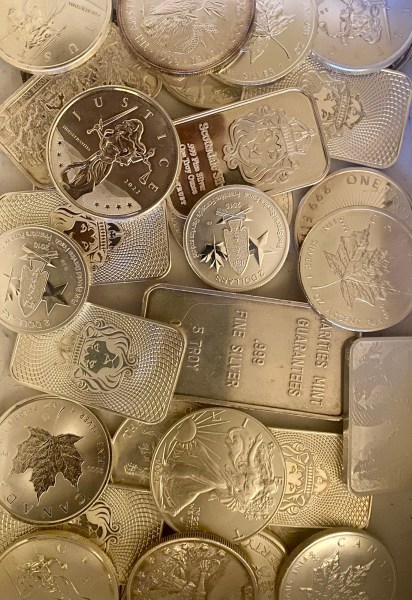
So while the software runs smoother every year, the hardware gets scarcer. Especially now that Costco is selling silver to the masses; it’s estimated they’ve already sold anywhere from 20-30 million Troy ounces of silver since January of 2024.
Industry is now competing with citizens of nations dealing with currency devaluation and governments with bad budgeting in its blood.
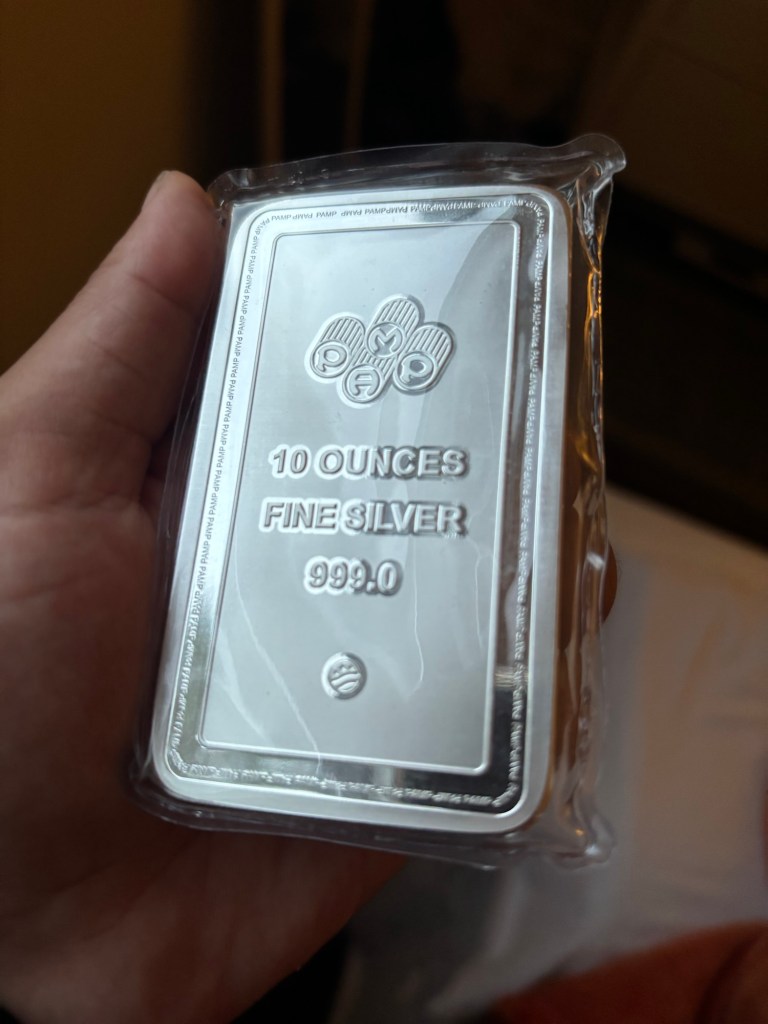
One of those 10 ozt PAMP Suisse bars from Costco doesn’t even equal a full solar panel; it’s just enough to finish making about 7 EV batteries though!
Quiet Disappearances
If silver were priced according to its utility—its indispensability to the green transition—its value would be multiples higher. But that would disrupt the illusion. It would wake the markets. It might even force a reckoning with how we plan, and who gets access to these technologies when scarcity arrives. (On another note, it would also break a couple banks since there’s a large short position affecting silver price discovery but that’s a whole other story you should read up on elsewhere.)
So the system does what it’s good at. It mutes the signal.
Silver’s price is managed, its physical demand obscured by the over-issuance of paper derivatives. Meanwhile, physical silver disappears—not in vaults, but into solder points, busbars, and circuitry. Into machinery that will work until it breaks and be too costly to recover when it does.
This is not theoretical. It is measurable. It is ongoing. It is irreversible on any policy-relevant timeline.
The Consequences of True Price
Here’s the part no one likes to say out loud:
If silver ever reaches a price that reflects its real utility and real scarcity, millions of people will be priced out of vehicle ownership—permanently. This can especially said with certainty for any jurisdictions that mandate EV adoption by way of phasing out ICEs or increasing daily taxation for driving an ICE vehicle like London does already.
But not because of a shortage of cars. Because of the materials required to build them. If silver doubles, triples, or reaches the kind of price discovery that gold once saw, the cost to manufacture electric vehicles and solar panels will skyrocket. That cost won’t land on corporations. It’ll land on people.
The very people these transitions were supposed to serve.
Middle-income households. Rural drivers. Lower-tier homeowners trying to insulate themselves from rising energy bills. They’ll be handed a clean-energy future they can’t afford to participate in.
Not Fragile Like Glass—Fragile Like a Lie
This isn’t just about silver.
It’s about what happens when we shift from one form of dependency to another and pretend the second is progress. Fossil fuels were finite and demonized for being dirty. But critical metals are finite, dirty until refined and polished; will they be demonized or will we make a beast out of the burden of allocation for these green dreams?
Silver is not the only material with a bottleneck. But it may be the first one to snap and it has reason to be called the most important material in the effort to advance green technology adoption across the U.S. and the other nations party to the U.N. climate goals.
And when it does, we’ll realize we didn’t build a transition. We built a fantasy. One that is clean on the surface, fragile underneath, just waiting for the first real demand to break it.
What we’re probably heading towards is a two-tier society built upon who has precious metals & who doesn’t.
Sounds sort of like we’re regressing to a world of kings and peasants doesn’t it?
When this piece was first written, I estimated the silver cost of producing 167 million EVs using $38.32/ozt spot price. At today’s $51.60, the same calculation jumps from roughly $6.4 billion to $8.6 billion, a reminder that “sustainability” priced in fiat ignores the finite nature of the materials that make it possible.
For more content related to silver, I’d recommend the Bald Guy Money YouTube channel, David Jensen’s Substack and Maneco64 on YouTube as well. These 3 individuals have the best grasp on why silver is probably one of the most interesting metals, it’s got conspiracy, history, importance for the future, it’s got it all.


 The Rumination Compilation