A policy. A system. A technology. A way of talking about “progress” that sounds reasonable on the surface until you sit with it for a while. My blog has been where I work through those things in nonfiction.
But there’s a limit to that approach.
Nonfiction has to stay tethered to what can be verified. Fiction doesn’t. Fiction lets you follow a line of thinking to where it might lead without stopping to prove every step along the way. That difference is why this book exists, from watching the world closely and wanting a format that allowed me to ask: where could this lead?
CANOPY is a short collection of four interconnected speculative stories set in a near future that isn’t dramatic or apocalyptic, just recognizable. Systems function, decisions are made, and people adjust, consciously or not.
If you’ve read my nonfiction, you’ll recognize the concerns. Fiction simply gave me room to push them further.
I’ll be donating copies to local libraries and sharing a few with people who’ve influenced my thinking over the years.
CANOPY is now available for preorder through independent bookstores including Powell’s and Magers & Quinn, and through other retailers nationwide.
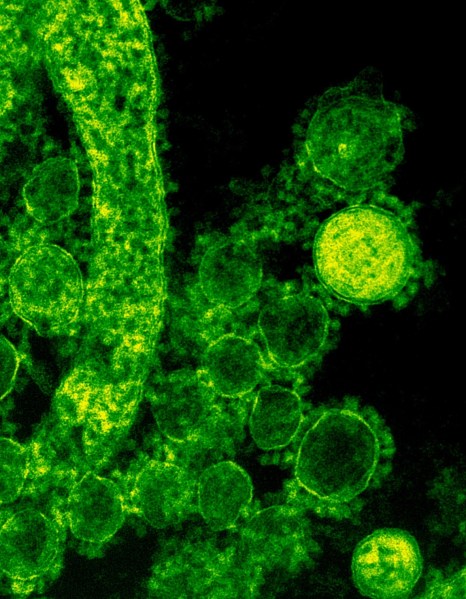
From the wetlands of Asia to the frozen coasts of Antarctica, from the farms of Europe to the forests of North America, H5N1 is moving quietly yet relentlessly. Once called “bird flu,” this virus has slipped through the cracks of public attention, expanding its reach across species and continents. It is no longer just a disease of birds: it is a cross-species contagion, touching goats, pigs, seals, sea lions, cats, cows and numerous other wild mammals.
Yet despite this, media coverage is fragmented and human awareness is uneven. H5N1 is everywhere, but our gaze often stops at borders, political lines, or convenient news cycles. The virus does not respect such boundaries. Its spread is a mirror to our selective attention.
A Global Cast of Hosts
Consider the reach of this virus. Across the globe, new species are being documented with infection and the list is become extensive to say the least (FAO, 2025). In Europe, swans, wild geese, poultry and even foxes and martens have been infected (ECDC, 2025). North America has seen seals, sea lions, wild birds, domestic cats, cows, raccoons and skunks (USDA, 2025). South America reports penguins, sea lions, gulls and other marine mammals. Swine are the historical step before human transmission but because of the amount of mammalian hosts thus far, it could be anything from cattle to sea lions that lead to a mutation that’ll cause the jump (Nature, 2025).
From Antarctic penguins to goats in Asia, from big cats in American sanctuaries to backyard poultry across the globe, the virus leaps in ways that are both biological and symbolic. It reminds us that human, animal and environmental health are never separate; they are threads in a single, tangled web.
The Global Eye: How States Track (or don’t track) Bird Flu
Even as H5N1 spreads across species and continents, the ways in which governments observe it diverge sharply. Some countries maintain strict, systematic surveillance; others glance occasionally; some have turned away entirely.
United States: Federal oversight has receded. The Centers for Disease Control and Prevention treats H5N1 updates as a subset of routine influenza data (CDC, 2025). Voluntary testing programs in dairy herds draw participation from just a tiny fraction of farms. The state’s gaze has shifted elsewhere, leaving large gaps in knowledge.
China: Poultry markets and farms are disinfected daily, weekly, and monthly in a meticulously enforced rhythm (ScienceDirect, 2025). Every bird cough, every unusual death is a signal in a network designed to catch the virus before it leaps.
Europe: Coordinated regionally, member states report any case within 24 hours. A sick bird in Spain triggers alerts across the continent (ECDC, 2025).
India: Reactive measures, like the temporary closure of the National Zoological Park in Delhi after two painted storks died, illustrate intervention that follows tragedy rather than anticipation (Times of India, 2025).
Across the globe, this spectrum of vigilance (from obsessive monitoring to passive observation to deliberate neglect) illustrates the human choices behind surveillance. The virus moves indiscriminately, but our attention is selective. And selective attention, in a pandemic of interspecies proportion, is a choice with consequences.
The most recent iteration of government action related to H5N1 is quite literally a polar opposite of the U.S. approach: The Korea Center for Disease Control and Prevention conducts a national diagnostic test practice mock training for animal influenza human infection (KCDCP, 2025).
A Reflection on Our Relationship with the Wild
H5N1’s march across species and continents forces a question: how do we relate to the wild when it can suddenly turn contagious? When a virus moves from birds to goats to marine mammals, when pets and livestock are implicated, the boundary between nature and human society blurs.
As with other technologies or threats, the unintended consequences unfold over time. The virus is impartial; we are not. Our awareness is shaped by policy, economics and media attention. What we choose to track, or not track, determines not just who gets sick, but who notices, who acts and who survives. And so the question lingers: if a virus can hop continents and species, why do our eyes remain shut? When does selective monitoring become neglect, when does the world’s quiet whisper demand that we finally listen?
Closing Reflection
H5N1 is not just a threat to poultry or wildlife; it is a mirror of our attention, our governance, our relationship to the planet. The wild was once where humans went to disappear; now it is a place where contagion can travel undetected, where the boundaries between species and borders blur.
We can ignore it, as some states do. We can track obsessively, as others do. But no matter where the virus moves, it challenges every human assumption about control, safety, and care. And perhaps the greatest question is not whether we can stop it, but whether we are paying attention in time.
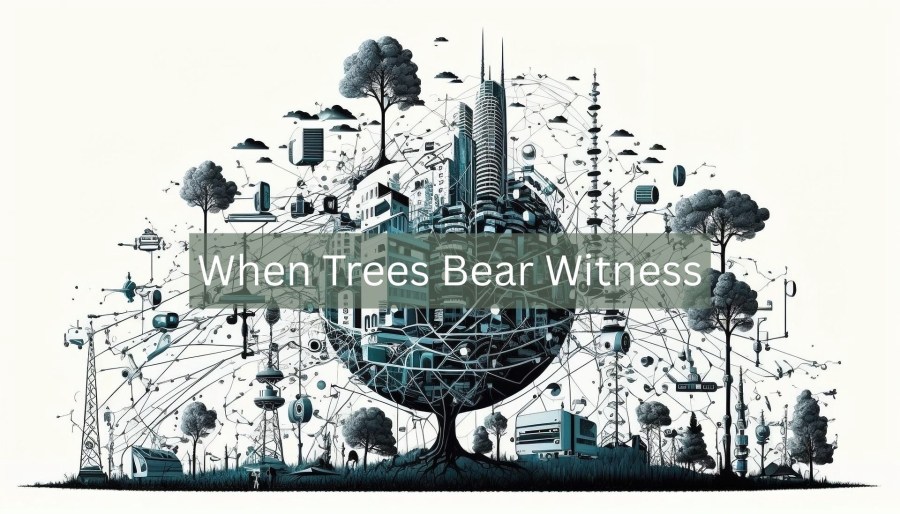
Give it some time, the trees will start listening to you. A device once used only to track growth rates is now the seed of something else, a quiet grafting of the forest into the cloud.
Dendrometers (used to measure the growth of trees and other plants by monitoring changes in diameter) have gotten a recent boost in applicability for more than just forest management teams. Thus far, they’ve allowed forest managers to cut down site visits needed to gather data on tree growth and carbon capture rates, but because of a recent innovation, much more is possible and I want to paint a picture for you.
As per usual, what begins as a gesture to efficiency, a nod to preservation, may warp into something far more insidious.
The company Treemetrics, working alongside the European Space Agency, created sensors that link through wide-area networks and satellites, feeding streams of data into a platform called Forest HQ. If your tree is growing, Forest HQ knows. The forest becomes an extension of the cloud, feeding numbers related to diameter growth, height, location—change of all sorts. So, the forest is no longer a place. It is a feed. The company calls this project the Internet of Trees.
The logic is seductive: better measurement equals better care. Carbon accounting strengthens climate response. Carbon credits for the cap-and-trade markets gain more authenticity. But inside that necessity lies a governance architecture: every tree, instrumented; every growth curve, visible; every beat of the forest, rearranged as data. A swarm of data waiting to be further monetized or weaponized—unfortunately, humans do one or the other. Often both.
I know what I will soon describe may seem altogether far fetched, but it does not take much imagination to see the scope widen in the way I expect given the right amount of time.
The slope is not hard to imagine. Already, forests are wired with listening devices meant to detect chainsaws, trucks and any other prohibited criteria. Artificial intelligence runs on-site, flagging the sounds of illegal logging before they reach the cloud. It is admittedly clever, even noble. But anything involving criminalization soon collapses into categories: nuance is stripped, anomalies are flagged, people are reduced to signals.
We’ve seen this arc before. The Global Positioning System was once sold as a gift for navigation: finding your way home, never getting lost. Now it’s the backbone of precision strikes and geofencing. Closed-circuit television cameras were rolled out for “public safety.” Now they’re stitched together in networks that can track a face across an entire city and can even recognize your gait amongst a crowd. Social media began as a way to connect with friends and now it’s a sprawling apparatus of profiling, targeted persuasion and behavioral nudging.
Each began as benevolent. Each hardened into control.
For a good number of technologies, the arc of applicability tends to bend toward something darker. Monetized until meaningless or weaponized against anyone not in control of the weapon.
What begins as protection of ecology can just as easily become the monitoring of people. A hiker’s footsteps, a group of protestor’s chants; any human activity can be parsed as anomaly, pinged to headquarters. With the right contracts, the forest becomes surveillance infrastructure, camouflaged in green.
What if Forest HQ evolves from tracking growth to performing guard duty? What if the forest ceases to be wild and becomes a grid, mapping bodies as much as making bark?
Conveniently, this year a viral post showcased a new service from XFinity that uses WiFi signals to detect motion in your home, “without relying on sensors or cameras.” The technology has existed for years, but only now is it being pitched as household convenience. Tracking once reserved for homes and offices will soon extend to the wilderness.
You can opt into this service, which routers and WiFi connected objects around you don’t give the option to opt out?
This shift matters not only technologically but culturally. What happens when forests are no longer trusted as wild refuges, but feared as watchtowers? What happens to the human imagination when trees are not symbols of mystery or sanctuary, but extensions of a monitoring state? Jokes about birds not being real will lose their humor. Children will hesitate or outright refuse to climb a tree.
Surveillance always arrives dressed as care. It comes with drones, dashboards and dragnet data streams in the name of stewardship and security. But benevolence, left unexamined, can harden into coercion. The trees will stop watching silently; they start reflecting, transmitting, bearing witness.
And so the question lingers: at what point does monitoring, however noble its pitch, become policing?
Throughout our history, the wild was once where we went to disappear. Now it has the potential to be where we are found most easily.
For more reading on how technological advancement affects our interaction with nature and cultivated products, see The Products of a New Environment.
Even though the farmer is the man, the farmer has a few friends to thank. The crops and various yields we concern ourselves with, or at least the ones we place the highest value on, severely depend on interactions with other creatures that we tend to overlook or altogether neglect.
As of late, the neglect is reaching a potential maximum that may herald in a world in which some recipes seem too costly or altogether impossible to alter for sake of substitution. Bats, bees and other pollinators are invaluable aids to humanity, yet they’re slowly and quietly going into the long night…moreso than the TV screens care to tell you.
Going Batty
Bats (those cool, nocturnal insectivores) are being wiped out across 40 states by Pseudogymnoascus destructans (white-nose syndrome), a fungus that shatters their hibernation, fat reserves and wings. The result: millions dead, entire colonies erased. Their absence carries a price tag. Bats provide $3.7 to $53 billion in pest control services each year by eating the insects that would otherwise chew through corn, cotton, rice and other staples. In field studies, excluding bats from cornfields meant 60% more pests and 50% more crop damage in just two nights (Kunz et al, 2011). Counties hit by the fungus see $2.84 per acre rental declines, idle farmland, a 31% jump in pesticide use and a 7.9% rise in infant mortality which ends up costing society $39 billion. Still today, the fungus spreads. Tangentially, they’re also the largest pollinator group of agave, the basis of tequila; so maybe enjoy it while you got it?
Now the bees…
Between mid-2024 and early 2025, U.S. beekeepers lost 62% of their colonies, totaling over 1.1 million hives gone. These pollinators add $34 billion annually to U.S. agriculture; almonds alone require 1.4 million hives each spring, with hundreds of millions of dollars at stake in pollination contracts. The causes are hardly mysterious: Varroa mites, viruses, pesticide exposure, habitat loss, and extreme weather (Goulson et al., 2015). In Texas, heat and drought drove a 66% colony collapse; a staggering loss far beyond the norm. Globally, inadequate pollination already reduces fruit, vegetable and nut production by 3–5%, contributing to hundreds of thousands of premature deaths each year from diet-related disease. Fewer pollinators mean smaller harvests, higher prices and a poorer diet for millions.
Cattle Craze
In early 2024, H5N1 appeared in U.S. dairy herds. A trade group quickly pushed to rename it Bovine Influenza A Virus (BIAV), softening the optics even as infections spread to 17 states and hundreds of herds. Viral shedding was found in milk and wastewater, human cases were recorded, and federal surveillance quietly receded. The direct food-safety risk is managed through pasteurization, but the economic risk comes from reduced production, herd health declines, and tighter export margins in an already tariff-heavy trade environment (USDA ERS, 2024).
Poultry Problems
The same virus has hit poultry far harder. Since 2022, over 166 million birds have been culled nationwide, across all 50 states and Puerto Rico—marking the largest, longest avian influenza outbreak in U.S. history. The fallout has been rough, to say the least. Wholesale egg prices more than doubled in early 2025, retail prices hit $5–$9 per dozen and store shelves in some areas went bare between shipments. In February 2025, the USDA launched a $1 billion response plan, including $500 million in biosecurity upgrades, $400 million in farmer relief and $100 million for vaccine research. Wholesale egg prices later fell 64%, retail by 27% and still the USDA forecasts a 41% increase in egg prices for 2025 overall. Meat production also tightened as infected flocks were destroyed, pushing poultry prices upward and reshuffling supply chains.
None of this even covers the detriment to pest management we owe to millions of other birds we’ve lost to H5N1 recently; they may be bird species we don’t ingest but their contributions to food production shouldn’t be dismissed.
The Hidden Truth Beneath Rising Prices • Bats gone = higher pest pressure, greater crop losses. • Bees gone = pollination deficits, reduced yields, higher produce prices. • Cattle infected = production hits, export challenges. • Poultry culled = eggs and meat scarce, prices surge. We call it inflation, trade friction, “market shifts,” but the ledger is ecological and measured in wings lost, colonies collapsed and flocks erased. These losses don’t happen in a vacuum. They’re amplified by poor government stewardship: from underfunded wildlife agencies to reactive rather than preventative biosecurity. Corporate malpractice often doubles the damage, whether through chemical overuse, disease mismanagement, or lobbying for optics over truth (Food Tank, 2024). Climate disruption compounds every weakness, making winters too warm for pest cycles to break, summers too hot for bees to forage and droughts too long for forage crops to survive (IPCC, 2019). And all of this is made more volatile by consumer demands for cheap, abundant, uniform products causes pressure for producers to cut corners in ways that weaken ecological resilience further. The true cost of our food is not just in the grocery bill. It’s in degraded ecosystems, distorted market signals, and an agriculture system that burns through its biological capital faster than it can be replenished.
The runaway printing of fiat isn’t helping either but ultimately, the more we ignore the interlocking causes, the more expensive eating will become. Whether it’s denoted in dollars, observed in personal health or in the declining stability of the systems that feed us, we’ll see the cost sooner rather than later and it won’t be easy to stomach.
You’re not losing your mind, you’re losing your purchasing power.
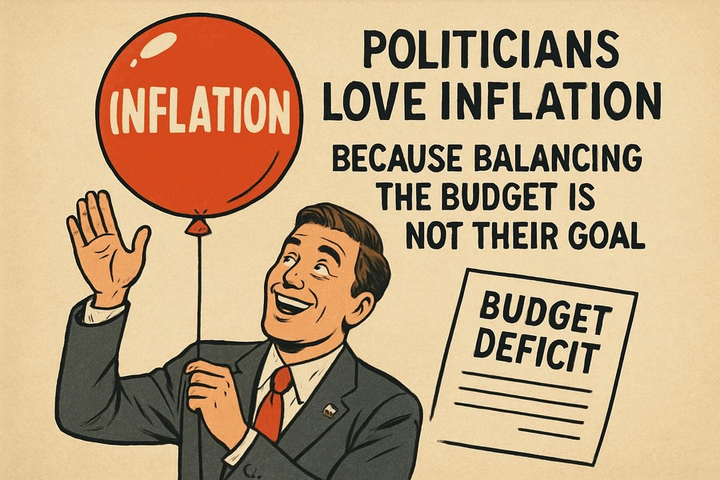
Everything from groceries to rent to basic utilities has crept into unaffordable territory, but somehow the government insists inflation is around 3.3%. To most of us, that number feels like a punchline with no setup.
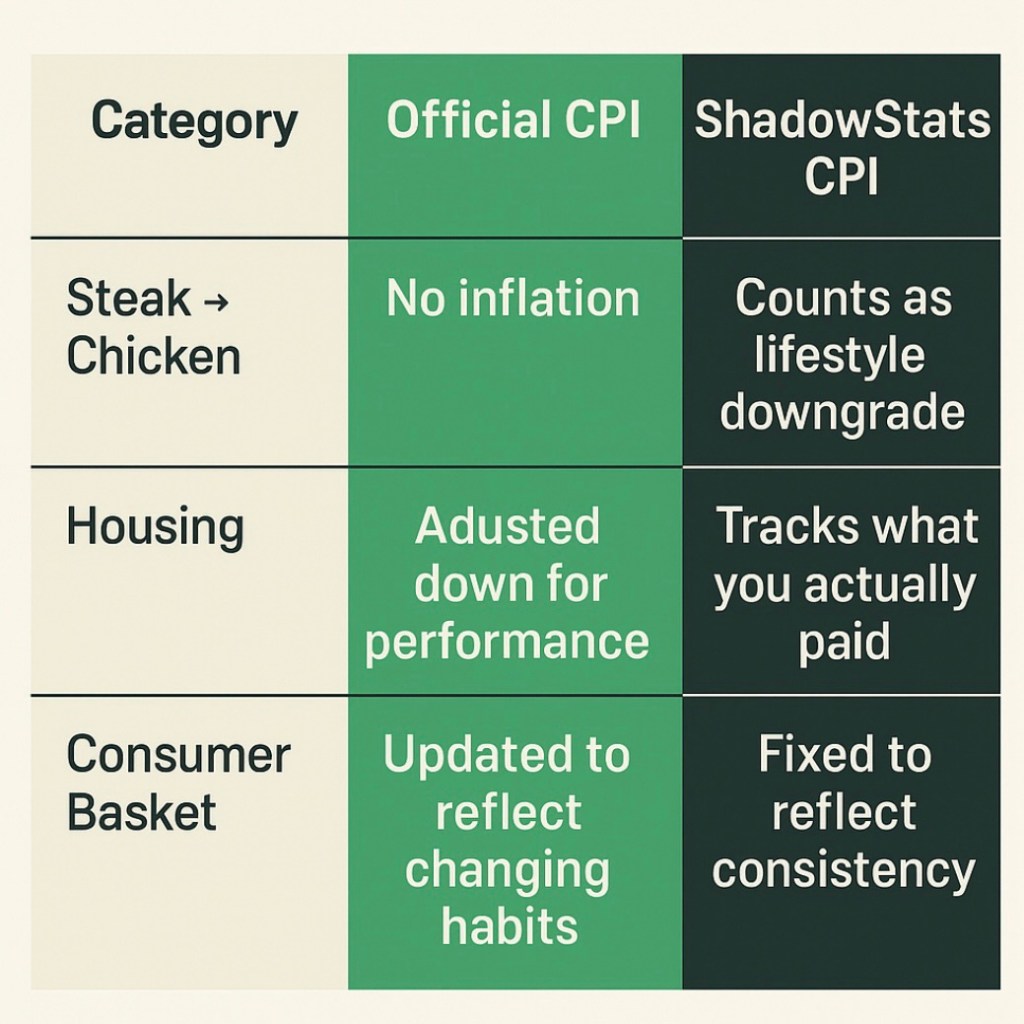
ShadowStats, which calculates inflation using methods from before the 1980s CPI revisions, suggests it’s actually over 9%. That sounds far more in line with what you feel in your bones and your wallet, doesn’t it?
The difference isn’t just mathematical, it’s philosophical. It determines whether you believe our society is slowly progressing or quietly deteriorating.
And at the center of that delusion sits the green tech movement: an ideal pushed by agreements between supranational organizations and state governments, built on commodities like silver, which ironically is one of the few tangible lifeboats left in an era of untethered money, misrepresented data, and unsustainable goals.
CPI: The Numbers Game That Makes Poverty Look Like Progress
In the early 1980s, the U.S. government began quietly redefining inflation. It didn’t look good on paper to say retirees needed 10% annual increases in Social Security checks. It looked even worse for Treasury bondholders expecting “real” returns.
So instead of wrestling inflation down, policymakers redefined how it was measured.
They introduced terms like:
Substitution: If steak gets too expensive, CPI assumes you switch to chicken. Inflation problem solved.
Hedonic adjustment: If your laptop is twice as fast, they say you’re paying less for it—even if it cost you more dollars (source, second bullet point).
Owner’s Equivalent Rent (OER): Instead of tracking what you pay in housing, they estimate what your home might rent for, based on surveys. (Crazy isn’t it?)
These methods were sold as ways to make CPI “more accurate,” but what they really did was make inflation more palatable to policymakers and debt managers. They also did it to make sure you and I kept racking up debt and consuming more each quarter.
Official inflation numbers rely on mechanisms that hide the erosion of lifestyle:
These adjustments treat your survival adaptations like buying cheaper food, delaying car repairs, moving back in with family, etc as market choices rather than signs of stress.
You’re not living worse, they say you’re just living differently.
Here’s what the former Fed Chairman Alan Greenspan said in 1995:
Green Tech: The Utopian Offramp Built on Industrial Scarcity
Enter the Sustainable Development Goals and the “just transition” to a greener future. Electric vehicles. Wind turbines. Solar panels. Battery storage. Carbon offsets. All tied to the years 2030 and 2050 as I’ve outlined in more than a few posts on this blog.
The problem? Every one of these systems relies heavily on silver, a finite, mined metal with growing industrial scarcity. According to the Silver Institute, solar panel production alone is expected to account for over 25% of annual silver demand by the end of this decade.
The price of silver has risen 43% year-to-date as of July 2025. Gold is up roughly 22%. Compare that to:
2025 YTD Return
NASDAQ +15%
S&P 500 +10%
DJIA +5.5%
So let’s check the math. If inflation is only 3.3% (official CPI), then those stock market gains look decent. But if ShadowStats is right, and inflation is closer to 9%, then:
The Dow Jones is posting a negative real return.
The S&P 500 is barely breaking even.
Even the NASDAQ, with its AI hype and tech surge, is only modestly positive in real terms.
Only silver and gold are delivering substantial real returns after adjusting for actual inflation.
This is the moment where you realize: only one entity will be paying for the widespread retrofitting and implementation of all this green tech that needs silver and it’s you. Either through willing compliance or taxation by the government so they can buy it with your wages and make you use it.
Hedonics, Hopium, and the Silver Choke Point
The CPI tells you that your phone is getting cheaper, even if you spent more on it, because it has better specs (source, first bullet point).
The ESG movement tells you your energy is getting cleaner, even if your utility bills are rising, because it’s coming from renewables.
But here’s what they don’t tell you:
Silver is irreplaceable in high-efficiency solar, circuit boards, EV contacts, and grid storage.
No large-scale replacement exists.
We are burning through reserves faster than we are discovering new viable deposits.
That means the very commodity needed to “fix” the future is becoming more expensive, even in inflation-adjusted terms. And that creates a dilemma no policy paper can solve.
Silver: The Honest Asset in a Dishonest System
In a world where official CPI is engineered to deflate your sense of decline, silver doesn’t lie.
It doesn’t get adjusted for quality.
It doesn’t get substituted.
It doesn’t get hedonicized.
It just reflects what a scarce, in-demand physical asset actually costs in a world of paper promises and underpriced labor.
And unlike fiat currencies or ESG credits, silver is outside the system. That’s why central banks don’t talk about it, and why retail investors who understand its utility in both monetary protection and energy transition are quietly accumulating at Costco before getting a hot dog and soda.
The Fatal Irony of Sustainable Progress
We are trying to build a green future using a grey metal whose supply cannot scale with our policy ambition. The Sustainable Development Goals require a miracle of material availability that simply doesn’t exist.
If silver prices are outpacing even ShadowStats’ inflation, then the affordability of the clean tech utopia vanishes on arrival. And if real inflation is devouring your market returns, then the dream of using “compound growth” to escape stagnation is mathematically dead.
Compliance or Sovereignty: There Is No Third Option
If you’re not holding assets that outpace real inflation (like silver or gold or the next randomly pumping stock) then you’re not preserving wealth. You’re slowly converting it into obedience.
Because what happens when your savings can’t keep up?
You’ll be offered government rebates for heat pumps.
Carbon credits for commuting less.
EV mandates.
Sustainability scorecards tied to your bank account (like that Aspire card I mentioned a few posts ago).
Access granted in exchange for compliance.
If you can’t buy your way out of the system, you’ll be forced to conform to it.
Green tech won’t be a lifestyle choice. It will be a behavioral requirement coded into policy, enforced by banks, and justified by a CPI that says “everything’s fine.”
Final Thought: Scarcity Isn’t the Problem—It’s the Lie
ShadowStats reveals how far we’ve drifted from price reality. Silver shows how tangible scarcity still has economic weight, how truth leaks out where it can’t be hedged.
And if you’re still counting on index funds and CPI-adjusted retirement accounts to protect you, ask yourself:
What happens when the growth you’re chasing is just inflation in disguise?
Silver isn’t just a hedge. It’s a mirror. And the reflection it shows is too uncomfortable for mainstream narratives to tolerate.
[Update – October 2025: When this piece was first published in July 2025, silver traded at $38.32 per ounce. As of this update, it sits near $51.60 — a 34% increase in less than four months. Every dollar rise in silver’s spot price compounds the already-underestimated cost of “green” manufacturing, storage, and infrastructure. The same scarcity dynamics I described below are now playing out in real time.]
There’s something ironic in how silver doesn’t match the weight it now carries, even when labeled on bullion.
It’s the best conductor of electricity, it’s antimicrobial and for thousands of years it acted as a monetary metal. For centuries it has been ornamental or a tool of commerce or consumption (think silverware) and now it finds itself increasingly involved in the infrastructure of a repeatedly promised future: solar panels, electric vehicles, grid storage systems, and the increasingly complicated web of “green” innovation spurred on by Sustainability Development Goals created by the U.N.
Excited conversations on TV and other blog posts discuss these technologies as if they’re incorporeal though. Guaranteed but incorporeal. As if solar energy arrives by virtue of political will or increased taxation, that EVs emerge from factories every quarter to appease shareholders and to respond to inevitable increases in consumer acceptance.
“People will want EVs when the range per full charge surpasses ICE gas mileage!”
But silver is physical. It is mined, refined, shipped, spent. However, there is only so much of it and fiscally speaking, only so much that it can be used on before the next thing that requires it is just too expensive.
Paper or Physical?
The silver market is quiet in the way illusions are quiet.
Prices have remained strangely stagnant; even as demand rises from every direction, prices have been relatively flat. Silver is only up about 94% in the last 4-5 years, even amidst the obvious increase in solar panel production & EVs all over.
But there’s a clear reason: most of the silver traded in financial markets isn’t silver at all. It’s “paper silver”—contracts, ETFs, and other abstractions that represent claims on silver rather than silver itself.
This paper silver is stacked and restacked, layered so thick that for every ounce of physical metal, there are about 300 paper claims for every physical ounce. These instruments are cheap and convenient. They give the appearance of liquidity. They help manufacture downward pressure on a metal that is worth more each and every day that governments push the green future they’ve committed to with Sustainability Development Goals.
But try to build a solar panel with an ETF. Try to wire a battery with a futures contract. Buy a paper claim for a 1,000 ounces of silver and try to claim ownership; it’s a bit more convoluted & difficult than you’d think.
But that’s because markets pretend there is abundance when the mines quietly say otherwise.
Domestic Dependence
The U.S. mines very little silver on the global scale.
Most of it comes as a byproduct—scraped from zinc, lead or copper operations already past their prime. Mexico, Peru, and China dominate the supply chain.
Still, federal and state initiatives in the U.S. continue pushing solar incentives, EV mandates, and infrastructure investments without asking the most basic question: is there enough material to meet these goals?
Independence in energy policy without independence in materials is not independence at all. It is an illusion with a timer or an attempt at convincing the public that independence exists at all. How can each nation experience independence in a global economy attempting to deal with a global problem like environmental protection?
The Math That Isn’t Discussed
There are roughly 260 million licensed drivers in the United States. If half of them eventually drive electric—an optimistic yet increasingly standardized projection—that’s 130 million EVs.
Each EV contains roughly 25 to 50 grams of silver. Taking the midpoint:
130,000,000 × 40g = 5.2 billion grams of silver = 167 million troy ounces
That’s one-fifth of the entire global silver production in a year (~800 Million ounces) just for U.S. EVs.
Now consider rooftops. There are around 82 million owner-occupied homes in the U.S. Maybe 60% are viable for solar. That’s 49 million rooftops.
Each home installation uses about 700 grams of silver, on average:
That’s more than all the silver the world mines in a year, just for U.S. homes. We expect this for all the nations involved in international agreements like the Paris Climate Accords and the 2050-centered plans from the U.N. so these figures throw a lot of things into question.
This doesn’t cover batteries, none of the redundancy systems, commercial arrays, or military contracts. No export demand. No global population growth. Just drivers and rooftops. Already unfeasible. This doesn’t even cover the actual dollar cost of simply buying the necessary amount of silver.
At the time of writing, silver is trading hands at $38.32 USD.
So that 167 million Troy ounces needed for just the vehicles? That’s just shy of $6.4 billion and that’s a figure expected to be paid in part by us, the consumer, upfront and more than likely down the road through taxpayer funded subsidies to accelerate EV adoption.
(There’s about an average of 62 ounces of pure Lithium in an EV battery; at $1.93 an ounce for refined lithium, it’s obvious the real price constraint will eventually be silver.)
The 1.1 billion Troy ounces needed for the solar panels? That’s about $42 billion, another cost we can attribute to the federal deficit and consumer spending.
These are not “if” numbers. These are baseline assumptions. The kind that policy was supposed to be built on.
Technology Without Materials
We’ve been taught to think of green energy as a software problem. That with the right code, the right algorithm, the right policy tweak, we can unlock a clean, efficient, endlessly scaling future.
But materials don’t scale like software.
Silver is not a “tech solution.” It is a finite, mined resource that lives in geological time. Once it’s pulled from the ground, used in a panel or circuit, it is largely unrecoverable. There is no efficient way to recycle the trace amounts embedded in electronics or laminated into photovoltaic cells.
So while the software runs smoother every year, the hardware gets scarcer. Especially now that Costco is selling silver to the masses; it’s estimated they’ve already sold anywhere from 20-30 million Troy ounces of silver since January of 2024.
Industry is now competing with citizens of nations dealing with currency devaluation and governments with bad budgeting in its blood.
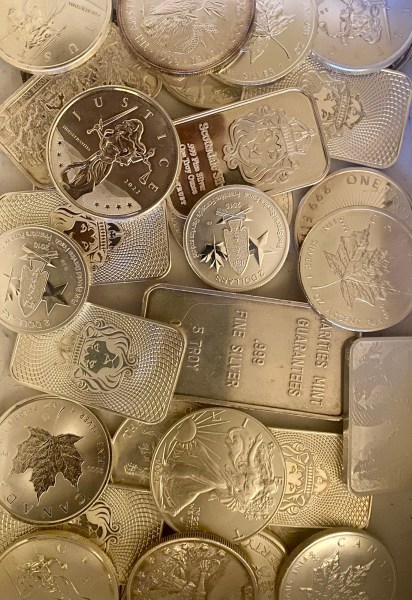
One of those 10 ozt PAMP Suisse bars from Costco doesn’t even equal a full solar panel; it’s just enough to finish making about 7 EV batteries though!
Quiet Disappearances
If silver were priced according to its utility—its indispensability to the green transition—its value would be multiples higher. But that would disrupt the illusion. It would wake the markets. It might even force a reckoning with how we plan, and who gets access to these technologies when scarcity arrives. (On another note, it would also break a couple banks since there’s a large short position affecting silver price discovery but that’s a whole other story you should read up on elsewhere.)
So the system does what it’s good at. It mutes the signal.
Silver’s price is managed, its physical demand obscured by the over-issuance of paper derivatives. Meanwhile, physical silver disappears—not in vaults, but into solder points, busbars, and circuitry. Into machinery that will work until it breaks and be too costly to recover when it does.
This is not theoretical. It is measurable. It is ongoing. It is irreversible on any policy-relevant timeline.
The Consequences of True Price
Here’s the part no one likes to say out loud:
If silver ever reaches a price that reflects its real utility and real scarcity, millions of people will be priced out of vehicle ownership—permanently. This can especially said with certainty for any jurisdictions that mandate EV adoption by way of phasing out ICEs or increasing daily taxation for driving an ICE vehicle like London does already.
But not because of a shortage of cars. Because of the materials required to build them. If silver doubles, triples, or reaches the kind of price discovery that gold once saw, the cost to manufacture electric vehicles and solar panels will skyrocket. That cost won’t land on corporations. It’ll land on people.
The very people these transitions were supposed to serve.
Middle-income households. Rural drivers. Lower-tier homeowners trying to insulate themselves from rising energy bills. They’ll be handed a clean-energy future they can’t afford to participate in.
Not Fragile Like Glass—Fragile Like a Lie
This isn’t just about silver.
It’s about what happens when we shift from one form of dependency to another and pretend the second is progress. Fossil fuels were finite and demonized for being dirty. But critical metals are finite, dirty until refined and polished; will they be demonized or will we make a beast out of the burden of allocation for these green dreams?
Silver is not the only material with a bottleneck. But it may be the first one to snap and it has reason to be called the most important material in the effort to advance green technology adoption across the U.S. and the other nations party to the U.N. climate goals.
And when it does, we’ll realize we didn’t build a transition. We built a fantasy. One that is clean on the surface, fragile underneath, just waiting for the first real demand to break it.
What we’re probably heading towards is a two-tier society built upon who has precious metals & who doesn’t.
Sounds sort of like we’re regressing to a world of kings and peasants doesn’t it?
When this piece was first written, I estimated the silver cost of producing 167 million EVs using $38.32/ozt spot price. At today’s $51.60, the same calculation jumps from roughly $6.4 billion to $8.6 billion, a reminder that “sustainability” priced in fiat ignores the finite nature of the materials that make it possible.
For more content related to silver, I’d recommend the Bald Guy Money YouTube channel, David Jensen’s Substack and Maneco64 on YouTube as well. These 3 individuals have the best grasp on why silver is probably one of the most interesting metals, it’s got conspiracy, history, importance for the future, it’s got it all.
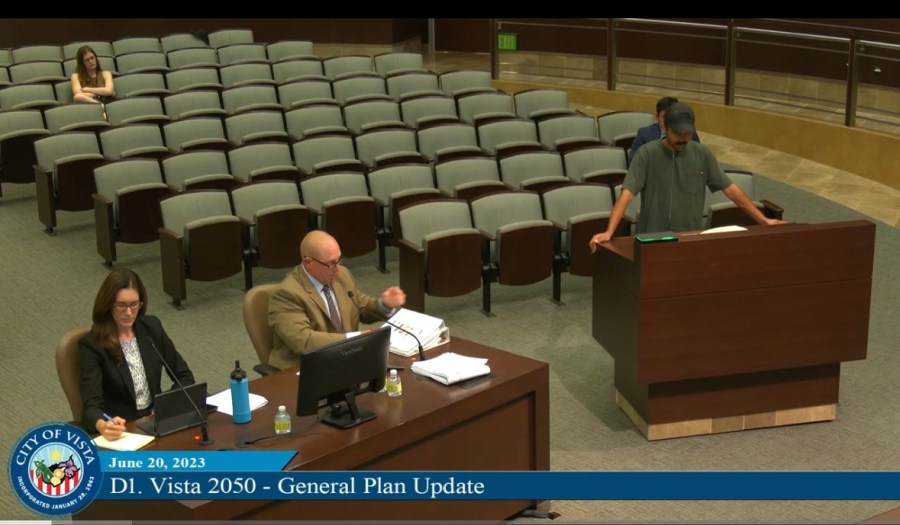
Last year, I spoke at a city council meeting in Vista, California where the focus was on the “General Plan”. This “General Plan” is Vista’s version of California state’s “Climate Action Plan”. Since 2011, California law has mandated that every city have a General Plan, but only recently have cities started hosting meetings and workshops to involve community members in discussing what citizens want in the plan and marginally clarifying what citizens should expect the plan’s fruition to really look like.
For context, prior to the meeting, I prepared 3 questions to ask the city officials regarding the General Plan & provided each a copy of the questions to follow along as I spoke. Admittedly, I didn’t expect anything other than outright dismissal of my questions but I was extremely wrong. I got a response I need to share with you.
Before I do that, I want to separately address any potential readers based on geography:
⁃ Citizens of Vista, if possible, start going to the meetings for the General Plan & listen to what’s coming. I know it’s hard to carve out time with all that life sends our way but if you have any level of concern for future of the city (or your place in the city) show up to one of these specific meetings & listen to the plan they have in mind for the city, bearing fully in mind what Commissioner Looney says from 6:30-9:42 in the video below.
⁃ Citizens elsewhere, google whatever state you live in along with the words “climate action plan”. If your state has has one, check & see if a law was passed requiring the city you live in to adopt a climate action plan (CAP) or general plan as well. Since 33 states already have, I’d almost bet on it, so if it happens to be so, I suggest watching the clip below & asking yourself “is what Commissioner Looney says from 6:30-9:42 going on in my city too?”
Sorry this is a long video (by today’s standards) but I wanted to show every city member’s response unedited.
If anyone wants to watch the entirety of the meeting:
On the surface & even from a distance this new ordinance seems fickle, overreaching, unnecessary or long overdue – the opinions vary as greatly as the personalities & cultures of California itself.
Unbeknownst to most, this new ordinance is a sign of the times to come. An indication of the veracity with which the governing bodies & authorities are willing to display in their endeavor to see predetermined plans finally implemented across the populous.
Just this past week, the neighboring City of San Diego enacted their own legislative frameworks regarding bikes too! Mayor Todd Gloria, members of SANDAG & affiliated organizations presented the 2022 edition of the Climate Action Plan, even though only weeks prior, what was reported to be over 4,000 citizens expressed discontent & preferences requesting the withdrawal of the plan altogether.
For those that have already read my post, “Environments & Requirements”, you may skip this video from a 2009 city council meeting in San Carlos, CA showing council members ignoring the words of the citizenry & implementing an ICLEI-derived plan. For those now coming across this site, I’d recommend watching & comparing the disregard of the San Carlos council members to the disregard of our politicians today as far climate legislation is concerned.
The folks seen in 2009 & the folks seen last week are of like mind: they simply wish to oversee their lands themselves; they uniformly wish to see the lands & its resources benefit the locals to the greatest degree. The politicians seen in 2009 & today are the same: they wish to see their plans fulfilled, no matter the cost as increased taxes will foot the bill.
Proposed taxes & suggested economic frameworks of San Diego’s 2022 version of CAP range from gallon per capita water limits, an increase in funding for tree rebate programs I covered a bit in “The Products of a New Environment” & transportation ordinances that all relate to a 2050 plan the City of San Diego has been pushing since at least 2010 involving…you guessed it: bikes. If you look to page 56 of the 2022 CAP, under Strategy 3: Mobility and Land Use, you see the City’s obsession with bikes & disdain for internal combustion engine vehicles at once:
“Shifting away from a car-centric transportation system starts with a loading priority for our roadways, prioritizing and protecting the most vulnerable modes such as walking and biking, and enhancing public transit for improved efficiency and performance. The loading priority concludes with shared, commercial, and personal electric vehicles, underscoring a commitment to the full transition of all vehicles from combustion engines and fossil fuels. The City will reduce vehicle miles traveled (VMT) for trips through transportation infrastructure and technology improvements, transportation demand management (TDM) programs, and land use changes.”
It should be noted that this 2022 plan is simply a foundation for the 2050 plan titled “Riding to 2050: The San Diego Regional Bicycle Plan” but there are a number of proposed actions relating to Greenhouse Gas (GHG) emissions & other climate issues that will be enacted along the way as 2035 is a mid-point target year from now to 2050. Among the myriad of proposals to curb GHG emissions, one of marked interest is found in the 2022 edition of the CAP on page 69:
1) Reduce GHG emissions and water use of total beef, pork, chicken, turkey and dairy purchases by 20%.
2) Increase local, healthy, and sustainable foods to 20% of total food purchases prioritizing locally sourced, valued workforce and animal welfare.
Interestingly enough, in the entire CAP document, only one page is devoted to “Measure 5.3: Local Water Supply” & simply discusses the aforementioned gallon per capita limit; in one week the Federal government is going to impose water restrictions on 40 million people due to the state of the Colorado River basin, yet the City of San Diego has apparently nothing to say on the matter.
At the moment, the City of San Diego is primarily focused on regulator technology & economic frameworks that will advance the 2050 plan. In all fairness, San Diego has been this way since it entertained ICLEI & other entities; in the 2010 version of “Riding to 2050: The San Diego Regional Bicycle Plan”, published while Jerry Sanders was Mayor, on page 49, “encouragement programs” are proposed as an economic method of enticing, to some perspectives coercing, citizens & businesses into participating in these programs where ride-sharing & biking are the preferred forms of transportation.
Encouragement programs are generally characterized by their focus on encouraging people to bicycle more frequently, particularly for transportation. Encouragement programs increase the propensity for bicycle trips by providing incentives, recognition, or services that make bicycling a more convenient transportation mode. The following encouragement programs are recommended for implementation in the region and described in more detail in the remainder of the section:
⁃ Bike Sharing Program
⁃ Pilot Smart Trips Program
⁃ Employer Incentive Programs
⁃ Bicycle Friendly Community Designation
⁃ San Diego Region Bike Map
⁃ Identification and Way-finding Signage
⁃ University-base Bike Orientation
In the version published in 2011, the concept of ride-share programs is expanded & marginally defined a bite more with examples like the Guaranteed Ride Home Program (which I had no clue existed until today) & iCommute, a vanpool program with a subsidy of $400 per month per vanpool. By 2015, under the direction of then Mayor Kevin L. Faulconer, the ride-share programs expanded into a contract with DecoBike but ended in 2019 after the City of San Diego claimed a breach of contract occurred on the companies end – though this is disputed by DecoBike.
In terms of high occupancy transportation, all versions of the climate plans advocate for electric vehicle fleets; the most common form is tied to K-12 & collegiate school bus programs. This past July, a San Diego based company, Nuvve Holding Corp., announced a joint venture with San Diego Gas & Electric where eight electric school buses in the Cajon Valley Union School District will connect to the grid & serve as a pilot program for the next five years, not only for state-wide school transportation use but also for the federal Build Back Better plan as Nuvve Holding Corp. announced a Memorandum of Understanding with the US Department of Energy some time ago regarding V2G & V2X technology.
An often overlooked aspect of the V2X technology that appeals to governing bodies is the “connected vehicle” nexus & data mining capabilities thereof. In these evolving iterations of climate plans related to the years 2025, 2030 & 2050, digital details are a prerequisite of all vehicles that will be on the road for a consortium of reasons that summarily present as regulatory technology. In early plans, connected vehicles simply refers to vehicles capable of emitting wireless data vehicle-to-vehicle & vehicle-to-infrastructure so as to aid in the flow of traffic; as we’ve seen with newer plans & in European counterparts, intelligent speed limits, excessive tracking & the aforementioned prioritization of biking civilians are the culmination of these mandated advances in vehicle technology.
I have yet to address the cost of all these mandated applications of higher-end vehicle-to-everything technologies; I’ve considered making a whole post on the expected costs incurred for civilians in the wake of these subnational & national mandates stemming from international contractual agreements but I’ll simply point out that the average all-electric bus costs $400,000 & in the Inflation Reduction Act of 2022, eligible “clean” vans, SUVs & pickup trucks qualify for a rebate of $80,000 upon purchase & other vehicles for $55,000. I really can’t imagine how much these all vehicles will cost in total but if the rebates are already close to some people’s yearly income, I can imagine most will not be buying these vehicles, unless on an already strained credit line.
So, I guess we’ll all bike to work, right?
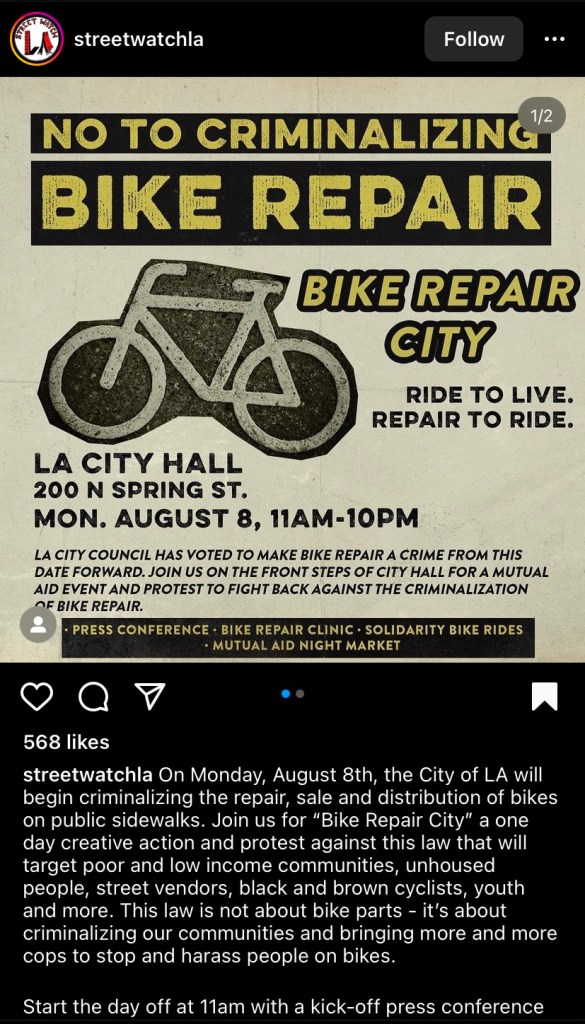
But what if your bike breaks down & you live in a city like Los Angeles where you can’t rely on your local handy-folk to lend a helping hand anymore because of a city ordinance? Guess you’ll pull out your card anyways & pay for a ride on an EV bus, rent a ride-share bike or pay for a ride on the rail transit system.
From what I can gather, the Guaranteed Ride Home Program only covers three rides per year; seems like baseball, three strikes & we’re left outside.
Amazingly, the word “homeless” shows up only one time in the entire 2022 San Diego Climate Action Plan, whereas the word “bike” shows up 49 times. I wonder, if one is left outside, what is the plan, what are the options & allowances afforded by a City that can’t even type the word “homeless” more than once in a 238 page document?
Are you certain that you’ll reap what you’ve sown?
For the moment, I seek to address those in the southwestern portion of the United States of America & ask those reading from elsewhere to keep an open mind & an open eye. We’re just about halfway into our summer season but we’re nowhere near close to beginning the actual battles that’ll come in respect to water rights & land rights for those in the southwest & eventually the entire nation.
Though one could dive deeper into the legal acumen involving water use, I will not be doing that here. I am admittedly more concerned with the present nature of genetic ownership in regards to gardening & farming – I find the issue to be a bit more murky than Leak Mead is at the moment & I believe predetermined agreements between corporations & legislative bodies will exacerbate any water issue regardless of civilian conservation efforts going forward.
Are you certain the things you’ve grown are things you own?
To illustrate the point of a future scuffle regarding “right to grow”, one must only look to existing laws that provide precedent for such an incident.
“Nonetheless, with the data that can readily be gleaned publicly, our analysis of mapped and referenced patent sequences across the three crop genomes revealed DuPont and its affiliates as the holder of the largest collection of gene patents. It holds more gene patents than Monsanto or the rest of the US industry—including small and medium biotech companies and governmental research institutes and universities—put together (Fig. 1).
Uniquely in the United States, plants and their products can be protected by patents and by other IP mechanisms at the same time. Plant varieties can be protected by a specific plant patent under the Plant Patent Act of 1930 for asexually reproducible plants; by a plant variety protection (PVP) certificate under the Plant Variety Protection Act of 1970 for sexually reproducible plants or tuber-propagated plant varieties; or, since 1985, by utility patents.
Because several types of protection can be granted at the same time—for example, either a plant patent or a PVP certificate with a utility patent—and exclusive rights extend for 20 years, any IP right holder on any of the crops can in principle benefit not only by enforcing their IP rights but also by holding off competition in the market and potentially delaying innovation on certain technologies, especially when the granted rights are under utility patents. Utility patents have a broader scope, including protection on the plant itself, its diverse uses, its progenies and the method used to produce it, and they have an impact on follow-on innovations.”
The commercial aspect of gardening, rife with rebranding & business-to-business marketing schemes like any other discernible industry has notably unique moments wherein legislation concerning biological conservation can be tweaked or outright ignored.
While most Californians by now are aware of the issue of the moderately invasive nature of the Eucalyptus globulus (Tasmanian Blue Gum) & the impact it has on soil erosion & fueling fires, certain corporations that operate in the southwest are tactically circumnavigating subnational & national legislation meant to curb the sale of invasive species & they’re becoming increasingly bold in their endeavors.
In all honesty, I work for a large nursery that supplies plants to a number of states & I thoroughly enjoy my job so I won’t be disclosing business practices I can directly speak to that correlate here. Sorry Too Short, this is the one time I don’t want to blow the whistle. That said, I will do my best to display the matter as a basic schematic so as to allow application to any business that potentially falls under the model to be properly scrutinized in a like manner.
Linked here are the 6 agencies overseeing the invasive species list; if you live in California, look at one of the lists the next time you go shopping at a store that has a garden center. For the past year & change that I’ve worked in the industry, a number of the listed plants have been available for purchase & the number of invasive species being sold on the market is growing.
Through genetically manipulating invasive species, commercial growers are able to market the plants as “new varieties” or “regional friendly” – no determinations, to my knowledge, are required by legislation to assess the nature of hybridized or genetically modified plant varieties in regards to local impact on the environments where these lab-produced plants are introduced & established. As the Non-GMO group put it in their blog post, “nothing in nature exists in a vacuum, and it is unnatural to assume that it would.” So it could be said that these lab-produced edible & non-edible plants on the market are potentially as detrimental as the organisms they are based on, unfortunately only time & focused attention will tell.
At the present time, companies like SDG&E are facilitating programs wherein “qualifying SDG&E customers can receive a $35 rebate for planting or potting a 1- or 5-gallon tree/plant species.”
Specifically, under the “native trees” category, the Black Willow is native to the East Coast of the US, not the Southwest; furthermore, the other two Willow species listed are more commonly found in wetlands as their root systems take so much water that is advised not to plant them near septic tanks or drainage fields. Intriguing choices to say the absolute least, though when you look to the “regionally-friendly” trees & see the number of invasive species, it doesn’t seem to matter much anymore. Either SDG&E is misinformed or they’re willing to let the public stay misinformed about the future cost of those $35 since it’s all for “local biodiversity, improving air quality, and sequestering carbon.”
That “sequestering carbon” bit is how a lot of these GMO trees are being pushed on the market & into the ground lately & why the Lorax is one of my favorite films of all time.
Artificial Trees & Grasslands Please
Mass sapling-planting campaigns are nothing new; most of anyone who could read this is probably aware of at least 1-3 moments wherein a company or country just threw a bunch of saplings in the ground. My mothers homeland just went crazy with the idea last year & planted 350 million of them.
Without a doubt, the only certainty at all, is that the most interesting & equally terrifying campaigns are the ones that involve the interplay between genetically modified trees & the cap-and-trade carbon-credit scheme.
MasterCard, a proponent of the cap-and-trade scheme, has a credit card called Aspiration: Zero Carbon Footprint where they “plant a tree every time you make a purchase—and let you round up to plant one too. Using this card just once a day can plant enough trees that, once grown, will counteract your daily negative carbon footprint (unless you’re a real gas-guzzler). Spend daily with Zero to neutralize your footprint and earn up to 1% cash back. Use your rewards to plant more trees or receive a statement credit.”
Call me crazy whatever way suits you, merely afford me a bit more of your time if you’ve yet to read Part 3 of “The Volumes on Vitality” specifically the section on utility tokens.
The “statement credit” Zero Card is vaguely proposing in lieu of planting more trees is rather reminiscent of the utility token FreeWater quickly mentioned on their own site & digital advertisements, along with carbon credits as a whole. Aspirations’ “join us in our mission to plant 125 Million trees by 2030” remark on their website, coupled with the self-implementation of a carbon-credit schematic makes it clear they are probably aware of one of the contracts I mentioned in the blog post that precedes this one. Good old “market forces”!
Another company, Living Carbon, genetically modifies trees in a way that causes “modified poplar trees [to] store up to 53% more carbon than control trees.” In the interview for the article, the CEO Maddie Hall said, “if we were to double the acreage that we have today up until 2030, we would be able to actually plant enough trees to remove 1.66% of global emissions in 2021.” I can’t wait to see how many companies try to buy these GMO trees, then reason to the government & relevant regulating bodies that the trees in question warrant greater carbon capture credit values than purchases of regular trees.
It’s odd though – there is a respectable amount of science regarding carbon capture practices that point out that grass is more of a reliable carbon sink than trees for two reasons: grass grows faster & grass stores the carbon in the soil unlike trees that store carbon in their wood above soil. The carbon above the soil line is pure fuel in the event of a forest fire & hardly the safer choice considering a sizable portion of the US is in a drought & is expected to remain so for the foreseeable future. All this considered, we have a stark prevalence of tree planting campaigns across the globe & across the market & water restrictions across the Southwest that directly impact civilian grass lawn upkeep. It seems as though not all things are considered equally, I should say.
Due in large part to the unequal use of water from the Colorado River Basin, one can see exactly what it looks like when water is continuously taken from one environment & used/left in another. The canopy alongside the canal that exists now is a testament to what Lake Mead will look like(check out 12:16-17:08) in due time, should the water levels continue to recede at the rate they have as shown in the beginning of the video.
But as a whole, what will our collective future be like in regards to water rights & land rights? I often wonder, did the people who wrote the film adaptation of the Lorax just get oddly lucky in retrospect or were they prematurely portraying a theoretical situation where GMO trees modified to capture increased levels of carbon replace natural trees in a system where carbon credits & debits become commonplace across the globe?
Will we prevail through this unifying struggle or will we communally fail, leaving behind only remnants of our attempts to simply survive, much like the Hohokam people who long ago built the canals that the city of Phoenix, Arizona finds inspiration from today?
I don’t imagine these compounding issues can be swept under the rug – we’re talking about the earth itself, where can we sweep it? There needs to be better application of the best practices available to every region afflicted with constrained access to the basics of life, greater attention paid to the outcome of our efforts & actual transparency between civilian, regulator & market. The cool thing is, the civilian is the foundation of the coupled latter & Dr. Seuss said it well enough, “Unless someone like you cares a whole awful lot, nothing is going to get better. It’s not.”
This is not to say we all need to memorize the list of invasive species & self-impose restrictions; on the contrary, in a world where the morality of consumption is debated & designed by market forces & legislation that can oftentimes be overreaching (hello & goodbye 18th amendment) we, the consumer, must become pickier & demand more of the persons seeking to make off with our hard earned money. We must work to see our own requirements met, soon, before there comes a time, for some maybe August 15th, when the only requirements met are those set outside of our control.
Jefferson, O., Köllhofer, D., Ehrich, T. et al. The ownership question of plant gene and genome intellectual properties. Nat Biotechnol 33, 1138–1143 (2015). https://doi.org/10.1038/nbt.3393
Millison, Andrew. “The Canal That Accidentally Grew a Forest in the Arizona Desert.” Andrew Millison, YouTube, 29 Nov. 2021, https://m.youtube.com/watch?v=jf8usAesJvo.
In an another example of the Supreme Court redefining & restricting regulatory rights of an agency we see that these Justices, for some time now, have been potentially pondering some sort of idea that the federal government has done enough or what it can. Odd to say, considering this is an extremely active time for the Court as they’ve made a total of 7 decisions since June 23rd of this year; some would say that’s more than enough & some of what’s been done is more than unnecessary.
Solely focusing on the EPA matter though, considering what this decision may mean for our collective future, I wonder if we may witness the beginning of a reinvigorated battle between state economies & the likelihood of various sustainability development goals set by the UN being met by the United States of America by 2030.
Although this recent Court decision emphasizes the States’ right to discern appropriate levels of emission reduction over periods of time, external forces besides the federal government are pushing to incentivize States to move away from coal as much as possible, as soon as possible.
Summarily, the Supreme Court denied the EPA, emboldened by the Clean Power Plan introduced by the Obama Administration in August of 2015, the regulatory power to implement a cap-and-trade economy centered around carbon credits & compliance costs through the form of increased energy prices that would begin this year. The goal of the Clean Power Plan was to reduce carbon emissions by 32% by 2030, a legislative example of a Nationally Determined Contribution (NDCs) spoken of in the Paris Agreement that was adopted in December of 2015.
Every five years, nations that are party to this agreement submit NDCs that detail how their governments will steer their respective nations towards achieving various sustainability development goals set by the UN & its various subgroups like the ICAO (International Civil Aviation Organization) & IMO (International Maritime Organization).
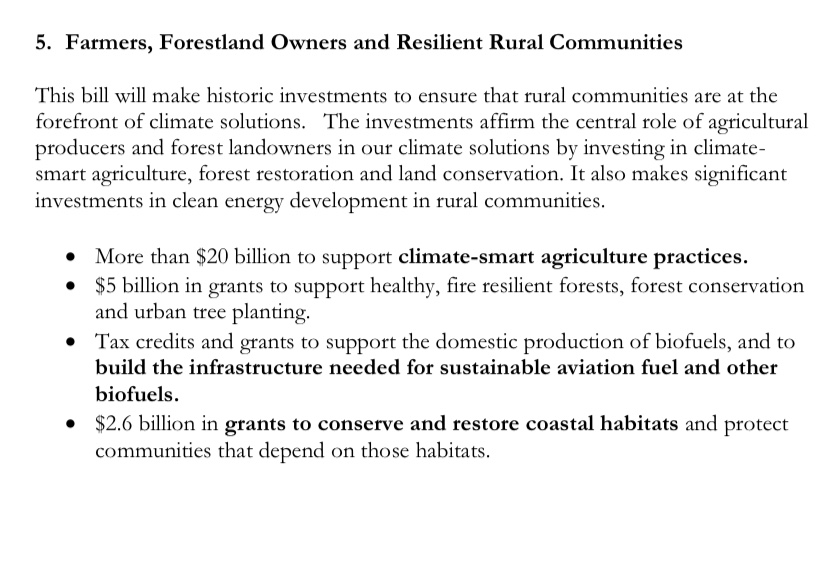
Provided here are the two NDCs the USA has submitted since the inception of the Paris Climate Agreement:
In a portion of the dissenting opinion provided by Justice Kagan, supported by Justices Breyer & Sotomayor, it is said “the effect of the Court’s order, followed by the Trump administration’s repeal of the rule, was that the Clean Power Plan never went into effect. The ensuing years, though, proved the Plan’s moderation. Market forces alone caused the power industry to meet the Plan’s nationwide emissions target-through exactly the kinds of generation shifting the Plan contemplated.”
The “market forces” vaguely presented as proof of some inevitable generation shift are more aptly described in full as the corporate compliance with a global cap-and-trade carbon credit system established by non-government organizations & various conglomerates in the banking & energy industries.
Earlier this year, UN Secretary-General António Guterres spoke at a Powering Past Coal Summit, urging members to reduce coal use in electricity generation “by 80% below 2010 levels by 2030” by “cancel[ling] all global coal projects in the pipeline and end[ing] the deadly addiction to coal, end[ing] the international financing of coal plants and shift investment to renewable energy projects & jump-start[ing] a global effort to finally organize a just transition, going coal plant by coal plant if necessary.”
While the United States federal government itself is not a member of the Powering Past Coal Alliance (a coalition of governments, businesses and organizations) representatives of California, Connecticut, Hawaii, Minnesota, New Jersey, New Mexico, New York, Oregon, Pennsylvania & Washington state all attend the Summits & act as intermediaries, to a degree, that facilitate the economic & legislative maneuvers these international agreements seek to enact.
Cognizant of these extrajudicial environments that enumerate new requirements implemented through “market forces” just about every year, five years at the minimum accounting for NDCs, I have to wonder, what exactly did the Supreme Court do?
For decades, these UN sub-groups have been affecting governments on the micro & macro level; here’s a San Carlos, CA city council meeting from 2009 that showcases the process by which they circumnavigate democracy through “rapport building”:








 The Rumination Compilation