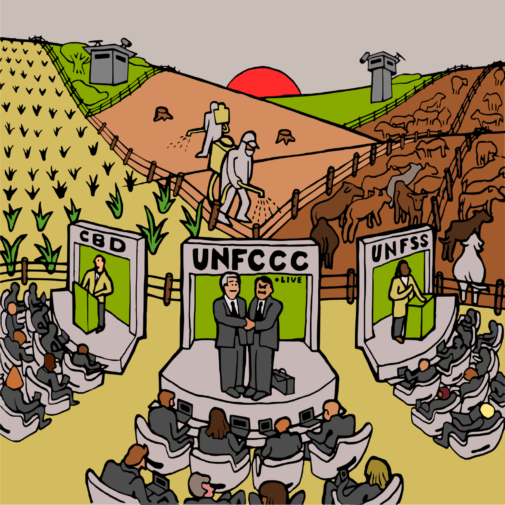
Do you see it yet?
Assumptions aside, before progressing any further into this text, I’d recommend reading my post, “Environments & Requirements” – it serves as a backdrop for this discussion of ambiguous terminology employed by myself & others of far greater influence.
Admittedly, I was extremely reductive in my total description of the dissenting Justice’s vague reference to “market forces” that economically enacted the moderation sought to be legislatively achieved through the Clean Power Plan of 2015. I was pressed for time in a number of ways & opted to employ a tone as cryptic as the parties involved & for that I apologize.
Across the United States of America & most nations across the globe, contractually binding agreements focused on the years 2025, 2030 & 2050 are actively being implemented & exercised in ways that, more often than not, circumnavigates a nations domestic legislation & overtly neglects public opinion.
Nonetheless, we’re all pressed for time.
By a design I hope to properly explain henceforth, these contracts are primarily fulfilled through utilization of actors in two distinct groupings:
• individual members of domestic governments on the local or national level, party to, or at the very least aware of the contract & beholden to it’s terms. Throughout this text, we’ll refer to them as “domestic actors”.
• individual members of corporations & non-government organizations party to, or at the very least aware of the contract & beholden to it’s terms. Throughout this text, we’ll refer to them as “foreign factors”. (The video I have linked at the end of “Environments & Requirements” is a documented example of the second scenario.)
This aforementioned contract, oftentimes discussed as though singular in nature, is actually a consortium of contracts contingent upon an original that essentially grows through these compartmentalized amendments.
In 1992, the United Nations Framework Convention on Climate Change, described as a treaty of nations, was the foundation of the Conference of the Parties (COP) & the Convention on Biological Diversity (CBD), the latter being an international contract signed at the Earth Summit in Rio de Janeiro, Brazil, on June 5, 1992 and entered into force at the end of 1993. A majority of the 196 parties signed the contract immediately or soon after; the rest signed later in the early 2000’s with the latest being the nation of Andorra on February 4th, 2015. As simply as it is, nations involved are the Conference of the Parties.
The contract created by the CBD is the foundation of a number of other contracts & compartmentalized sub-organizations – for the sake of time & clarity, I’ll be focusing on overall elements & intermittently addressing specifics that will best discuss the “market forces” alluded to all too often.
The degree of obligation parties to the contract are subject to are clearly stated in Article 5:
Each Contracting Party shall, as far as possible and as appropriate, cooperate with other Contracting Parties, directly or, where appropriate, through competent international organizations, in respect of areas beyond national jurisdiction and on other matters of mutual interest, for the conservation and sustainable use of biological diversity.
As well as Article 10:
Each Contracting Party shall, as far as possible and as appropriate:
(a) Integrate consideration of the conservation and sustainable use of biological resources into national decision-making;
(e) Encourage cooperation between its governmental authorities and its private sector in developing methods for sustainable use of biological resources.
Frequently, the competent international organizations are subgroups that have been delegated authorities vested by these two Articles – entities like the Wildlife Project, Cities With Nature, & the financial arm of the CBD, the Global Environment Facility, in charge of about $5.33 billion from government & corporate investments, all stem from the contract itself while various organizations like ICLEI (the International Council for Local Environmental Initiatives, the subject of the linked video) are granted jurisdiction & provided impetus by way of the CBD contract.
Furthermore, through manufactured fragmentation of the UNCCC into the aforementioned subgroups & others I’ve opted to forego in the interest of time, individual members from each of the original UNCCC subgroups bestow upon each other & new subgroups a false sense of authority in the eyes of a subnational government & the general public. This inorganic networking founded upon disingenuous representation serves as a way to also build rapport with a subnational government, often the focus of these UNCCC subgroups, through a multitude of domestic actors.
From the state level to the federal level, most nations have members of government party to the contract by association with one, if not more, of the UNCCC subgroups. By my estimate however, there are more members of commerce in leadership positions party to the contract considering the private sector is where the implementation of the carbon credit cap-and-trade system began.
In your own time, pay attention to the prevalence of corporate commitments to sustainability efforts related to the years 2025, 2030 & 2050; it is more than likely that the board of directors, in part or full, are aware of the CBD contract, specifically Article 11:
Each Contracting Party shall, as far as possible and as appropriate, adopt economically and socially sound measures that act as incentives for the conservation and sustainable use of components of biological diversity.
In no clearer terms, this is the foundation of the cap-and-trade system in relation to carbon emissions & other economic sustainability tools like Sustainable Aviation Fuel being spearhead by Shell Corp & Boeing. The actions taken by corporate interests & universities that mirror the SDGs set forth by the UNCCC are in summation the market forces the Justices briefly mentioned – the individuals working in government (e.g. mayors, city council members, directors/chancellors of state universities) while also representing these extrajudicial entities are the domestic actors.
For a few examples, here in the United States of America, since 06/21/22 the point of contact (domestic actor) between the GEF & the U.S. Department of the Treasury is Ms. Abigail Mary Demopulos who has worked as an economist for the Department since 2004, as far as public record states.
For a more local example, Scott Tess is a Sustainability & Resilience Officer at the City of Urbana, Illinois (a noted Cities With Nature city member) who contributed to the 2020 Illinois Climate Action Plan (iCAP), created by the Institute for Sustainability, Energy, and Environment (iSEE) at the University of Illinois on the Urbana-Champaign campus. iSEE gets most of its funding from students through increased costs of attendance & an organization called the University Climate Change Coalition (UC3) who seek “to scale up climate actions by both state and non-state actors to accelerate the implementation of the Paris Agreement and the 2030 Agenda” across the United States, Mexico & Canada. Both the Paris Agreement & the 2030 Agenda are creations of the UNCCC & CBD. (I’ll be doing a few posts on the Precision Consumer aspects of the 2030 Agenda in due time.)
If one hyper-focuses on the iCAP objectives (or any of the other versions at USA state universities), it is clear that they essentially copied the framework of essentially every other UNCCC-derived economic climate plan:
Objective 2.2.1: Improve efficiency of space use by minimizing the square footage per person and updating the Space Policy in the Campus Administrative Manual (CAM) by FY23.
Objective 3.3: Establish an Electric Vehicle Task Force to identify key goals for supporting the use of electric vehicles on and off campus by FY22.
Objective 8.1: Develop a coordinated urban bio- diversity master plan by FY24 to make the Champaign, Urbana, Savoy, and campus metro area a model for biodiversity.
In light of this exceedingly shrouded information, to what degree, if at all, can you be certain that your representatives in government are observing only the constitutional laws of your nation? To what degree are markets truly free?
Again, I’d like to apologize for my preference to discuss these matters from an American/North American standpoint – please do not misconstrue omissions of other nations as indications of absence of this schematic, to reiterate, all nations of the globe are party to the contract as of 2015; from that point forward, all nations were essentially operating in a form of lockstep that is founded upon external influence & market manipulation by way of self-imposed fossil fuel/carbon emission restrictions well before advent of constitutionally observed legislation & incentivized programs for entities that opt to follow the 2030 Agenda.
Essentially, since 1992, even prior depending on the length of research of done, the events & the lifestyles of 2025, 2030 & 2050, regardless of the country, were being planned for precise results. Predetermined forms of economics & reimagined realities await us; in just 3 years from now, our lives will begin to bear greater resemblance across national borders & social groups as our restrictions become unified under a global framework centered around carbon emissions.
Over the next few weeks, I hope to discuss this concept of market forces in further detail & with more focused points of discussion; this post itself, I imagine, has a bit too many links for most readers & still has a bit of ambiguity plaguing it, thus we’ll be returning to this topic numerous times.
In the meantime, research your local entities – determine their unspoken goals & decide for yourself if they are the same goals you & yours seek to achieve.
Feel free to contact me if you have any questions or anecdotes regarding this text.
Thanks for reading.
Photo credit: https://globalforestcoalition.org/who-makes-decisions-at-the-cbd-the-increasing-power-of-business-in-biodiversity-protection/
© 2022 Zakariyas James. First shared here at theruminationcompilation.wordpress.com.

 The Rumination Compilation