
H5N1: When the Wild Whispers Across Continents

From the wetlands of Asia to the frozen coasts of Antarctica, from the farms of Europe to the forests of North America, H5N1 is moving quietly yet relentlessly. Once called “bird flu,” this virus has slipped through the cracks of public attention, expanding its reach across species and continents. It is no longer just a disease of birds: it is a cross-species contagion, touching goats, pigs, seals, sea lions, cats, cows and numerous other wild mammals.


Yet despite this, media coverage is fragmented and human awareness is uneven. H5N1 is everywhere, but our gaze often stops at borders, political lines, or convenient news cycles. The virus does not respect such boundaries. Its spread is a mirror to our selective attention.

A Global Cast of Hosts

Consider the reach of this virus. Across the globe, new species are being documented with infection and the list is become extensive to say the least (FAO, 2025). In Europe, swans, wild geese, poultry and even foxes and martens have been infected (ECDC, 2025). North America has seen seals, sea lions, wild birds, domestic cats, cows, raccoons and skunks (USDA, 2025). South America reports penguins, sea lions, gulls and other marine mammals. Swine are the historical step before human transmission but because of the amount of mammalian hosts thus far, it could be anything from cattle to sea lions that lead to a mutation that’ll cause the jump (Nature, 2025).


From Antarctic penguins to goats in Asia, from big cats in American sanctuaries to backyard poultry across the globe, the virus leaps in ways that are both biological and symbolic. It reminds us that human, animal and environmental health are never separate; they are threads in a single, tangled web.

The Global Eye: How States Track (or don’t track) Bird Flu

Even as H5N1 spreads across species and continents, the ways in which governments observe it diverge sharply. Some countries maintain strict, systematic surveillance; others glance occasionally; some have turned away entirely.


United States: Federal oversight has receded. The Centers for Disease Control and Prevention treats H5N1 updates as a subset of routine influenza data (CDC, 2025). Voluntary testing programs in dairy herds draw participation from just a tiny fraction of farms. The state’s gaze has shifted elsewhere, leaving large gaps in knowledge.


China: Poultry markets and farms are disinfected daily, weekly, and monthly in a meticulously enforced rhythm (ScienceDirect, 2025). Every bird cough, every unusual death is a signal in a network designed to catch the virus before it leaps.


Europe: Coordinated regionally, member states report any case within 24 hours. A sick bird in Spain triggers alerts across the continent (ECDC, 2025).


India: Reactive measures, like the temporary closure of the National Zoological Park in Delhi after two painted storks died, illustrate intervention that follows tragedy rather than anticipation (Times of India, 2025).


Across the globe, this spectrum of vigilance (from obsessive monitoring to passive observation to deliberate neglect) illustrates the human choices behind surveillance. The virus moves indiscriminately, but our attention is selective. And selective attention, in a pandemic of interspecies proportion, is a choice with consequences.

The most recent iteration of government action related to H5N1 is quite literally a polar opposite of the U.S. approach: The Korea Center for Disease Control and Prevention conducts a national diagnostic test practice mock training for animal influenza human infection (KCDCP, 2025).

A Reflection on Our Relationship with the Wild

H5N1’s march across species and continents forces a question: how do we relate to the wild when it can suddenly turn contagious? When a virus moves from birds to goats to marine mammals, when pets and livestock are implicated, the boundary between nature and human society blurs.


As with other technologies or threats, the unintended consequences unfold over time. The virus is impartial; we are not. Our awareness is shaped by policy, economics and media attention. What we choose to track, or not track, determines not just who gets sick, but who notices, who acts and who survives.
And so the question lingers: if a virus can hop continents and species, why do our eyes remain shut? When does selective monitoring become neglect, when does the world’s quiet whisper demand that we finally listen?

Closing Reflection

H5N1 is not just a threat to poultry or wildlife; it is a mirror of our attention, our governance, our relationship to the planet. The wild was once where humans went to disappear; now it is a place where contagion can travel undetected, where the boundaries between species and borders blur.


We can ignore it, as some states do. We can track obsessively, as others do. But no matter where the virus moves, it challenges every human assumption about control, safety, and care. And perhaps the greatest question is not whether we can stop it, but whether we are paying attention in time.


For further reading on how lobby groups are influencing the U.S. decision to ignore H5N1, see Bird Flu & The Great Disappearing Act.


References / Further Reading

Photo credit: NIAID

© 2025 Zakariyas James. First shared here at theruminationcompilation.wordpress.com.
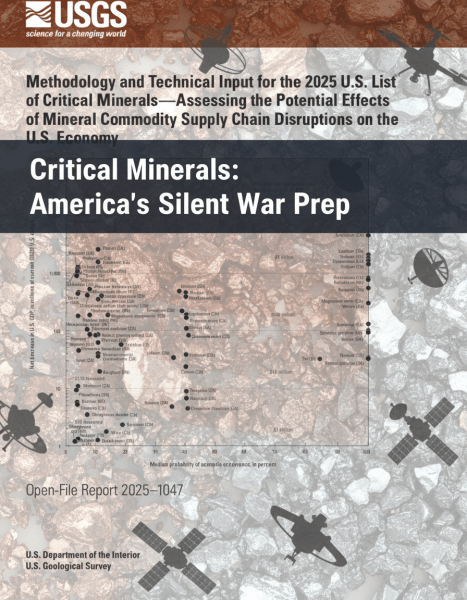
Critical Minerals: The Silent Tell of a War Economy

When the U.S. Geological Survey (USGS) updates its critical minerals list, the headlines barely notice. It reads like administrative trivia: a few minerals added, others removed, technical notes buried in appendices. But the 2025 draft list, now including copper, silver, lead, potash, silicon and rhenium, is not trivia. It is a tell.
These are not just “resources.” They are the circuitry, fuel and substrates of distance warfare: drones, satellites, AI servers, hypersonic craft and cyber networks. Naming them “critical” is not geology; it is policy. It signals that Washington intends to underwrite, secure (and if necessary) militarize the supply chains for tomorrow’s conflicts.
If history is the guide we expect it to be, we understand such lists are never neutral. Before WWII, Washington catalogued strategic materials like chromium, manganese and nickel as tanks and planes would have remained sketches without these metals. The Cold War stockpiles of uranium, titanium and rare earths told their own story of nuclear escalation and aerospace competition. Whenever governments build inventories of earth and ore, war usually follows.

Copper

Copper has long been civilization’s wire. Today it is the bloodstream of unmanned systems. Every drone swarm, every electronic countermeasure, every power-hungry radar dome requires copper’s conductive veins. The Pentagon’s own electrification push (from hybrid tactical vehicles to expeditionary battlefield grids) makes copper as strategically indispensable as oil once was.
The USGS data shows about two-thirds of copper production comes from private multinationals, while state firms like Chile’s Codelco anchor the rest. In war, that’s a chokepoint: private profit and public sovereignty tugging against U.S. demand. The federal “critical” designation is the mechanism for resolving that tug, by aligning private output with military need.

Silver

Silver is the mineral of precision. Its conductivity makes it indispensable in the circuitry of surveillance satellites, the sensors on drone wings, the guidance modules of missiles. It’s also the mirror of the heavens: silver-coated panels and optics sharpen the eyes of space-based reconnaissance.
Mexico’s silver (highlighted in USGS modeling as a $435 million GDP risk in the event of disruption) is more than jewelry export. It is the fragile tether of America’s electronic warfare capacity. If WWII needed steel and oil, the drone wars of the 21st century will need silver: it’s in every chip, every reflective surface, every sensor that makes remote systems function in real time.

Lead

Lead sounds archaic, a relic of musket balls. But logistics never sheds old tools. Lead-acid batteries remain the workhorse of backup power, rugged vehicles and forward-deployed comms units. They start engines in the desert, stabilize grids in the field and keep lights burning when lithium-ion fails under cold or cost.
China dominates production, with “private” firms bound to state direction. By putting lead on the list, the U.S. acknowledges what the generals already know: battles are won not just with drones and code but with batteries that still crank when newer chemistries fail in the field or fail the budget.

Potash

Food is logistics. Napoleon’s armies starved; Hitler’s armies sought Ukrainian wheat; America’s mobilization in WWII required fertilizer to keep farms feeding troops and allies. Potash, as a primary input to fertilizer, is not about crops alone, it is about sustaining human capital in war.
With Belarus, Russia and Canada holding the export reins, potash is geopolitically entangled. Its presence on the USGS list signals that Washington understands a modern war economy will not only hinge on missiles and AI but on whether its population (and allied populations) can eat under blockade or disruption.

Silicon

If copper is circulation, silicon is cognition. It is the substrate of AI, the backbone of cybersecurity, the etched brain of every satellite, drone and digital fortress. Without silicon wafers, there are no chips; without chips, there is no digital battlefield.
China’s industrial policy has made it the center of silicon refining. That means the U.S. must either subsidize domestic fabs or militarize semiconductor flows (hello Intel). By declaring silicon “critical,” the federal government isn’t just protecting consumer supply. It is announcing that AI warfighting, drone autonomy and orbital cybersecurity are national defense priorities and that silicon will be commandeered to feed them.

Rhenium

Rhenium is the most esoteric of the six, but perhaps the most militarily revealing. Added to nickel-based superalloys, it allows turbine blades to withstand searing temperatures. Without rhenium, high-performance jet engines melt; without those engines, fighter jets, hypersonics and reconnaissance craft can’t fly.
In WWII, nickel and chromium were critical because they made steel tanks roll and engines run. In the Cold War, titanium allowed spy planes to reach the stratosphere. Today, rhenium plays that role. Its scarcity (less than 10 metric tons globally in 2024) mostly recovered as a byproduct of copper mining makes it a perfect “tell.” It is not industry that demands it at scale; it is the Air Force.

The Historical Echo

Every mobilization has its list. The National Defense Stockpile Act of 1939 quietly laid the groundwork for industrial war, identifying which resources would decide victory or defeat. The Cold War Defense Production Act extended the logic, aligning corporate supply with strategic need. Each list is both an inventory and a prophecy.
The DoD Industrial Capabilities Report underscores the stakes: vulnerabilities in minerals like copper, silicon, silver, rhenium, and lead are national security threats. Adversary control or disruption of these materials would undermine warfighting readiness and the Pentagon already treats this as an operational, not just economic, issue. The USGS 2025 draft list is therefore more than academic: it is the civilian-facing reflection of a military strategy that assumes scarcity could decide battles.

Stimulus or Inevitable Conflict?

The genius of bureaucratic language is that it conceals what it reveals. The report never says “we are preparing for remote wars and orbital conflict” on page one. It doesn’t have to. The list itself is the confession.
By designating these minerals as “critical,” the federal government is signaling that two possibilities are on the table:

  1. War as Stimulus: Subsidies, stockpiles and corporate alignment redirect production into a defense-driven growth cycle. The late 1930s provide a historical parallel: FDR’s pre-WWII rearmament quietly built the arsenal of democracy while simultaneously pulling America out of the Depression. Factories humming with war contracts were both shield and lifeline.
  2. War as Expectation: The alternative is grimmer: Washington is preparing for conflict because it expects it: whether in orbital control, cyber escalation, or contested supply chains. Just as FDR’s military buildup acknowledged looming global confrontation, today’s mineral maneuvering may be a recognition that certain conflicts are unavoidable.

Either way, these minerals are no longer neutral commodities. They are instruments of war planning. Copper wires it. Silver refines it. Lead powers it. Potash sustains it. Silicon thinks for it. Rhenium lifts it into the sky.
This is structural war prep: either as a lever for economic revival or as preparation for a fight the state believes it cannot avoid.

Works Cited

1. Nassar, Nedal T., et al. Methodology and Technical Input for the 2025 U.S. List of Critical Minerals—Assessing the Potential Effects of Mineral Commodity Supply Chain Disruptions on the U.S. Economy. U.S. Geological Survey Open-File Report 2025–1047. Reston, VA: U.S. Geological Survey, August 25, 2025.


2. U.S. Geological Survey. “Department of the Interior Releases Draft 2025 List of Critical Minerals.” USGS News Release. U.S. Department of the Interior, August 2025.


3. U.S. Geological Survey. Mineral Commodity Summaries 2025 (ver. 1.2, March 2025): 212 p. U.S. Geological Survey.


4. Bloomberg News. “US Agency Proposes Including Copper, Potash in Critical Minerals.” Bloomberg, August 2025.


5. U.S. Department of Defense. Annual Industrial Capabilities Report to Congress. Office of the Under Secretary of Defense for Acquisition and Sustainment, January 2024.

© 2025 Zakariyas James. First shared here at theruminationcompilation.wordpress.com.
America’s Warpath Towards Corporate Control

Do you feel it shifting yet?
It is subtle, but unmistakable. The United States is stepping beyond ordinary economic support, slipping into direct ownership of private enterprise. Owning ten percent of Intel is not a bailout, it’s a strategic maneuver.
The Intel chip foundry, powering every drone, missile system, satellite and cyber-defense operation is now partially tethered to Washington. This is the war economy coming alive again.
Let us walk this through.
(Cue the Battle Hymn of the Republic)

Intel as the New Arsenal

On August 22, 2025, the administration converted federal CHIPS Act grants into a ten-percent equity stake in Intel. The stake carries no voting rights, yet it signals Intel’s further integration into the national defense apparatus; chips are now synonymous with weapons.
While the government claims this move will not interfere with day-to-day operations, history shows that ownership (even without governance) aligns strategic interests with influence.
Consider SkyWater Technology, a U.S.-based semiconductor foundry specializing in radiation-hardened chips for high-altitude craft and satellites. With deep collaborations with the Defense Advanced Research Projects Agency, it stands as the only American-owned pure-play foundry of its kind, making it a likely candidate for future government equity. If Intel is the visible fortress of U.S. semiconductor capacity, SkyWater may be the shadow arsenal woven into defense.
This is not mere industrial policy, it is war economy logistics; the state is embedding itself into the supply chains critical for military readiness.

A Repeating Playbook

In both World Wars, the U.S. government nationalized railroads, seized control of the telephone system and created the Defense Plant Corporation to build and lease munitions factories. These assets were returned or privatized in peacetime and the pattern has been repeated: wartime central planning, privatization in peace. Today, semiconductors are the new artillery; Intel’s stake could be the new assembly line.
Likewise, the Department of Defense’s $400 million investment in MP Materials, the only significant rare-earth mining company in the U.S., mimics wartime strategy: securing magnet supply chains for guidance systems, drones and missiles.

What Industries Are Next?

Semiconductors were just the opening salvo. The war economy model is poised to extend into:
• Rare-earth elements and strategic metals: MP Materials already shows the model.
• Battery minerals such as lithium, graphite, and cobalt: critical for advanced munitions and energy systems.
• Oil and natural gas infrastructure: needed to sustain fleets, aircraft, and command centers.
• Advanced manufacturing for aerospace, hypersonics, and AI systems.

Silver’s Role in Military Tech and Munitions

Silver is indispensable in modern warfare for its superior conductivity and reliability. It features prominently in military electronics from radar and guidance systems to circuit boards.
• Conservative estimates put cruise missiles silver usage at about 15 per missile.
• Defense contractors manufacture silver-zinc batteries for missile families such as Patriot, Tomahawk, Hellfire, THAAD, and JDAM to power guidance, telemetry and control systems.
This demand makes silver a strategic resource and yet supply remains volatile. It is likely to become a target for government safeguarding or supply-chain oversight. If not from a military perspective, the government may involve themselves in the industry solely to manipulate cost of acquiring the metal for all industrial use.

U.S.–Ukraine Minerals Partnership

On April 30, 2025, the United States and Ukraine signed a landmark minerals agreement establishing a United States–Ukraine Reconstruction Investment Fund, equally managed by both governments. Ukraine retains ownership of its subsoil and resources, while 50 percent of new project revenues (across rare earths, lithium, titanium, uranium, graphite, oil, and gas) will flow into the fund. U.S. military aid counts as contributions and there are no debt provisions on past aid.
Ukraine’s parliament has since ratified the deal, envisioned as both a reconstruction and strategic investment vehicle. However, actual economic benefits are projected to take a decade or more due to damaged infrastructure, outdated geological data, and active conflict zones as many resource-rich areas remain under Russian control.

Strategic State War Economics

This is not European-style dirigiste planning in peacetime, it is America preparing its economy for conflict. From railroads and refineries to rare-earth mines, semiconductor fabs, critical minerals and silver-dependent munitions. The pattern is clear: when the United States identifies a threat, it turns not merely to regulation or subsidies but to ownership and control.

Ownership as Armament

America is once again rewiring capitalism for conflict. The Intel stake may feel disconcerting because it is not a standard industrial policy, it is war economy policy.
Will this be temporary, like past wartime interventions, or permanent like the Tennessee Valley Authority? That is the question.

In some respects, these recent developments from our government resembles a form of economic warfare conducted in the open but rarely acknowledged as such. The factories, the mineral rights, the intellectual property, they have all become fields of contest rather than fields of commerce. A document that circulated decades ago, Silent Weapons for Quiet Wars, framed the notion that a population could be subdued not by force of arms but by systems of policy, scarcity and control. Ignoring whether it should be viewed as allegory or leaked strategy, the thesis lingers: today’s corporate stakeholdings and mineral seizures may not be silent weapons in the literal sense but they echo the idea that war has shifted into quieter, more pervasive forms. If the weapon is silent and the war is quiet, how would we recognize we are even at war at all?


For more insight as to how likely it is the U.S. is prepping for a major conflict, see Critical Minerals: The Silent Tell of a War Economy.

© 2025 Zakariyas James. First shared here at theruminationcompilation.wordpress.com.
Bird Flu & The Great Disappearing Act


In early 2024, cows started testing positive for a virus we’ve long associated with birds H5N1, also known as Highly Pathogenic Avian Influenza (HPAI). The phrase bird flu in cattle started showing up in news alerts and government bulletins, albeit intermittently. But now, hundreds of infected dairy herds later, the illness is being given a new name.

Not by virologists. Not by the CDC.
By a trade group.

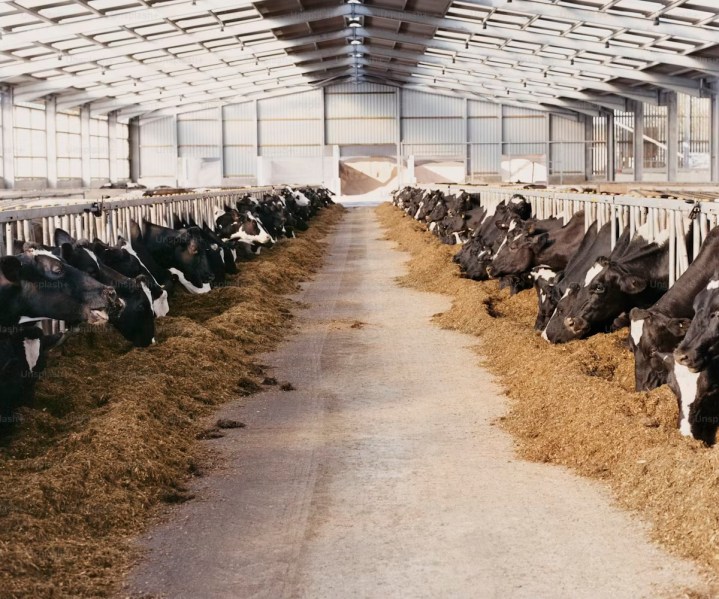
The American Association of Bovine Practitioners (AABP) declared it will no longer refer to the virus in cattle as HPAI. From here on out, they’re calling it Bovine Influenza A Virus (BIAV) and they’re urging federal agencies, diagnostic labs and state health officials to follow suit.

The reason?
To help the public “better understand” the difference between bird flu in birds and the milder form now spreading through cows.

They also say the change will “help maintain confidence in the safety and accessibility of dairy and beef products.”

Which might be the most honest sentence in the entire press release.


In 2024, the U.S. exported nearly 2.8 billion pounds of beef, generating over $10 billion in international sales.
China, a cornerstone of those exports, is now largely off the table. American beef faces a 32% tariff there, alongside widespread delistings of U.S. facilities.

With the Trump administration’s tariffs raising tensions across North America, maintaining consumer trust (both domestic and foreign) has never been more financially urgent for the beef lobby.
You don’t move that kind of product if people start panicking about biosecurity, let alone the potential for animal-to-human spillover.


At least 17 states have now reported H5N1 infections in dairy cattle.
Human cases have already occurred. Wastewater and milk sampling show signs of persistent viral shedding.

But the renaming of the virus comes at a time when the federal government is reportedly scaling back H5N1 surveillance efforts. Staff reductions, limited testing and quiet policy shifts are leaving fewer eyes on a virus that’s crossing species lines with alarming ease.

There’s a strange convenience in the timing.

A virus known for devastating poultry industries is now embedded in America’s dairy system. And just as public concern might begin to swell, a new label appears.

Not one rooted in viral evolution or scientific consensus but in consumer confidence.

The virus didn’t disappear.
Just the name.


Meanwhile, American consumers are seeing beef prices climb steadily, often far faster than official inflation numbers suggest.

Major media outlets and government agencies largely frame these increases as a natural outcome of supply and demand or temporary inflationary pressures. But the reality is more complex.

For a deeper look at how inflation numbers get manipulated and what that means for prices like beef, see: Shadow Inflation & the Price of Freedom


Tariffs imposed by the current administration on beef imports from key trading partners like Canada and Mexico (sometimes as high as 25%) have disrupted supply chains and added costs that producers pass down the line.

Meanwhile, retaliatory tariffs from export markets such as China have shrunk overseas demand, squeezing domestic producers from both ends.

Add to that rising feed, fuel, and labor expenses and the fallout from widespread H5N1 infections in dairy herds (costs they simply can’t eat) it’s clear that American beef is caught in a pressure cooker.


Consumers are left to wonder:

  • How much of the rising beef price is due to trade policy?
  • How much stems from inflation?
  • And how much reflects an industry quietly trying to manage the optics of a virus now entrenched in the very livestock they rely on?

The American Association of Bovine Practitioners and the current administration say people won’t get sick from bird flu in cows unless, of course, they drink the milk raw.

But if the virus isn’t a threat, why does every regulatory body recommend only pasteurized milk?


The answers are complicated.
But what is certain is this:

The story told about beef, bird flu, and prices is being carefully served to us on a dirty platter.

© 2025 Zakariyas James. First shared here at theruminationcompilation.wordpress.com.