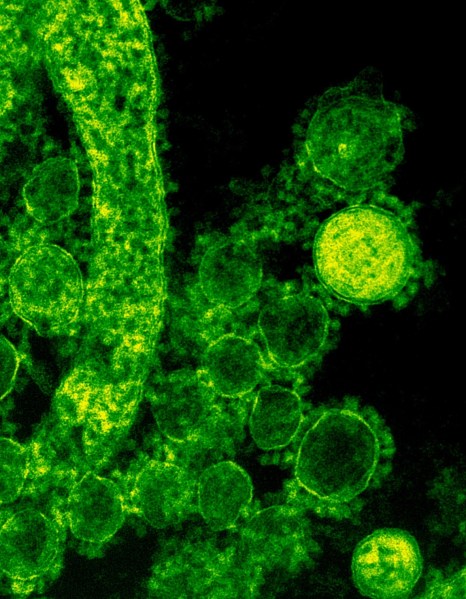
Even though the farmer is the man, the farmer has a few friends to thank. The crops and various yields we concern ourselves with, or at least the ones we place the highest value on, severely depend on interactions with other creatures that we tend to overlook or altogether neglect.
As of late, the neglect is reaching a potential maximum that may herald in a world in which some recipes seem too costly or altogether impossible to alter for sake of substitution. Bats, bees and other pollinators are invaluable aids to humanity, yet they’re slowly and quietly going into the long night…moreso than the TV screens care to tell you.
Going Batty
Bats (those cool, nocturnal insectivores) are being wiped out across 40 states by Pseudogymnoascus destructans (white-nose syndrome), a fungus that shatters their hibernation, fat reserves and wings. The result: millions dead, entire colonies erased.
Their absence carries a price tag. Bats provide $3.7 to $53 billion in pest control services each year by eating the insects that would otherwise chew through corn, cotton, rice and other staples. In field studies, excluding bats from cornfields meant 60% more pests and 50% more crop damage in just two nights (Kunz et al, 2011).
Counties hit by the fungus see $2.84 per acre rental declines, idle farmland, a 31% jump in pesticide use and a 7.9% rise in infant mortality which ends up costing society $39 billion. Still today, the fungus spreads. Tangentially, they’re also the largest pollinator group of agave, the basis of tequila; so maybe enjoy it while you got it?
Now the bees…
Between mid-2024 and early 2025, U.S. beekeepers lost 62% of their colonies, totaling over 1.1 million hives gone. These pollinators add $34 billion annually to U.S. agriculture; almonds alone require 1.4 million hives each spring, with hundreds of millions of dollars at stake in pollination contracts.
The causes are hardly mysterious: Varroa mites, viruses, pesticide exposure, habitat loss, and extreme weather (Goulson et al., 2015). In Texas, heat and drought drove a 66% colony collapse; a staggering loss far beyond the norm.
Globally, inadequate pollination already reduces fruit, vegetable and nut production by 3–5%, contributing to hundreds of thousands of premature deaths each year from diet-related disease. Fewer pollinators mean smaller harvests, higher prices and a poorer diet for millions.
Cattle Craze
In early 2024, H5N1 appeared in U.S. dairy herds. A trade group quickly pushed to rename it Bovine Influenza A Virus (BIAV), softening the optics even as infections spread to 17 states and hundreds of herds. Viral shedding was found in milk and wastewater, human cases were recorded, and federal surveillance quietly receded.
The direct food-safety risk is managed through pasteurization, but the economic risk comes from reduced production, herd health declines, and tighter export margins in an already tariff-heavy trade environment (USDA ERS, 2024).
Poultry Problems
The same virus has hit poultry far harder. Since 2022, over 166 million birds have been culled nationwide, across all 50 states and Puerto Rico—marking the largest, longest avian influenza outbreak in U.S. history.
The fallout has been rough, to say the least. Wholesale egg prices more than doubled in early 2025, retail prices hit $5–$9 per dozen and store shelves in some areas went bare between shipments. In February 2025, the USDA launched a $1 billion response plan, including $500 million in biosecurity upgrades, $400 million in farmer relief and $100 million for vaccine research. Wholesale egg prices later fell 64%, retail by 27% and still the USDA forecasts a 41% increase in egg prices for 2025 overall.
Meat production also tightened as infected flocks were destroyed, pushing poultry prices upward and reshuffling supply chains.
None of this even covers the detriment to pest management we owe to millions of other birds we’ve lost to H5N1 recently; they may be bird species we don’t ingest but their contributions to food production shouldn’t be dismissed.
The Hidden Truth Beneath Rising Prices
• Bats gone = higher pest pressure, greater crop losses.
• Bees gone = pollination deficits, reduced yields, higher produce prices.
• Cattle infected = production hits, export challenges.
• Poultry culled = eggs and meat scarce, prices surge.
We call it inflation, trade friction, “market shifts,” but the ledger is ecological and measured in wings lost, colonies collapsed and flocks erased.
These losses don’t happen in a vacuum. They’re amplified by poor government stewardship: from underfunded wildlife agencies to reactive rather than preventative biosecurity. Corporate malpractice often doubles the damage, whether through chemical overuse, disease mismanagement, or lobbying for optics over truth (Food Tank, 2024). Climate disruption compounds every weakness, making winters too warm for pest cycles to break, summers too hot for bees to forage and droughts too long for forage crops to survive (IPCC, 2019). And all of this is made more volatile by consumer demands for cheap, abundant, uniform products causes pressure for producers to cut corners in ways that weaken ecological resilience further.
The true cost of our food is not just in the grocery bill. It’s in degraded ecosystems, distorted market signals, and an agriculture system that burns through its biological capital faster than it can be replenished.
The runaway printing of fiat isn’t helping either but ultimately, the more we ignore the interlocking causes, the more expensive eating will become. Whether it’s denoted in dollars, observed in personal health or in the declining stability of the systems that feed us, we’ll see the cost sooner rather than later and it won’t be easy to stomach.
Sources
• Boyles, J.G., Cryan, P.M., McCracken, G.F., & Kunz, T.H. (2011). Economic Importance of Bats in Agriculture. Science, 332(6025), 41–42.https://science.sciencemag.org/content/332/6025/41
• Kunz, T.H. et al. (2011). Ecosystem Services Provided by Bats. US Forest Service Report. https://www.landcan.org/pdfs/wns%20kunz%20april%205%20%202011.pdf
• Environmental Health Journal (2020). Economic and Health Impacts of Bat Declines. https://www.science.org/doi/10.1126/science.adg0344
• Survey Reveals Over 1.1 Million Honey Bee Colonies Lost, Raising Alarm for Pollination and Agriculture https://honeybeehealthcoalition.org/survey-reveals-over-1-1-million-honey-bee-colonies-lost-raising-alarm-for-pollination-and-agriculture/
• Bee Informed Partnership, 2025 National Honey Bee Loss Survey Results. http://web.archive.org/web/20231218173803/https://beeinformed.org/citizen-science/loss-and-management-survey/
• Calderone, N.W. (2012). Insect Pollinated Crops and US Agriculture. PLoS ONE, 7(5): e37235.
https://journals.plos.org/plosone/article?id=10.1371/journal.pone.0037235
• Almond Board of California, 2024 Annual Report. Annual Publications | Almond Almanac | Growing Good
• Goulson, D. et al. (2015). Bee Declines Driven by Combined Stressors. Science, 347(6229).
https://science.sciencemag.org/content/347/6229/1255957
• Pollination loss removes healthy foods from global diets, increases chronic diseases causing excess deaths. https://hsph.harvard.edu/news/pollination-loss-removes-healthy-foods-from-global-diets-increases-chronic-diseases-causing-excess-deaths/
• USDA Economic Research Service (2024). Cattle and Beef Market Reports.
https://www.ers.usda.gov/topics/animal-products/cattle-beef/
• USDA APHIS (2022–2025). Avian Influenza Outbreak Reports.
https://www.aphis.usda.gov/aphis/ourfocus/animalhealth/animal-disease-information/avian/avian-influenza
• USDA Press Release (Feb 2025). $1 Billion Avian Influenza Response Plan.
https://www.usda.gov/media/press-releases/2025/02/15/usda-announces-1-billion-avian-influenza-response
• USDA Economic Research Service (2025). Poultry and Egg Price Outlook.
https://www.ers.usda.gov/topics/animal-products/poultry-eggs/
• Examining Corporate Influence Over Food and Farm Bill – Food Tank https://foodtank.com/news/2024/07/examining-corporate-influence-over-food-and-farm-bill/
• Intergovernmental Panel on Climate Change (2019). Climate Change and Land.
https://www.ipcc.ch/srccl/
© 2025 Zakariyas James. First shared here at theruminationcompilation.wordpress.com.
 The Rumination Compilation