“Ramparts & Revolution”

Nature & nurture or design & downloads?

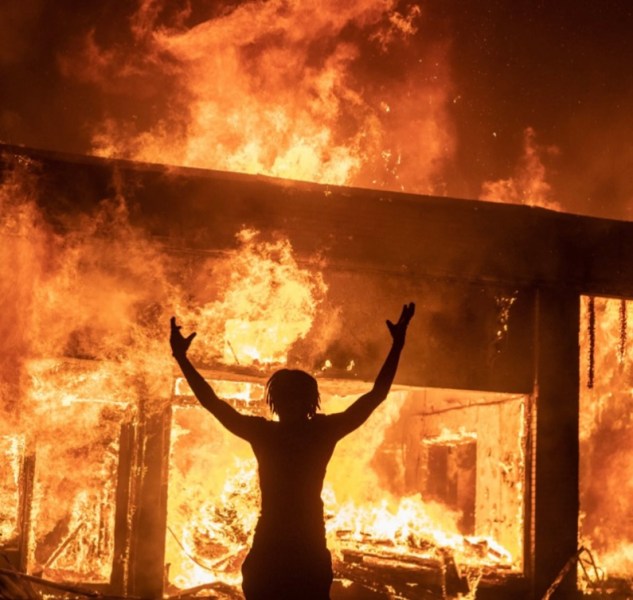
In the spirit of the times, I’d like to discuss revolution. Though it is one of the most human activities, in this instance, for the sake of clarity & successful generalized speculation, I’ll compare the human mind & spirit as general components of a computing system. In doing so, I hope to outline innate flaws & fortuitous features in the battle for freedom both physically & mentally.

The mind, agreed upon by addicts, philosophers & most high school football coaches, is the greatest obstacle. The body itself can be manipulated – broken to a point. Yet, the mind, the intangible byproduct of this intricate vessel, is moreso susceptible to manipulation & damage, oftentimes beyond repair.

I view the mind, individual & hive-kind, as systems in which necessary informations, or those that are time sensitive, are subject to the tendencies of a hard drive & a RAM drive.

Within this imagined “hard drive” lies the things we’ve patiently & earnestly considered; the information we hold of such high value that it lies stored in the back of the mind ready to be called at-will. This information spurs on the basic action we display with our body: if one truly believes “might is right” on this deep a level, their physical mannerisms & corporeal presentation will reflect in kind: athletic prowess, brute force, checked or unchecked ferocity. Contrarily, if a mindset values peace through inaction or “turning the other cheek” to a comparable degree, we see events like Thích Quảng Đức’s self-immolation where “as he burned he never moved a muscle, never uttered a sound, his outward composure in sharp contrast to the wailing people around him”.

The “basic truths” we all hold are inherited from older generations or our peers, oftentimes in close proximity. Stewardship, privacy, acknowledgment, control, freedom; there are a number of basic driving concepts, diverse as the number of lives one can lead. The energy of these concept stem from older generations (downloading, so to speak) but “update” as needed; 2,000 years ago, the same basic driving concepts existed but were in different stages of application – different times, different operating systems ie governments, prevailing social orders. Freedom today, in most nations, is vastly different than freedoms described centuries ago; privacy, by the day, diminishes in real life but creates more energy, more drive in some to achieve it (and for that we look to Julian Assange for our barely-living example). I see these “basic truths” as things we deeply appreciate across lifetimes, those things whose absence causes a depression of the energy in us all to do whatever we set a healthy & determined mind to. When a computer shuts off, the hard drive still holds all the pertinent information; we may fall asleep, but even in our dreams we are drawn to what we yearn for most & battle that which we fear the most.

This part of the mind is malleable but rather fixed as these inherited ideals, the downloaded desires are replicants, reiterations of past dreams; if they remained so for a millennia, they will probably remain so. The other side, the “RAM” parts, this is where the battle lies.

Here, in the hyperactive front of the mind, the Random Access Memory drive is where external coercion (stress) creates chaos. Comparatively, a RAM drive is the temporary storage space to the constant storage space of a hard drive; too much power is required to recall all information simultaneously, thus we have the limitations of awareness, focus & stress exemplified by the RAM drive.

This part of the mind exists in a state that initially resembles amnesia; upon further observation though, it is better described as the part of the mind directed & detailed by distraction & external commands.

External commands, the keystrokes that request specific files from the hard drive, are the stressors in life that cause us to hyper-fixate on an obstacle, a miscalculation. It’s in these moments we lose sight of the bigger picture; through the same electric shocks that trigger the mechanical response to have the RAM drive retrieve a specific file, we can view the “shocking” material on mainstream media as a mechanism by which the content creator seeks to retrieve a specific file, a specific reaction from the content consumer.

It’s possible, similarly, to frame these symbolic keystrokes in an authoritative light: as the tools of propaganda become more cutting-edge with the advancement of technology, the gradual human interfacing & censorship thereof online will only better serve to discuss the individual mind & the hive-mind as the computers of social order. Even as governments simply add legislation that illicit trigger reactions in any notable demographic under its authority, the correlation will suffice as misrepresentation on the governing scale can be jadedly termed as the moment the computer screen says “Error 404: File Not Found” as we’ve seen in the instances where FOIA requests are disgraced with black space.

The primary matter of this entire text is to analyze how this specific part of the mind, using a computing framework as lenses, disables revolution. In a sense, the remaining discussion requires a sustained recognition that those in power wish to stay in power; otherwise this ensuing text is for naught-a ruler indifferent to maintenance of power would not operate in the same ways, their hard drive is filled with different information.

The regimes of old, present & yet to be all have a persistent fixation upon the malleable nature of the RAM drive part of the mind where it concerns language & stress.

Moderation of public discourse by way of censorship is the foundation of this manipulation of the RAM drive. Through selection of approved key commands (talking points), those in control of information can either choose to outright “delete” sections of public sentiment & ideologies or saturate the available pool of information (noise) with state-sponsored sentiments & ideologies so the average citizen in the current & future generation inherits this information & essentially “copy & paste”s it until the original native information in the hard drives of the masses is replaced with the new.

Essentially, this would be described as integrative propaganda-that which the narrative controllers wish to see the citizenry slowly accept as reality & convince others of, to download & disseminate.

Agitative propaganda, that which seeks to place the RAM in overdrive, is most commonly found in instances that illicit emotional responses or those that compel an individual to act in an irregular way, or we’ll say “glitch”. In one fashion, narrative controllers can cause this agitation through information suppression; citizens kept in the dark through periods of strife become demoralized at the lack of actionable intel & eventually submit or commit violent acts in a disoriented manner incomparable to prior examples of the group or individuals demeanor-this is the hacking process in a human.

Soon, people will be singing “o’er the ramparts we watch,” & there will be varying meanings; some will imagine physical barriers between free speech, unencumbered travel & freedom of expression. Some will be imagining chat boards, blog sites & stages across the globe affected by double-speak & key commands, wondering what new ways they’ll be able to hack you & I & anyone plugged in, consciously or not.

Hold fast to what you’ve inherited but assess the source; changing our minds sometimes takes a considerable force. Countless campaigns continue attempting to convince future generations that the desires of the past should be left in the past, that they are barbaric due to antiquity. Should we continue down a path that allows the human mind to be manipulated as a computer, I fear our minds will be tormented & left as hollow receptacles of mandated iniquity.

Thanks for reading.

P.S. check out this art this guy I follow on Instagram made; I seriously love his content.

Check out his stuff!

© 2022 Zakariyas James. First shared here at theruminationcompilation.wordpress.com.
A Moment of Stillness

I just got off the phone with my mother; all in all, all is well but there’s one less person in this world.

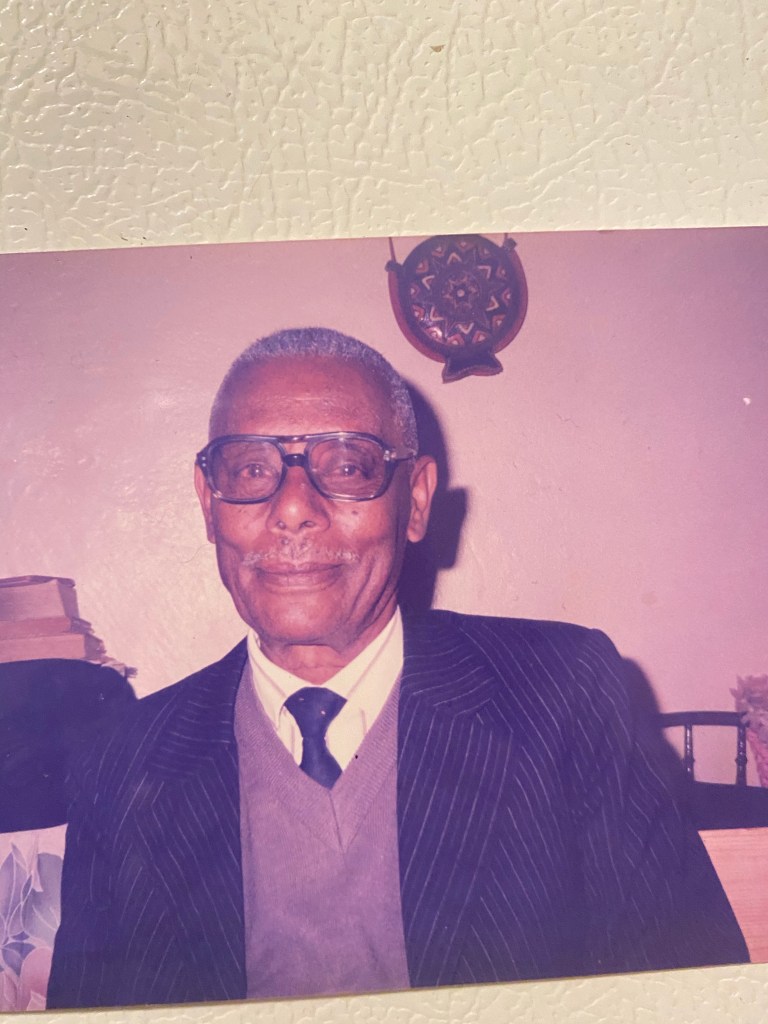
I had called to let her know that my car was acting up again only to be interrupted & told that my great-grandfather, Demoze, passed away last night.

Demoze, in all his glory. I have this photo on my fridge.

It’s not that I’m at a loss for words-on the contrary, it’s just extremely difficult to find words worthy of being used to describe him.

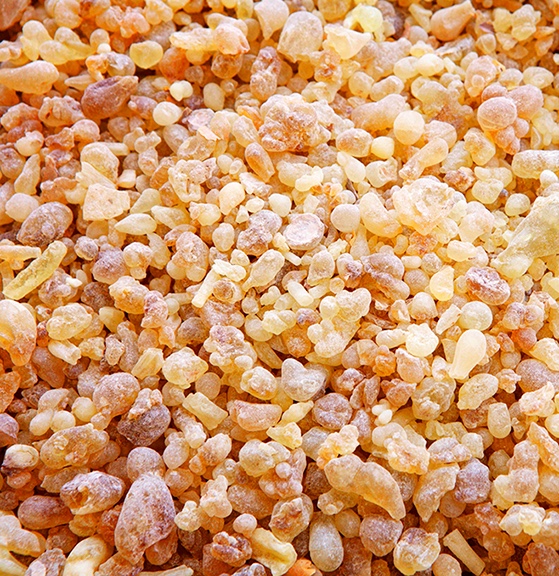
Instead of racking my brains trying to write more, I think I’ll burn some etan as tradition goes & then encourage you dear reader, to take a moment of stillness today & reach out to those you love, while you can.

Thanks for reading.

© 2022 Zakariyas James. First shared here at theruminationcompilation.wordpress.com.
The Volumes on Vitality: Part Three

Platforms of Mobility

Even the Rain

Growing up, I’d heard that someday there would be water wars. Conflicts centered around physical domination of a resource that is already depleting or diminishing in value/utility. I’d heard this from immediate family members, those I’d randomly encounter over the course of a day & the a few forms of content available on the web like this NPR piece from a while back that’s always stuck in my mind.

Though I accept this unfortunate possibility of nations warring over waterways & dams, I often wonder to myself, “what’ll lead up to that? What will the economics of water look like over the course of my lifetime & further on?”

Along the way, going through life with these random thoughts, I’ve come across tidbits of innovation & determinations that I believe paint an abstract picture of what the economics of & around water could look like.

At the moment, the CME Group, the largest financial derivatives exchange in the world, has been offering futures contracts where the underlying asset is water since December of 2020 when California’s entire water market was valued at $1.1 billion. The speculated water spans “across the five largest and most actively traded regions in California. Water entitlement transactions from the surface water market and four adjudicated groundwater basins-the Central Basin, the Chino Basin, the Main San Gabriel Basin, and the Mojave Basin Alto Subarea are included in the index.”

As far as California goes, around 65%, give or take seasonal changes, of the surface water available is in Northern California, hence the mentioning of the basins in the NQH20 index. Most of that water is pumped from the north to south or transported by other means; the rest of the water needed in the south is pumped from groundwater basins regulated by the Sustainable Groundwater Management Act of 2014 & other legislative actions.

To do a bit more in depth research & also try my hand at trading the NQH20 contracts, I contacted the CME Group & one of their registered brokers to open an account but was told I do not possess the capital required to participate in the market. I guess I should cry a river & then trade futures on that supply of water.

In all seriousness, not just because my humor lacks refinement by any standard of the word, I bring this up to echo the sentiment Pedro Arrojo Agudo made when he said, “water is increasingly being treated as a mere commodity and even as a financial asset, undermining the human rights to safe drinking water and sanitation and the sustainability of the environment.” at the UN General Assembly on October 20th, 2021. If I myself, a “middle-class” citizen, can’t access the potential profits from a water market, what sort of hope or outlook should I hold for my future financial status & the mobility of my money? Will it stretch worse in a world where water prices are speculated on by those who won’t even drink that exact water? Or will those gains “trickle down” too & it’ll all be okay?

About a week ago or so, my fiancé brought to my attention a startup company called FreeWater based in Austin, Texas that markets aluminum bottles & paper-based cartons of “free” water “paid for by ads that are printed directly onto eco-friendly cans and cartons. Ten cents per beverage is donated to charity.”

The 10¢ per beverage is donated to WellAware a non-profit based out of Austin, Texas as well that “fund[s] and implement[s] lasting clean water systems to drive development and empower communities in East Africa.” After a bout of equal parts boredom & being nosey, I perused their IRS audits from 2017 & 2020 & noticed the non-profit WellAware, pays a for-profit company called WellBeyond, which is owned by the same individual, also based in Austin, for “project consulting and execution services for the Organization’s program services in Kenya” to the tune of “$237,460 in paid expenditures and $124,823 of in-kind contributions and expenses,” in 2020.

Through pessimistic lenses critical of foreign conglomerates granted unilateral rights of a resource or location, I look at this “free water” scenario as a possible foundational step towards a future where the 1999-2000 water wars of Cochabamba, Bolivia are replayed with new characters. The protests over the wells & water costs inspired a film called (in English) “Even the Rain” that I saw some years ago now; as summer is upon & droughts continue, various scenes from the film cross my mind as of late, especially so when I think of the creeping normalization of water as a commodity.

FreeWater, in their FAQ section, says they’ll be launching “a new type of utility tokens called the FreeWater token.” Ignoring the application of a currency not scrutinized by external securities aspect (hello crypto), I’ve sat wondering how many energy resources will someday have respective “utility tokens” created by large conglomerates; I eventually wonder, will there be tokens or other company-based credit systems for electricity too? Mastercard already has a card in Sweden with a company based there that “not only helps users track and measure CO2 emissions associated with their purchases, but also puts a limit to the climate impact of their spending with a carbon footprint limit.”

Hear me out, I’m not saying blockchain currencies won’t be a part of the future with my jab earlier towards cryptocurrencies in a general way. Earlier this week, Shell Corp., American Express Global Business Travel & Accenture announced a joint partnership to create a company called Avelia Solutions, that facilitates a “blockchain powered book-and-claim solution that provides you with fully traceable environmental attributes of SAF (sustainable aviation fuel) to help decarbonise your air travel.” I see these continued applications of blockchain pay systems & corporate tokens to be indicative of the fact that they’ll be the norm at some point.

As far as innovation besides blockchain tokens & the like goes, technology related to water & other liquids necessitates further discussion on the levels of access & uses of water.

Over the last decade & change, the desalination industry has made improvements in technology & production costs to combat the decreasing level of access of freshwater, researchers at the University of Colorado Boulder have developed a method using microbes to clean both organic contaminants and salts from hydraulic fracturing wastewater, while producing renewable energy & countless other examples can be given but my favorite comes from even further back in time: MagnetoHydrodynamics (MHD).

Popularized by a few Tom Clancy books, MHD systems can be found discussed & funded at length by parties like the US Dep of Energy’s National Energy Technology Laboratory, NASA & the HIT-SI lab, part of the William E. Boeing Department of Aeronautics & Astronautics at the University of Washington.

I’d wager, if this technology that utilizes water as a fuel component becomes widespread with multiple applications (as far vehicles go) water will become even more scarce but truly live up to its designation of “platform of mobility”. In a way, it’s like we might go from ancient, disconnected seafaring peoples that eventually learned flight to evolving into spacefaring peoples that will use water as much as our ancestors did before us, maybe even more.

In my mind there’s a war between all these thoughts; possibility versus possibility, only settled by time passed. Hopefully, we enter a future ultimately lacking in strife that is abundant with the needed resources for us all to equally enjoy the gift of life. I hope we all someday look at a glass completely full, instead of bicker about the determined or perceived volume.

Thanks for reading.

P.S. leave a comment! Tell me of your goals, expectations, concerns for 2022; I hope to create an area where it can all be hashed out.

P.P.S. are there water restrictions where you live too?

Links to ponder:

https://www.newyorker.com/news/letter-from-the-southwest/the-water-wars-come-to-the-suburbs

Added on 8/16/22:

https://www.washingtonpost.com/climate-environment/2022/08/16/colorado-river-bureau-of-reclamation/

© 2022 Zakariyas James. First shared here at theruminationcompilation.wordpress.com.
A Somber Scot Pine

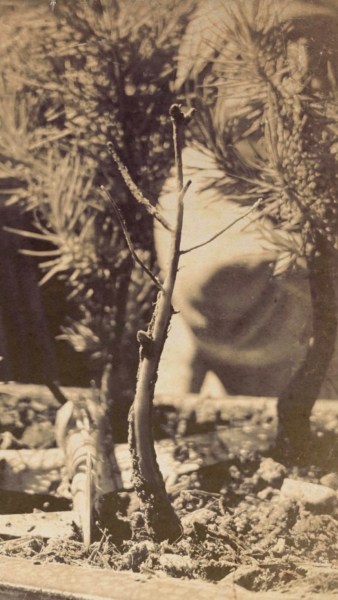
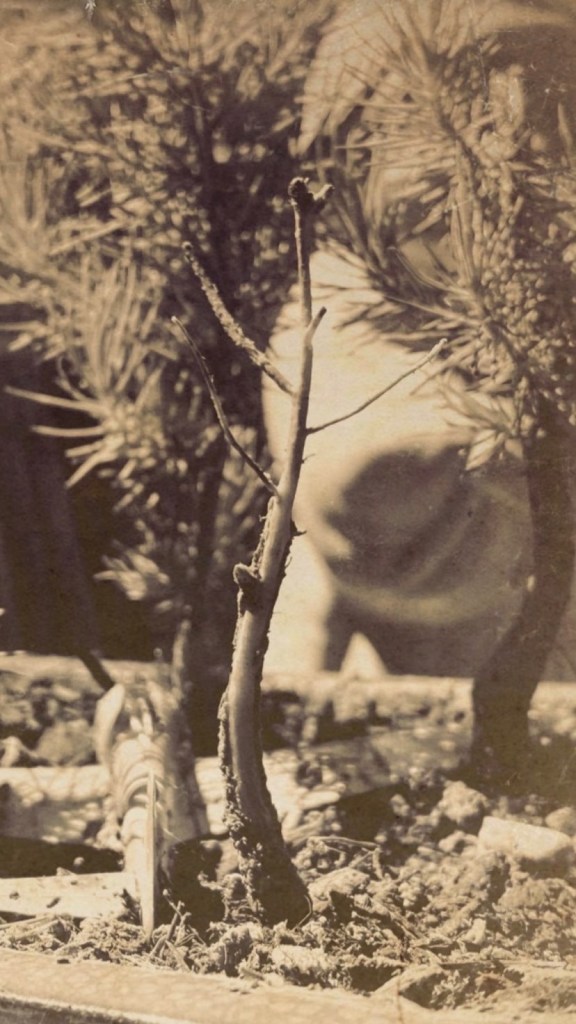
For the past year & change, I’ve been attempting to develop multiple Scot Pine saplings for various bonsai projects as a hobby.

Recently, one of my Scot Pine saplings in a group planting I put together passed away. Rather than remove the lasting image of the error on my part, I’ve opted to remove the bark down to the cambium & appreciate the final step all living things happen upon: death.

Dealing with death is an exhausting matter; cerebral & poetic, discussions of death deal in recollections of past events & postulations of what could’ve been, often intangible.

Maybe it’s a childlike hope that reflecting on a perished pine will help me appreciate the things around me that are still alive & worth caring for. Maybe it’s the appropriate thing to do.

Either way, I’ll leave this somber Scot pine settled in the soil to see a sign of what used to be & what will come to be.

Thanks for reading

© 2022 Zakariyas James. First shared here at theruminationcompilation.wordpress.com.
The Volumes on Vitality: Part Two

Water Music

The next post is rather long & bleak, so here’s a pleasant break before really delving into the deep end. Here’s to a relaxing weekend; next post is on Monday!

“Shenandoah” arr. by unknown

Fairly certain this arrangement is a stylistic melding of two different arrangements for SATB (soprano, alto, tenor, bass) versions repurposed for this men’s group called Chanticleer.

The song first appeared in writing as “Shenadore” in The New Dominion Monthly in April, 1876. The author, Captain Robert Chamblet Adams, indicated that he had first heard the song around 1850.  W.B. Whall reprinted it in his 1910 book Ships, Sea Songs and Shanties Collected by W.B. Whall, Master Mariner. The lyrics tell the story of a canoeing voyageur, or fur trader, who was in love with the daughter of a Native American chief.

This earliest known version of the song likely originated with French Canadian voyageurs who traded with Native Americans around the Great Lakes starting in the 16th century. The voyageurs gave weapons, tools, and money in exchange for animal furs, especially beaver pelts. They often sang while they paddled their canoes along the Mississippi River and its tributaries, including the Missouri, in the quest for furs.

“The Blue Danube Waltz” arr. by Johann Strauss II

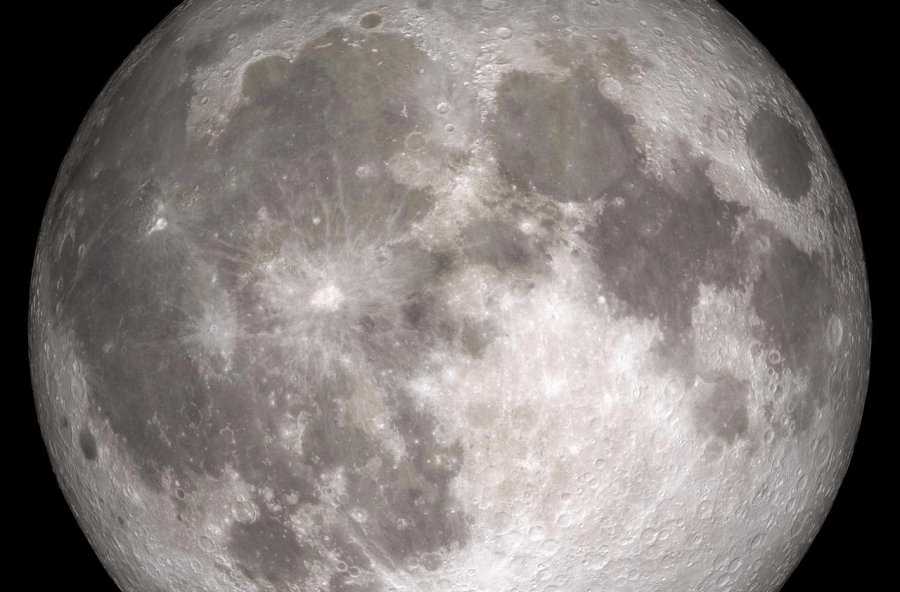
I remember first hearing this one in 2001: A Space Odyssey; still one of my favorites of all time. I think Kubrick purposefully picked this song as the Sea of Tranquility is where the obelisk is found for the first time by spacefaring humans. In the next post, at the end, I’ll lightly touch on water as a fuel source; I like to imagine Kubrick was aware of this technology & wanted to symbolically portray it both musically & geographically, as far as the moon goes, which is also symbolically synonymous with the seas & the tides.

Written to celebrate the River Danube that flows through Vienna, it was premiered as a choral piece on February 13, 1867 at a concert of the Vienna Men’s Choral Association. Its initial performance only got a lukewarm response and Strauss is reputed to have said “The devil take the waltz, my only regret is for the coda – I wish that had been a success!” Strauss adapted it into a purely orchestral version for the World’s Fair in Paris that same year, and it this form that it is best known today.

“Boat on Tai Lake” arr. by Dr. Reed Criddle

I honestly have had the hardest time finding historical notes about this piece; I’ve tried for about 5 years now since first hearing this song with no luck whatsoever.

Tai Lake is a lake in the Yangtze Delta and one of the largest freshwater lakes in China. The lake lies in Jiangsu province and significant part of its southern shore forms its border with Zhejiang.

“Across the Western Ocean” arr. by Celius Dougherty

I only know this song because I was a choir nerd as a kid (can you tell yet?) & sang this piece as a solo. I think the lyrics are depressingly beautiful, the opening line is timeless: “oh the times are hard & the wages low,” how much more needs to be said?

Penniless in the wake of a potato famine in their homeland, one and a half million Irish people immigrated to the United States between 1846 and 1850. Their passages were frequently paid by relatives who had already settled in America. Crossing the Atlantic by packet ship was inexpensive, especially for those who traveled from English ports, due to trade competition between America and Britain. The journey took at least six weeks on the overcrowded vessels. Famine, disease, and shipwreck caused an estimated one of every five immigrants to die at sea.

Thanks for reading & hopefully listening to these awesome pieces of music!

P.S. leave a comment! Tell me of your goals, expectations, concerns for 2022; I hope to create an area where it can all be hashed out.

P.P.S. are there water restrictions where you live too?

© 2022 Zakariyas James. First shared here at theruminationcompilation.wordpress.com.
The Volumes on Vitality: Part One

The Summer Solstice

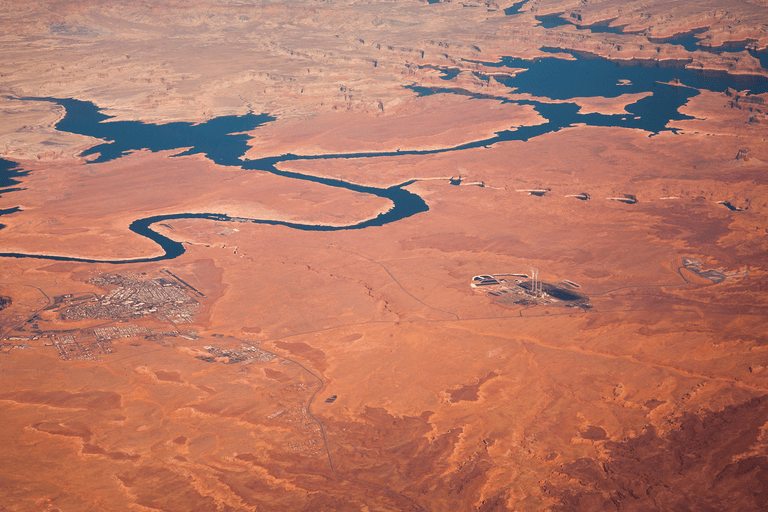
For the next few posts, I’ll be devoting time to discussing water in a multi-part series we’ll call “The Volumes on Vitality”.

In the Northern Hemisphere, where I’m writing this from, the first day of summer starts tomorrow!

When I was really young, my mother made a point to use my summer breaks from school in hotter-than-hell Arizona to take trips to Ethiopia as that’s where she’s originally from; she would always say it’s a trip to see extended family & to see how the rest of the world lives with my own eyes.

Even though it lies north of the equator, due to large mountain ranges & high elevation most of Ethiopia is subject to two rainy seasons: a short one that lasts from February to April, and a longer one that lasts from mid-June to mid-September. I essentially skipped the summer season over five times just by traveling to a place where the four season schematic is not descriptive of the climate-I jokingly call this a life hack from time to time.

On the other hand, my father’s side of the family is from a tiny town called Wardell, Missouri of about 390 people per the last U.S. census where “natural gas [came]…in 1966 or 1967 and a sewage system was installed in 1976. Although public water had been available since 1962, each individual had to install his own cesspool or septic tank,” as Eva Welch wrote in “History of Wardell”. (The Mr. & Mrs. W.O. James mentioned at the end of paragraph 6 are my great grandparents.)

When I review my ancestral roots, I always marvel at the similarities my two families displayed in regards to their experiences with water even though they were genuinely worlds apart, 7,858 miles to be exact.

On one side, I see Amharas walking with jugs of water on their backs for miles & on the other, I see Americans doing the same thing; the only real difference is the timeframe in which these events took place.

Large bodies of water are prevalent aspects of both parties & their stories of success, failure & demise. Wardell itself lies about 10-14 miles from the Mississippi River & Ethiopia itself is home to the Nile River; both are foundational in the formation of various cultures to date like the people of Egypt & the people of the Sioux nation in America & both have storied histories of both floods & droughts.

This summer, besides moving from one state to another with my fiancé & two cats, I plan on being a bit more aware of water & the things water accompany. This blog aside, I’ve been finding myself in a recurring position where I utilize water & begin thinking about these molecules strung together perfectly that create this world we inhabit, in all its variety. A repetitive motion of, “water my plant, think about water, realize I have other plants to water, repeat process” that admittedly hasn’t done much other than help me recall memories where I’m at a body of water with family & friends or I think about humanity in general.

I encourage whoever is reading, the next time you use water, think about the water for a bit. “Where has it been?” “Where will it go?” The next time you take a sip, think to yourself, “what else did it give further life to, before me?”

Thanks for reading.

P.S. leave a comment! Tell me of your goals, expectations, concerns for 2022; I hope to create an area where it can all be hashed out.

P.P.S. are there water restrictions where you live too?

Links to review: https://www.nbcsandiego.com/news/local/san-diego-county-water-authority-proposes-5-2-increase-citing-inflation-and-energy-costs/2957211/

© 2022 Zakariyas James. First shared here at theruminationcompilation.wordpress.com.
The New Three R’s:

Rates, Restrictions & Representation

I’m a product of the mid-90’s; a measured concept of early education at that time was “reading, writing & arithmetic”. Admittedly, I’m a novice writer, an impatient reader that skims more than I should & mathematics are a language I don’t understand all too often-calculators are translators in my eyes.

But I think there are new ideological frameworks available as rubrics from here on out.

Economically, on, June 13th, 2022, “The S&P 500 slumped nearly 4%, entering a bear market territory, meaning the broad benchmark index has now dropped more than 20% from its most recent high. The S&P 500 had briefly entered a bear market last month but was able to pull back, a feat it was unable to accomplish this time around.”

Obviously, it is now more than safe to say “rates” will be on many minds as life with a dollar that doesn’t stretch like it used to starts to feel like the body not stretching the same it way did last year either, just sad all around.

Socially, we’re at a point now where the social credit system is more than simply a TV trope or a concept far away in “the East”; within the last year or so, I’ve watched, with others, the slow refinement of how consumers can interact with creators on various platforms.

From removing the option to like/dislike content, to flooding spaces with bots that can mimic a genuine account & up/downvote content enmasse (at the least) & outright removing creators from platforms or removing consumers from platforms, our ability to have meaningful interaction unencumbered with rules outside of the framework of the language itself will dissipate faster than the pennies pinched & dollars stretched.

On another hand busy trying to make ends meet since the last recession, both economically & socially, the concept of rate of infection is now at the forefront of policymakers, market makers & the commonwealth’s mind, no matter how much we try to focus on any other issue, pertinent or not. Like many others, I have built an irregular habit of staying up-to-date on various diseases of elevated concern as determined by the World Health Organization. How long will I & others find themselves looking at case rates & articles upon articles of issues close in proximity & far outside our scope of contact?

Lately, I’ve been restricting myself in ways more than likely concerning or amusing for an outsider looking in; from being painfully mindful of spending habits while looking at the impulse aisle goodies to skipping certain sources of protein in lieu of elevated zoonotic disease spreading across the continental U.S.

Self-imposed restrictions are always subject to scrutiny by the masses; how often do we find content online or in mainstream media demeaning or berating individuals for fasting, abstaining from sex, going gluten free, etc. even the abstinent voter is still in 2022 admonished at a rate greater than the corporations who time & time again find themselves indisposed indefinitely during tax season. Sure, we as the commonwealth griped a bit here & there to no avail but I dare you to buy a “I didn’t vote” sticker this weekend & see how that goes.

State-imposed restrictions are another matter.

To date, a number of governing bodies are exercising emergency powers either challenged as excessive by way of unlimited scope of control through ambiguous language or excessive due to social determinations that the powers are no longer needed. The average Joe can complain about the ruling Joe’s orders all day & night but there is no true amount of scrutiny involved in this process, as we have seen thus far considering emergency powers from 2001 still abide.

In a world of staggering uncertainty, I question how well you & I are represented & considered in the determinations & processes that spur on action. Very often, regardless of external circumstances, I question how well I represent myself given the fact that I learn more about my goals, dreams, fears, desires as I age or they simply shift with experience & preference.

Will we be better represented in this coming world or will we find our representation by authoritative & legislative bodies simply shift with experience & preference?

P.S. leave a comment! Tell me of your goals, expectations, concerns for 2022; I hope to create an area where it can all be hashed out.

Links to ponder that’ve come out since posting this:

https://www.cnbc.com/2022/06/24/roe-v-wade-overturned-by-supreme-court-ending-federal-abortion-rights.html

https://www.dw.com/en/water-scarcity-eu-countries-forced-to-restrict-drinking-water-access/a-62363819

https://www.england.nhs.uk/london/2022/08/25/routine-hiv-testing-rolls-out-to-all-emergency-departments-in-london/

© 2022 Zakariyas James. First shared here at theruminationcompilation.wordpress.com.