Water Music
The next post is rather long & bleak, so here’s a pleasant break before really delving into the deep end. Here’s to a relaxing weekend; next post is on Monday!
“Shenandoah” arr. by unknown
Fairly certain this arrangement is a stylistic melding of two different arrangements for SATB (soprano, alto, tenor, bass) versions repurposed for this men’s group called Chanticleer.
The song first appeared in writing as “Shenadore” in The New Dominion Monthly in April, 1876. The author, Captain Robert Chamblet Adams, indicated that he had first heard the song around 1850. W.B. Whall reprinted it in his 1910 book Ships, Sea Songs and Shanties Collected by W.B. Whall, Master Mariner. The lyrics tell the story of a canoeing voyageur, or fur trader, who was in love with the daughter of a Native American chief.
This earliest known version of the song likely originated with French Canadian voyageurs who traded with Native Americans around the Great Lakes starting in the 16th century. The voyageurs gave weapons, tools, and money in exchange for animal furs, especially beaver pelts. They often sang while they paddled their canoes along the Mississippi River and its tributaries, including the Missouri, in the quest for furs.
“The Blue Danube Waltz” arr. by Johann Strauss II
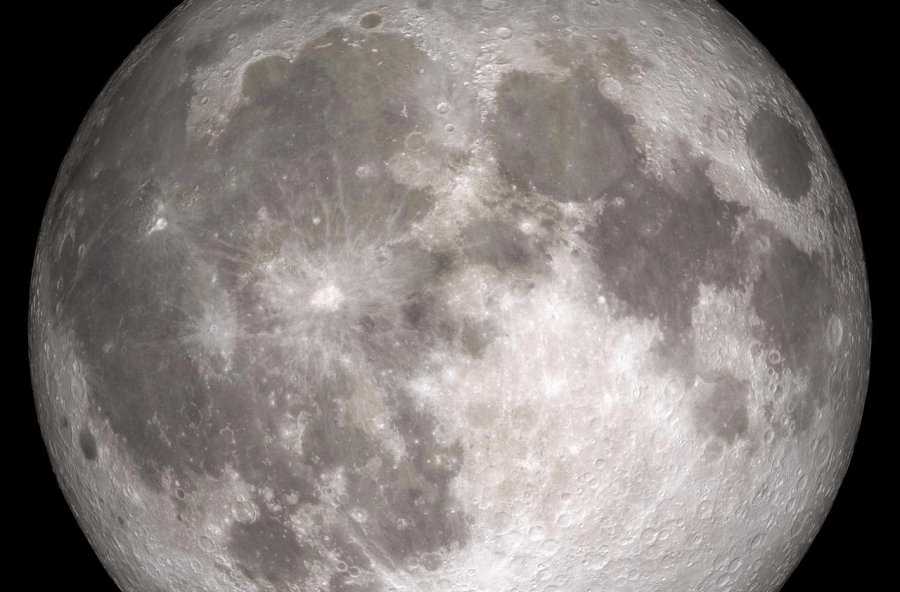
I remember first hearing this one in 2001: A Space Odyssey; still one of my favorites of all time. I think Kubrick purposefully picked this song as the Sea of Tranquility is where the obelisk is found for the first time by spacefaring humans. In the next post, at the end, I’ll lightly touch on water as a fuel source; I like to imagine Kubrick was aware of this technology & wanted to symbolically portray it both musically & geographically, as far as the moon goes, which is also symbolically synonymous with the seas & the tides.
Written to celebrate the River Danube that flows through Vienna, it was premiered as a choral piece on February 13, 1867 at a concert of the Vienna Men’s Choral Association. Its initial performance only got a lukewarm response and Strauss is reputed to have said “The devil take the waltz, my only regret is for the coda – I wish that had been a success!” Strauss adapted it into a purely orchestral version for the World’s Fair in Paris that same year, and it this form that it is best known today.
“Boat on Tai Lake” arr. by Dr. Reed Criddle
I honestly have had the hardest time finding historical notes about this piece; I’ve tried for about 5 years now since first hearing this song with no luck whatsoever.
Tai Lake is a lake in the Yangtze Delta and one of the largest freshwater lakes in China. The lake lies in Jiangsu province and significant part of its southern shore forms its border with Zhejiang.
“Across the Western Ocean” arr. by Celius Dougherty
I only know this song because I was a choir nerd as a kid (can you tell yet?) & sang this piece as a solo. I think the lyrics are depressingly beautiful, the opening line is timeless: “oh the times are hard & the wages low,” how much more needs to be said?
Penniless in the wake of a potato famine in their homeland, one and a half million Irish people immigrated to the United States between 1846 and 1850. Their passages were frequently paid by relatives who had already settled in America. Crossing the Atlantic by packet ship was inexpensive, especially for those who traveled from English ports, due to trade competition between America and Britain. The journey took at least six weeks on the overcrowded vessels. Famine, disease, and shipwreck caused an estimated one of every five immigrants to die at sea.
Thanks for reading & hopefully listening to these awesome pieces of music!
P.S. leave a comment! Tell me of your goals, expectations, concerns for 2022; I hope to create an area where it can all be hashed out.
P.P.S. are there water restrictions where you live too?
© 2022 Zakariyas James. First shared here at theruminationcompilation.wordpress.com.
 The Rumination Compilation