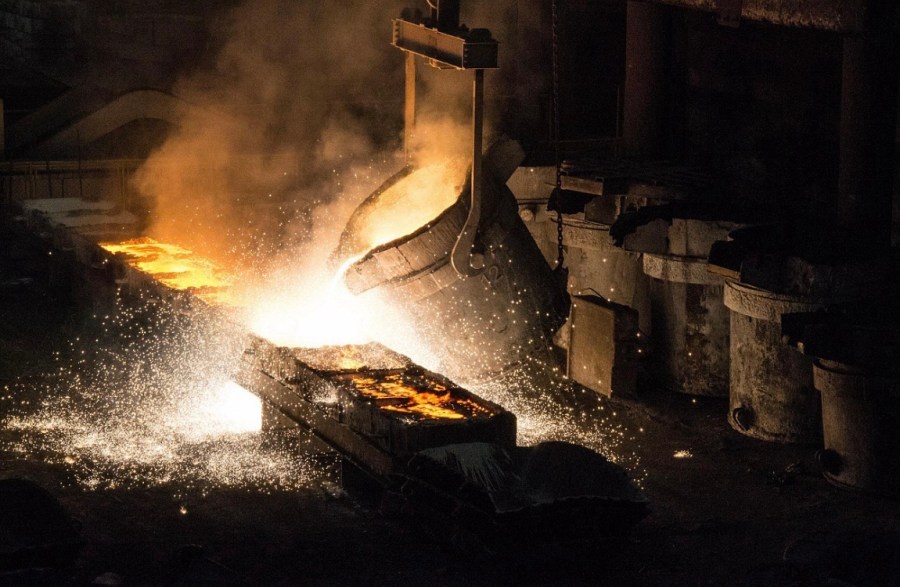
The Human Appetite for Metals and the Cost Incurred

Metals are more than just commodities, they exist as the scaffolding of corporate and societal appetite itself. Central banks hoard gold, nations fight over lithium and entire industries rise or fall depending on nickel supply chains. Upon their discovery and recognition as more than something in the earth, they had been survival tools, currencies, monuments, weapons, talismans et cetera; now they have become “green” lifelines. To follow metals through history is to trace how human desire, how our appetites, change shape but never lessen in weight and how we’ve entwined ourselves with them eternally.

The Hunger that Shapes Worlds

From the first hammered copper tool to the record bulk purchases of gold by central banks these last two years, human history has been driven by a desire involving metal.
While the metals we’ve wrought don’t hold intrinsic power, they ultimately reflect what societies hunger for: security, wealth, prestige, immortality. Each era and advancement of our metal use fulfilled this multifaceted appetite in a new way, yet each fulfillment left depletion, waste or disillusionment in its wake. While we improved our craftsmanship, mining and smelting, our satiation of the appetites didn’t improve, only the appetite itself. This pattern repeats across millennia with limited deviation: desire drives extraction from the earth, extraction feeds consumption and all that’s left is something that might shine for a while; altogether, only certainly can we say a hole in the ground is what remains. Trace this thread and you trace humanity itself: the mines we’ve riddled the earth with are the greatest testament to our appetite for more.

“Wealth consists not in having great possessions, but in having few wants.” — Epictetus

Copper, Bronze and the Weight of Survival

Copper and bronze emerged from necessity: sharper tools, stronger weapons, more productive farms, each proper meals to satiate the hunger our ancestors had for change and growth. Iron scaled our early appetite of secured growth, making war easier to wage and ultimately creating the first empires that stretched across continents. Empires rose on metal ripped from the very grounds they claimed; the lands our ancestors desired enough to kill for were in like kind stripped of resources as quickly as they were gazed upon. This hunger for dominance and security demanded such action and accompanied an unfounded belief that the two metals guaranteed the fulfillment of these desires as they unlocked new weapons and tools of agriculture.
Thus was the advent of a simple truth: the more we consume to secure ourselves, the faster the world erodes around us. From Bronze Age city-states to Roman legions, metals carried both civilization and destruction, a paradox that echoes in every era of human ambition.

“If you would conquer the world, first conquer yourself.” — Seneca

Coins and the Illusion of Security

When appetite shifted from survival to wealth, metals became symbols, not tools. Gold and silver promised stability, denoted status, solidified lines between beggar and chooser and consolidated power. Primarily power, that for the first time, that could be exerted without force yet had the capacity to create force by way of financing military might.
But power built on trust must always outrun the hunger it feeds, otherwise the hunger leads to cannibalism. Coins became less about the weight of their metal and more about the faith they carried. Once rulers discovered that stamped images and state decree could anchor belief as firmly as silver itself, debasement was inevitable. Rome did not hollow its coins and diminish the purity of them because it lacked imagination, but because its appetite for expansion exceeded its mines and temporarily staved off their people from eating the nation from the inside. Soldiers had to be paid, wars had to be financed and marble cities had to rise, so silver content shrank as promises swelled. Swelled until the money men figured out the greatest trick of all time, printing paper called money. Fiat currency was less of an invention than it was a confession: the earth could no longer yield enough metal to sustain the ambitions placed upon it. By detaching paper from gold and silver, states learned to mint appetite itself. Debt became the hidden ore of civilization, mined not from the ground but from tomorrow’s labor. Fractional reserve banking enshrined the process, multiplying desire by lending what did not yet exist.
Modern economies are thus propped up on this cycle: appetite creating credit, credit enabling appetite, each pretending to be backed by something more tangible than belief. Each coin, each bill, each ledger entry is a mirror of our urge to claim security and our long winded attempt at quantifying the appetite that drives it all. Metals, once tangible bastions of strength, became metaphors for ambition. Even in the process of detaching mass finance from metals, states opted to use nickel, which resembles silver to the untrained eye, instead of silver in monetary supply to convince the masses the metals were still around, that their appetite for more would still be met.
Rome’s problem was never the weight of its silver, but the weight of its hunger. The more it acquired, the more it needed; the more it consumed, the less it could restrain itself. Coins lost their substance because restraint lost its place; this Roman problem still exists and we inherited it.

“The things we love tell us what we are.” — Thomas Aquinas

Monuments of Desire and Ambition

Identity and legacy find their most visible expression in monuments, statues and icons. Gold leaf in Notre-Dame, copper on the Statue of Liberty, the iron of the Eiffel Tower: these are metals forged not to plow fields or mint coins, not for security or domination. Our use of metal had already addressed these things to a sufficient degree and the appetite we share shifted again: awe, impress and endure. The innumerable golden crosses, icons, and talismans scattered across the globe likewise functioned as declarations: this land is consecrated, this people belong to this god, this ruler has favor beyond the mortal, this symbol is synonymous with truth. Monuments are depictions of our craving to be remembered, to assert permanence in a world that refuses to grant it.
Yet permanence is the grandest illusion. Cathedrals burn, towers rust, statues are toppled and smelted into new emblems of power and declaration. The appetite then is less about survival or wealth than it is the craving for recognition, identity and symbolic immortality. We spend metal as though it could buy eternity and ignore the debt it exacts from the earth and ourselves, for the unrestrained appetite is truly a debt cycle in essence, potentially the worst there is. That our appetite allows us to stomach the price for any level of satiation, great or small, reveals its magnitude more than any monument ever could. Nothing can compare.

“All the works of mortals are destined to perish; only desire itself is endless.” — Seneca

Steel, Aluminum and the Facade of Progress

Industrialization morphed the appetite endurance and inspiration into speed, mass production and convenience. Steel carved railroads and skyscrapers; aluminum and nickel flowed into aircraft, appliances and war machines. Metals no longer just secured empires, they manufactured an entirely new pace of life. Admittedly, the first time we as a species realized copper and bronze availed sedentary societies and seasonal repetition, this was too the case but the comparison is pale and dismisses the state of leisure. Convenience became its own form of conquest, and with it, our appetite found a new dimension: the craving for effortlessness and essentially endless rest.
The machines we built did not merely serve us; they reshaped us. Factories and assembly lines gave rise to gadgets that promised ease but also ensnared attention. The circuits of modernity (televisions, smartphones, computers) are only the latest refinements of the same metallic hunger. Appetite, once satisfied by empire or monument, now found sustenance in the pocket and the screen. Even to the point of mental impact, the hunger for expedited content, contentment and contact has become so pervasive it is nearing levels of cannibalism at it obviously eats away at society in many ways today.
So, the gleam of progress is still two-sided as an ancient coin. On the obverse, we depict advancement, connectedness unparalleled and growth. On the reverse, beneath the polished facades lay pollution, gutted mines, battlefields littered with steel and aluminum and economies mortgaged and over-leveraged to feed the machinery our appetites demand. Thus, the hunger persists.

“Men have become the tools of their tools.” — Henry David Thoreau

Lithium Dreams and the Morality of Metals

The modern appetite, having already tasted of security, self-expression, leisure and longevity, now drapes itself in morality. Lithium, cobalt and silver (among other metals) are cast as instruments of redemption, promising a “green” future both for ourselves and for the planet. For the first time in history, our appetite presents itself not as selfish consumption but as virtuous stewardship. Yet what does stewardship mean when it is measured in gigafactories, strip mines and subsidies? What does it mean when mass adoptions of green tech demands mining at levels exceeding the norm?
Beneath this moral cloak lies the familiar cycle, only more globalized and more disguised. Child labor in cobalt mines, rivers poisoned in lithium basins, profits absorbed by the very manufacturers and kickback-enriched policymakers who prescribe these “solutions” are the overlooked and ignored foundation of our new ethics. We consume now not only for comfort or survival but for the absolution of guilt. The battery, the solar panel, the wind turbine all carry a subtext: I am not to blame.
But appetite, even moralized, does not change its nature. The so-called green revolution risks repeating history at high speed with a twist: appetite creating carbon credits to excuse pollution, carbon credits enabling appetite, over and over. So still, the hunger intensifies. Stewardship itself becomes a performance, one whose costs are obscured by urgency, by moral pressure and by our own willingness to believe that appetite can finally be reconciled with virtue and carbon credit scores. That the appetite won’t eventually envelop the planets and stars we’ve looked to throughout the ages. But it will. There’s only so much metal on this earth and only so many lands to rip apart.

“Man is not worried by real problems so much as by his imagined anxieties about real problems.” — Epictetus

The Tarnish of Tomorrow

Metals endure. They rust, they corrode, they are melted down and reshaped, but they do not vanish. So too with our appetite. Truly, are you full? Copper, bronze, silver, steel, lithium—each metal has been refashioned by successive generations and each time it has carried the same urge: to secure, to impress, to progress. This appetite has never rested; it has only found new vessels, new tastes, new forms of fulfillment.
Tomorrow, our mining may stretch beyond the Earth itself. Whether it be asteroids, moons, or distant planets, our appetite will follow the ore, carrying the same patterns we have engraved into metal for millennia: desire fueling extraction, extraction sustaining consumption, the consequences deferred or displaced. The residues of our ambition (scrap, debt, pollution, human toil and environmental destruction) will travel with us, folded into the architecture of other worlds.
If we cannot imagine restraint now, the cycle will repeat, not just on Earth but wherever we take our hunger. Metals will endure. Appetite will endure. Surely, the record of our desires, written in ore and dust alike, will be the first legacy we leave among the stars.

“It is not the man who has too little, but the man who craves more, that is poor.” — Seneca

Understanding the human appetite for metals echoes the points in An Ounce of Silver and More than an Ounce of Delusion

© 2025 Zakariyas James. First shared here at theruminationcompilation.wordpress.com.

America’s Warpath Towards Corporate Control

Do you feel it shifting yet?
It is subtle, but unmistakable. The United States is stepping beyond ordinary economic support, slipping into direct ownership of private enterprise. Owning ten percent of Intel is not a bailout, it’s a strategic maneuver.
The Intel chip foundry, powering every drone, missile system, satellite and cyber-defense operation is now partially tethered to Washington. This is the war economy coming alive again.
Let us walk this through.
(Cue the Battle Hymn of the Republic)

Intel as the New Arsenal

On August 22, 2025, the administration converted federal CHIPS Act grants into a ten-percent equity stake in Intel. The stake carries no voting rights, yet it signals Intel’s further integration into the national defense apparatus; chips are now synonymous with weapons.
While the government claims this move will not interfere with day-to-day operations, history shows that ownership (even without governance) aligns strategic interests with influence.
Consider SkyWater Technology, a U.S.-based semiconductor foundry specializing in radiation-hardened chips for high-altitude craft and satellites. With deep collaborations with the Defense Advanced Research Projects Agency, it stands as the only American-owned pure-play foundry of its kind, making it a likely candidate for future government equity. If Intel is the visible fortress of U.S. semiconductor capacity, SkyWater may be the shadow arsenal woven into defense.
This is not mere industrial policy, it is war economy logistics; the state is embedding itself into the supply chains critical for military readiness.

A Repeating Playbook

In both World Wars, the U.S. government nationalized railroads, seized control of the telephone system and created the Defense Plant Corporation to build and lease munitions factories. These assets were returned or privatized in peacetime and the pattern has been repeated: wartime central planning, privatization in peace. Today, semiconductors are the new artillery; Intel’s stake could be the new assembly line.
Likewise, the Department of Defense’s $400 million investment in MP Materials, the only significant rare-earth mining company in the U.S., mimics wartime strategy: securing magnet supply chains for guidance systems, drones and missiles.

What Industries Are Next?

Semiconductors were just the opening salvo. The war economy model is poised to extend into:
• Rare-earth elements and strategic metals: MP Materials already shows the model.
• Battery minerals such as lithium, graphite, and cobalt: critical for advanced munitions and energy systems.
• Oil and natural gas infrastructure: needed to sustain fleets, aircraft, and command centers.
• Advanced manufacturing for aerospace, hypersonics, and AI systems.

Silver’s Role in Military Tech and Munitions

Silver is indispensable in modern warfare for its superior conductivity and reliability. It features prominently in military electronics from radar and guidance systems to circuit boards.
• Conservative estimates put cruise missiles silver usage at about 15 per missile.
• Defense contractors manufacture silver-zinc batteries for missile families such as Patriot, Tomahawk, Hellfire, THAAD, and JDAM to power guidance, telemetry and control systems.
This demand makes silver a strategic resource and yet supply remains volatile. It is likely to become a target for government safeguarding or supply-chain oversight. If not from a military perspective, the government may involve themselves in the industry solely to manipulate cost of acquiring the metal for all industrial use.

U.S.–Ukraine Minerals Partnership

On April 30, 2025, the United States and Ukraine signed a landmark minerals agreement establishing a United States–Ukraine Reconstruction Investment Fund, equally managed by both governments. Ukraine retains ownership of its subsoil and resources, while 50 percent of new project revenues (across rare earths, lithium, titanium, uranium, graphite, oil, and gas) will flow into the fund. U.S. military aid counts as contributions and there are no debt provisions on past aid.
Ukraine’s parliament has since ratified the deal, envisioned as both a reconstruction and strategic investment vehicle. However, actual economic benefits are projected to take a decade or more due to damaged infrastructure, outdated geological data, and active conflict zones as many resource-rich areas remain under Russian control.

Strategic State War Economics

This is not European-style dirigiste planning in peacetime, it is America preparing its economy for conflict. From railroads and refineries to rare-earth mines, semiconductor fabs, critical minerals and silver-dependent munitions. The pattern is clear: when the United States identifies a threat, it turns not merely to regulation or subsidies but to ownership and control.

Ownership as Armament

America is once again rewiring capitalism for conflict. The Intel stake may feel disconcerting because it is not a standard industrial policy, it is war economy policy.
Will this be temporary, like past wartime interventions, or permanent like the Tennessee Valley Authority? That is the question.

In some respects, these recent developments from our government resembles a form of economic warfare conducted in the open but rarely acknowledged as such. The factories, the mineral rights, the intellectual property, they have all become fields of contest rather than fields of commerce. A document that circulated decades ago, Silent Weapons for Quiet Wars, framed the notion that a population could be subdued not by force of arms but by systems of policy, scarcity and control. Ignoring whether it should be viewed as allegory or leaked strategy, the thesis lingers: today’s corporate stakeholdings and mineral seizures may not be silent weapons in the literal sense but they echo the idea that war has shifted into quieter, more pervasive forms. If the weapon is silent and the war is quiet, how would we recognize we are even at war at all?


For more insight as to how likely it is the U.S. is prepping for a major conflict, see Critical Minerals: The Silent Tell of a War Economy.

© 2025 Zakariyas James. First shared here at theruminationcompilation.wordpress.com.
The Volumes on Vitality: Part Four

Even though the farmer is the man, the farmer has a few friends to thank. The crops and various yields we concern ourselves with, or at least the ones we place the highest value on, severely depend on interactions with other creatures that we tend to overlook or altogether neglect.

As of late, the neglect is reaching a potential maximum that may herald in a world in which some recipes seem too costly or altogether impossible to alter for sake of substitution. Bats, bees and other pollinators are invaluable aids to humanity, yet they’re slowly and quietly going into the long night…moreso than the TV screens care to tell you.

Going Batty

Bats (those cool, nocturnal insectivores) are being wiped out across 40 states by Pseudogymnoascus destructans (white-nose syndrome), a fungus that shatters their hibernation, fat reserves and wings. The result: millions dead, entire colonies erased.
Their absence carries a price tag. Bats provide $3.7 to $53 billion in pest control services each year by eating the insects that would otherwise chew through corn, cotton, rice and other staples. In field studies, excluding bats from cornfields meant 60% more pests and 50% more crop damage in just two nights (Kunz et al, 2011).
Counties hit by the fungus see $2.84 per acre rental declines, idle farmland, a 31% jump in pesticide use and a 7.9% rise in infant mortality which ends up costing society $39 billion. Still today, the fungus spreads. Tangentially, they’re also the largest pollinator group of agave, the basis of tequila; so maybe enjoy it while you got it?

Now the bees…

Between mid-2024 and early 2025, U.S. beekeepers lost 62% of their colonies, totaling over 1.1 million hives gone. These pollinators add $34 billion annually to U.S. agriculture; almonds alone require 1.4 million hives each spring, with hundreds of millions of dollars at stake in pollination contracts.
The causes are hardly mysterious: Varroa mites, viruses, pesticide exposure, habitat loss, and extreme weather (Goulson et al., 2015). In Texas, heat and drought drove a 66% colony collapse; a staggering loss far beyond the norm.
Globally, inadequate pollination already reduces fruit, vegetable and nut production by 3–5%, contributing to hundreds of thousands of premature deaths each year from diet-related disease. Fewer pollinators mean smaller harvests, higher prices and a poorer diet for millions.

Cattle Craze

In early 2024, H5N1 appeared in U.S. dairy herds. A trade group quickly pushed to rename it Bovine Influenza A Virus (BIAV), softening the optics even as infections spread to 17 states and hundreds of herds. Viral shedding was found in milk and wastewater, human cases were recorded, and federal surveillance quietly receded.
The direct food-safety risk is managed through pasteurization, but the economic risk comes from reduced production, herd health declines, and tighter export margins in an already tariff-heavy trade environment (USDA ERS, 2024).

Poultry Problems

The same virus has hit poultry far harder. Since 2022, over 166 million birds have been culled nationwide, across all 50 states and Puerto Rico—marking the largest, longest avian influenza outbreak in U.S. history.
The fallout has been rough, to say the least. Wholesale egg prices more than doubled in early 2025, retail prices hit $5–$9 per dozen and store shelves in some areas went bare between shipments. In February 2025, the USDA launched a $1 billion response plan, including $500 million in biosecurity upgrades, $400 million in farmer relief and $100 million for vaccine research. Wholesale egg prices later fell 64%, retail by 27% and still the USDA forecasts a 41% increase in egg prices for 2025 overall.
Meat production also tightened as infected flocks were destroyed, pushing poultry prices upward and reshuffling supply chains.

None of this even covers the detriment to pest management we owe to millions of other birds we’ve lost to H5N1 recently; they may be bird species we don’t ingest but their contributions to food production shouldn’t be dismissed.

The Hidden Truth Beneath Rising Prices
• Bats gone = higher pest pressure, greater crop losses.
• Bees gone = pollination deficits, reduced yields, higher produce prices.
• Cattle infected = production hits, export challenges.
• Poultry culled = eggs and meat scarce, prices surge.
We call it inflation, trade friction, “market shifts,” but the ledger is ecological and measured in wings lost, colonies collapsed and flocks erased.
These losses don’t happen in a vacuum. They’re amplified by poor government stewardship: from underfunded wildlife agencies to reactive rather than preventative biosecurity. Corporate malpractice often doubles the damage, whether through chemical overuse, disease mismanagement, or lobbying for optics over truth (Food Tank, 2024). Climate disruption compounds every weakness, making winters too warm for pest cycles to break, summers too hot for bees to forage and droughts too long for forage crops to survive (IPCC, 2019). And all of this is made more volatile by consumer demands for cheap, abundant, uniform products causes pressure for producers to cut corners in ways that weaken ecological resilience further.
The true cost of our food is not just in the grocery bill. It’s in degraded ecosystems, distorted market signals, and an agriculture system that burns through its biological capital faster than it can be replenished.

The runaway printing of fiat isn’t helping either but ultimately, the more we ignore the interlocking causes, the more expensive eating will become. Whether it’s denoted in dollars, observed in personal health or in the declining stability of the systems that feed us, we’ll see the cost sooner rather than later and it won’t be easy to stomach.

Sources

• Boyles, J.G., Cryan, P.M., McCracken, G.F., & Kunz, T.H. (2011). Economic Importance of Bats in Agriculture. Science, 332(6025), 41–42.https://science.sciencemag.org/content/332/6025/41


• Kunz, T.H. et al. (2011). Ecosystem Services Provided by Bats. US Forest Service Report. https://www.landcan.org/pdfs/wns%20kunz%20april%205%20%202011.pdf


• Environmental Health Journal (2020). Economic and Health Impacts of Bat Declines. https://www.science.org/doi/10.1126/science.adg0344

• Survey Reveals Over 1.1 Million Honey Bee Colonies Lost, Raising Alarm for Pollination and Agriculture https://honeybeehealthcoalition.org/survey-reveals-over-1-1-million-honey-bee-colonies-lost-raising-alarm-for-pollination-and-agriculture/


• Bee Informed Partnership, 2025 National Honey Bee Loss Survey Results. http://web.archive.org/web/20231218173803/https://beeinformed.org/citizen-science/loss-and-management-survey/


• Calderone, N.W. (2012). Insect Pollinated Crops and US Agriculture. PLoS ONE, 7(5): e37235.
https://journals.plos.org/plosone/article?id=10.1371/journal.pone.0037235


• Almond Board of California, 2024 Annual Report. Annual Publications | Almond Almanac | Growing Good


• Goulson, D. et al. (2015). Bee Declines Driven by Combined Stressors. Science, 347(6229).
https://science.sciencemag.org/content/347/6229/1255957


• Pollination loss removes healthy foods from global diets, increases chronic diseases causing excess deaths. https://hsph.harvard.edu/news/pollination-loss-removes-healthy-foods-from-global-diets-increases-chronic-diseases-causing-excess-deaths/


• USDA Economic Research Service (2024). Cattle and Beef Market Reports.
https://www.ers.usda.gov/topics/animal-products/cattle-beef/


• USDA APHIS (2022–2025). Avian Influenza Outbreak Reports.
https://www.aphis.usda.gov/aphis/ourfocus/animalhealth/animal-disease-information/avian/avian-influenza


• USDA Press Release (Feb 2025). $1 Billion Avian Influenza Response Plan.
https://www.usda.gov/media/press-releases/2025/02/15/usda-announces-1-billion-avian-influenza-response


• USDA Economic Research Service (2025). Poultry and Egg Price Outlook.
https://www.ers.usda.gov/topics/animal-products/poultry-eggs/


• Examining Corporate Influence Over Food and Farm Bill – Food Tank https://foodtank.com/news/2024/07/examining-corporate-influence-over-food-and-farm-bill/


• Intergovernmental Panel on Climate Change (2019). Climate Change and Land.
https://www.ipcc.ch/srccl/

© 2025 Zakariyas James. First shared here at theruminationcompilation.wordpress.com.
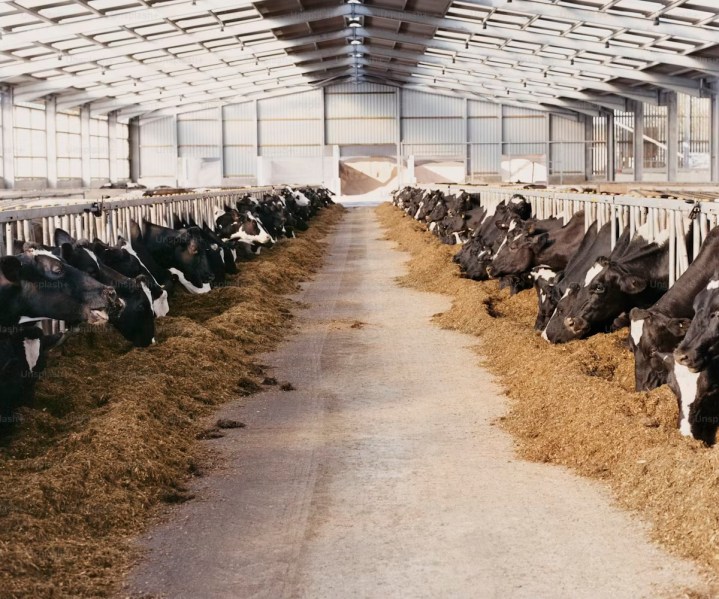
Bird Flu & The Great Disappearing Act


In early 2024, cows started testing positive for a virus we’ve long associated with birds H5N1, also known as Highly Pathogenic Avian Influenza (HPAI). The phrase bird flu in cattle started showing up in news alerts and government bulletins, albeit intermittently. But now, hundreds of infected dairy herds later, the illness is being given a new name.

Not by virologists. Not by the CDC.
By a trade group.

The American Association of Bovine Practitioners (AABP) declared it will no longer refer to the virus in cattle as HPAI. From here on out, they’re calling it Bovine Influenza A Virus (BIAV) and they’re urging federal agencies, diagnostic labs and state health officials to follow suit.

The reason?
To help the public “better understand” the difference between bird flu in birds and the milder form now spreading through cows.

They also say the change will “help maintain confidence in the safety and accessibility of dairy and beef products.”

Which might be the most honest sentence in the entire press release.


In 2024, the U.S. exported nearly 2.8 billion pounds of beef, generating over $10 billion in international sales.
China, a cornerstone of those exports, is now largely off the table. American beef faces a 32% tariff there, alongside widespread delistings of U.S. facilities.

With the Trump administration’s tariffs raising tensions across North America, maintaining consumer trust (both domestic and foreign) has never been more financially urgent for the beef lobby.
You don’t move that kind of product if people start panicking about biosecurity, let alone the potential for animal-to-human spillover.


At least 17 states have now reported H5N1 infections in dairy cattle.
Human cases have already occurred. Wastewater and milk sampling show signs of persistent viral shedding.

But the renaming of the virus comes at a time when the federal government is reportedly scaling back H5N1 surveillance efforts. Staff reductions, limited testing and quiet policy shifts are leaving fewer eyes on a virus that’s crossing species lines with alarming ease.

There’s a strange convenience in the timing.

A virus known for devastating poultry industries is now embedded in America’s dairy system. And just as public concern might begin to swell, a new label appears.

Not one rooted in viral evolution or scientific consensus but in consumer confidence.

The virus didn’t disappear.
Just the name.


Meanwhile, American consumers are seeing beef prices climb steadily, often far faster than official inflation numbers suggest.

Major media outlets and government agencies largely frame these increases as a natural outcome of supply and demand or temporary inflationary pressures. But the reality is more complex.

For a deeper look at how inflation numbers get manipulated and what that means for prices like beef, see: Shadow Inflation & the Price of Freedom


Tariffs imposed by the current administration on beef imports from key trading partners like Canada and Mexico (sometimes as high as 25%) have disrupted supply chains and added costs that producers pass down the line.

Meanwhile, retaliatory tariffs from export markets such as China have shrunk overseas demand, squeezing domestic producers from both ends.

Add to that rising feed, fuel, and labor expenses and the fallout from widespread H5N1 infections in dairy herds (costs they simply can’t eat) it’s clear that American beef is caught in a pressure cooker.


Consumers are left to wonder:

  • How much of the rising beef price is due to trade policy?
  • How much stems from inflation?
  • And how much reflects an industry quietly trying to manage the optics of a virus now entrenched in the very livestock they rely on?

The American Association of Bovine Practitioners and the current administration say people won’t get sick from bird flu in cows unless, of course, they drink the milk raw.

But if the virus isn’t a threat, why does every regulatory body recommend only pasteurized milk?


The answers are complicated.
But what is certain is this:

The story told about beef, bird flu, and prices is being carefully served to us on a dirty platter.

© 2025 Zakariyas James. First shared here at theruminationcompilation.wordpress.com.

Precision Consumer 2030

Wellness as a Window into You

You are being watched.
Not just by a camera or a satellite or a data broker.

But by your smart mirror.
Your fitness ring.
Your gut biome dashboard.
Your digital assistant that noticed you’ve been coughing more lately.

This isn’t surveillance in the dystopian, authoritarian sense. It’s subtler than that. It’s called “precision wellness”. By 2030, so they say especially if certain think tanks have their way, it’ll be normalized. Incrementally, then all at once. After that, it’ll more than likely be dystopian but let’s take a step back. 

In 2019, a cultural intelligence consultancy called Sparks & Honey released a document titled Precision Consumer 2030—a 125-page playbook detailing the transformation of personal health into a hyper-individualized, AI-optimized ecosystem of apps, trackers, scores, and predictive services. At first glance, it reads like a wellness brochure from the future: designer synbiotics, mood-responsive interiors, “smart” toilets that analyze your waste. But with discerning eyes, what emerges is not just summaries of consumer trends but actually a governance architecture.

That’s because Sparks & Honey isn’t just some boutique agency running ideation workshops for sleepy CPG brands. It is a strategic foresight division of Omnicom Precision Marketing Group, a branch of the $17B Omnicom advertising conglomerate. They deploy an AI platform called Q™, which digests thousands of cultural signals to guide institutional decision-making. And their most prominent collaborator on Precision Consumer 2030 was the World Economic Forum (WEF).

The WEF Connection

Sparks & Honey didn’t just work adjacent to the World Economic Forum. They co-developed and presented the Precision Consumer 2030 initiative at Davos in 2020 alongside corporate partners like IBM, 23andMe, Mount Sinai, and PepsiCo, to name a very short few. Robb Henzi, their SVP of Strategy, also served on the WEF’s Global Future Council on Agile Governance, where he contributed to WEF white papers on regulatory technology (RegTech) and behaviorally responsive governance frameworks. 

So when you read Precision Consumer 2030, you’re not just browsing a guess at what’s coming. You’re reading an institutionally aligned proposal, actively disseminated to the very companies, cities, and policymakers tasking themselves with building the future.

This is not fiction. This is how it comes to be. 

Your Body, Their API

In the Precision 2030 model:

  • Consumers will soon manage a “bio-cloud”—a constantly updating digital twin of their physiology.
  • Workplaces will match employees to tasks using biometric stress data.
  • Retail will shift from demographic targeting to individual mood-based personalization.
  • Health insurance could fluctuate based on real-time metabolic behavior.

This isn’t a question of “if” or “when.” The infrastructure is already here. What Precision Consumer 2030 shows us is the desired end-state of that infrastructure. A system where privacy, bodily autonomy, and informed consent are functionally obsolete.

And nowhere in the document is data security meaningfully addressed. There is no mechanism proposed to protect against biometric theft, psychological profiling, or genetic discrimination. Why would there be? That’s not the concern of predictive market designers. Their job is to make behavior legible, profitable, and manageable. 

Wellness as Performance, Surveillance as Care

In this model, health becomes aesthetic; another layer of conspicuous consumption. You don’t just track your well-being; you display it. Your biometric score becomes your new credit score. Your gut biome becomes part of your brand. Your wearable tells others whether you’re exhausted, inflamed, focused, or fertile. It tells others that your affluence is secure enough to secure you another healthy day. 

This is the new luxury: the appearance of control over your own biology, delivered through interfaces owned and operated by someone else.

The Sparks & Honey advisory board itself reveals how broad this reach is:

1. Judy Samuelson

Affiliation: Executive Director, Aspen Institute Business and Society Program
Known For:

  • Leading voice in rethinking the role of corporations in society.
  • Spearheaded the Aspen Principles, which influenced long-term corporate value metrics and social responsibility standards.
  • Frequently writes and speaks on stakeholder capitalism and the limits of Milton Friedman’s shareholder-first model.
  • Author of The Six New Rules of Business.

Relevance: Brings policy influence and corporate ethics framing to Sparks & Honey’s predictions; grounding their trend work in emerging governance and business ideology.

2. Kahlil Greene

Known As: The “Gen-Z Historian”
Background:

  • Former Yale Student Body President, became widely recognized on TikTok and Instagram for distilling American history and social issues for younger audiences.
  • Topics often include race, systemic inequality, and generational perspective shifts.
  • Strong social media presence with partnerships in youth education, brand consulting, and activism.

Relevance: Represents the youth culture pulse, with the ability to translate institutional messaging into digestible narratives for digital-native generations.

3. Dr. Brian Pierce

Background: Former Director of the Information Innovation Office (I2O) at DARPA (Defense Advanced Research Projects Agency)
Known For:

  • Oversaw cutting-edge military research related to artificial intelligence, neuroscience, and human-machine symbiosis.
  • Helped lead DARPA’s efforts into predictive intelligence and autonomous systems.

Relevance: Adds high-level expertise in defense-grade AI, surveillance tech, and human-data integration, which reinforces Sparks & Honey’s credibility in biometric and predictive modeling domains.

4. Lynn Greene

Background: Former President of Estée Lauder’s Global Brands
Known For:

  • Oversaw Estée Lauder, Clinique, and Origins globally.
  • Noted for modernizing brand strategy and integrating emerging beauty tech and AI-driven personalization.
  • Played a key role in shifting beauty toward data-informed consumer experiences.

Relevance: Ties Sparks & Honey’s foresight work to consumer behavior, biometric branding, and commercial personalization strategies.

5. Maarten Leyts

Background: Youth culture expert; CEO of Trendwolves (a Belgium-based trend forecasting firm focused on millennials and Gen Z)
Known For:

  • Specializes in cross-generational insight, emerging behaviors, and cultural forecasting across Europe.
  • Has advised on education, youth employment, and tech adoption trends.
  • Published widely on the socio-psychological patterns of Gen Z and post-pandemic youth culture.

Relevance: Adds granular insight into how generational shifts impact consumer behavior, governance models, and cultural adoption of bio-integrated tech.

These aren’t marketers. These are architects of consensus, shaping how commerce, identity, and even biology are interpreted across institutions, over years of focused influence. 

The Real Takeaway: This Is the Blueprint

Precision Consumer 2030 is not simply forecasting where health culture might go. It is manufacturing the desirability of its inevitability, corporations on board are working at this very moment to convince you or your younger peers this is sexy, smart and socially significant. Through collaborations with the WEF and a multitude of Fortune 500 partners, Sparks & Honey’s influence isn’t theoretical it’s operational.

As a result, this document (light on footnotes but heavy on framing) should be read the way a legal analyst reads a contract. Or the way a surveyor reads a map of land that isn’t theirs yet.

Because this is a roadmap for cultural submission, where each biometric check-in is repackaged as empowerment. Where every app that helps you sleep better might also be reshaping your insurance score, your employability, and your self-worth. It may even flag you for limited travel and limited consumption of goods and services; it will know more about you than you do and make decisions based of information you wouldn’t even know how to read or process.

But that’s no excuse to say you didn’t see it coming.


They published it.

They presented it.

(Then they scrubbed the paper from their website.)


Now they and a bunch of companies you probably give your money to or might even work for are building the infrastructure to make sure you can’t opt out.

Below, you will find a download of Precision Consumer 2030. Read it over and start to look at what’s on the shelves and on the way with this paper in mind.

Update: and just like that, President Trump has a very relevant idea that sounds like just another step in Precision Consumer 2030.

Trump Administration Is Launching a New Private Health Tracking System With Big Tech’s Help

President Donald Trump is expected to deliver remarks on the initiative Wednesday afternoon in the East Room. The event is expected to involve leaders from more than 60 companies, including major tech companies such as Google and Amazon, as well as prominent hospital systems like the Cleveland Clinic.

© 2025 Zakariyas James. First shared here at theruminationcompilation.wordpress.com.
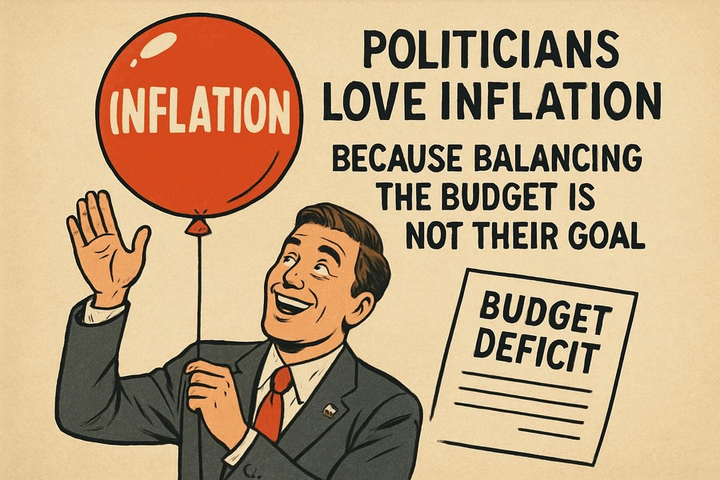
Shadow Inflation & the Price of Freedom

You’re not losing your mind, you’re losing your purchasing power.

Everything from groceries to rent to basic utilities has crept into unaffordable territory, but somehow the government insists inflation is around 3.3%. To most of us, that number feels like a punchline with no setup.

ShadowStats, which calculates inflation using methods from before the 1980s CPI revisions, suggests it’s actually over 9%. That sounds far more in line with what you feel in your bones and your wallet, doesn’t it?

The difference isn’t just mathematical, it’s philosophical. It determines whether you believe our society is slowly progressing or quietly deteriorating.

And at the center of that delusion sits the green tech movement: an ideal pushed by agreements between supranational organizations and state governments, built on commodities like silver, which ironically is one of the few tangible lifeboats left in an era of untethered money, misrepresented data, and unsustainable goals.


CPI: The Numbers Game That Makes Poverty Look Like Progress

In the early 1980s, the U.S. government began quietly redefining inflation. It didn’t look good on paper to say retirees needed 10% annual increases in Social Security checks. It looked even worse for Treasury bondholders expecting “real” returns.

So instead of wrestling inflation down, policymakers redefined how it was measured.

They introduced terms like:

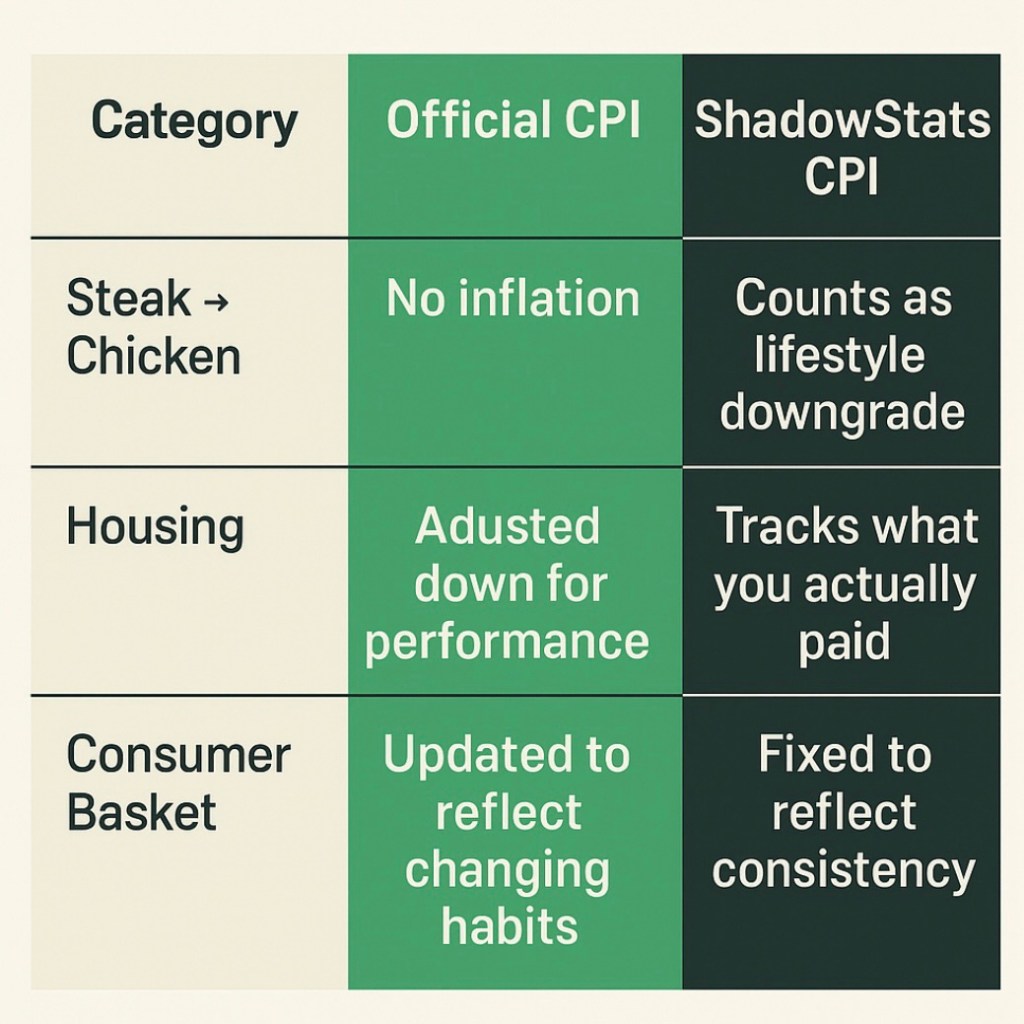
  • Substitution: If steak gets too expensive, CPI assumes you switch to chicken. Inflation problem solved.
  • Hedonic adjustment: If your laptop is twice as fast, they say you’re paying less for it—even if it cost you more dollars (source, second bullet point).
  • Owner’s Equivalent Rent (OER): Instead of tracking what you pay in housing, they estimate what your home might rent for, based on surveys. (Crazy isn’t it?)

These methods were sold as ways to make CPI “more accurate,” but what they really did was make inflation more palatable to policymakers and debt managers. They also did it to make sure you and I kept racking up debt and consuming more each quarter.

Official inflation numbers rely on mechanisms that hide the erosion of lifestyle:

These adjustments treat your survival adaptations like buying cheaper food, delaying car repairs, moving back in with family, etc as market choices rather than signs of stress.

You’re not living worse, they say you’re just living differently.

Here’s what the former Fed Chairman Alan Greenspan said in 1995:

“If you are measuring the cost of living, you must measure the cost of maintaining a constant standard of living. If you substitute chicken for beef, you are not maintaining the same standard.”(https://www.nytimes.com/1995/12/04/us/inflation-gauge-may-be-too-high-experts-say.html)

The BLS has been doing the opposite for decades.


Green Tech: The Utopian Offramp Built on Industrial Scarcity

Enter the Sustainable Development Goals and the “just transition” to a greener future. Electric vehicles. Wind turbines. Solar panels. Battery storage. Carbon offsets. All tied to the years 2030 and 2050 as I’ve outlined in more than a few posts on this blog.

The problem? Every one of these systems relies heavily on silver, a finite, mined metal with growing industrial scarcity. According to the Silver Institute, solar panel production alone is expected to account for over 25% of annual silver demand by the end of this decade.

The price of silver has risen 43% year-to-date as of July 2025. Gold is up roughly 22%. Compare that to:

2025 YTD Return

NASDAQ +15%

S&P 500 +10%

DJIA +5.5%

So let’s check the math. If inflation is only 3.3% (official CPI), then those stock market gains look decent. But if ShadowStats is right, and inflation is closer to 9%, then:

  • The Dow Jones is posting a negative real return.
  • The S&P 500 is barely breaking even.
  • Even the NASDAQ, with its AI hype and tech surge, is only modestly positive in real terms.
  • Only silver and gold are delivering substantial real returns after adjusting for actual inflation.

This is the moment where you realize: only one entity will be paying for the widespread retrofitting and implementation of all this green tech that needs silver and it’s you. Either through willing compliance or taxation by the government so they can buy it with your wages and make you use it.


Hedonics, Hopium, and the Silver Choke Point

The CPI tells you that your phone is getting cheaper, even if you spent more on it, because it has better specs (source, first bullet point).

The ESG movement tells you your energy is getting cleaner, even if your utility bills are rising, because it’s coming from renewables.

But here’s what they don’t tell you:

  • Silver is irreplaceable in high-efficiency solar, circuit boards, EV contacts, and grid storage.
  • No large-scale replacement exists.
  • We are burning through reserves faster than we are discovering new viable deposits.

That means the very commodity needed to “fix” the future is becoming more expensive, even in inflation-adjusted terms. And that creates a dilemma no policy paper can solve.


Silver: The Honest Asset in a Dishonest System

In a world where official CPI is engineered to deflate your sense of decline, silver doesn’t lie.

  • It doesn’t get adjusted for quality.
  • It doesn’t get substituted.
  • It doesn’t get hedonicized.

It just reflects what a scarce, in-demand physical asset actually costs in a world of paper promises and underpriced labor.

And unlike fiat currencies or ESG credits, silver is outside the system. That’s why central banks don’t talk about it, and why retail investors who understand its utility in both monetary protection and energy transition are quietly accumulating at Costco before getting a hot dog and soda.


The Fatal Irony of Sustainable Progress

We are trying to build a green future using a grey metal whose supply cannot scale with our policy ambition. The Sustainable Development Goals require a miracle of material availability that simply doesn’t exist.

If silver prices are outpacing even ShadowStats’ inflation, then the affordability of the clean tech utopia vanishes on arrival. And if real inflation is devouring your market returns, then the dream of using “compound growth” to escape stagnation is mathematically dead.


Compliance or Sovereignty: There Is No Third Option

If you’re not holding assets that outpace real inflation (like silver or gold or the next randomly pumping stock) then you’re not preserving wealth. You’re slowly converting it into obedience.

Because what happens when your savings can’t keep up?

  • You’ll be offered government rebates for heat pumps.
  • Carbon credits for commuting less.
  • EV mandates.
  • Sustainability scorecards tied to your bank account (like that Aspire card I mentioned a few posts ago).
  • Access granted in exchange for compliance.

If you can’t buy your way out of the system, you’ll be forced to conform to it.

Green tech won’t be a lifestyle choice. It will be a behavioral requirement coded into policy, enforced by banks, and justified by a CPI that says “everything’s fine.”


Final Thought: Scarcity Isn’t the Problem—It’s the Lie

ShadowStats reveals how far we’ve drifted from price reality. Silver shows how tangible scarcity still has economic weight, how truth leaks out where it can’t be hedged.

And if you’re still counting on index funds and CPI-adjusted retirement accounts to protect you, ask yourself:

What happens when the growth you’re chasing is just inflation in disguise?

Silver isn’t just a hedge. It’s a mirror. And the reflection it shows is too uncomfortable for mainstream narratives to tolerate.

© 2025 Zakariyas James. First shared here at theruminationcompilation.wordpress.com.
Something to share

Last year, I spoke at a city council meeting in Vista, California where the focus was on the “General Plan”. This “General Plan” is Vista’s version of California state’s “Climate Action Plan”. Since 2011, California law has mandated that every city have a General Plan, but only recently have cities started hosting meetings and workshops to involve community members in discussing what citizens want in the plan and marginally clarifying what citizens should expect the plan’s fruition to really look like.

For context, prior to the meeting, I prepared 3 questions to ask the city officials regarding the General Plan & provided each a copy of the questions to follow along as I spoke. Admittedly, I didn’t expect anything other than outright dismissal of my questions but I was extremely wrong. I got a response I need to share with you.

Before I do that, I want to separately address any potential readers based on geography:

⁃ Citizens of Vista, if possible, start going to the meetings for the General Plan & listen to what’s coming. I know it’s hard to carve out time with all that life sends our way but if you have any level of concern for future of the city (or your place in the city) show up to one of these specific meetings & listen to the plan they have in mind for the city, bearing fully in mind what Commissioner Looney says from 6:30-9:42 in the video below.

⁃ Citizens elsewhere, google whatever state you live in along with the words “climate action plan”. If your state has has one, check & see if a law was passed requiring the city you live in to adopt a climate action plan (CAP) or general plan as well. Since 33 states already have, I’d almost bet on it, so if it happens to be so, I suggest watching the clip below & asking yourself “is what Commissioner Looney says from 6:30-9:42 going on in my city too?”

Sorry this is a long video (by today’s standards) but I wanted to show every city member’s response unedited.


If anyone wants to watch the entirety of the meeting:

Thank you for your time, I value it tremendously.

© 2024 Zakariyas James. First shared here at theruminationcompilation.wordpress.com.