CANOPY

Most of my writing starts with something real.

A policy. A system. A technology. A way of talking about “progress” that sounds reasonable on the surface until you sit with it for a while. My blog has been where I work through those things in nonfiction.

But there’s a limit to that approach.

Nonfiction has to stay tethered to what can be verified. Fiction doesn’t. Fiction lets you follow a line of thinking to where it might lead without stopping to prove every step along the way. That difference is why this book exists, from watching the world closely and wanting a format that allowed me to ask: where could this lead?

CANOPY is a short collection of four interconnected speculative stories set in a near future that isn’t dramatic or apocalyptic, just recognizable. Systems function, decisions are made, and people adjust, consciously or not.

If you’ve read my nonfiction, you’ll recognize the concerns. Fiction simply gave me room to push them further.

I’ll be donating copies to local libraries and sharing a few with people who’ve influenced my thinking over the years.

CANOPY is now available for preorder through independent bookstores including Powell’s and Magers & Quinn, and through other retailers nationwide.

Official release: March 15th. 

ISBN: 9798218933623

[Powell’s Books]

[Magers & Quinn]

© 2026 Zakariyas James. First shared here at theruminationcompilation.wordpress.com.

When a Story Finally Lands Somewhere

Some months ago, I branched out into fiction. After finishing my short story Seed, I assumed it would sit on my devices and go nowhere. That is the normal fate of most short fiction and most ideas thrown into the world. Instead, it ended up in The Writer’s Workout’s Tales from the Unknown anthology. That outcome says more about the piece than I ever could.

What is worth speaking on is how the story loops back to the work I’ve been doing here on The Rumination Compilation. Seed did not appear out of thin air. It is built from the same ideas I track through my essays:

  • how environments, natural and digital and political, co-engineer human behavior
  • how systems pretend to be neutral even when they are steering everything
  • how progress hides its costs until the bill arrives
  • how the line between organic and engineered life keeps thinning while no one names what is happening

If you have read Mamagotchis & Digital Dependents, Precision Consumer 2030, or The Products of a New Environment, you have already seen the underlying structure of Seed. The story is the compressed form. Fiction lets me take the same ideas and apply pressure until they become something solid.

That is why the publication matters. It is not just a win. It confirms a suspicion I have had for a while: readers can tell when a piece is part of a larger architecture of thought. Even if they cannot articulate it, they feel the depth behind the lines. They sense something moving under the surface. Similarly to when we read, or hear, proposed legislation and innately understand something substantial is left unspoken.

Although this is the first time my fiction and my work here have formally crossed paths, it won’t be a singular event and I hope to share more when the time comes.

When the anthology is published, I will update this page with a link to the physical and digital versions of it, as well as the individual story itself.

© 2025 Zakariyas James. First shared here at theruminationcompilation.wordpress.com.

Digital Identity in the UK: The Hidden Architects Behind the Framework

Across much of the developed world, governments are translating social contracts into code. The UK’s digital ID rollout is simply one of the first to garner serious attention.

The UK government presents its digital identity initiative as simple, even practical. Secure. Voluntary. Privacy-preserving. A tool for proving who you are, without standing in line or waiting for forms in the mail. A step toward modernization.

The Digital ID isn’t being built in isolation. It’s emerging from a web of institutions that have long studied human systems — economic, social, and behavioral — and are now embedding those lessons into code.

Understanding these connections matters. The same expertise used to map, predict, and influence consumer behavior is now being applied to national digital identity infrastructure.

The Tech They Sell to You

Officially, the UK’s digital ID system operates through the Digital Verification Services (DVS) Trust Framework, to be embedded in law by the Data (Use & Access) Bill. It is designed to be interoperable and user-centric, allowing citizens to authenticate identity digitally across multiple services (banks, government, utilities) without repeatedly sharing documents.

The government’s communications emphasize privacy and choice. Each user controls their ID, and only necessary data is shared with service providers. Biometric data, at least at launch, is limited: photos of faces, not fingerprints or behavioral tracking. On paper, it is a modest system. Yet the technical scaffolding is built for expansion. Standards, APIs, and privacy frameworks could, in principle, accommodate far more data points than are currently being collected.

Behind the government’s polished language of security and efficiency sit institutions shaping not just how data is handled, but how people are expected to interact with systems of trust.

This is where the architects of the system come in, and where my warning begins for those in the UK.

Open Data Institute: Shaping the Rules

The ODI, headquartered in London, submitted formal written evidence to Parliament during the passage of the Data (Use & Access) Bill. Their recommendations were technical but far-reaching:

“We recommend a new clause tasking the Secretary of State, in consultation with relevant standards bodies (W3C, ISO, IEEE) to develop an automated privacy framework.” (bills.parliament.uk)

“Citizens should be able to use the holder in the Gamma framework to pull in data to reshare at their discretion.” (bills.parliament.uk)

These statements reflect a focus on interoperable, citizen-centered control. But they also establish technical flexibility: the very framework that allows citizens to pull in and share data could, in future iterations, include behavioral or biometric elements. The ODI does not advocate for this explicitly; it is the architecture that permits it.

If the ODI, in any way, shapes the system’s technical skeleton, the Tavistock Institute shapes its behavioral soul: the psychology of adoption and normalization.

Tavistock Institute: Historical Continuity in Behavioral Systems

The Tavistock Foundation, listed as a partner in the WEF’s Future of Personalized Well-being, has a far longer history applicable to the Digital ID.

Founded in 1947, Tavistock grew from the Tavistock Clinic, which conducted wartime studies in morale, psychological resilience and propaganda, into an institute focused on social systems, organizational psychology, and behavioral adaptation — fields that, while individually benign, form a powerful mix when aligned with technology and governance. Governments, NATO, and corporations have sought their expertise for decades.

Their involvement in the WEF initiative is framed in terms of improving health outcomes:

“The Future of Personalized Well-being initiative aims to harness the power of digital biology to be the game-changer needed to improve people’s quality of life.” (World Economic Forum)

It is easy to dismiss this as abstract or aspirational. Yet when behavioral expertise historically applied to wartime and organizational contexts now intersects with digital identity systems, the implications for user adoption, normalization of surveillance, and behavioral nudges are difficult to ignore. Tavistock is not writing laws, but their work informs the design and reception of systems that shape how people interact with their own data.

The World Economic Forum’s Reimagining Digital ID paper explicitly notes:

“These communications campaigns should explain the link between privacy and digital ID and seek to counter misinformation and conspiracy theories related to digital ID.”

Given Tavistock’s expertise in behavioral systems and its partnerships in related initiatives, it is reasonable to surmise that institutions like it may play a central role in shaping public perception and acceptance of digital IDs. The task is not merely informational, it is a subtle orchestration of narrative and trust, guiding citizens toward voluntary submission within the framework being constructed.

Precision Consumer 2030: The Bridge Between Digital IDs and Behavior

Co-developed by the WEF, IBM, 23andMe, and over 20 other partners, Precision Consumer 2030 envisions personalized data streams—biosensors, wearables, AI predictions—that guide individual behavior. The report emphasizes the potential benefits: preventive interventions, better individual health outcomes, more efficient services.

“Advancements in technology and the use of personal biodata hold the promise to move beyond mass ‘one size fits all’ solutions to more personalized solutions that preventatively improve well-being…New business, operating, and governance models are needed to realize the benefits of personalized well-being solutions at scale” (World Economic Forum)

The conceptual overlap with digital identity is clear. Digital IDs create a legally recognized digital anchor for a person, while Precision Consumer 2030 envisions systems that measure, predict, and guide the same person’s behavior. The same principles—data collection, interoperability, user-centric design—apply in both contexts. The difference is in scale and integration: one is domestic, one is global; one is currently modest, one is aspirational.

The Implications

Taken together, these strands suggest the UK’s digital ID rollout is more than convenience. It is a platform designed with foresight into behavior, interoperability, and potential expansion. Citizens will control their data, but the architecture will allow for more data types, more services, and greater influence over the parameters of individual participation in society. As Prime Minister Keir Starmer stated plainly:

“You will not be able to work in the United Kingdom if you do not have digital ID.” (2025 Global Progress Action Summit, in London)

There’s no reason to believe that statement is the end of the plan, nor the limit of its scope. Whether meant literally or rhetorically, the remark reflects a policy direction where participation in the economy becomes increasingly contingent on digital verification.

This is not speculation. The evidence is public, in the written submissions, the WEF partnerships, and the report itself. What is less public is the extent to which future iterations could integrate behavioral and biometric elements, or the subtle ways adoption can be encouraged through system design.

The lesson is not fear, but awareness: the architecture exists, the actors are connected, and the system is being built in plain sight. How it will be used, and how it will evolve, is a question that rests partly with the public—and partly with the invisible hands that designed the foundations.

Questions to Carry Forward

  • How will the UK define the limits of digital ID data collection as new biometric and behavioral data types become feasible?
  • What transparency exists in the influence of organizations like ODI and Tavistock on policy and system design?
  • If the Precision Consumer 2030 framework informs system design, how far might predictive and adaptive digital services extend into everyday life?

The government’s framing is simple: convenience, security, privacy. The systems’ potential is far more complex.

Complex enough that civil-liberty groups such as Big Brother WatchLiberty, and the Open Rights Group, along with campaigns like NO2ID and StopBritCard, have already warned that digital identity schemes risk the creation of a checkpoint society — one where access to work, housing, and even participation in public life may hinge on a single government-issued credential. Their objections aren’t noise from the fringe; they touch on cybersecurity fragility, digital exclusion, and the quiet expansion of state reach under the banner of modernization. Even parties outside Westminster’s mainstream, like Plaid Cymru, have raised these same alarms. That alignment — activists, technologists, and politicians speaking the same cautionary language — suggests this isn’t paranoia but recognition of an emerging pattern.


For those following the threads of emerging governance and digital influence, this discussion of the UK’s digital ID is only part of the story. The systems being built today draw on principles first outlined in Precision Consumer 2030, where personal data, predictive analytics, and behavioral insight converge under the guise of well-being. To see how these frameworks were imagined—and how they quietly shape the infrastructure now being deployed—read my earlier exploration, Precision Consumer 2030: Wellness as a Window into You, republished by OffGuardian.org.  Understanding the blueprint is the first step toward recognizing the structure being quietly built around us.

© 2025 Zakariyas James. First shared here at theruminationcompilation.wordpress.com.

Painted Quarters Cattle Company: Where Soil and Sound Money Meet

I first heard of Painted Quarters Cattle Company through word of mouth. After reviewing their methods, I concluded they produced some of the best beef available. For me, the decision was personal: I wanted my 8-month-old son to eat the best food possible during these critical developmental months. That pursuit brought me to their stand at the Hobe Sound Farmers Market.

I had a rough idea of what cuts I wanted and an even clearer idea of what it would cost after visiting Painted Quarters’ website. I paid for two ½-pound brisket patties with a Utah 1 Goldback and a Florida 1 Goldback. When I mentioned my intention to use Goldbacks, Greg Flewelling, who hadn’t been assisting at the counter, came over with a smile, genuinely pleased to see them in action. 

Our conversation quickly turned to economics: the failing fiat dollar, gold and silver as stores of value, and how Goldbacks create steady transactions on both sides of the counter. Greg mentioned that he travels the world teaching other farms how to implement regenerative practices. In that brief exchange, the scope of Painted Quarters became clear to me: this is more than a cattle company. It’s a model where ecological stewardship and financial resilience intersect; an example of how farming might endure in a future defined by economic and ecological challenges.

Greg Flewelling, founder of Painted Quarters, takes a hands-on approach to cattle and land management.

Greg’s story begins long before Painted Quarters. Food was always his family’s work; his father and relatives were butchers. As a boy, he spent summers on his uncle’s dairy farm in Canada, situated in a Mennonite community, though his family did not practice the faith themselves. The exposure there shaped his early perspective on resilience, self-sufficiency, and where he first absorbed the rhythms of food production and community. As an adult, he showed horses competitively, even ran a rodeo while raising cattle of his own.

Before Painted Quarters, Flewelling ran a rodeo and showed horses competitively, a foundation for the discipline he later brought to cattle.

The crash of 2008 became his pivot point; amidst a downturn in demand for horses, he sold his rodeo and shifted his focus back to vegetables and cattle. Greg began traveling abroad to teach regenerative methods, which he’s done in six countries so far. Back home, he took every chance to tour American feedlots. Those two tracks, mentoring and researching, eventually converged into a single realization: the food system in America was structured for profit, not health, and its effects were showing up in children.

Today, Painted Quarters operates on principles that take longer but restore balance and trust. It can take him five to six years to raise an animal, compared with the 18 to 24 months common in industrial agriculture. That difference exists because Greg refuses the shortcuts: steroid shots, antibiotics on arrival, and feed laced with more of the same, the commercial production standard. Unlike large-scale operations where cattle stand shoulder to shoulder on concrete, fed for maximum weight while machines scrape away their daily excrement, Greg ensures his animals touch grass and walk on natural earth. He respects each animal, herding them thoughtfully and letting them move freely. That philosophy also informs how he approaches the economics of farming. The pricing of farm goods is another reason commercial operations prioritize weight over quality: futures contracts and derivative mechanisms allow industry and organizations to skew the system. The market pays for heavier cattle, not healthier ones. Greg, however, can sell his cattle slightly above these futures prices at live auctions because the value is tangible. Real animals, raised well. Not just numbers on a contract. That tangibility is also why he favors Goldbacks over fiat, currency that carries real, discernible worth, not faith. For him, being a farmer is not about the straw hat stereotype but about proving there’s another way to do the work while remaining profitable. He mentors young farmers, emphasizing that agriculture doesn’t need to serve corporate profit alone but can be reoriented toward community profit.


One of Painted Quarters’ bulls grazing on Florida grassland, raised without shortcuts.

The fight hasn’t been easy. When hurricanes wiped out his greenhouses, Greg received no help from the USDA, while corporations like Del Monte were bailed out, all because of red tape that always seems to favor the big guys. He has seen firsthand how agricultural policy serves consolidation, not small independence. “Get big or go broke,” as farmers say, and inheritance taxes make sure family land doesn’t last beyond a few generations. Greg told me a family farm these days is lucky to survive past 3 generations. 

Along the way, sound money became more than an experiment for Greg; it became a necessity. “I have no confidence in fiat,” he told me, noting that the dollar has already lost 11 percent of its value this year. For him, Goldbacks and constitutional silver represent not just alternative currency but survival tools. Gold is already priced out of reach for most, leaving silver and fractional notes like Goldbacks as practical options. “They control the population by controlling the food, they control the food by controlling the money,” he said. He appreciates that Florida has legalized gold and silver transactions, but he also knows people need to relearn the art of barter. We shared anecdotes about the first time we held silver and gold coinage, agreeing it’s easier to hand over paper currency than hand over an ounce of real value. The phrase “weighing your options” has a deeper meaning when you feel the weight of a Troy ounce and remember the work it took to earn it. 

For Greg, financial resilience and ecological resilience are inseparable. “Hand in hand,” he told me. A farmer who learns to cut out the middlemen, go vertical, and keep that wealth within the community is as regenerative as soil that retains its fertility. Both systems—soil and currency—are depleted by extraction and strengthened by care. 

Flewelling sees resilience in both soil and currency, an outlook shaped by decades of farming.

Looking forward, his outlook is both sobering and hopeful. He sees large corn farms already collapsing, with massive auctions happening. He recounted the news about Walmart and Sam’s Club expanding further into cattle production, swallowing even more of the market that could have gone to independents. Regulations will continue to strangle small operators while leaving corporate giants untouched. At the same time, he is encouraged by young farmers willing to adapt and build resilience. He mentors two a year, and says, “if I can make 20 copies of myself, I’ll consider all my work worth it.” To farmers at large, his advice is simple: form groups, co-ops, and online networks to create a stronger voice, one resilient against government efforts that hinder choice and freedom. Spend physical money amongst yourselves and your wealth will never end up in the accounts of corporations you inevitably compete with. He sees urban farming rising in the next five to ten years, while food from corporate channels becomes increasingly artificial, “food out of tubes” as he put it.

Painted Quarters is not just Greg’s business. It’s his counter-argument to the way food and money have been handled for decades. It is proof that agriculture can serve people and land together, without cutting corners or bowing to corporate dictates. If agriculture is to survive the twin crises of ecological degradation and economic instability, it won’t be through business-as-usual models propped up by fragile fiat systems. Painted Quarters Cattle Company shows us what a different path can look like: regeneration of the land paired with the resilience of sound money. Supporting farms like this, and building parallel economies of barter, silver, and Goldbacks, isn’t just preference, it’s preservation. It may well be the foundation of food security and sovereignty in the decades ahead. 

© 2025 Zakariyas James. First shared here at theruminationcompilation.wordpress.com.

When Code Replaces Congress: AI, Expiring Law, and the Disappearing Line of Accountability

The Cybersecurity Information Sharing Act (CISA) of 2015 expires in less than 48 hours. A replacement is inevitable; the government can’t simply relinquish a power it once held. It will be framed as necessary, but the reality may prove quite the opposite.

CISA’s language was dressed up in the rhetoric of national security, but in practice it was an information-sharing system that blurred lines between private platforms and federal agencies. It was controversial, for good reason, but it was still bound to the machinery of government. There were names, faces, and offices that could be subpoenaed. 

But CISA is expiring, and the draft of its replacement—H.R. 5079—shows us where the baton is being passed. Instead of agencies tasked with oversight and decision-making, the text anticipates AI-driven “threat classification engines” as the functional arbiters of what constitutes a risk, a violation, or even a crime.

The bill goes further. In Section 108, it explicitly clarifies that nothing in the law should block the use of artificial intelligence strictly deployed for cybersecurity purposes. In plain terms, agencies now have the discretion to use AI as they see fit, and the law ensures that such use cannot be legally precluded. What was once subject to human judgment, oversight, and debate can now be filtered through algorithms that evolve on their own, all while remaining fully lawful. This codification turns AI from a tool into a quasi-authority: it can act, adjudicate, and classify, and the law gives it a protected seat at the table, all without the same lines of accountability that once existed for human decision-makers. This is worth noting: many content creators banned from 2019–2021 were legally removed under this law. Now, we may face the next round with AI-driven enforcement.

That shift matters. It means authority no longer lives in an office or under a director’s signature. It lives in code: dynamic, opaque, and designed to evolve on its own. What once could be debated in congressional hearings now dissolves into machine reasoning, cloaked in the language of efficiency and national security. And that is where the plausible deniability begins.

When an agency misclassifies information, it can be scrutinized, corrected, even dismantled like we’ve seen countless times. When an AI does it, the blame evaporates. Was it a bug? A training data error? A gap in oversight? Or simply the “best assessment” of a probabilistic engine? The answer will always be flexible, and that flexibility is precisely what makes it dangerous. Code becomes the shield, not just for the state but for the actors behind it, because the code can always be said to have “misinterpreted.”

This is not a matter of efficiency; it’s a matter of sovereignty. Agencies exist to receive direction from Congress; they are meant to be the executors of democratically expressed will, however diluted that may be in practice. Replacing them with adaptive systems means allowing the rationale of the machine to fill in legal gaps on its own terms. Those gaps will grow over time, as the law ages, as threats evolve, as interpretations stretch. 

The expiration of CISA should be a moment for reflection: do we want more accountability, more clarity in how information is shared and acted upon? Or are we quietly accepting that accountability is a relic, and that narrative control can be handed off to code because it is less visible, less contestable, and ultimately harder to discuss in the public square?

The choice isn’t just between one law and its successor, it’s between governance we can confront and governance we can’t even see. Between accountability we can demand and code that answers to no one.


Want to understand how this erosion of accountability fits into the bigger picture of civic life? Dive deeper into the patterns shaping our society in Civic Ineptitude: Signals in a Nation of Noise here. It’s a critical read if you want to see the forces behind public inaction, systemic noise, and how power quietly moves in the shadows.

© 2025 Zakariyas James. First shared here at theruminationcompilation.wordpress.com.

Civic Ineptitude: Signals in a Nation of Noise

Some time ago, I wrote a song with a lyric I find myself repeating more often to coworkers, and even in online conversations:

“Pay attention to what you pay attention.”

It’s the simplest way I’ve found to gesture toward the problem of the signal-to-noise ratio and how its manipulation breeds civic ineptitude.

Most of what we take in, whether from commerce or politics, isn’t meant to sharpen judgment. It’s engineered to trap us inside a single topic, to overload the civic ear. Not to expand participation, but to shrink it under the weight of constant input. Inputs irrelevant to both daily life and future prospects.

Democracy likes to sell the story that people can separate signal from static, that citizens have reviewed all sides of a problem and reached true understanding. The reality rarely matches the pitch.

Defining Civic Ineptitude

Civic ineptitude is a manufactured incapacity, not an accidental occurrence. It’s not that people are unwilling to participate, it’s that they are overloaded with inputs designed to trap attention in outrage and trivia. Citizens debate endlessly but rarely govern themselves or the institutions meant to be by the people, for the people. They are trained to consume noise to the point they delegate their sovereignty to an outside source, until they no longer truly think for themselves.

Commerce & Politics: The Social Noise Complex

Politics delivers daily scandal, a viral hearing, or a televised confrontation in all caps. These moments are designed to impress upon viewers the breaking news matters more than they could ever know. They digress from legislative maneuvers that might actually impact daily life and repress the viewer’s ability to think independently.

The churn promises significance but rarely explains consequences without exaggeration. Slow, structural signals (like infrastructure, demographics, environmental planning, national debt) fade into silence because they don’t trend. Because the ones in charge don’t need your input anymore, just your compliance.

Commerce is louder still. Advertising and financial media bombard us with promises of autonomy through consumption. New gadgets, lifestyle upgrades, and speculative bets are sold as independence. But the true signal, legitimate questions of sovereignty, labor, and national debt, goes unheard. Instead, the illusion of participation is kept alive by trading apps, side hustles, and brand loyalty. It looks like engagement but it’s only noise. Sometimes they’re blatant about it: “escape from real life, escape the burden of civic duty.”

While headlines focus on tech scandals, trillion-dollar corporate buybacks reshape ownership of the entire economy. Credit, conspicuous consumption and engineered complacency drive the system.

Historical Shifts that Made It So

This condition has roots. The 24/7 news cycle rewarded outrage over substance. The modernization of the Smith–Mundt Act blurred propaganda into domestic media. The dollar’s divorce from gold made inflation and debt permanent features, not temporary policies.

Citizens are still taught to treat dollars as solid. In reality, the currency became an abstraction, an IOU backed only by government promise. A system that once had a natural limit (gold convertibility) turned into one that could expand infinitely. The public was never educated on what that shift meant, because understanding it would expose the truth: debt is not a temporary emergency but the backbone of fiscal policy. The so-called debt ceiling is theater, not restraint.

When the money supply lost its anchor, spending lost its discipline. Citizens could still count dollars in their wallet, but they could no longer count on those dollars to mean the same thing tomorrow. The disconnect between appearance and reality became the foundation of modern civic ineptitude.

Even right now, the news is trying to convince every citizen the reason other governments and foreign banks are dumping U.S. Treasury Bonds is because of tariffs. They can’t let you doubt the longevity of the dollar too, you know?

Present-Day Illustration

The imbalance is obvious: the public spends weeks locked onto scandals, while consequential legislation moves quietly in the background. The pattern is clear:

  • 2008 financial collapse: While the public debated Wall Street outrage, Congress passed the $700 billion TARP bailout with little scrutiny.
  • Post-9/11: Fear of terrorism overshadowed the Patriot Act, quietly expanding surveillance.
  • Pandemic: Debate over masks and mandates eclipsed multi-trillion-dollar stimulus packages, shaping long-term debt obligations.

Here’s the next one: In about two weeks (from the time I published this) CISA, the Cybersecurity Information Sharing Act of 2015, will be hitting the 10 year expiration date and needs to be re-enacted/rewritten.

Why? Because in 2018, Congress created CISA, the Cybersecurity Infrastructure Security Agency, an agency with almost unrestricted authority over citizen communications, a component of the Department of Homeland Security. (Notice the acronyms are identical, blurring law and agency. Hardly an accident.)

Since the Agency’s creation, Congressional Oversight Committees have run multiple investigations that uncovered the Agency is apparently more concerned with what you and I say online, rather than cyber attack threats. Working in tandem with social media platforms, CISA has censored comments and posts, employed “narrative intervention” tactics, and surveilled US citizens unconstitutionally with the Mis-, Dis, and Malinformation (MDM) team.

CISA was disbanded in 2022, but government power rarely disappears, it reincarnates. When the new CISA passes (and it will) the agency will return, maybe under a new acronym, but with the same powers reborn.

I fully expect the law to be revived with further additions that exacerbate this issue of government weaponization upon the citizenry of the United States. I also fully expect only a sliver of the populace to even know it happened.

Why? The spectacle is always designed to be louder than the substance. Outrage consumes the civic ear while policy slips by unnoticed, and the government is always watching, waiting for us to be distracted or disinterested in what they’re doing this week.

The Democratic Mirage

Democracy promises citizens can separate signal from static. In reality, engagement is mediated by distraction. Civic aptitude is nearly nonexistent.

Candidates are products of party machinery, donor networks, and lobbying groups. Not public deliberation. Most voters respond to slogans, sound bites, and marketing repetition. The candidate becomes a brand, politics becomes advertising.

Appointments reveal where real power sits and why the candidate was dangled before us. Positions of influence often benefit industry, private networks, and political machines—not citizens. Just look at the last 25 years of questionable appointments:

George W. Bush

  • John Bolton – U.S. Ambassador to the UN (2005)
    Bolton was openly hostile to the UN and multilateral diplomacy, which made his appointment look like sabotage by placement. Bush didn’t even wait for Congress to vote on the appointment, he just signed off on it while Congress was in recess. 
  • Also appointed over 700 judges in the wake of 9/11, judges who provided no opposition to warrantless surveillance requests from the then-created Department of Homeland Security. 

Barack Obama

  • Mark A. Patterson – Chief of Staff to the Treasury Secretary (2009)
    Patterson was a former Goldman Sachs lobbyist, put into a senior Treasury role just after Goldman benefited from TARP bailout policies. 
  • Gary Gensler – Chairman of the Commodity Futures Trading Commission (2009)
    Former Goldman Sachs partner, placed in charge of regulating derivatives, the very instruments central to the 2008 crisis. 
  • Jack Lew – Director of the Office of Management and Budget (2010) then Treasury Secretary (2013)
    Former Citigroup Chief Operating Officer, another bank complicit in the 2008 derivatives scandal. 

Donald Trump (First Administration)

  • William Perry Pendley – Acting Director, Bureau of Land Management (2019–2021)
    Pendley had spent much of his career arguing for selling off federal lands, yet was appointed to oversee them.

Joe Biden

  • Gary Gensler – SEC Chairman (2021)
    Another Great Financial Crisis banker appointed by Obama, later reappointed under Biden to lead the SEC.

Donald Trump (Second Administration)

  • Ed Martin – U.S. Attorney for D.C. (2025)
    Martin had no prior experience as a federal prosecutor or judge, but was appointed to one of the most powerful legal posts in the country.

This is the democratic mirage: the appearance of choice, the ritual of participation, the illusion of sovereignty. All sustained by noise. The decisions made behind closed doors have had lasting impacts on these last 25 years, and more than likely, will for the next 25.

Returning to Attention

Civic ineptitude is not stupidity; it’s engineered overload. The signals of governance, sovereignty, and responsibility are still there, but faint, competing against an industrial volume of noise.

The question isn’t whether people can still hear them. The question is whether anyone remembers how to listen.

Pay attention to what you pay attention.


If this piece resonated, you may also find these worth your attention:

Market Forces: Foreign Factors & Domestic Actors

Precision Consumer 2030: Wellness as a Window Into You

© 2025 Zakariyas James. First shared here at theruminationcompilation.wordpress.com.

H5N1: When the Wild Whispers Across Continents

From the wetlands of Asia to the frozen coasts of Antarctica, from the farms of Europe to the forests of North America, H5N1 is moving quietly yet relentlessly. Once called “bird flu,” this virus has slipped through the cracks of public attention, expanding its reach across species and continents. It is no longer just a disease of birds: it is a cross-species contagion, touching goats, pigs, seals, sea lions, cats, cows and numerous other wild mammals.


Yet despite this, media coverage is fragmented and human awareness is uneven. H5N1 is everywhere, but our gaze often stops at borders, political lines, or convenient news cycles. The virus does not respect such boundaries. Its spread is a mirror to our selective attention.

A Global Cast of Hosts

Consider the reach of this virus. Across the globe, new species are being documented with infection and the list is become extensive to say the least (FAO, 2025). In Europe, swans, wild geese, poultry and even foxes and martens have been infected (ECDC, 2025). North America has seen seals, sea lions, wild birds, domestic cats, cows, raccoons and skunks (USDA, 2025). South America reports penguins, sea lions, gulls and other marine mammals. Swine are the historical step before human transmission but because of the amount of mammalian hosts thus far, it could be anything from cattle to sea lions that lead to a mutation that’ll cause the jump (Nature, 2025).


From Antarctic penguins to goats in Asia, from big cats in American sanctuaries to backyard poultry across the globe, the virus leaps in ways that are both biological and symbolic. It reminds us that human, animal and environmental health are never separate; they are threads in a single, tangled web.

The Global Eye: How States Track (or don’t track) Bird Flu

Even as H5N1 spreads across species and continents, the ways in which governments observe it diverge sharply. Some countries maintain strict, systematic surveillance; others glance occasionally; some have turned away entirely.


United States: Federal oversight has receded. The Centers for Disease Control and Prevention treats H5N1 updates as a subset of routine influenza data (CDC, 2025). Voluntary testing programs in dairy herds draw participation from just a tiny fraction of farms. The state’s gaze has shifted elsewhere, leaving large gaps in knowledge.


China: Poultry markets and farms are disinfected daily, weekly, and monthly in a meticulously enforced rhythm (ScienceDirect, 2025). Every bird cough, every unusual death is a signal in a network designed to catch the virus before it leaps.


Europe: Coordinated regionally, member states report any case within 24 hours. A sick bird in Spain triggers alerts across the continent (ECDC, 2025).


India: Reactive measures, like the temporary closure of the National Zoological Park in Delhi after two painted storks died, illustrate intervention that follows tragedy rather than anticipation (Times of India, 2025).


Across the globe, this spectrum of vigilance (from obsessive monitoring to passive observation to deliberate neglect) illustrates the human choices behind surveillance. The virus moves indiscriminately, but our attention is selective. And selective attention, in a pandemic of interspecies proportion, is a choice with consequences.

The most recent iteration of government action related to H5N1 is quite literally a polar opposite of the U.S. approach: The Korea Center for Disease Control and Prevention conducts a national diagnostic test practice mock training for animal influenza human infection (KCDCP, 2025).

A Reflection on Our Relationship with the Wild

H5N1’s march across species and continents forces a question: how do we relate to the wild when it can suddenly turn contagious? When a virus moves from birds to goats to marine mammals, when pets and livestock are implicated, the boundary between nature and human society blurs.


As with other technologies or threats, the unintended consequences unfold over time. The virus is impartial; we are not. Our awareness is shaped by policy, economics and media attention. What we choose to track, or not track, determines not just who gets sick, but who notices, who acts and who survives.
And so the question lingers: if a virus can hop continents and species, why do our eyes remain shut? When does selective monitoring become neglect, when does the world’s quiet whisper demand that we finally listen?

Closing Reflection

H5N1 is not just a threat to poultry or wildlife; it is a mirror of our attention, our governance, our relationship to the planet. The wild was once where humans went to disappear; now it is a place where contagion can travel undetected, where the boundaries between species and borders blur.


We can ignore it, as some states do. We can track obsessively, as others do. But no matter where the virus moves, it challenges every human assumption about control, safety, and care. And perhaps the greatest question is not whether we can stop it, but whether we are paying attention in time.


For further reading on how lobby groups are influencing the U.S. decision to ignore H5N1, see Bird Flu & The Great Disappearing Act.


References / Further Reading

Photo credit: NIAID

© 2025 Zakariyas James. First shared here at theruminationcompilation.wordpress.com.

When Ledgers Rewrite Culture: The Social Side of Sound Money

The technocrats will eventually tell you Basel III was a technical fix. The pundits will call BRICS a geopolitical contest. Both are true in their limited ways but us real people do not live inside policy memos or summit communiqués and will have our own perspective. We live in the real world of habit, rituals and desire. As the scaffolding of global finance is quietly remodeled (physical bullion regaining status and liquidity rerouting to the Global South) the most consequential shifts will be cultural, not merely fiscal.

This is the story no headline quite tells: how an accounting reclassification becomes a tiered, shared experience.

The West: From Immaterial Credit to Material Anxiety

In economies that grew comfortable with digital balances and endless credit aka “easy money”, the cultural shift will feel different, it will be slower and then sudden. Crack-up boom. Daily life is calibrated to cheap, frictionless money: mortgages, subscription living, bulk pricing. When policy nudges value back toward the tangible, the result will be a new kind of cognitive dissonance.

Expect changes in language first, personally, interpersonally and then communally/politically. Conversations will shift from “How much can I borrow?” to “What is real?”

Nostalgia will warp itself into politics. Calls for protectionism, reclaiming physical assets, other varying populist sentiments will resonate with people who discover a mismatch between their actual costs and their imagined abundance.

Mutual Aid and Parallel Economies: Gardens and Barter

When trust in fiat frays, communities adapt. We’ve seen it in Argentina, Zimbabwe and during wartime rationing but the west will have variation:

• Community gardens reappear as survival infrastructure, where calories mean more than currency. As fiat fails, big chain grocer prices will madden the masses and local growers will become pseudo-heroes.

• Barter centers allow exchange without the reach of taxation or failing banks. I expect this to be a mainstay of the West post-wealth transfer as citizens will lose respect and trust in the institutions they blindly followed. “Why give them taxes when they got us into this mess?”

• Local scrip or informal IOUs return as a temporary patch for frayed systems. This is already happening in terms of the Goldback movement in 7 states of the U.S., with two more announced but not yet active at the time of writing. In the U.K., the Bristol Pound (backed by sterling) is the closest example as it is a functioning local currency but lacks association to precious metals.

What begins as improvisation can calcify into an alternative, parallel economy. Trust, not credit, becomes the currency. Skills, not stocks, will pay the dividends. Trickle-down economics will be exemplified by the kind ones in the community, not the corporations.

Rituals, Class and the Story of Ownership

Ownership is never neutral: it’s class-status and identity. The form of possession matters as much as the fact of it.

In BRICS-aligned nations, gold is held whole. A coin is a coin, a bar is a bar. Jewelry is worn not just for ornament but for sovereignty. Wholeness is permanence: the signal that your wealth cannot be deleted by a keystroke or dissolved in a bankruptcy court.

In the West, scarcity will force a different adaptation: tokenization. Instead of outright ownership, assets will be broken into fractions and sold back as digital claims. Families will cling to ledger entries representing “one-tenth of a coin” or “a fraction of a house.” Cities and corporations will tokenize infrastructure just to stay liquid, slicing the material world into abstract coupons.

This isn’t innovation though, it’s desperation disguised as fintech. Tokenization is a coping mechanism for a civilization that can no longer afford wholeness, that can’t afford endless growth. It lets people pretend to own what they cannot hold.

The divide will cut deeper than economics. To the bullion-rich nations, the West will look like addicts trading scraps of paper to simulate the real thing. To Western citizens, the sight of others wearing or storing full reserves will feel like betrayal: their leaders sold them futures, while others secured permanence.

The new class line will be brutal and obvious: whole vs. fractioned, real vs. synthetic, permanent vs. provisional. One side will pass their wealth on intact. The other will spend their lives juggling slices.

This approach isn’t unique to the U.S. though; across the West, similar experiments have emerged. In 2018, the U.K.’s Royal Mint launched a gold-backed cryptocurrency: The Blockchain-based coin, called Royal Mint Gold (RMG), is a digital representation of gold stored in The Royal Mint vault. One RMG coin may be equal to one gram of gold but in a world of hard assets, I’m not sure how attractive this digital placeholder will be over the real deal. But you know, this might be the best the West might have to offer.

Theology, Disillusionment and the Question of Faith

Religion bends around money’s shape. In the West, Christian sermons may reach for familiar motifs: Judas’s thirty pieces of silver, the dangers of idolatry, the fleeting nature of wealth. But overuse risks cliché and invites criticism of hypocrisy. Different branches of Christianity may fracture in their responses:

Catholicism could lean into what’s lasting ie liturgy and sacrament as the “true store of value” against a collapsing fiat world. Evangelical Protestantism may frame gold resurgence as a divine order reasserting itself: God’s money returning into life after man’s failed experiment with paper. Prosperity gospel will struggle the most, almost collapsing entirely, as its glitzy promises seem outlandish in a world where even the faithful cannot finance new SUVs on credit.

The collapse of fiat’s aura may also push in two opposite directions across the board:

• Renewed Faith: A turn back toward God, with bullion framed as a sign of “end-times upon us”. The sentiment might find greater hold in non-denominational settings, though I imagine it’ll be common to the point of standardization.

• Rising Atheism: A wave of disillusionment, rejecting not only money but the institutions and faiths that blessed the old order and inevitably request tithes in the form of precious metals.

Theology will not be a bystander; it will be a contested arena for interpreting what gold’s return “means.” I fully expect the sermons post-wealth transfer to be extremely centered around Proverbs 3:13-14, along with stern reminders that the coveting of money is the root of all evil.

Secrecy Replaces Display: the Death of Flex Culture

Today’s culture of flaunting lifestyles, enabled by credit, will become dangerous in a metals-driven economy. Buy now, pay later schemes have almost entirely ensnared millennials and Gen-Z. But in a metals-driven economy, this visibility becomes dangerous.

• Those who stacked metals early will avoid attention, adopting aloofness and secrecy. This is already a norm, as it is for the general prepper, though the lengths these people will take to ensure privacy and security will impress just about anyone.

• Those who struggle amidst the post-wealth transfer will conceal their “bad luck” by retreating from the shame of scarcity both online and in real life.

• The algorithmic culture of flaunt-and-scroll will erode, replaced by discretion and silence.

Social media will have its reckoning in the post-wealth transfer world. Without a doubt, the failure of fiat will dismantle decades of “flexing” and the result will be admittedly cathartic for those who used to subscribe to content creators of all sorts, as the seemingly synchronized decline in quality of leisure is observed, the subscribers will realize it’s not just them, it’s just normal.

Everyday Behavior: Thrifting , Working and Timing

Culture is habit, and habits follow incentives. As money rewires, so too does the cadence of daily life.

• Work: jobs built on speculation, abstract consulting and branding will thin out. The booming will be in agriculture, repair trades, personal security, medical basics and food logistics. The gig worker who once delivered takeout may now be fixing farm equipment. The “creative consultant” and “affiliate marketer” will look more like a hustler without a market.

• Consumption: novelty becomes a liability. The fast-fashion buyer becomes the thrift-shop regular. The broken appliance gets repaired, not replaced. Mending, patching and improvising will become core skills, especially among the young who never learned them.

• Time Horizons: in unstable regions, people will hesitate to sign a 12-month lease or take out student loans for degrees tied to paper economies. Short-term survival dominates. But where gold and silver are treated as security, the opposite emerges: multi-decade infrastructure projects, new family compounds, community institutions.

The cultural split will be sharp. In one town, neighbors trade tools, seeds, weekend labor. In another, boarded-up shops and “for sale” signs multiply. The wealth transfer will redraw which places feel livable, which don’t and it’ll happen far faster than governments can manage.

Media, Narrative, and the New Moral Economies

How people interpret this shift will depend on who controls the story.

• State media in bullion-rich nations will frame accumulation as sovereignty and “what we deserve”. Depending on the nation, newscasters may invariably parrot state-sponsored rhetoric related to the “defeat of the West” and support re-election for many leaders within the Global South.

• Western outlets may cast it as loss, betrayal and “temporary”. On the other hand, I imagine investigative journalism may rise as the citizens of the West hunger for truth, valuable information and explanations of how the shift happened when decades went by of leaders and institutions saying it wouldn’t.

• Social platforms will fracture the narrative into memes; without a doubt humor will veer further into dark comedy, especially as the humor of Gen-Z prevails online as they are the growing bulk of the most active user base. Humor heals to a degree and humor will find a way to soften the financial blow.

Stories will shape behavior and politics, not spreadsheets and quarterly updates. The way media summarizes the drop in sales, the rise in unemployment, how things are the “new normal” will be at odds with how the common people view things.

Migration, Mobility and the Geography of Belief

Money moves people as much as goods. As liquidity tilts eastward, migration will not only follow jobs but a deeper quest for security.

For Western immigrants who left the Global South, the arc may reverse. A banker’s son who once left Lagos for London may find himself heading back. Skills, connections, and a sense of Western fragility will travel with him. A daughter who studied in Boston may bring her expertise home. Accreditation knowledge leaves one region and finds roots in another.

Western nations losing both talent and capital gained through immigration may find themselves hollowed out. Skilled professionals will no longer see New York or Paris as the obvious endgame. Families will weigh where their real, tangible savings feel safest.

Diasporas will change their tunes and ties. They won’t just wire money home; they will re-anchor their futures there. This will be a cultural migration as much as a physical one. My own mother, like millions of others, came here to the U.S. on the promise of stability, safety, and opportunity. In a post-wealth transfer world, that promise may not hold. The dream of “making it in the West” could erode, replaced by a dream of returning to one’s motherland or fatherland and not as escape, but as reclamation.

Closing Reflection

The mechanics of money are written in ledgers; the consequences are written in kitchens, altars and the streets. Basel III’s technical recalibration and BRICS’ geopolitical choreography are the inorganic architecture. The organic architecture will be cultural: how we talk about value, how we teach children to save, whom we trust which rituals we carry forward, how we consume, how we view leisure.

If you want to understand the future, don’t look at trading floors, prospectus statements or anything of the sort. Listen to the markets filled with people like you and people nothing like you: what songs are being sung at weddings, what words children learn about wealth, how neighbors share food in hard seasons, how people talk about their government. Those small things are the real indicators of where an economy has landed in the human heart and how people conceptualize worth.

When ledgers rewrite culture, ‘sound money’ becomes less about accounting conventions and more about the sounds in the marketplace, the voices in prayer halls, the silence at the dinner table.


This write-up is a cultural assessment of the banking changes coming into play that I’ve outlined in Basel III and the Return of Gold: A Comparative History.

© 2025 Zakariyas James. First shared here at theruminationcompilation.wordpress.com.

Basel III and the Return of Gold: A Comparative History

When the Bank for International Settlements finalized Basel III in 2019, it didn’t make headlines. But in elevating physical gold bullion to a Tier 1 asset (and relegating paper contracts and futures to near-irrelevance), the rules of global finance shifted as profoundly as they did in 1933, 1944, or 1971.

To understand the magnitude of this change, it helps to compare it with the last century’s monetary resets.

1933 — U.S. Gold Confiscation & Revaluation
• What changed: Franklin Roosevelt suspended the domestic gold standard, forcing Americans to hand in their gold at $20.67/oz. Months later, the government revalued gold to $35/oz.
• Effect: Citizens lost bullion, the state gained reserves, and the U.S. Treasury booked an overnight windfall that supported Depression-era finance.
• Parallel to today: A rule change, not a war, restructured wealth by reclassifying gold’s role. Value didn’t vanish—it was reassigned.

1944 — Bretton Woods & Dollar Hegemony
• What changed: Allied powers agreed to anchor global currencies to the U.S. dollar, itself pegged to gold at $35/oz.
• Effect: Nations no longer settled accounts in gold directly; they settled in dollars. The U.S. consolidated financial supremacy by holding the world’s largest bullion hoard.
• Parallel to today: Liquidity was centralized under one system. The illusion of stability masked a transfer of gold’s role into state-backed paper claims.

1971 — Nixon Closes the Gold Window
• What changed: President Nixon suspended the dollar’s convertibility into gold. The Bretton Woods system collapsed, leaving a purely fiat world.
• Effect: Currencies floated, debt exploded, and dollar dominance survived only because oil and global trade continued to be priced in dollars.
• Parallel to today: A pivot disguised as necessity. Rules were rewritten mid-game to preserve credit expansion, even as trust in the old system eroded.

2019 — Basel III Redefines Gold’s Value
• What changed: Physical gold was upgraded to Tier 1, recognized at full value on bank balance sheets. Paper gold contracts and futures were risk-weighted down to ~10%.
• Effect: Sovereigns and central banks suddenly had incentive to accumulate bullion, not paper promises. The East has led record purchases, while Western markets cling to futures.
• Parallel to history: Like 1933, 1944, and 1971, the change was regulatory and quiet—but it redefined gold’s place in the system. Instead of removing gold, Basel III restores it to the balance sheet.

The Throughline

Across each reset, the same pattern emerges:

• Gold is never eliminated. It is reclassified, revalued, or hidden behind paper substitutes.

• Fiat credit is preserved. Whether by confiscation, substitution, suspension, or regulation, the system shifts rules to extend its lifespan.

• The burden of adaptation is global. Citizens in 1933, allied nations in 1944, world markets in 1971—all had no choice but to adjust. Basel III sets up the East as the next adjustment point.

As analyst Lena Petrova notes, “We are being told a story of multipolarity, but what we’re really seeing is continuity. The structure doesn’t vanish—it relocates.” The “relocation” now is not merely geographic (West to East) but material: away from paper contracts toward bullion. The BIS and World Bank aren’t losing control; they are orchestrating the transfer. To preserve fiat credit, bubbles must migrate, and liquidity must sink somewhere new.

If the 20th century required world wars to enforce its financial resets, the 21st may achieve the same outcome more subtly but no less disruptively. Basel III is the quiet hinge-point: a reminder that while money changes form, its gravity keeps circling back to the same metal.

What Comes Next, A New 1971 Moment?

If 1933 was confiscation, 1944 was consolidation, and 1971 was suspension, then Basel III may be the preparation stage for a fourth great reset. The difference this time is that it is not centered in Washington, London, or Paris, but in Beijing, Moscow, and the capitals of the Global South.


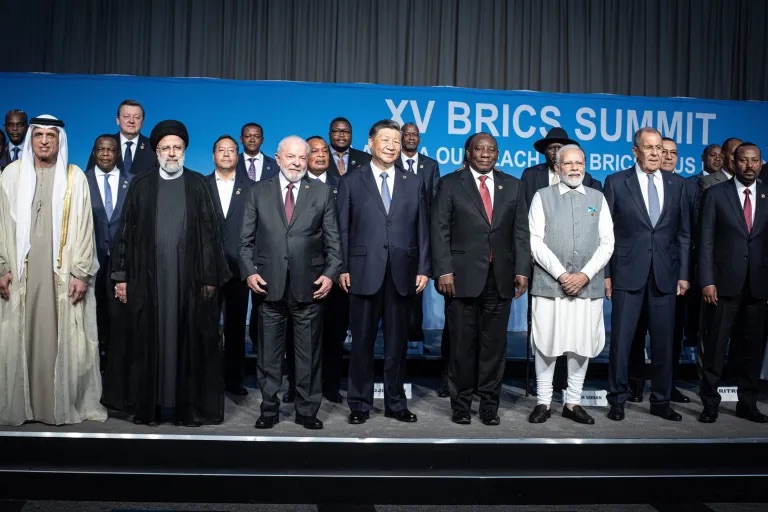
The BRICS bloc has already signaled its intent. Its member nations—Brazil, Russia, India, China, South Africa, and now a widening circle of others—are exploring settlement systems that bypass the U.S. dollar. Without a peg, such systems risk fragmentation. The glue, as history shows, is gold.

• Eastern central banks are buying record tonnage of bullion, not futures contracts.

• Western banks remain tethered to paper claims, increasingly downgraded by Basel III rules.

• Liquidity migration is not a conspiracy but a pattern: when one region’s fiat exhausts credibility, another inherits the burden and backstopped by gold.

As Petrova observes, “This is not about destroying the dollar—it is about keeping fiat alive by shifting its weight onto new pillars.” Those pillars may look multipolar, but their load-bearing material is the same as it has always been.

The Shape of the Next Reset

If history holds, the shift will not be announced openly. It will arrive by necessity disguised as inevitability:

• A commodity crisis forcing nations to accept settlement in a BRICS-linked system.

• A financial shock exposing the fragility of Western futures markets.

• A global liquidity squeeze that can only be relieved by bullion-backed credit.

The pivot could take many forms: gold-linked settlement units, hybrid currency baskets, or digital instruments backed by physical reserves. But the essence will echo 1971: a silent rewriting of the rules, enforced globally, with citizens and smaller nations adjusting afterward.

Closing Reflection

The world has seen this cycle before. Gold is confiscated, concealed, dismissed, and restored again under new terms. Each reset claims permanence, but each is temporary scaffolding for the next.

The question is not whether BRICS will displace the dollar, but whether fiat itself can endure without a metallic skeleton. If the 20th century taught us that wars were the price of financial rearrangement, the 21st may show whether quiet regulation and rebalancing can achieve the same outcome or whether conflict remains the final enforcer of monetary truth.

Photo credit: PER-ANDERS PETTERSSON/GETTY IMAGES

© 2025 Zakariyas James. First shared here at theruminationcompilation.wordpress.com.

When Trees Bear Witness

Give it some time, the trees will start listening to you. A device once used only to track growth rates is now the seed of something else, a quiet grafting of the forest into the cloud. 

Dendrometers (used to measure the growth of trees and other plants by monitoring changes in diameter) have gotten a recent boost in applicability for more than just forest management teams. Thus far, they’ve allowed forest managers to cut down site visits needed to gather data on tree growth and carbon capture rates, but because of a recent innovation, much more is possible and I want to paint a picture for you. 

As per usual, what begins as a gesture to efficiency, a nod to preservation, may warp into something far more insidious.

The company Treemetrics, working alongside the European Space Agency, created sensors that link through wide-area networks and satellites, feeding streams of data into a platform called Forest HQ. If your tree is growing, Forest HQ knows. The forest becomes an extension of the cloud, feeding numbers related to diameter growth, height, location—change of all sorts. So, the forest is no longer a place. It is a feed. The company calls this project the Internet of Trees.

The logic is seductive: better measurement equals better care. Carbon accounting strengthens climate response. Carbon credits for the cap-and-trade markets gain more authenticity. But inside that necessity lies a governance architecture: every tree, instrumented; every growth curve, visible; every beat of the forest, rearranged as data. A swarm of data waiting to be further monetized or weaponized—unfortunately, humans do one or the other. Often both. 

I know what I will soon describe may seem altogether far fetched, but it does not take much imagination to see the scope widen in the way I expect given the right amount of time.

The slope is not hard to imagine. Already, forests are wired with listening devices meant to detect chainsaws, trucks and any other prohibited criteria. Artificial intelligence runs on-site, flagging the sounds of illegal logging before they reach the cloud. It is admittedly clever, even noble. But anything involving criminalization soon collapses into categories: nuance is stripped, anomalies are flagged, people are reduced to signals. 

We’ve seen this arc before. The Global Positioning System was once sold as a gift for navigation: finding your way home, never getting lost. Now it’s the backbone of precision strikes and geofencing. Closed-circuit television cameras were rolled out for “public safety.” Now they’re stitched together in networks that can track a face across an entire city and can even recognize your gait amongst a crowd. Social media began as a way to connect with friends and now it’s a sprawling apparatus of profiling, targeted persuasion and behavioral nudging.

Each began as benevolent. Each hardened into control.

For a good number of technologies, the arc of applicability tends to bend toward something darker. Monetized until meaningless or weaponized against anyone not in control of the weapon. 

What begins as protection of ecology can just as easily become the monitoring of people. A hiker’s footsteps, a group of protestor’s chants; any human activity can be parsed as anomaly, pinged to headquarters. With the right contracts, the forest becomes surveillance infrastructure, camouflaged in green.

What if Forest HQ evolves from tracking growth to performing guard duty? What if the forest ceases to be wild and becomes a grid, mapping bodies as much as making bark? 

Conveniently, this year a viral post showcased a new service from XFinity that uses WiFi signals to detect motion in your home, “without relying on sensors or cameras.” The technology has existed for years, but only now is it being pitched as household convenience. Tracking once reserved for homes and offices will soon extend to the wilderness.

You can opt into this service, which routers and WiFi connected objects around you don’t give the option to opt out?

This shift matters not only technologically but culturally. What happens when forests are no longer trusted as wild refuges, but feared as watchtowers? What happens to the human imagination when trees are not symbols of mystery or sanctuary, but extensions of a monitoring state? Jokes about birds not being real will lose their humor. Children will hesitate or outright refuse to climb a tree.

Surveillance always arrives dressed as care. It comes with drones, dashboards and dragnet data streams in the name of stewardship and security. But benevolence, left unexamined, can harden into coercion. The trees will stop watching silently; they start reflecting, transmitting, bearing witness.

And so the question lingers: at what point does monitoring, however noble its pitch, become policing? 

Throughout our history, the wild was once where we went to disappear. Now it has the potential to be where we are found most easily. 


For more reading on how technological advancement affects our interaction with nature and cultivated products, see The Products of a New Environment.

© 2025 Zakariyas James. First shared here at theruminationcompilation.wordpress.com.

Critical Minerals: The Silent Tell of a War Economy

When the U.S. Geological Survey (USGS) updates its critical minerals list, the headlines barely notice. It reads like administrative trivia: a few minerals added, others removed, technical notes buried in appendices. But the 2025 draft list, now including copper, silver, lead, potash, silicon and rhenium, is not trivia. It is a tell.
These are not just “resources.” They are the circuitry, fuel and substrates of distance warfare: drones, satellites, AI servers, hypersonic craft and cyber networks. Naming them “critical” is not geology; it is policy. It signals that Washington intends to underwrite, secure (and if necessary) militarize the supply chains for tomorrow’s conflicts.
If history is the guide we expect it to be, we understand such lists are never neutral. Before WWII, Washington catalogued strategic materials like chromium, manganese and nickel as tanks and planes would have remained sketches without these metals. The Cold War stockpiles of uranium, titanium and rare earths told their own story of nuclear escalation and aerospace competition. Whenever governments build inventories of earth and ore, war usually follows.

Copper

Copper has long been civilization’s wire. Today it is the bloodstream of unmanned systems. Every drone swarm, every electronic countermeasure, every power-hungry radar dome requires copper’s conductive veins. The Pentagon’s own electrification push (from hybrid tactical vehicles to expeditionary battlefield grids) makes copper as strategically indispensable as oil once was.
The USGS data shows about two-thirds of copper production comes from private multinationals, while state firms like Chile’s Codelco anchor the rest. In war, that’s a chokepoint: private profit and public sovereignty tugging against U.S. demand. The federal “critical” designation is the mechanism for resolving that tug, by aligning private output with military need.

Silver

Silver is the mineral of precision. Its conductivity makes it indispensable in the circuitry of surveillance satellites, the sensors on drone wings, the guidance modules of missiles. It’s also the mirror of the heavens: silver-coated panels and optics sharpen the eyes of space-based reconnaissance.
Mexico’s silver (highlighted in USGS modeling as a $435 million GDP risk in the event of disruption) is more than jewelry export. It is the fragile tether of America’s electronic warfare capacity. If WWII needed steel and oil, the drone wars of the 21st century will need silver: it’s in every chip, every reflective surface, every sensor that makes remote systems function in real time.

Lead

Lead sounds archaic, a relic of musket balls. But logistics never sheds old tools. Lead-acid batteries remain the workhorse of backup power, rugged vehicles and forward-deployed comms units. They start engines in the desert, stabilize grids in the field and keep lights burning when lithium-ion fails under cold or cost.
China dominates production, with “private” firms bound to state direction. By putting lead on the list, the U.S. acknowledges what the generals already know: battles are won not just with drones and code but with batteries that still crank when newer chemistries fail in the field or fail the budget.

Potash

Food is logistics. Napoleon’s armies starved; Hitler’s armies sought Ukrainian wheat; America’s mobilization in WWII required fertilizer to keep farms feeding troops and allies. Potash, as a primary input to fertilizer, is not about crops alone, it is about sustaining human capital in war.
With Belarus, Russia and Canada holding the export reins, potash is geopolitically entangled. Its presence on the USGS list signals that Washington understands a modern war economy will not only hinge on missiles and AI but on whether its population (and allied populations) can eat under blockade or disruption.

Silicon

If copper is circulation, silicon is cognition. It is the substrate of AI, the backbone of cybersecurity, the etched brain of every satellite, drone and digital fortress. Without silicon wafers, there are no chips; without chips, there is no digital battlefield.
China’s industrial policy has made it the center of silicon refining. That means the U.S. must either subsidize domestic fabs or militarize semiconductor flows (hello Intel). By declaring silicon “critical,” the federal government isn’t just protecting consumer supply. It is announcing that AI warfighting, drone autonomy and orbital cybersecurity are national defense priorities and that silicon will be commandeered to feed them.

Rhenium

Rhenium is the most esoteric of the six, but perhaps the most militarily revealing. Added to nickel-based superalloys, it allows turbine blades to withstand searing temperatures. Without rhenium, high-performance jet engines melt; without those engines, fighter jets, hypersonics and reconnaissance craft can’t fly.
In WWII, nickel and chromium were critical because they made steel tanks roll and engines run. In the Cold War, titanium allowed spy planes to reach the stratosphere. Today, rhenium plays that role. Its scarcity (less than 10 metric tons globally in 2024) mostly recovered as a byproduct of copper mining makes it a perfect “tell.” It is not industry that demands it at scale; it is the Air Force.

The Historical Echo

Every mobilization has its list. The National Defense Stockpile Act of 1939 quietly laid the groundwork for industrial war, identifying which resources would decide victory or defeat. The Cold War Defense Production Act extended the logic, aligning corporate supply with strategic need. Each list is both an inventory and a prophecy.
The DoD Industrial Capabilities Report underscores the stakes: vulnerabilities in minerals like copper, silicon, silver, rhenium, and lead are national security threats. Adversary control or disruption of these materials would undermine warfighting readiness and the Pentagon already treats this as an operational, not just economic, issue. The USGS 2025 draft list is therefore more than academic: it is the civilian-facing reflection of a military strategy that assumes scarcity could decide battles.

Stimulus or Inevitable Conflict?

The genius of bureaucratic language is that it conceals what it reveals. The report never says “we are preparing for remote wars and orbital conflict” on page one. It doesn’t have to. The list itself is the confession.
By designating these minerals as “critical,” the federal government is signaling that two possibilities are on the table:

  1. War as Stimulus: Subsidies, stockpiles and corporate alignment redirect production into a defense-driven growth cycle. The late 1930s provide a historical parallel: FDR’s pre-WWII rearmament quietly built the arsenal of democracy while simultaneously pulling America out of the Depression. Factories humming with war contracts were both shield and lifeline.
  2. War as Expectation: The alternative is grimmer: Washington is preparing for conflict because it expects it: whether in orbital control, cyber escalation, or contested supply chains. Just as FDR’s military buildup acknowledged looming global confrontation, today’s mineral maneuvering may be a recognition that certain conflicts are unavoidable.

Either way, these minerals are no longer neutral commodities. They are instruments of war planning. Copper wires it. Silver refines it. Lead powers it. Potash sustains it. Silicon thinks for it. Rhenium lifts it into the sky.
This is structural war prep: either as a lever for economic revival or as preparation for a fight the state believes it cannot avoid.

Works Cited

1. Nassar, Nedal T., et al. Methodology and Technical Input for the 2025 U.S. List of Critical Minerals—Assessing the Potential Effects of Mineral Commodity Supply Chain Disruptions on the U.S. Economy. U.S. Geological Survey Open-File Report 2025–1047. Reston, VA: U.S. Geological Survey, August 25, 2025.


2. U.S. Geological Survey. “Department of the Interior Releases Draft 2025 List of Critical Minerals.” USGS News Release. U.S. Department of the Interior, August 2025.


3. U.S. Geological Survey. Mineral Commodity Summaries 2025 (ver. 1.2, March 2025): 212 p. U.S. Geological Survey.


4. Bloomberg News. “US Agency Proposes Including Copper, Potash in Critical Minerals.” Bloomberg, August 2025.


5. U.S. Department of Defense. Annual Industrial Capabilities Report to Congress. Office of the Under Secretary of Defense for Acquisition and Sustainment, January 2024.

© 2025 Zakariyas James. First shared here at theruminationcompilation.wordpress.com.

America’s Warpath Towards Corporate Control

Do you feel it shifting yet?
It is subtle, but unmistakable. The United States is stepping beyond ordinary economic support, slipping into direct ownership of private enterprise. Owning ten percent of Intel is not a bailout, it’s a strategic maneuver.
The Intel chip foundry, powering every drone, missile system, satellite and cyber-defense operation is now partially tethered to Washington. This is the war economy coming alive again.
Let us walk this through.
(Cue the Battle Hymn of the Republic)

Intel as the New Arsenal

On August 22, 2025, the administration converted federal CHIPS Act grants into a ten-percent equity stake in Intel. The stake carries no voting rights, yet it signals Intel’s further integration into the national defense apparatus; chips are now synonymous with weapons.
While the government claims this move will not interfere with day-to-day operations, history shows that ownership (even without governance) aligns strategic interests with influence.
Consider SkyWater Technology, a U.S.-based semiconductor foundry specializing in radiation-hardened chips for high-altitude craft and satellites. With deep collaborations with the Defense Advanced Research Projects Agency, it stands as the only American-owned pure-play foundry of its kind, making it a likely candidate for future government equity. If Intel is the visible fortress of U.S. semiconductor capacity, SkyWater may be the shadow arsenal woven into defense.
This is not mere industrial policy, it is war economy logistics; the state is embedding itself into the supply chains critical for military readiness.

A Repeating Playbook

In both World Wars, the U.S. government nationalized railroads, seized control of the telephone system and created the Defense Plant Corporation to build and lease munitions factories. These assets were returned or privatized in peacetime and the pattern has been repeated: wartime central planning, privatization in peace. Today, semiconductors are the new artillery; Intel’s stake could be the new assembly line.
Likewise, the Department of Defense’s $400 million investment in MP Materials, the only significant rare-earth mining company in the U.S., mimics wartime strategy: securing magnet supply chains for guidance systems, drones and missiles.

What Industries Are Next?

Semiconductors were just the opening salvo. The war economy model is poised to extend into:
• Rare-earth elements and strategic metals: MP Materials already shows the model.
• Battery minerals such as lithium, graphite, and cobalt: critical for advanced munitions and energy systems.
• Oil and natural gas infrastructure: needed to sustain fleets, aircraft, and command centers.
• Advanced manufacturing for aerospace, hypersonics, and AI systems.

Silver’s Role in Military Tech and Munitions

Silver is indispensable in modern warfare for its superior conductivity and reliability. It features prominently in military electronics from radar and guidance systems to circuit boards.
• Conservative estimates put cruise missiles silver usage at about 15 per missile.
• Defense contractors manufacture silver-zinc batteries for missile families such as Patriot, Tomahawk, Hellfire, THAAD, and JDAM to power guidance, telemetry and control systems.
This demand makes silver a strategic resource and yet supply remains volatile. It is likely to become a target for government safeguarding or supply-chain oversight. If not from a military perspective, the government may involve themselves in the industry solely to manipulate cost of acquiring the metal for all industrial use.

U.S.–Ukraine Minerals Partnership

On April 30, 2025, the United States and Ukraine signed a landmark minerals agreement establishing a United States–Ukraine Reconstruction Investment Fund, equally managed by both governments. Ukraine retains ownership of its subsoil and resources, while 50 percent of new project revenues (across rare earths, lithium, titanium, uranium, graphite, oil, and gas) will flow into the fund. U.S. military aid counts as contributions and there are no debt provisions on past aid.
Ukraine’s parliament has since ratified the deal, envisioned as both a reconstruction and strategic investment vehicle. However, actual economic benefits are projected to take a decade or more due to damaged infrastructure, outdated geological data, and active conflict zones as many resource-rich areas remain under Russian control.

Strategic State War Economics

This is not European-style dirigiste planning in peacetime, it is America preparing its economy for conflict. From railroads and refineries to rare-earth mines, semiconductor fabs, critical minerals and silver-dependent munitions. The pattern is clear: when the United States identifies a threat, it turns not merely to regulation or subsidies but to ownership and control.

Ownership as Armament

America is once again rewiring capitalism for conflict. The Intel stake may feel disconcerting because it is not a standard industrial policy, it is war economy policy.
Will this be temporary, like past wartime interventions, or permanent like the Tennessee Valley Authority? That is the question.

In some respects, these recent developments from our government resembles a form of economic warfare conducted in the open but rarely acknowledged as such. The factories, the mineral rights, the intellectual property, they have all become fields of contest rather than fields of commerce. A document that circulated decades ago, Silent Weapons for Quiet Wars, framed the notion that a population could be subdued not by force of arms but by systems of policy, scarcity and control. Ignoring whether it should be viewed as allegory or leaked strategy, the thesis lingers: today’s corporate stakeholdings and mineral seizures may not be silent weapons in the literal sense but they echo the idea that war has shifted into quieter, more pervasive forms. If the weapon is silent and the war is quiet, how would we recognize we are even at war at all?


For more insight as to how likely it is the U.S. is prepping for a major conflict, see Critical Minerals: The Silent Tell of a War Economy.

© 2025 Zakariyas James. First shared here at theruminationcompilation.wordpress.com.

The Volumes on Vitality: Part Four

Even though the farmer is the man, the farmer has a few friends to thank. The crops and various yields we concern ourselves with, or at least the ones we place the highest value on, severely depend on interactions with other creatures that we tend to overlook or altogether neglect.

As of late, the neglect is reaching a potential maximum that may herald in a world in which some recipes seem too costly or altogether impossible to alter for sake of substitution. Bats, bees and other pollinators are invaluable aids to humanity, yet they’re slowly and quietly going into the long night…moreso than the TV screens care to tell you.

Going Batty

Bats (those cool, nocturnal insectivores) are being wiped out across 40 states by Pseudogymnoascus destructans (white-nose syndrome), a fungus that shatters their hibernation, fat reserves and wings. The result: millions dead, entire colonies erased.
Their absence carries a price tag. Bats provide $3.7 to $53 billion in pest control services each year by eating the insects that would otherwise chew through corn, cotton, rice and other staples. In field studies, excluding bats from cornfields meant 60% more pests and 50% more crop damage in just two nights (Kunz et al, 2011).
Counties hit by the fungus see $2.84 per acre rental declines, idle farmland, a 31% jump in pesticide use and a 7.9% rise in infant mortality which ends up costing society $39 billion. Still today, the fungus spreads. Tangentially, they’re also the largest pollinator group of agave, the basis of tequila; so maybe enjoy it while you got it?

Now the bees…

Between mid-2024 and early 2025, U.S. beekeepers lost 62% of their colonies, totaling over 1.1 million hives gone. These pollinators add $34 billion annually to U.S. agriculture; almonds alone require 1.4 million hives each spring, with hundreds of millions of dollars at stake in pollination contracts.
The causes are hardly mysterious: Varroa mites, viruses, pesticide exposure, habitat loss, and extreme weather (Goulson et al., 2015). In Texas, heat and drought drove a 66% colony collapse; a staggering loss far beyond the norm.
Globally, inadequate pollination already reduces fruit, vegetable and nut production by 3–5%, contributing to hundreds of thousands of premature deaths each year from diet-related disease. Fewer pollinators mean smaller harvests, higher prices and a poorer diet for millions.

Cattle Craze

In early 2024, H5N1 appeared in U.S. dairy herds. A trade group quickly pushed to rename it Bovine Influenza A Virus (BIAV), softening the optics even as infections spread to 17 states and hundreds of herds. Viral shedding was found in milk and wastewater, human cases were recorded, and federal surveillance quietly receded.
The direct food-safety risk is managed through pasteurization, but the economic risk comes from reduced production, herd health declines, and tighter export margins in an already tariff-heavy trade environment (USDA ERS, 2024).

Poultry Problems

The same virus has hit poultry far harder. Since 2022, over 166 million birds have been culled nationwide, across all 50 states and Puerto Rico—marking the largest, longest avian influenza outbreak in U.S. history.
The fallout has been rough, to say the least. Wholesale egg prices more than doubled in early 2025, retail prices hit $5–$9 per dozen and store shelves in some areas went bare between shipments. In February 2025, the USDA launched a $1 billion response plan, including $500 million in biosecurity upgrades, $400 million in farmer relief and $100 million for vaccine research. Wholesale egg prices later fell 64%, retail by 27% and still the USDA forecasts a 41% increase in egg prices for 2025 overall.
Meat production also tightened as infected flocks were destroyed, pushing poultry prices upward and reshuffling supply chains.

None of this even covers the detriment to pest management we owe to millions of other birds we’ve lost to H5N1 recently; they may be bird species we don’t ingest but their contributions to food production shouldn’t be dismissed.

The Hidden Truth Beneath Rising Prices
• Bats gone = higher pest pressure, greater crop losses.
• Bees gone = pollination deficits, reduced yields, higher produce prices.
• Cattle infected = production hits, export challenges.
• Poultry culled = eggs and meat scarce, prices surge.
We call it inflation, trade friction, “market shifts,” but the ledger is ecological and measured in wings lost, colonies collapsed and flocks erased.
These losses don’t happen in a vacuum. They’re amplified by poor government stewardship: from underfunded wildlife agencies to reactive rather than preventative biosecurity. Corporate malpractice often doubles the damage, whether through chemical overuse, disease mismanagement, or lobbying for optics over truth (Food Tank, 2024). Climate disruption compounds every weakness, making winters too warm for pest cycles to break, summers too hot for bees to forage and droughts too long for forage crops to survive (IPCC, 2019). And all of this is made more volatile by consumer demands for cheap, abundant, uniform products causes pressure for producers to cut corners in ways that weaken ecological resilience further.
The true cost of our food is not just in the grocery bill. It’s in degraded ecosystems, distorted market signals, and an agriculture system that burns through its biological capital faster than it can be replenished.

The runaway printing of fiat isn’t helping either but ultimately, the more we ignore the interlocking causes, the more expensive eating will become. Whether it’s denoted in dollars, observed in personal health or in the declining stability of the systems that feed us, we’ll see the cost sooner rather than later and it won’t be easy to stomach.

Sources

• Boyles, J.G., Cryan, P.M., McCracken, G.F., & Kunz, T.H. (2011). Economic Importance of Bats in Agriculture. Science, 332(6025), 41–42.https://science.sciencemag.org/content/332/6025/41


• Kunz, T.H. et al. (2011). Ecosystem Services Provided by Bats. US Forest Service Report. https://www.landcan.org/pdfs/wns%20kunz%20april%205%20%202011.pdf


• Environmental Health Journal (2020). Economic and Health Impacts of Bat Declines. https://www.science.org/doi/10.1126/science.adg0344

• Survey Reveals Over 1.1 Million Honey Bee Colonies Lost, Raising Alarm for Pollination and Agriculture https://honeybeehealthcoalition.org/survey-reveals-over-1-1-million-honey-bee-colonies-lost-raising-alarm-for-pollination-and-agriculture/


• Bee Informed Partnership, 2025 National Honey Bee Loss Survey Results. http://web.archive.org/web/20231218173803/https://beeinformed.org/citizen-science/loss-and-management-survey/


• Calderone, N.W. (2012). Insect Pollinated Crops and US Agriculture. PLoS ONE, 7(5): e37235.
https://journals.plos.org/plosone/article?id=10.1371/journal.pone.0037235


• Almond Board of California, 2024 Annual Report. Annual Publications | Almond Almanac | Growing Good


• Goulson, D. et al. (2015). Bee Declines Driven by Combined Stressors. Science, 347(6229).
https://science.sciencemag.org/content/347/6229/1255957


• Pollination loss removes healthy foods from global diets, increases chronic diseases causing excess deaths. https://hsph.harvard.edu/news/pollination-loss-removes-healthy-foods-from-global-diets-increases-chronic-diseases-causing-excess-deaths/


• USDA Economic Research Service (2024). Cattle and Beef Market Reports.
https://www.ers.usda.gov/topics/animal-products/cattle-beef/


• USDA APHIS (2022–2025). Avian Influenza Outbreak Reports.
https://www.aphis.usda.gov/aphis/ourfocus/animalhealth/animal-disease-information/avian/avian-influenza


• USDA Press Release (Feb 2025). $1 Billion Avian Influenza Response Plan.
https://www.usda.gov/media/press-releases/2025/02/15/usda-announces-1-billion-avian-influenza-response


• USDA Economic Research Service (2025). Poultry and Egg Price Outlook.
https://www.ers.usda.gov/topics/animal-products/poultry-eggs/


• Examining Corporate Influence Over Food and Farm Bill – Food Tank https://foodtank.com/news/2024/07/examining-corporate-influence-over-food-and-farm-bill/


• Intergovernmental Panel on Climate Change (2019). Climate Change and Land.
https://www.ipcc.ch/srccl/

© 2025 Zakariyas James. First shared here at theruminationcompilation.wordpress.com.

Bird Flu & The Great Disappearing Act


In early 2024, cows started testing positive for a virus we’ve long associated with birds H5N1, also known as Highly Pathogenic Avian Influenza (HPAI). The phrase bird flu in cattle started showing up in news alerts and government bulletins, albeit intermittently. But now, hundreds of infected dairy herds later, the illness is being given a new name.

Not by virologists. Not by the CDC.
By a trade group.

The American Association of Bovine Practitioners (AABP) declared it will no longer refer to the virus in cattle as HPAI. From here on out, they’re calling it Bovine Influenza A Virus (BIAV) and they’re urging federal agencies, diagnostic labs and state health officials to follow suit.

The reason?
To help the public “better understand” the difference between bird flu in birds and the milder form now spreading through cows.

They also say the change will “help maintain confidence in the safety and accessibility of dairy and beef products.”

Which might be the most honest sentence in the entire press release.


In 2024, the U.S. exported nearly 2.8 billion pounds of beef, generating over $10 billion in international sales.
China, a cornerstone of those exports, is now largely off the table. American beef faces a 32% tariff there, alongside widespread delistings of U.S. facilities.

With the Trump administration’s tariffs raising tensions across North America, maintaining consumer trust (both domestic and foreign) has never been more financially urgent for the beef lobby.
You don’t move that kind of product if people start panicking about biosecurity, let alone the potential for animal-to-human spillover.


At least 17 states have now reported H5N1 infections in dairy cattle.
Human cases have already occurred. Wastewater and milk sampling show signs of persistent viral shedding.

But the renaming of the virus comes at a time when the federal government is reportedly scaling back H5N1 surveillance efforts. Staff reductions, limited testing and quiet policy shifts are leaving fewer eyes on a virus that’s crossing species lines with alarming ease.

There’s a strange convenience in the timing.

A virus known for devastating poultry industries is now embedded in America’s dairy system. And just as public concern might begin to swell, a new label appears.

Not one rooted in viral evolution or scientific consensus but in consumer confidence.

The virus didn’t disappear.
Just the name.


Meanwhile, American consumers are seeing beef prices climb steadily, often far faster than official inflation numbers suggest.

Major media outlets and government agencies largely frame these increases as a natural outcome of supply and demand or temporary inflationary pressures. But the reality is more complex.

For a deeper look at how inflation numbers get manipulated and what that means for prices like beef, see: Shadow Inflation & the Price of Freedom


Tariffs imposed by the current administration on beef imports from key trading partners like Canada and Mexico (sometimes as high as 25%) have disrupted supply chains and added costs that producers pass down the line.

Meanwhile, retaliatory tariffs from export markets such as China have shrunk overseas demand, squeezing domestic producers from both ends.

Add to that rising feed, fuel, and labor expenses and the fallout from widespread H5N1 infections in dairy herds (costs they simply can’t eat) it’s clear that American beef is caught in a pressure cooker.


Consumers are left to wonder:

  • How much of the rising beef price is due to trade policy?
  • How much stems from inflation?
  • And how much reflects an industry quietly trying to manage the optics of a virus now entrenched in the very livestock they rely on?

The American Association of Bovine Practitioners and the current administration say people won’t get sick from bird flu in cows unless, of course, they drink the milk raw.

But if the virus isn’t a threat, why does every regulatory body recommend only pasteurized milk?


The answers are complicated.
But what is certain is this:

The story told about beef, bird flu, and prices is being carefully served to us on a dirty platter.

© 2025 Zakariyas James. First shared here at theruminationcompilation.wordpress.com.

Precision Consumer 2030

Wellness as a Window into You

You are being watched.
Not just by a camera or a satellite or a data broker.

But by your smart mirror.
Your fitness ring.
Your gut biome dashboard.
Your digital assistant that noticed you’ve been coughing more lately.

This isn’t surveillance in the dystopian, authoritarian sense. It’s subtler than that. It’s called “precision wellness”. By 2030, so they say especially if certain think tanks have their way, it’ll be normalized. Incrementally, then all at once. After that, it’ll more than likely be dystopian but let’s take a step back. 

In 2019, a cultural intelligence consultancy called Sparks & Honey released a document titled Precision Consumer 2030—a 125-page playbook detailing the transformation of personal health into a hyper-individualized, AI-optimized ecosystem of apps, trackers, scores, and predictive services. At first glance, it reads like a wellness brochure from the future: designer synbiotics, mood-responsive interiors, “smart” toilets that analyze your waste. But with discerning eyes, what emerges is not just summaries of consumer trends but actually a governance architecture.

That’s because Sparks & Honey isn’t just some boutique agency running ideation workshops for sleepy CPG brands. It is a strategic foresight division of Omnicom Precision Marketing Group, a branch of the $17B Omnicom advertising conglomerate. They deploy an AI platform called Q™, which digests thousands of cultural signals to guide institutional decision-making. And their most prominent collaborator on Precision Consumer 2030 was the World Economic Forum (WEF).

The WEF Connection

Sparks & Honey didn’t just work adjacent to the World Economic Forum. They co-developed and presented the Precision Consumer 2030 initiative at Davos in 2020 alongside corporate partners like IBM, 23andMe, Mount Sinai, and PepsiCo, to name a very short few. Robb Henzi, their SVP of Strategy, also served on the WEF’s Global Future Council on Agile Governance, where he contributed to WEF white papers on regulatory technology (RegTech) and behaviorally responsive governance frameworks. 

So when you read Precision Consumer 2030, you’re not just browsing a guess at what’s coming. You’re reading an institutionally aligned proposal, actively disseminated to the very companies, cities, and policymakers tasking themselves with building the future.

This is not fiction. This is how it comes to be. 

Your Body, Their API

In the Precision 2030 model:

  • Consumers will soon manage a “bio-cloud”—a constantly updating digital twin of their physiology.
  • Workplaces will match employees to tasks using biometric stress data.
  • Retail will shift from demographic targeting to individual mood-based personalization.
  • Health insurance could fluctuate based on real-time metabolic behavior.

This isn’t a question of “if” or “when.” The infrastructure is already here. What Precision Consumer 2030 shows us is the desired end-state of that infrastructure. A system where privacy, bodily autonomy, and informed consent are functionally obsolete.

And nowhere in the document is data security meaningfully addressed. There is no mechanism proposed to protect against biometric theft, psychological profiling, or genetic discrimination. Why would there be? That’s not the concern of predictive market designers. Their job is to make behavior legible, profitable, and manageable. 

Wellness as Performance, Surveillance as Care

In this model, health becomes aesthetic; another layer of conspicuous consumption. You don’t just track your well-being; you display it. Your biometric score becomes your new credit score. Your gut biome becomes part of your brand. Your wearable tells others whether you’re exhausted, inflamed, focused, or fertile. It tells others that your affluence is secure enough to secure you another healthy day. 

This is the new luxury: the appearance of control over your own biology, delivered through interfaces owned and operated by someone else.

The Sparks & Honey advisory board itself reveals how broad this reach is:

1. Judy Samuelson

Affiliation: Executive Director, Aspen Institute Business and Society Program
Known For:

  • Leading voice in rethinking the role of corporations in society.
  • Spearheaded the Aspen Principles, which influenced long-term corporate value metrics and social responsibility standards.
  • Frequently writes and speaks on stakeholder capitalism and the limits of Milton Friedman’s shareholder-first model.
  • Author of The Six New Rules of Business.

Relevance: Brings policy influence and corporate ethics framing to Sparks & Honey’s predictions; grounding their trend work in emerging governance and business ideology.

2. Kahlil Greene

Known As: The “Gen-Z Historian”
Background:

  • Former Yale Student Body President, became widely recognized on TikTok and Instagram for distilling American history and social issues for younger audiences.
  • Topics often include race, systemic inequality, and generational perspective shifts.
  • Strong social media presence with partnerships in youth education, brand consulting, and activism.

Relevance: Represents the youth culture pulse, with the ability to translate institutional messaging into digestible narratives for digital-native generations.

3. Dr. Brian Pierce

Background: Former Director of the Information Innovation Office (I2O) at DARPA (Defense Advanced Research Projects Agency)
Known For:

  • Oversaw cutting-edge military research related to artificial intelligence, neuroscience, and human-machine symbiosis.
  • Helped lead DARPA’s efforts into predictive intelligence and autonomous systems.

Relevance: Adds high-level expertise in defense-grade AI, surveillance tech, and human-data integration, which reinforces Sparks & Honey’s credibility in biometric and predictive modeling domains.

4. Lynn Greene

Background: Former President of Estée Lauder’s Global Brands
Known For:

  • Oversaw Estée Lauder, Clinique, and Origins globally.
  • Noted for modernizing brand strategy and integrating emerging beauty tech and AI-driven personalization.
  • Played a key role in shifting beauty toward data-informed consumer experiences.

Relevance: Ties Sparks & Honey’s foresight work to consumer behavior, biometric branding, and commercial personalization strategies.

5. Maarten Leyts

Background: Youth culture expert; CEO of Trendwolves (a Belgium-based trend forecasting firm focused on millennials and Gen Z)
Known For:

  • Specializes in cross-generational insight, emerging behaviors, and cultural forecasting across Europe.
  • Has advised on education, youth employment, and tech adoption trends.
  • Published widely on the socio-psychological patterns of Gen Z and post-pandemic youth culture.

Relevance: Adds granular insight into how generational shifts impact consumer behavior, governance models, and cultural adoption of bio-integrated tech.

These aren’t marketers. These are architects of consensus, shaping how commerce, identity, and even biology are interpreted across institutions, over years of focused influence. 

The Real Takeaway: This Is the Blueprint

Precision Consumer 2030 is not simply forecasting where health culture might go. It is manufacturing the desirability of its inevitability, corporations on board are working at this very moment to convince you or your younger peers this is sexy, smart and socially significant. Through collaborations with the WEF and a multitude of Fortune 500 partners, Sparks & Honey’s influence isn’t theoretical it’s operational.

As a result, this document (light on footnotes but heavy on framing) should be read the way a legal analyst reads a contract. Or the way a surveyor reads a map of land that isn’t theirs yet.

Because this is a roadmap for cultural submission, where each biometric check-in is repackaged as empowerment. Where every app that helps you sleep better might also be reshaping your insurance score, your employability, and your self-worth. It may even flag you for limited travel and limited consumption of goods and services; it will know more about you than you do and make decisions based of information you wouldn’t even know how to read or process.

But that’s no excuse to say you didn’t see it coming.


They published it.

They presented it.

(Then they scrubbed the paper from their website.)


Now they and a bunch of companies you probably give your money to or might even work for are building the infrastructure to make sure you can’t opt out.

Below, you will find a download of Precision Consumer 2030. Read it over and start to look at what’s on the shelves and on the way with this paper in mind.

Update: and just like that, President Trump has a very relevant idea that sounds like just another step in Precision Consumer 2030.

Trump Administration Is Launching a New Private Health Tracking System With Big Tech’s Help

President Donald Trump is expected to deliver remarks on the initiative Wednesday afternoon in the East Room. The event is expected to involve leaders from more than 60 companies, including major tech companies such as Google and Amazon, as well as prominent hospital systems like the Cleveland Clinic.

© 2025 Zakariyas James. First shared here at theruminationcompilation.wordpress.com.

Shadow Inflation & the Price of Freedom

You’re not losing your mind, you’re losing your purchasing power.

Everything from groceries to rent to basic utilities has crept into unaffordable territory, but somehow the government insists inflation is around 3.3%. To most of us, that number feels like a punchline with no setup.

ShadowStats, which calculates inflation using methods from before the 1980s CPI revisions, suggests it’s actually over 9%. That sounds far more in line with what you feel in your bones and your wallet, doesn’t it?

The difference isn’t just mathematical, it’s philosophical. It determines whether you believe our society is slowly progressing or quietly deteriorating.

And at the center of that delusion sits the green tech movement: an ideal pushed by agreements between supranational organizations and state governments, built on commodities like silver, which ironically is one of the few tangible lifeboats left in an era of untethered money, misrepresented data, and unsustainable goals.


CPI: The Numbers Game That Makes Poverty Look Like Progress

In the early 1980s, the U.S. government began quietly redefining inflation. It didn’t look good on paper to say retirees needed 10% annual increases in Social Security checks. It looked even worse for Treasury bondholders expecting “real” returns.

So instead of wrestling inflation down, policymakers redefined how it was measured.

They introduced terms like:

  • Substitution: If steak gets too expensive, CPI assumes you switch to chicken. Inflation problem solved.
  • Hedonic adjustment: If your laptop is twice as fast, they say you’re paying less for it—even if it cost you more dollars (source, second bullet point).
  • Owner’s Equivalent Rent (OER): Instead of tracking what you pay in housing, they estimate what your home might rent for, based on surveys. (Crazy isn’t it?)

These methods were sold as ways to make CPI “more accurate,” but what they really did was make inflation more palatable to policymakers and debt managers. They also did it to make sure you and I kept racking up debt and consuming more each quarter.

Official inflation numbers rely on mechanisms that hide the erosion of lifestyle:

These adjustments treat your survival adaptations like buying cheaper food, delaying car repairs, moving back in with family, etc as market choices rather than signs of stress.

You’re not living worse, they say you’re just living differently.

Here’s what the former Fed Chairman Alan Greenspan said in 1995:

“If you are measuring the cost of living, you must measure the cost of maintaining a constant standard of living. If you substitute chicken for beef, you are not maintaining the same standard.”(https://www.nytimes.com/1995/12/04/us/inflation-gauge-may-be-too-high-experts-say.html)

The BLS has been doing the opposite for decades.


Green Tech: The Utopian Offramp Built on Industrial Scarcity

Enter the Sustainable Development Goals and the “just transition” to a greener future. Electric vehicles. Wind turbines. Solar panels. Battery storage. Carbon offsets. All tied to the years 2030 and 2050 as I’ve outlined in more than a few posts on this blog.

The problem? Every one of these systems relies heavily on silver, a finite, mined metal with growing industrial scarcity. According to the Silver Institute, solar panel production alone is expected to account for over 25% of annual silver demand by the end of this decade.

The price of silver has risen 43% year-to-date as of July 2025. Gold is up roughly 22%. Compare that to:

2025 YTD Return

NASDAQ +15%

S&P 500 +10%

DJIA +5.5%

So let’s check the math. If inflation is only 3.3% (official CPI), then those stock market gains look decent. But if ShadowStats is right, and inflation is closer to 9%, then:

  • The Dow Jones is posting a negative real return.
  • The S&P 500 is barely breaking even.
  • Even the NASDAQ, with its AI hype and tech surge, is only modestly positive in real terms.
  • Only silver and gold are delivering substantial real returns after adjusting for actual inflation.

This is the moment where you realize: only one entity will be paying for the widespread retrofitting and implementation of all this green tech that needs silver and it’s you. Either through willing compliance or taxation by the government so they can buy it with your wages and make you use it.


Hedonics, Hopium, and the Silver Choke Point

The CPI tells you that your phone is getting cheaper, even if you spent more on it, because it has better specs (source, first bullet point).

The ESG movement tells you your energy is getting cleaner, even if your utility bills are rising, because it’s coming from renewables.

But here’s what they don’t tell you:

  • Silver is irreplaceable in high-efficiency solar, circuit boards, EV contacts, and grid storage.
  • No large-scale replacement exists.
  • We are burning through reserves faster than we are discovering new viable deposits.

That means the very commodity needed to “fix” the future is becoming more expensive, even in inflation-adjusted terms. And that creates a dilemma no policy paper can solve.


Silver: The Honest Asset in a Dishonest System

In a world where official CPI is engineered to deflate your sense of decline, silver doesn’t lie.

  • It doesn’t get adjusted for quality.
  • It doesn’t get substituted.
  • It doesn’t get hedonicized.

It just reflects what a scarce, in-demand physical asset actually costs in a world of paper promises and underpriced labor.

And unlike fiat currencies or ESG credits, silver is outside the system. That’s why central banks don’t talk about it, and why retail investors who understand its utility in both monetary protection and energy transition are quietly accumulating at Costco before getting a hot dog and soda.


The Fatal Irony of Sustainable Progress

We are trying to build a green future using a grey metal whose supply cannot scale with our policy ambition. The Sustainable Development Goals require a miracle of material availability that simply doesn’t exist.

If silver prices are outpacing even ShadowStats’ inflation, then the affordability of the clean tech utopia vanishes on arrival. And if real inflation is devouring your market returns, then the dream of using “compound growth” to escape stagnation is mathematically dead.


Compliance or Sovereignty: There Is No Third Option

If you’re not holding assets that outpace real inflation (like silver or gold or the next randomly pumping stock) then you’re not preserving wealth. You’re slowly converting it into obedience.

Because what happens when your savings can’t keep up?

  • You’ll be offered government rebates for heat pumps.
  • Carbon credits for commuting less.
  • EV mandates.
  • Sustainability scorecards tied to your bank account (like that Aspire card I mentioned a few posts ago).
  • Access granted in exchange for compliance.

If you can’t buy your way out of the system, you’ll be forced to conform to it.

Green tech won’t be a lifestyle choice. It will be a behavioral requirement coded into policy, enforced by banks, and justified by a CPI that says “everything’s fine.”


Final Thought: Scarcity Isn’t the Problem—It’s the Lie

ShadowStats reveals how far we’ve drifted from price reality. Silver shows how tangible scarcity still has economic weight, how truth leaks out where it can’t be hedged.

And if you’re still counting on index funds and CPI-adjusted retirement accounts to protect you, ask yourself:

What happens when the growth you’re chasing is just inflation in disguise?

Silver isn’t just a hedge. It’s a mirror. And the reflection it shows is too uncomfortable for mainstream narratives to tolerate.

© 2025 Zakariyas James. First shared here at theruminationcompilation.wordpress.com.
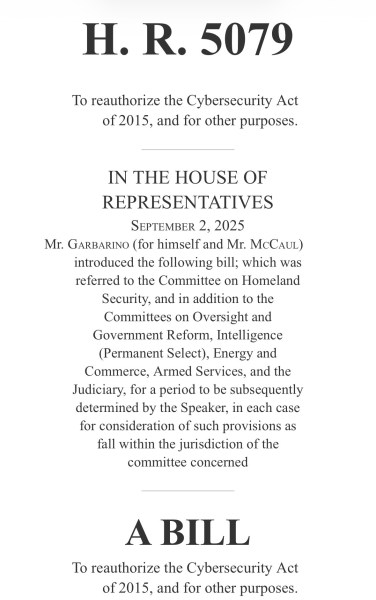
An Ounce of Silver & More than An Ounce of Delusion

[Update – October 2025: When this piece was first published in July 2025, silver traded at $38.32 per ounce. As of this update, it sits near $51.60 — a 34% increase in less than four months. Every dollar rise in silver’s spot price compounds the already-underestimated cost of “green” manufacturing, storage, and infrastructure. The same scarcity dynamics I described below are now playing out in real time.]

There’s something ironic in how silver doesn’t match the weight it now carries, even when labeled on bullion.

It’s the best conductor of electricity, it’s antimicrobial and for thousands of years it acted as a monetary metal. For centuries it has been ornamental or a tool of commerce or consumption (think silverware) and now it finds itself increasingly involved in the infrastructure of a repeatedly promised future: solar panels, electric vehicles, grid storage systems, and the increasingly complicated web of “green” innovation spurred on by Sustainability Development Goals created by the U.N.

Excited conversations on TV and other blog posts discuss these technologies as if they’re incorporeal though. Guaranteed but incorporeal. As if solar energy arrives by virtue of political will or increased taxation, that EVs emerge from factories every quarter to appease shareholders and to respond to inevitable increases in consumer acceptance.

“People will want EVs when the range per full charge surpasses ICE gas mileage!”

But silver is physical. It is mined, refined, shipped, spent. However, there is only so much of it and fiscally speaking, only so much that it can be used on before the next thing that requires it is just too expensive.


Paper or Physical?

The silver market is quiet in the way illusions are quiet.

Prices have remained strangely stagnant; even as demand rises from every direction, prices have been relatively flat. Silver is only up about 94% in the last 4-5 years, even amidst the obvious increase in solar panel production & EVs all over.

But there’s a clear reason: most of the silver traded in financial markets isn’t silver at all. It’s “paper silver”—contracts, ETFs, and other abstractions that represent claims on silver rather than silver itself.

This paper silver is stacked and restacked, layered so thick that for every ounce of physical metal, there are about 300 paper claims for every physical ounce. These instruments are cheap and convenient. They give the appearance of liquidity. They help manufacture downward pressure on a metal that is worth more each and every day that governments push the green future they’ve committed to with Sustainability Development Goals.

But try to build a solar panel with an ETF. Try to wire a battery with a futures contract. Buy a paper claim for a 1,000 ounces of silver and try to claim ownership; it’s a bit more convoluted & difficult than you’d think.

But that’s because markets pretend there is abundance when the mines quietly say otherwise.


Domestic Dependence

The U.S. mines very little silver on the global scale.

Most of it comes as a byproduct—scraped from zinc, lead or copper operations already past their prime. Mexico, Peru, and China dominate the supply chain.

Still, federal and state initiatives in the U.S. continue pushing solar incentives, EV mandates, and infrastructure investments without asking the most basic question: is there enough material to meet these goals?

Independence in energy policy without independence in materials is not independence at all. It is an illusion with a timer or an attempt at convincing the public that independence exists at all. How can each nation experience independence in a global economy attempting to deal with a global problem like environmental protection?


The Math That Isn’t Discussed

There are roughly 260 million licensed drivers in the United States. If half of them eventually drive electric—an optimistic yet increasingly standardized projection—that’s 130 million EVs.

Each EV contains roughly 25 to 50 grams of silver. Taking the midpoint:

130,000,000 × 40g = 5.2 billion grams of silver
= 167 million troy ounces

That’s one-fifth of the entire global silver production in a year (~800 Million ounces) just for U.S. EVs.

Now consider rooftops. There are around 82 million owner-occupied homes in the U.S. Maybe 60% are viable for solar. That’s 49 million rooftops.

Each home installation uses about 700 grams of silver, on average:

49,000,000 × 700g = 34.3 billion grams of silver
= 1.1 billion troy ounces

That’s more than all the silver the world mines in a year, just for U.S. homes. We expect this for all the nations involved in international agreements like the Paris Climate Accords and the 2050-centered plans from the U.N. so these figures throw a lot of things into question.

This doesn’t cover batteries, none of the redundancy systems, commercial arrays, or military contracts. No export demand. No global population growth. Just drivers and rooftops. Already unfeasible. This doesn’t even cover the actual dollar cost of simply buying the necessary amount of silver.

At the time of writing, silver is trading hands at $38.32 USD.

So that 167 million Troy ounces needed for just the vehicles? That’s just shy of $6.4 billion and that’s a figure expected to be paid in part by us, the consumer, upfront and more than likely down the road through taxpayer funded subsidies to accelerate EV adoption.

(There’s about an average of 62 ounces of pure Lithium in an EV battery; at $1.93 an ounce for refined lithium, it’s obvious the real price constraint will eventually be silver.)

The 1.1 billion Troy ounces needed for the solar panels? That’s about $42 billion, another cost we can attribute to the federal deficit and consumer spending.

These are not “if” numbers. These are baseline assumptions. The kind that policy was supposed to be built on.


Technology Without Materials

We’ve been taught to think of green energy as a software problem. That with the right code, the right algorithm, the right policy tweak, we can unlock a clean, efficient, endlessly scaling future.

But materials don’t scale like software.

Silver is not a “tech solution.” It is a finite, mined resource that lives in geological time. Once it’s pulled from the ground, used in a panel or circuit, it is largely unrecoverable. There is no efficient way to recycle the trace amounts embedded in electronics or laminated into photovoltaic cells.

So while the software runs smoother every year, the hardware gets scarcer. Especially now that Costco is selling silver to the masses; it’s estimated they’ve already sold anywhere from 20-30 million Troy ounces of silver since January of 2024.

Industry is now competing with citizens of nations dealing with currency devaluation and governments with bad budgeting in its blood.

One of those 10 ozt PAMP Suisse bars from Costco doesn’t even equal a full solar panel; it’s just enough to finish making about 7 EV batteries though!

Quiet Disappearances

If silver were priced according to its utility—its indispensability to the green transition—its value would be multiples higher. But that would disrupt the illusion. It would wake the markets. It might even force a reckoning with how we plan, and who gets access to these technologies when scarcity arrives. (On another note, it would also break a couple banks since there’s a large short position affecting silver price discovery but that’s a whole other story you should read up on elsewhere.)

So the system does what it’s good at. It mutes the signal.

Silver’s price is managed, its physical demand obscured by the over-issuance of paper derivatives. Meanwhile, physical silver disappears—not in vaults, but into solder points, busbars, and circuitry. Into machinery that will work until it breaks and be too costly to recover when it does.

This is not theoretical. It is measurable. It is ongoing. It is irreversible on any policy-relevant timeline.


The Consequences of True Price

Here’s the part no one likes to say out loud:

If silver ever reaches a price that reflects its real utility and real scarcity, millions of people will be priced out of vehicle ownership—permanently. This can especially said with certainty for any jurisdictions that mandate EV adoption by way of phasing out ICEs or increasing daily taxation for driving an ICE vehicle like London does already.

But not because of a shortage of cars. Because of the materials required to build them. If silver doubles, triples, or reaches the kind of price discovery that gold once saw, the cost to manufacture electric vehicles and solar panels will skyrocket. That cost won’t land on corporations. It’ll land on people.

The very people these transitions were supposed to serve.

Middle-income households. Rural drivers. Lower-tier homeowners trying to insulate themselves from rising energy bills. They’ll be handed a clean-energy future they can’t afford to participate in.


Not Fragile Like Glass—Fragile Like a Lie

This isn’t just about silver.

It’s about what happens when we shift from one form of dependency to another and pretend the second is progress. Fossil fuels were finite and demonized for being dirty. But critical metals are finite, dirty until refined and polished; will they be demonized or will we make a beast out of the burden of allocation for these green dreams?

Silver is not the only material with a bottleneck. But it may be the first one to snap and it has reason to be called the most important material in the effort to advance green technology adoption across the U.S. and the other nations party to the U.N. climate goals.

And when it does, we’ll realize we didn’t build a transition. We built a fantasy. One that is clean on the surface, fragile underneath, just waiting for the first real demand to break it.

What we’re probably heading towards is a two-tier society built upon who has precious metals & who doesn’t.

Sounds sort of like we’re regressing to a world of kings and peasants doesn’t it?


When this piece was first written, I estimated the silver cost of producing 167 million EVs using $38.32/ozt spot price. At today’s $51.60, the same calculation jumps from roughly $6.4 billion to $8.6 billion, a reminder that “sustainability” priced in fiat ignores the finite nature of the materials that make it possible.


For more content related to silver, I’d recommend the Bald Guy Money YouTube channel, David Jensen’s Substack and Maneco64 on YouTube as well. These 3 individuals have the best grasp on why silver is probably one of the most interesting metals, it’s got conspiracy, history, importance for the future, it’s got it all.

© 2025 Zakariyas James. First shared here at theruminationcompilation.wordpress.com.