I first heard of Painted Quarters Cattle Company through word of mouth. After reviewing their methods, I concluded they produced some of the best beef available. For me, the decision was personal: I wanted my 8-month-old son to eat the best food possible during these critical developmental months. That pursuit brought me to their stand at the Hobe Sound Farmers Market.
I had a rough idea of what cuts I wanted and an even clearer idea of what it would cost after visiting Painted Quarters’ website. I paid for two ½-pound brisket patties with a Utah 1 Goldback and a Florida 1 Goldback. When I mentioned my intention to use Goldbacks, Greg Flewelling, who hadn’t been assisting at the counter, came over with a smile, genuinely pleased to see them in action.
Our conversation quickly turned to economics: the failing fiat dollar, gold and silver as stores of value, and how Goldbacks create steady transactions on both sides of the counter. Greg mentioned that he travels the world teaching other farms how to implement regenerative practices. In that brief exchange, the scope of Painted Quarters became clear to me: this is more than a cattle company. It’s a model where ecological stewardship and financial resilience intersect; an example of how farming might endure in a future defined by economic and ecological challenges.
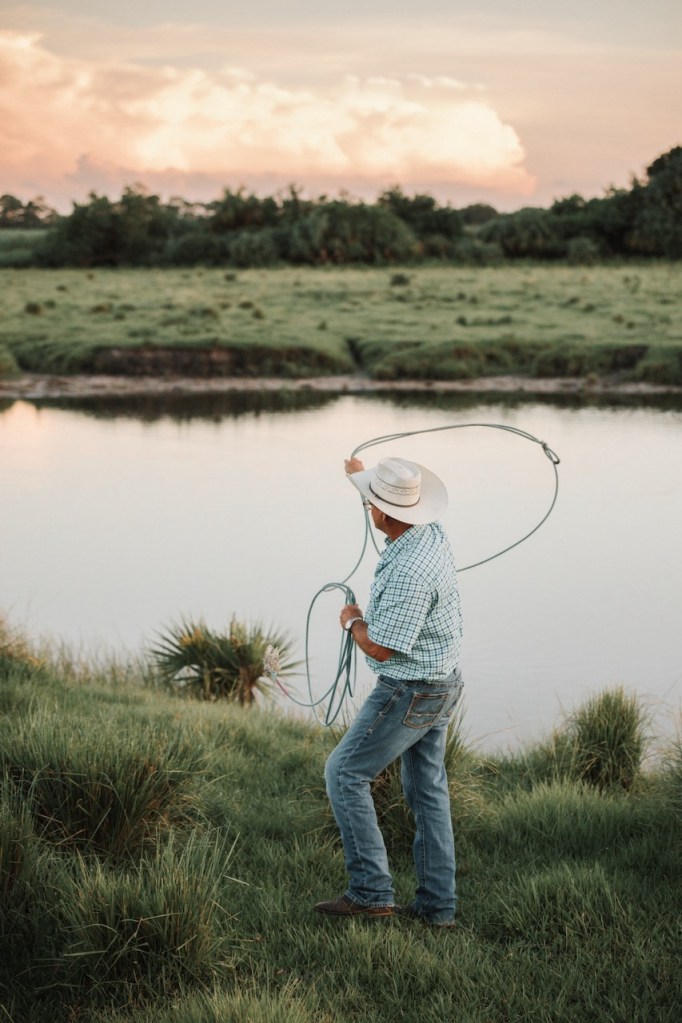
Greg’s story begins long before Painted Quarters. Food was always his family’s work; his father and relatives were butchers. As a boy, he spent summers on his uncle’s dairy farm in Canada, situated in a Mennonite community, though his family did not practice the faith themselves. The exposure there shaped his early perspective on resilience, self-sufficiency, and where he first absorbed the rhythms of food production and community. As an adult, he showed horses competitively, even ran a rodeo while raising cattle of his own.
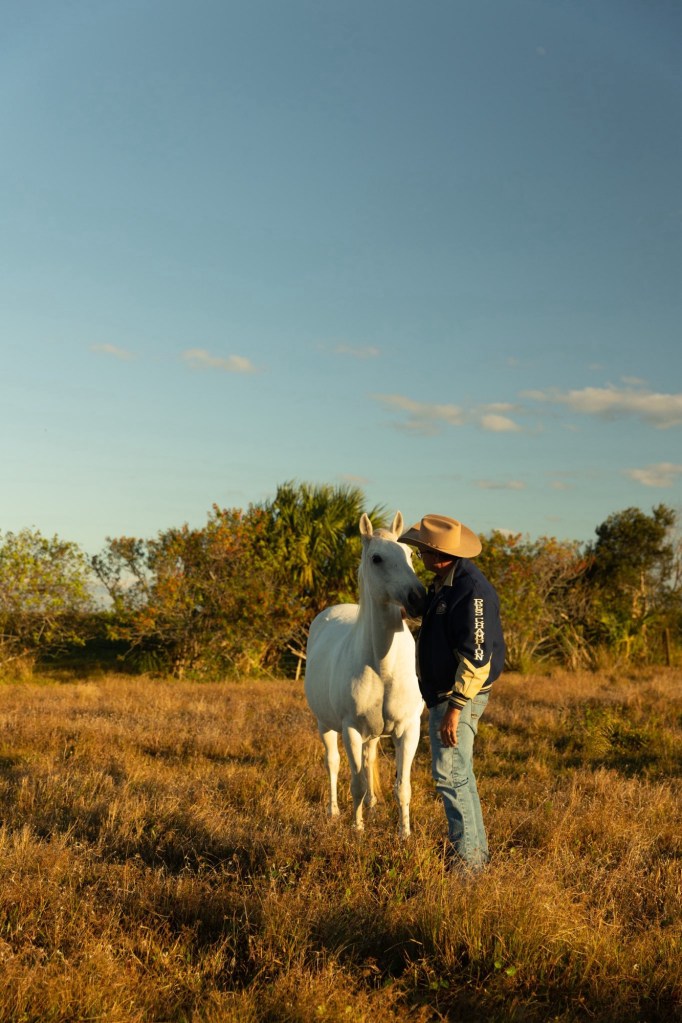
The crash of 2008 became his pivot point; amidst a downturn in demand for horses, he sold his rodeo and shifted his focus back to vegetables and cattle. Greg began traveling abroad to teach regenerative methods, which he’s done in six countries so far. Back home, he took every chance to tour American feedlots. Those two tracks, mentoring and researching, eventually converged into a single realization: the food system in America was structured for profit, not health, and its effects were showing up in children.
Today, Painted Quarters operates on principles that take longer but restore balance and trust. It can take him five to six years to raise an animal, compared with the 18 to 24 months common in industrial agriculture. That difference exists because Greg refuses the shortcuts: steroid shots, antibiotics on arrival, and feed laced with more of the same, the commercial production standard. Unlike large-scale operations where cattle stand shoulder to shoulder on concrete, fed for maximum weight while machines scrape away their daily excrement, Greg ensures his animals touch grass and walk on natural earth. He respects each animal, herding them thoughtfully and letting them move freely. That philosophy also informs how he approaches the economics of farming. The pricing of farm goods is another reason commercial operations prioritize weight over quality: futures contracts and derivative mechanisms allow industry and organizations to skew the system. The market pays for heavier cattle, not healthier ones. Greg, however, can sell his cattle slightly above these futures prices at live auctions because the value is tangible. Real animals, raised well. Not just numbers on a contract. That tangibility is also why he favors Goldbacks over fiat, currency that carries real, discernible worth, not faith. For him, being a farmer is not about the straw hat stereotype but about proving there’s another way to do the work while remaining profitable. He mentors young farmers, emphasizing that agriculture doesn’t need to serve corporate profit alone but can be reoriented toward community profit.
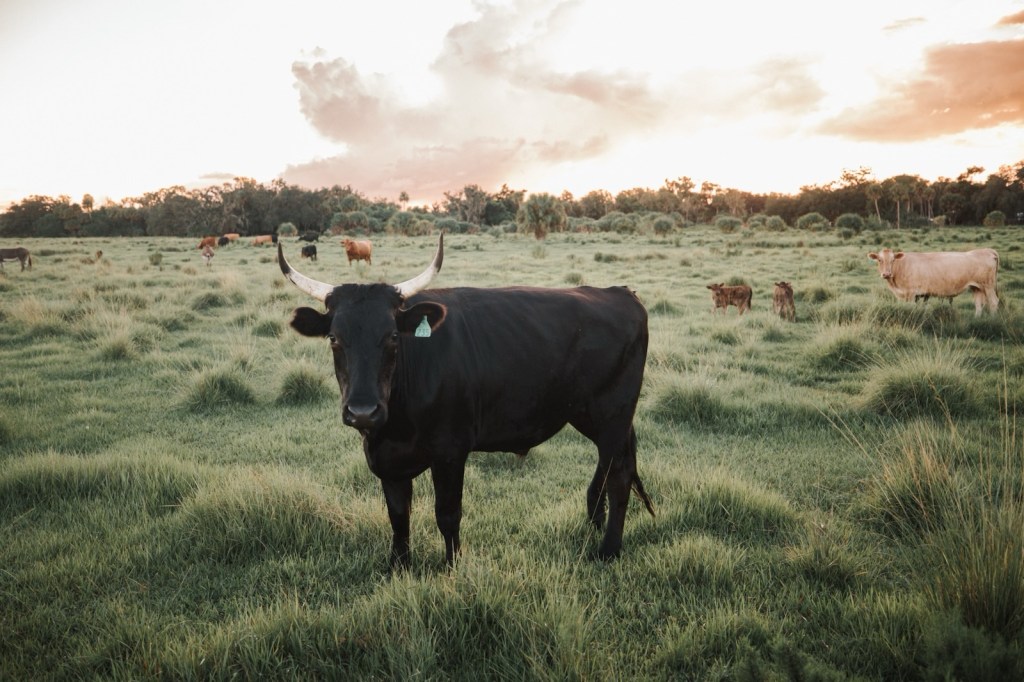
One of Painted Quarters’ bulls grazing on Florida grassland, raised without shortcuts.
The fight hasn’t been easy. When hurricanes wiped out his greenhouses, Greg received no help from the USDA, while corporations like Del Monte were bailed out, all because of red tape that always seems to favor the big guys. He has seen firsthand how agricultural policy serves consolidation, not small independence. “Get big or go broke,” as farmers say, and inheritance taxes make sure family land doesn’t last beyond a few generations. Greg told me a family farm these days is lucky to survive past 3 generations.
Along the way, sound money became more than an experiment for Greg; it became a necessity. “I have no confidence in fiat,” he told me, noting that the dollar has already lost 11 percent of its value this year. For him, Goldbacks and constitutional silver represent not just alternative currency but survival tools. Gold is already priced out of reach for most, leaving silver and fractional notes like Goldbacks as practical options. “They control the population by controlling the food, they control the food by controlling the money,” he said. He appreciates that Florida has legalized gold and silver transactions, but he also knows people need to relearn the art of barter. We shared anecdotes about the first time we held silver and gold coinage, agreeing it’s easier to hand over paper currency than hand over an ounce of real value. The phrase “weighing your options” has a deeper meaning when you feel the weight of a Troy ounce and remember the work it took to earn it.
For Greg, financial resilience and ecological resilience are inseparable. “Hand in hand,” he told me. A farmer who learns to cut out the middlemen, go vertical, and keep that wealth within the community is as regenerative as soil that retains its fertility. Both systems—soil and currency—are depleted by extraction and strengthened by care.
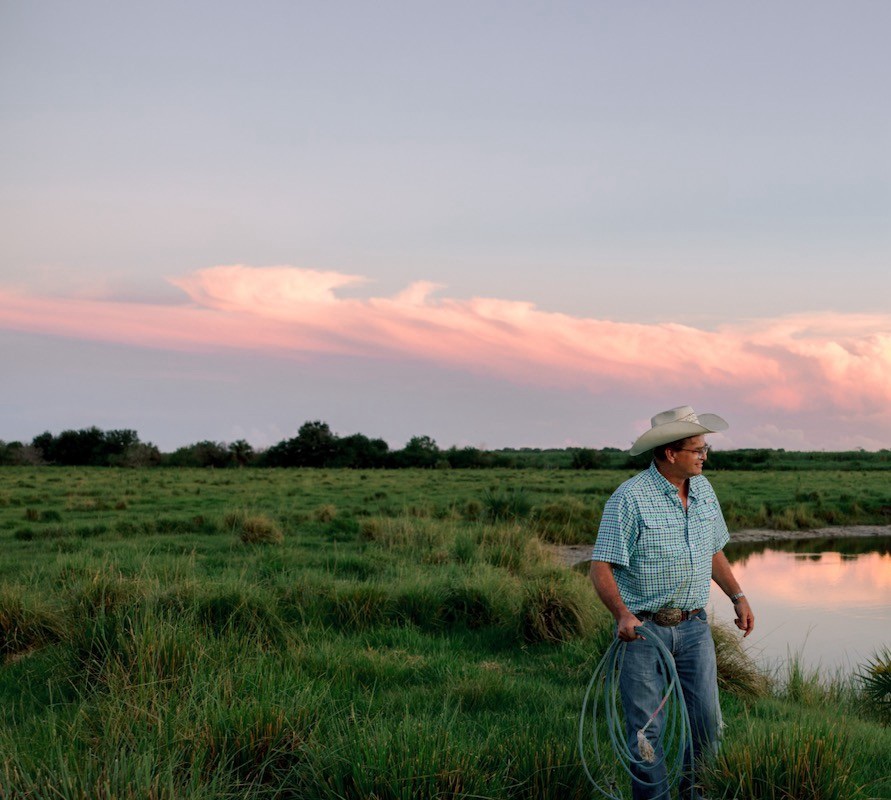
Looking forward, his outlook is both sobering and hopeful. He sees large corn farms already collapsing, with massive auctions happening. He recounted the news about Walmart and Sam’s Club expanding further into cattle production, swallowing even more of the market that could have gone to independents. Regulations will continue to strangle small operators while leaving corporate giants untouched. At the same time, he is encouraged by young farmers willing to adapt and build resilience. He mentors two a year, and says, “if I can make 20 copies of myself, I’ll consider all my work worth it.” To farmers at large, his advice is simple: form groups, co-ops, and online networks to create a stronger voice, one resilient against government efforts that hinder choice and freedom. Spend physical money amongst yourselves and your wealth will never end up in the accounts of corporations you inevitably compete with. He sees urban farming rising in the next five to ten years, while food from corporate channels becomes increasingly artificial, “food out of tubes” as he put it.
Painted Quarters is not just Greg’s business. It’s his counter-argument to the way food and money have been handled for decades. It is proof that agriculture can serve people and land together, without cutting corners or bowing to corporate dictates. If agriculture is to survive the twin crises of ecological degradation and economic instability, it won’t be through business-as-usual models propped up by fragile fiat systems. Painted Quarters Cattle Company shows us what a different path can look like: regeneration of the land paired with the resilience of sound money. Supporting farms like this, and building parallel economies of barter, silver, and Goldbacks, isn’t just preference, it’s preservation. It may well be the foundation of food security and sovereignty in the decades ahead.
© 2025 Zakariyas James. First shared here at theruminationcompilation.wordpress.com.
 The Rumination Compilation
amazing article, truth in facts, and wonderfully written! I can’t wait to try painted quarters beef!!!! Thank god someone is still putting in the hard work to make the world a better place to live and eat. The relearning to barter system rings true. I love my Goldbacks. I cherish them. Goldbacks have a beauty and history of each states survival and heritage. This is a job well done. I hope more become interested in this farmers hard work and enjoy what he produces. Painted Quarters is bringing back reality. Hard work and the little man get results. Looking forward to spending my goldbacks with his farm! I cannot wait!!!
LikeLiked by 1 person